 Semiahmoo Exterior
 Wiser Lake sits in the kind of Whatcom County landscape that looks calm on a dry afternoon and completely different by January. Homes out here deal with a steady mix of marine air pushing in off the Semiahmoo shoreline, long stretches of driving rain, and the shaded, damp conditions that let moss and algae take hold on roofs and siding for months at a time. None of that is unusual for this part of Washington, but it does mean an exterior built for a drier climate, or installed without much thought to drainage and airflow, tends to show its age here faster than it would somewhere inland.
We work on homes throughout this stretch of Whatcom County, and Wiser Lake has its own particular exposure — a mix of open water, tree cover, and low-lying ground that holds moisture longer than the surrounding hillsides. That combination shapes almost every recommendation we make when we're out looking at siding, a roof, windows, or a deck in this area.
What the Climate Actually Does to a House Out Here
It helps to separate the individual stresses, because each one wears down a different part of a home's exterior in a different way.
Salt Air
Being close enough to Semiahmoo Bay means airborne salt is a real factor, even a few miles inland. Salt-laden moisture accelerates corrosion on exposed metal — fasteners, flashing, gutters, hardware — and it can speed up the breakdown of paint films and caulking that aren't rated for coastal exposure. Over years, this is often what separates a trim board or fastener that lasts two decades from one that fails in under ten.
Driving Rain
Whatcom County doesn't just get rain, it gets wind-driven rain that hits siding and window assemblies at an angle instead of falling straight down. That matters because a lot of water intrusion problems aren't caused by rain volume alone — they're caused by rain being pushed sideways into laps, seams, and trim joints that were only ever designed to shed water falling vertically. A house near Wiser Lake needs weather barriers, flashing details, and siding laps that account for that horizontal pressure.
A Long Moss Season
Shade from mature trees, combined with consistently damp air, gives moss and algae a long runway to establish themselves on north-facing roof slopes and siding. Once moss gets a foothold on a roof, it holds moisture against the shingles, lifts tabs, and shortens the roof's usable life. On siding, algae staining is mostly cosmetic, but it's also a signal that a surface is staying wet longer than it should — which is worth paying attention to.
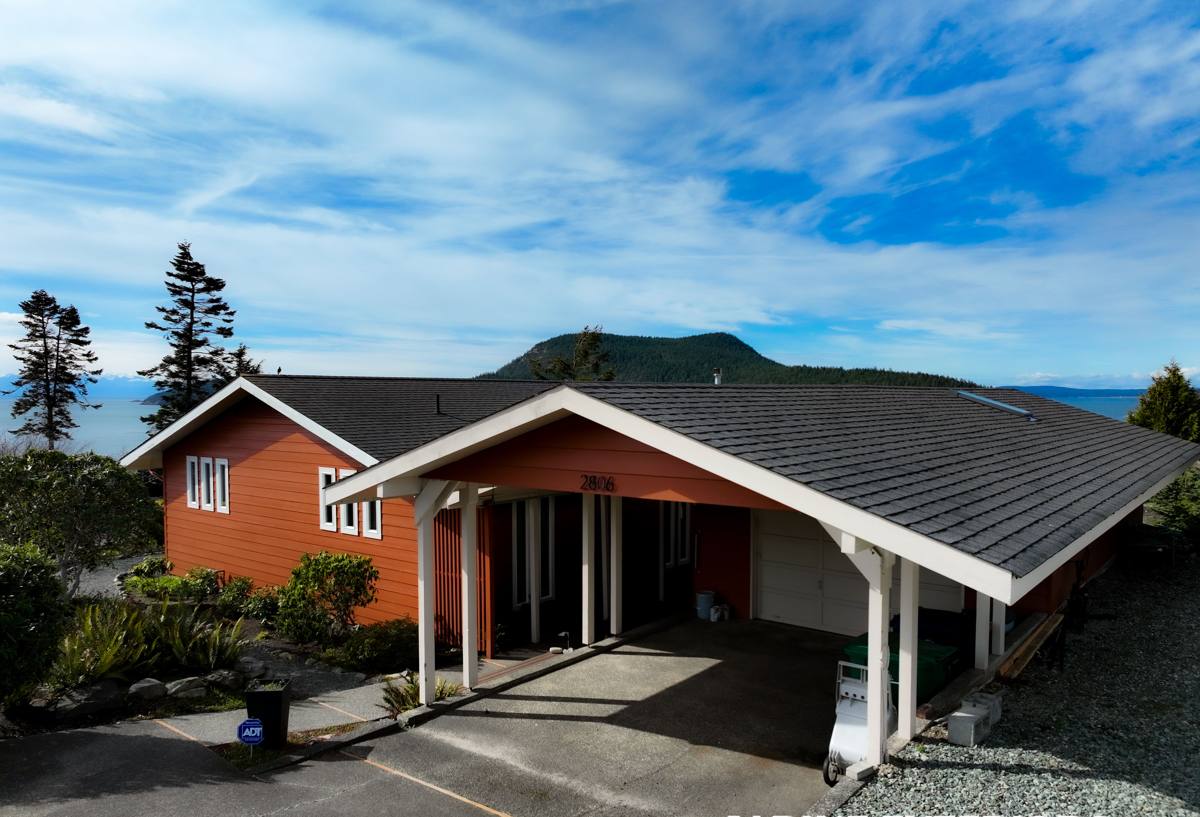
How This Shows Up on a Wiser Lake Home
Put those three stresses together over a decade or two and here's what we typically find during an inspection in this area:
- Moss buildup and shingle lifting on shaded, north- or west-facing roof slopes
- Corroded or discolored fasteners and flashing, especially on older homes
- Paint failure, cupping, or soft spots on wood-based siding, particularly at butt joints and lower courses near grade
- Window sills and lower sashes with early rot or seal failure from repeated wetting and drying cycles
- Deck ledger boards, joists, and fastener heads showing rust staining or early decay
- Gutters and downspouts undersized or clogged, sending overflow directly onto siding and foundation areas
None of this means a house near Wiser Lake is destined for problems — it means the exterior materials and details need to be chosen and installed with this climate specifically in mind, rather than treated the same as a house on the dry side of the Cascades.
Siding: Why We Standardized on One Product
We install James Hardie fiber cement siding exclusively. We don't install vinyl, LP SmartSide, primed spruce, cedar, or other fiber cement brands, and that's a deliberate call, not a limitation of what we know how to do. In a climate like this one, the material differences between siding products stop being theoretical and start showing up on the house.
Fiber cement is non-combustible and doesn't absorb and swell with moisture the way wood-based products can — a meaningful advantage in an area that stays damp for a large share of the year. James Hardie's ColorPlus factory finish is baked on in a controlled environment rather than field-applied, which gives it more consistent adhesion and better resistance to the fading and peeling that salt air and UV exposure cause over time. The company's HZ5 product line is specifically engineered for climates with significant moisture exposure, which matches conditions around Wiser Lake closely.
None of that means every other siding product is a bad product — it means we made a professional judgment that Hardie's moisture performance, finish durability, and warranty structure hold up best in this specific climate, and we'd rather install one product exceptionally well than install several products at a lower standard.
Roofing: Built to Handle Rain and a Long Moss Season
Roofing work in this area has to account for both the volume of water and the amount of time surfaces stay wet. That affects underlayment choices, ventilation, and how much attention goes into flashing at valleys, chimneys, and roof-to-wall transitions — the spots where a roof is most likely to leak, and where moss tends to establish first because debris and moisture collect there.
Proper attic and roof ventilation also matters more here than in a drier climate. Without enough airflow, moisture gets trapped under the roof deck, which shortens shingle life from underneath and creates conditions moss and mildew thrive in. We also talk with homeowners about realistic moss management — keeping overhanging branches trimmed back, periodic gentle cleaning, and zinc or copper strips at the ridge, which are simple, low-cost habits that meaningfully extend a roof's life in a shaded, damp setting like Wiser Lake.
Windows: Handling Marine Air and Temperature Swings
Windows near the water take a different kind of beating than windows further inland. Salt air accelerates corrosion on hardware and frames that aren't built for coastal exposure, and repeated cycles of wet, humid air followed by cold snaps stress seals and glazing over time. Poor flashing at the window opening is one of the most common sources of hidden water damage we find on older homes in this area — often the window unit itself is fine, but water has been getting behind it for years through a flashing detail that was never sealed correctly.
When we replace windows, we pay particular attention to integrating the new unit with the surrounding weather barrier and siding, not just swapping the window itself. A well-built window installed with poor flashing will still leak; the installation detail matters as much as the product.
Decks: Standing Up to a Long Wet Season
Decks near Wiser Lake face a straightforward but relentless problem: they stay damp for a large part of the year, and that shortens the life of anything that isn't built and fastened correctly. Ledger board attachment, proper flashing where the deck meets the house, and fastener selection all matter more here than in a dry climate, because a mistake in any of those areas gets exploited by moisture faster.
We build and repair decks with corrosion-resistant fasteners and hardware rated for exterior, high-moisture use, and we pay close attention to drainage underneath the deck surface so water doesn't sit against structural framing. Composite decking is often a good fit for homeowners here who want to reduce the ongoing maintenance that wood decking demands in a climate that barely gives lumber a chance to dry out between rains.
Why It Matters Who Actually Shows Up
A lot of exterior problems in this area trace back not to bad materials but to installation details that don't account for local conditions — flashing sequenced wrong, fasteners that aren't corrosion-resistant, or siding installed without the clearances it needs to shed wind-driven rain. A crew that works regularly in Whatcom County, and understands what a house near Wiser Lake specifically deals with, is more likely to get those details right the first time.
| Factor | Local, Regularly-Working Crew | Out-of-Area or One-Time Crew |
|---|---|---|
| Familiarity with local moisture/flashing detailing | Applies it as standard practice | May follow generic specs not suited to the climate |
| Response for warranty or follow-up questions | Reachable and accountable long-term | Often difficult to reach after the job is done |
| Knowledge of moss/salt-air maintenance needs | Built into recommendations | Rarely addressed |
| Permitting and local code familiarity | Established relationships and process | Learning curve on each project |
What an Estimate Visit Looks Like
When we come out to look at a home near Wiser Lake, we're not just measuring for materials — we're looking at how the house has actually held up against the specific conditions of this location. That usually means checking:
- Roof condition, moss buildup, and ventilation at the attic
- Siding for soft spots, paint failure, or gaps at trim and butt joints
- Window flashing and sill condition, especially on the weather-facing sides of the house
- Deck framing, ledger attachment, and fastener condition
- Gutter sizing and downspout placement relative to grading and drainage
From there we give a straightforward assessment of what needs attention now, what can reasonably wait, and what a correctly detailed repair or replacement would involve — without pushing a bigger project than the house actually needs.
A Straightforward Next Step
If you're weighing a siding, roofing, window, or deck project on a home near Wiser Lake, we're happy to take a look and give you a clear, no-pressure read on where things stand. Use the form below to request a free estimate, and we'll walk the exterior with you and talk through what actually makes sense for your house and this climate.