 Semiahmoo Exterior
 Deck Replacement Built for Wiser Lake's Climate
Wiser Lake sits in a part of Whatcom County that puts real demands on an outdoor deck. Between the salt-laden air drifting in from the coast, long stretches of driving rain, and a moss season that can run most of the year, a deck here ages differently than one built inland or in a drier climate. If your deck is graying, springy underfoot, or growing moss faster than you can clean it, that's not just cosmetic — it's usually a sign the structure underneath is losing the fight.
We build and replace decks for homeowners around Semiahmoo and the Wiser Lake area, and we see the same failure patterns over and over. A deck replacement done right for this location isn't just about swapping old boards for new ones — it's about correcting the moisture and ventilation problems that caused the original deck to fail in the first place.
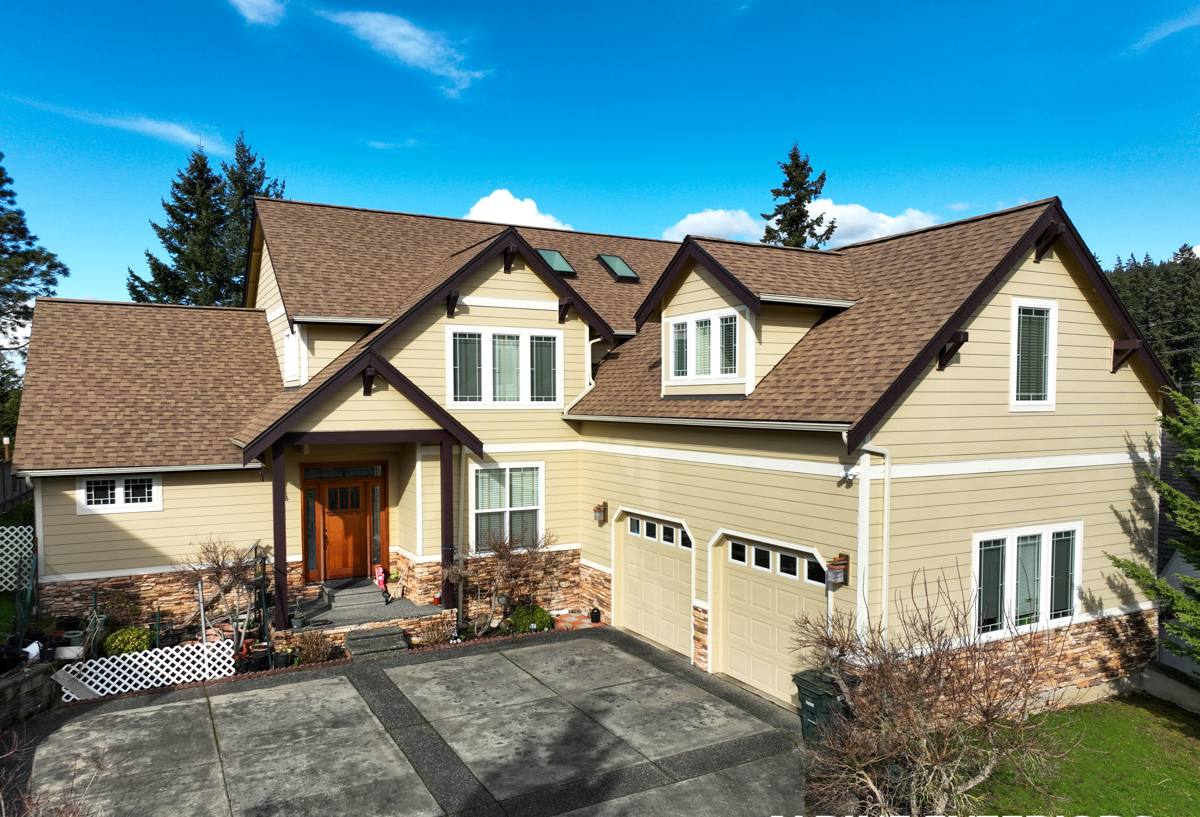
Why Decks Fail in This Part of Whatcom County
Three factors work together against outdoor structures here, and understanding them is the first step to building something that actually lasts.
Salt Air and Corrosion
Proximity to Semiahmoo Bay means airborne salt reaches fasteners, flashing, and metal hardware well before it ever reaches the wood. Standard zinc-coated screws and nails corrode faster in this environment, and once a fastener starts rusting, it weakens the connection long before the surrounding wood shows any obvious damage. Corroding hardware is one of the most common reasons we find a deck that looks fine on top but is unsafe underneath.
Driving Rain and Trapped Moisture
Rain here doesn't just fall — wind-driven storms push water sideways into ledger boards, joist hangers, and the gaps between deck boards. Older decks, or decks built without proper flashing and drainage gaps, trap that water against framing members. Wood that stays wet for extended periods is what actually rots; it's rarely a single storm that causes damage, it's water that never gets a chance to dry out between rain events.
Moss, Algae, and Surface Breakdown
Shaded areas, north-facing decks, and spots that don't get much direct sun stay damp for long stretches, which is exactly what moss and algae need to take hold. Beyond making a deck slick and dangerous to walk on, moss holds moisture directly against the wood or composite surface, accelerating rot in real lumber and staining or degrading the surface layer of composite boards over time.
Signs Your Deck Needs Replacing, Not Just Repairing
Not every aging deck needs full replacement — sometimes board-level repairs or hardware upgrades are enough. But certain conditions point to a structural problem that repair alone won't fix.
- Soft, spongy, or spring-loaded spots when you walk across the deck
- Visible rot, splitting, or crumbling wood at the ledger board or support posts
- Rust streaks running down from screws, nails, or joist hangers
- Gaps opening up between the deck and the house, or a ledger pulling away from the rim joist
- Persistent moss or algae that returns within weeks of cleaning
- Wobbly or loose railings and posts
- A deck more than 15-20 years old that has never had its framing inspected
- Standing water that doesn't drain off the surface after rain
If you're seeing two or more of these, it's worth having the substructure inspected before deciding between repair and replacement.
Decking Material Options for Wiser Lake Homes
Material choice matters more here than in drier climates, because whatever you install has to hold up to sustained moisture, salt exposure, and shaded, moss-prone conditions year after year. There's no single "best" material for every homeowner — it depends on budget, maintenance tolerance, and how much sun the deck actually gets.
| Material | Moisture & Salt Performance | Maintenance | Typical Lifespan |
|---|---|---|---|
| Pressure-treated lumber | Good when properly sealed and maintained; vulnerable if coatings lapse | Annual cleaning and periodic re-sealing | 15-25 years with upkeep |
| Cedar | Naturally rot-resistant, but surface graying and moss growth happen quickly in shade | Regular cleaning, occasional oiling to slow weathering | 15-20 years |
| Composite decking | Very strong resistance to rot and salt corrosion of the board itself | Low — periodic washing, no sealing required | 25-30+ years |
| PVC/capped polymer decking | Excellent moisture and salt resistance; least likely to stain from moss | Lowest maintenance of the group | 25-30+ years |
Composite and capped polymer boards tend to be popular in this area specifically because they don't absorb moisture the way wood does, which matters when a deck spends a large part of the year damp. That said, real wood decks still perform well when they're detailed correctly and the owner is willing to keep up with cleaning and sealing — the framing underneath matters as much as the surface material either way.
What a Correct Deck Replacement Involves
A deck replacement is really a rebuild of everything from the ground up, not just a new set of boards laid over old framing. Here's what we consider non-negotiable on a proper job in this climate.
Ledger Board and Flashing
The connection between the deck and the house is the single most common source of hidden rot. A correct install uses proper flashing that directs water away from the ledger board and the house's wall assembly, rather than letting it wick into the framing. This detail is invisible once the deck is finished, which is exactly why it's so often skipped or done poorly on lower-end jobs.
Framing and Hardware
Given the salt air here, we treat fastener and hardware selection as a real decision, not an afterthought — using connectors and fasteners rated for the corrosion exposure this area sees, not just whatever is cheapest at the yard. Joist hangers, post bases, and structural screws all take direct exposure to weather, so under-spec'd hardware is one of the fastest ways a new deck starts failing early.
Drainage and Airflow
Proper board spacing, joist orientation, and ventilation underneath the deck all affect how quickly it dries out after rain. A deck built tight to the ground with poor airflow will hold moisture far longer than one with adequate clearance and drainage planned into the design.
Footings and Structural Support
Post footings need to be sized and set correctly for the load and soil conditions, and any posts or beams should be rated for ground or moisture contact where applicable. This is the part of the job nobody sees once it's buried, which is exactly why it needs to be done right the first time.
Our Deck Replacement Process
We walk every Wiser Lake deck replacement through the same sequence, adjusted for the specific conditions of your lot — sun exposure, shade, wind direction, and how close you are to open water.
- On-site assessment — we inspect the existing deck's framing, ledger connection, and footings to determine the actual cause of failure, not just the visible symptoms.
- Material and layout discussion — we walk through decking material options, railing choices, and any layout changes you want, based on your budget and maintenance preferences.
- Permitting — where required, we handle the permit process so the structure meets current code, particularly around railing height, guard spacing, and structural connections.
- Demolition — full removal of the old deck surface and framing down to the footings, checking footing condition before building on top of them.
- Framing rebuild — new ledger flashing, joists, hardware, and footings as needed, built to handle this area's moisture and salt exposure.
- Decking and railing installation — boards and railings installed with proper spacing and fastening for drainage and long-term stability.
- Final walkthrough — we go over the finished deck with you, including basic maintenance guidance specific to the material you chose.
Cost Factors for a Wiser Lake Deck Replacement
Every deck is different, but the same handful of factors drive most of the price difference between projects. We don't publish flat pricing because size, material, and site conditions swing the number too much to make a single figure honest — but here's what actually moves the estimate.
| Factor | Why It Affects Cost |
|---|---|
| Deck size and shape | More square footage and complex angles mean more material and labor |
| Decking material | Composite and PVC boards cost more upfront than pressure-treated lumber |
| Height and stair count | Taller decks and multiple stair runs add framing, railing, and labor complexity |
| Existing structural condition | Rotted footings or ledger damage found during demo can add rebuild scope |
| Railing style | Cable, glass, and custom railing systems cost more than standard baluster railing |
| Site access | Difficult access for equipment or material delivery can add labor time |
Permits and Local Considerations
Most deck replacements that involve structural changes — new footings, a raised deck, or changes to railing height — require a permit in Whatcom County. Even when a straight board-for-board replacement on existing, sound framing might not trigger the same requirements, it's worth confirming before work starts rather than after. We factor permit requirements into the project timeline upfront so there are no surprises partway through the job.
Why Hire a Crew That Already Works Wiser Lake
A contractor who works this specific stretch of Whatcom County knows which fastener grades hold up against the salt air, which corners of a lot tend to stay shaded and damp longest, and how much drainage a deck actually needs to survive the wet season here without turning into a moss farm. That's different knowledge than a generalist crew brings from a drier or inland region. It also means we're not learning on your project — we've already worked through these same conditions on homes near yours.
If your deck is showing its age — soft spots, rust stains, moss that won't quit, or a ledger board you're not sure about — we're happy to take a look and give you a straight answer on whether it needs replacing or just repair. Reach out for a free, no-pressure estimate using the form below.