 Semiahmoo Exterior
 Building on a Spit: What Makes Semiahmoo Resort Different
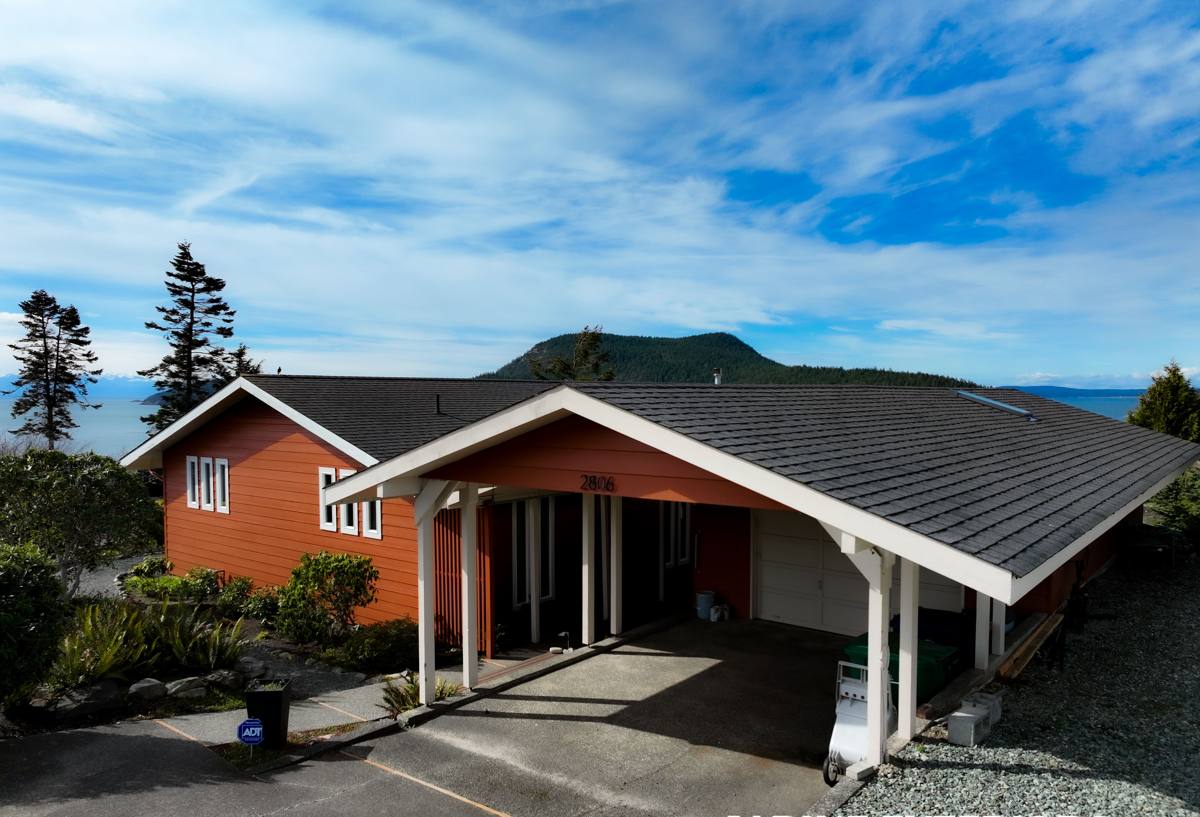
Semiahmoo Resort sits on a narrow spit of land reaching out into Semiahmoo Bay, with Drayton Harbor on one side and the open bay on the other. That geography is what makes the community beautiful, and it's also what makes the exterior of a home here work harder than almost anywhere else in Whatcom County. Water surrounds the property on two sides, wind has nothing to slow it down before it hits the siding, and the marine layer that rolls in off the water keeps everything damp for long stretches of the year. Homes built on a spit don't get a normal exposure profile — they get a concentrated one.
We've worked on homes throughout Whatcom County, from inland neighborhoods that see a fairly standard Pacific Northwest climate to waterfront properties like the ones on Semiahmoo Resort that take a much harder hit. The difference shows up fastest on the exterior envelope: siding, trim, roofing, and window seals. If you own or manage a property out here, understanding what the site is doing to your building materials helps you make better decisions about what goes on the house and how often it needs attention.
Salt Air and What It Does to a Building
Salt air is corrosive to metal and abrasive to many building materials over time. On a resort property directly adjacent to the bay, airborne salt settles on every exterior surface — siding, flashing, fasteners, window frames, gutters — and it doesn't wash off completely even with regular rain. The practical effects we see most often:
- Fasteners and metal flashing that aren't marine-grade corrode faster than they would a few miles inland
- Paint and coatings on lower-quality siding materials chalk, fade, and break down sooner
- Wood trim and untreated wood siding absorb salt-laden moisture and hold it longer
- Window hardware and door hardware need more frequent lubrication and inspection
None of this means a home on Semiahmoo Resort can't hold up well — it means the materials and fasteners have to be chosen with the exposure in mind, not selected the same way you'd spec a house in a sheltered inland subdivision.
Driving Rain and Wind-Driven Water Intrusion
Whatcom County gets a lot of rain in a normal year, but the rain that matters most for exterior durability isn't the gentle, straight-down kind — it's wind-driven rain that hits siding and window openings at an angle and gets pushed into every gap, seam, and fastener hole it can find. On an exposed spit like Semiahmoo Resort, wind off the water regularly pushes rain sideways into the building envelope. That's a different problem than rainfall volume alone.
Wind-driven rain finds the weak points in an exterior system: poorly lapped siding, undersized or missing flashing at window and door openings, deck ledger connections, and roof-to-wall transitions. Once water gets behind the cladding, it doesn't dry out quickly in this climate — the same marine humidity that brings the rain also slows evaporation. That's why the installation details around water management (proper flashing, correct siding overlap, sealed penetrations) matter as much as the material itself, arguably more.
Where We See Water Intrusion Start
In our experience across Whatcom County waterfront and near-waterfront properties, water problems tend to start in a short list of predictable places: window and door head flashing, deck ledger-to-wall connections, roof valleys and wall intersections, and siding butt joints that weren't properly caulked or capped. A thorough exterior assessment checks these spots first, because that's where a small gap becomes a rot problem years down the road.
Moss Season: Longer and More Aggressive Here
Every part of western Whatcom County deals with moss, but the season runs longer on properties with constant moisture and limited direct sun exposure, which describes a lot of homes on Semiahmoo Resort depending on orientation and tree cover. Moss and algae don't just look bad — they hold moisture against roofing and siding surfaces, which shortens the life of both. Moss roots work into small imperfections in roofing material, and algae growth on siding can trap dampness against the substrate longer than the surface alone would suggest.
A few things influence how bad moss gets on a given property: roof pitch and shade, gutter maintenance (clogged gutters hold standing water that feeds growth), and how much the north- and west-facing sides of the home stay shaded and damp. Homes closer to tree lines or with steep, low-light rooflines tend to need moss treatment and gutter cleaning more often than open, sun-exposed lots.
Siding: Why We Only Install James Hardie Fiber Cement
We install James Hardie fiber cement siding exclusively — we don't install vinyl, LP SmartSide, Cemplank, Allura, primed spruce, or cedar. On a property like Semiahmoo Resort, that decision isn't a brand preference, it's a direct response to what the site does to siding.
Vinyl siding expands and contracts significantly with temperature swings and can become brittle over time; wind-driven rain can also work behind loosely fitted panels at seams and corners. Wood siding — cedar or primed spruce — needs a maintained paint or stain film to keep moisture out, and in a climate where things stay damp for long stretches, that maintenance window shrinks fast; once moisture gets past the coating, wood siding is vulnerable to rot. Engineered wood products like LP SmartSide use a wood-strand substrate that's more resistant to some of wood's traditional weaknesses, but it still relies on an intact resin-treated surface and careful edge sealing to keep water out over the long term. Other fiber cement brands (Cemplank, Allura) use a similar base material to Hardie but differ in factory finish quality, product-line engineering, and warranty structure.
James Hardie fiber cement is non-combustible, doesn't rot, and holds up to the freeze-thaw and moisture cycling this climate produces. Hardie's ColorPlus factory finish is baked on and warranted separately from the substrate, which matters in salt air because it resists the fading and chalking that lower-grade coatings show first. Hardie also engineers HZ5-rated product lines specifically for cold, wet, high-moisture climates like the Pacific Northwest coast — that's a real engineering distinction, not marketing language.
Siding Material Comparison
| Material | Moisture Behavior | Maintenance | Fit for Marine Sites |
|---|---|---|---|
| James Hardie fiber cement | Does not rot; dimensionally stable when wet or dry | Occasional wash; factory finish, no repainting cycle | Engineered HZ5 line for this exposure |
| Vinyl | Doesn't rot itself, but seams and laps can let water behind panels | Low, but panels can crack or fade over time | Weak in high wind/driving rain exposure |
| Cedar / primed spruce | Absorbs moisture; vulnerable once coating fails | Repainting/staining on a recurring cycle | Demanding in constant-damp marine air |
| LP SmartSide | Wood-strand core; relies on intact resin coating and sealed edges | Moderate; edge and cut-end sealing is critical | Workable, but less margin for installation error near salt air |
Roofing: Matching the System to the Exposure
Roofing on Semiahmoo Resort has to deal with the same combination of wind, salt air, and prolonged dampness as the siding. Wind uplift resistance matters more on an exposed spit than it does on a sheltered inland roof, and the fastening and underlayment details around ridges, valleys, and roof-to-wall transitions are where most leaks eventually start if they're not done right the first time. Metal flashing components should be corrosion-resistant given the salt exposure, and moss-resistant roofing strategies (zinc or copper strips, regular treatment) are worth planning for from the start rather than reacting to moss after it's established.
We also pay close attention to ventilation on roofing replacements here. A well-ventilated attic and roof assembly helps the structure dry out between rain events instead of staying damp, which matters in a climate where "between rain events" can be a short window.
Windows and Decks: The Other Two Water Entry Points
Windows and decks are the two building components most likely to leak on a coastal Whatcom County home, and both deserve the same attention we give siding and roofing.
Window replacement or repair on a Semiahmoo Resort home should always include a hard look at the flashing around the opening, not just the window unit itself — a high-quality window installed with poor flashing will leak eventually, and a modest window installed correctly will usually outperform it. Hardware corrosion from salt air is also worth checking annually; sliding tracks and locking hardware near the water age faster than they would inland.
Decks on waterfront and near-waterfront lots take a beating from both moisture and UV exposure reflected off the water. The ledger connection — where the deck attaches to the house — is the single most important water-management detail on any deck, because a poorly flashed ledger lets water track directly into the wall framing behind it. We look at ledger flashing, joist hardware corrosion, and decking material fastening as the priority items on any deck inspection or rebuild out here.
What a Local Whatcom County Crew Brings to This
A crew that works Semiahmoo Resort regularly knows which side of a house takes the worst of the wind, how fast moss comes back on a shaded north elevation, and which flashing details actually hold up on an exposed spit versus a sheltered inland lot. That's not something a general contractor from outside the region picks up on the first job. It comes from doing exterior work on this specific stretch of coastline, on homes with this specific exposure, season after season.
Being local also means faster response for storm damage, moss treatment scheduling, or a water-intrusion concern that needs a look before it becomes a bigger repair. We're not driving in from another county to give an estimate or handle a warranty callback.
Exterior Checklist for Semiahmoo Resort Homeowners
- Check gutters at least twice a year — clogged gutters feed moss and can push water into fascia and siding
- Inspect window and door flashing for gaps, especially after a hard windstorm off the bay
- Look at deck ledger connections annually for staining, soft wood, or gaps in flashing
- Wash siding periodically to remove salt film and slow algae/moss growth
- Have roofing inspected for moss establishment before it spreads across a full slope
- Check exterior metal hardware (hinges, tracks, fasteners) for early corrosion
Cost Factors Specific to This Site
Exterior project costs on Semiahmoo Resort are shaped by a few site-specific factors beyond the base scope of work:
| Factor | Why It Matters Here |
|---|---|
| Fastener and flashing grade | Corrosion-resistant hardware costs more but is not optional in salt air exposure |
| Access and staging | Spit-road access and resort-community logistics can affect scheduling and staging |
| Existing moisture damage | Homes that went a long stretch without exterior attention often need substrate repair, not just replacement |
| Wind exposure of the specific lot | Bay-facing and open-water-facing elevations may need heavier-duty detailing than sheltered elevations |
We give straightforward, honest estimates based on what we actually find on your property — not a generic price list that ignores the site conditions.
Get a Local Assessment
If you own a home on Semiahmoo Resort and you're dealing with moss buildup, a siding or trim area that's staying damp longer than it should, a window that's letting water past the frame, or a deck connection that needs a second look, we're glad to come take a look. We'll give you a straightforward read on what's actually going on and a free, no-pressure estimate for the work — no obligation, no high-pressure pitch, just an honest assessment from a crew that knows this stretch of Whatcom County.