 Semiahmoo Exterior
 Exterior Work Built for Custer's Climate
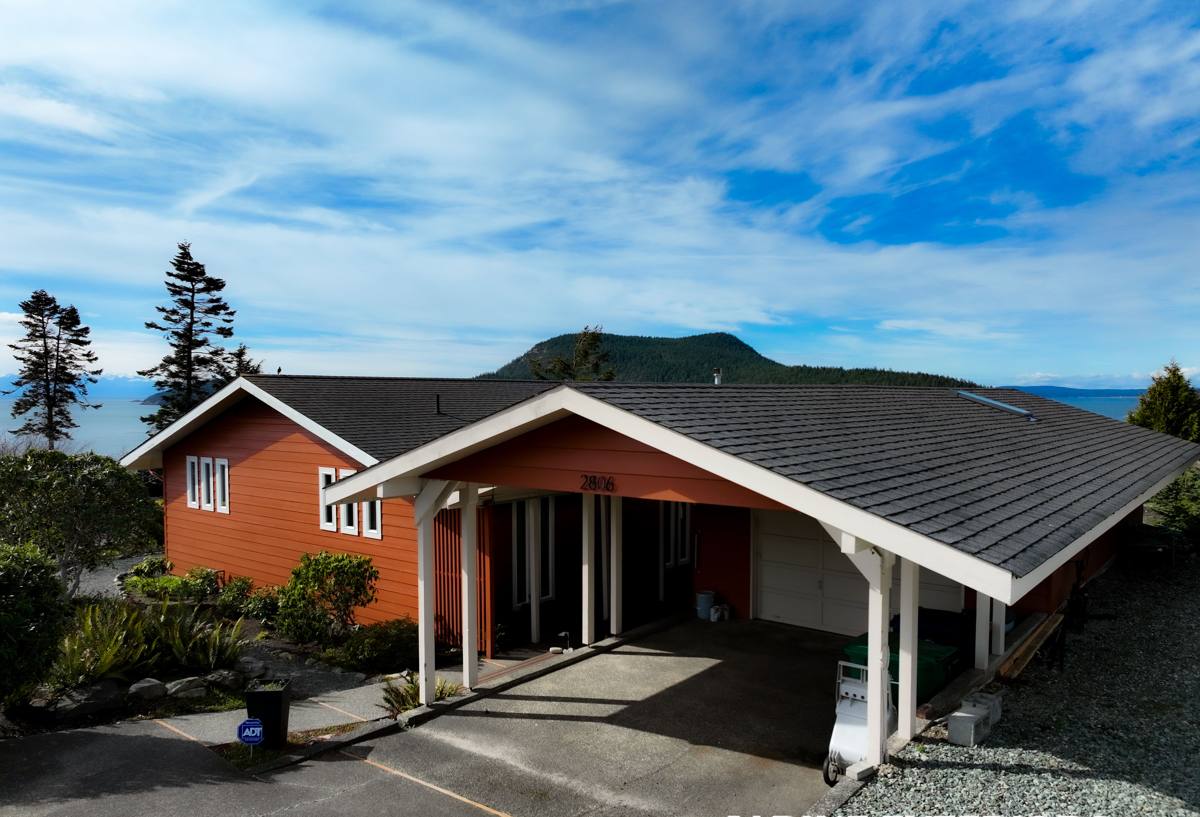
Custer sits in that stretch of northern Whatcom County where open farmland meets the salt air rolling in off Semiahmoo Bay and the Strait of Georgia. It's a beautiful place to own a home, but it's not an easy place to keep one looking good. Homes here deal with a combination most inland Washington towns don't: salt-laden marine air, wind that has nothing to slow it down across open fields, driving rain that comes in sideways during winter storms, and a moss season that can run eight or nine months out of the year in shaded, north-facing spots.
None of that is a reason to panic about your house. It's just the reason exterior materials and workmanship matter more here than they would somewhere drier or more sheltered. We work on homes throughout the Semiahmoo area, and Custer's mix of rural properties, newer construction, and older farmhouses gives us a good feel for what actually holds up out here versus what looks fine on a spec sheet and struggles after a few winters.
What Custer Homes Actually Face
Salt Air and Corrosion
You don't have to live right on the water to feel the effects of salt air — it travels with the wind, and Custer gets plenty of wind off the bay. Salt accelerates corrosion on exposed metal fasteners, flashing, and hardware, and it can speed up the breakdown of paint films and lesser siding materials over time. It's a slow, cumulative problem, which is exactly why it gets overlooked until a homeowner notices rust streaks or a finish that's chalking years ahead of schedule.
Driving Rain and Wind Exposure
Open farmland means open exposure. When a winter system moves through, rain doesn't just fall on a Custer home — it gets pushed sideways into siding seams, window flashing, and trim joints by wind with nothing to break it up. That kind of wind-driven rain finds every weak point in an exterior envelope: a poorly caulked joint, a butt seam that wasn't flashed correctly, a window that wasn't properly integrated with the siding. Once water gets behind the cladding, the damage often happens out of sight.
Moss and Shade
Whatcom County's moss season is long, and Custer's mix of tree cover and low winter sun angles means north- and east-facing walls and roof slopes can stay damp for months at a stretch. Moss and algae growth on roofing and siding isn't just cosmetic — sustained moisture retention against a wall or roof surface is what eventually leads to rot, granule loss on roofing, and finish failure on lower-grade siding products.
Siding: Why We Only Install James Hardie
We install James Hardie fiber cement siding exclusively — no vinyl, no LP SmartSide, no Cemplank, no Allura, no primed spruce or cedar. That's not a marketing position, it's a decision based on what actually performs in a climate like Custer's over the long run.
Vinyl siding doesn't rot, but it moves with temperature swings, can crack in cold snaps, and doesn't stand up well to sustained wind-driven rain at the seams — water can work its way behind panels over time, and vinyl offers no fire resistance. Wood products, including primed spruce and cedar, look great fresh off the truck, but in a moss-prone, high-moisture area they demand a maintenance schedule most homeowners underestimate: repainting, caulking, and moisture monitoring every few years, or rot sets in at the seams and end cuts. Engineered wood products like LP SmartSide perform reasonably well when installed and maintained correctly, but they're still wood-based composites, which means they're more sensitive to sustained moisture exposure and edge/seam integrity than fiber cement, and they carry real installation and maintenance requirements to keep warranties intact.
James Hardie fiber cement is non-combustible, engineered specifically for Pacific Northwest moisture cycles through its HZ5 product line, and finished at the factory with ColorPlus technology — a baked-on finish that resists fading and chalking far better than field-applied paint, which matters when salt air is working against your finish year-round. It won't rot, and it holds up to swelling and warping in ways wood-based products can't. Installed to spec — correct clearances, proper flashing, factory-finished cut edges sealed — it's the product we're willing to put our name behind on homes in this climate.
Siding Material Comparison for Coastal Whatcom County Conditions
| Material | Moisture/Rot Resistance | Salt Air Durability | Maintenance Burden | Fire Resistance |
|---|---|---|---|---|
| James Hardie Fiber Cement | Excellent — engineered for PNW moisture | Strong, factory-finished ColorPlus resists fading | Low | Non-combustible |
| Vinyl | Moderate — seams vulnerable to wind-driven rain | Can chalk and become brittle over time | Low, but limited repair options | Combustible |
| Cedar/Primed Spruce | Poor without diligent upkeep | Salt accelerates finish breakdown | High — regular repainting/sealing | Combustible |
| LP SmartSide / Engineered Wood | Good if maintained correctly | Moderate, installation-sensitive | Moderate — strict install/caulk requirements | Combustible |
Roofing for a Long Moss Season
Roofing in Custer has to do two jobs at once: shed a lot of water quickly during winter storms, and resist moss and algae growth through the shoulder seasons when things stay damp but don't dry out fast. We look at ventilation, underlayment, and flashing details as closely as the roofing material itself, because a roof that traps moisture under the surface will grow moss and degrade faster no matter how good the shingles are. Proper attic and roof ventilation reduces the condensation that feeds moss growth from underneath, and correctly lapped flashing at valleys, chimneys, and roof-to-wall transitions is what actually keeps wind-driven rain out during a real Whatcom County storm.
For a farmhouse or rural property with mature trees nearby, we'll also talk through practical moss management — gutter and valley clearing, and roof orientation considerations — as part of the conversation, not as an upsell.
Windows That Hold Up to Wind and Rain
Window performance in Custer comes down to installation as much as the window unit itself. A quality window installed with poor flashing integration into the siding will leak in a wind-driven rain event regardless of its energy rating. We integrate window flashing with the Hardie siding system as a single water-management plane, not two separate jobs — that's where a lot of leaks in this area actually originate, at the transition between window and wall rather than the window itself.
Decks Built for Salt Air and Standing Water
Decks in this area take a beating from the same conditions as the siding — wind-driven rain, standing moisture in shaded spots, and salt air working on fasteners and hardware over time. We build with attention to proper drainage and airflow underneath the deck surface, corrosion-resistant fasteners appropriate for coastal exposure, and materials and finishes matched to how much sun and shade a given deck actually gets. A deck tucked under trees on a north side of a Custer property needs a different maintenance conversation than one in open sun.
Why a Local Crew Matters Here
Whatcom County's coastal microclimates aren't uniform — a home a few miles inland from Custer can have noticeably different wind and moisture exposure than one closer to the water. A crew that works this area regularly knows which details actually matter here: where wind-driven rain hits hardest, which orientations grow moss fastest, and how to detail flashing and siding transitions so they hold up through real Whatcom County winters, not just a mild one. We also know the local permitting process and can move a project through inspection without the delays that come from a crew unfamiliar with the county's requirements.
What to Expect From an Estimate
We start with a walk-around inspection of the exterior — siding, roofline, trim, windows, and any deck structures — looking specifically for the early signs of moisture intrusion, moss buildup, and wear that are common in this climate. From there we'll give you a straightforward assessment of what's holding up fine, what's worth watching, and what actually needs work now versus later. There's no pressure to do more than what the house needs.
Signs Worth a Second Look
- Moss or dark streaking on north- or east-facing roof slopes and siding
- Soft or discolored siding near ground level, corners, or trim joints
- Rust staining around fasteners, flashing, or hardware
- Peeling or chalking paint on wood siding or trim
- Water stains on interior ceilings near exterior walls or roof valleys
- Gaps or separation at caulked joints and window/door trim
- Sagging gutters or standing water after rain events
- Deck boards that stay damp or feel soft underfoot in shaded areas
A Straightforward Approach
Custer homeowners don't need a sales pitch, they need an honest read on what their house is dealing with and a crew that installs things correctly the first time. That's the whole approach: fiber cement siding built for this climate, roofing and window details that actually manage water instead of just looking finished, and decks built to handle salt air and shade without shortcuts.
If you're noticing moss buildup, a siding finish that's not holding up, or you just want an honest assessment of where your home stands, we're happy to come out and take a look. The estimate is free, there's no pressure attached to it, and you'll walk away with a clear picture of what your exterior actually needs.