 Semiahmoo Exterior
 Homeowners in Semiahmoo occasionally ask us to quote Allura fiber cement siding, usually because a supplier or another contractor mentioned it as a cheaper alternative to James Hardie. It's a fair question, and it deserves an honest answer instead of a sales pitch. Allura is a legitimate fiber cement product — it is not vinyl, it is not a knockoff, and plenty of contractors install it without issue. We just don't. Here's the actual reasoning, not a competitor take-down.
What Allura Fiber Cement Actually Is
Allura makes fiber cement lap siding, panels, and trim using the same basic recipe as most of the industry: portland cement, sand, cellulose fiber, and water, cured into a rigid board. On paper, that puts it in the same category as James Hardie. It's non-combustible, it resists rot better than wood, and it holds paint or factory finish better than vinyl. For a homeowner comparing fiber cement to vinyl or engineered wood, Allura is a reasonable step up.
Where things get more nuanced is in how that raw material is engineered, finished, and backed — and that's where our standard product line differs from Allura in ways that matter over a 20-30 year ownership window, especially in a coastal, moss-prone climate like ours.
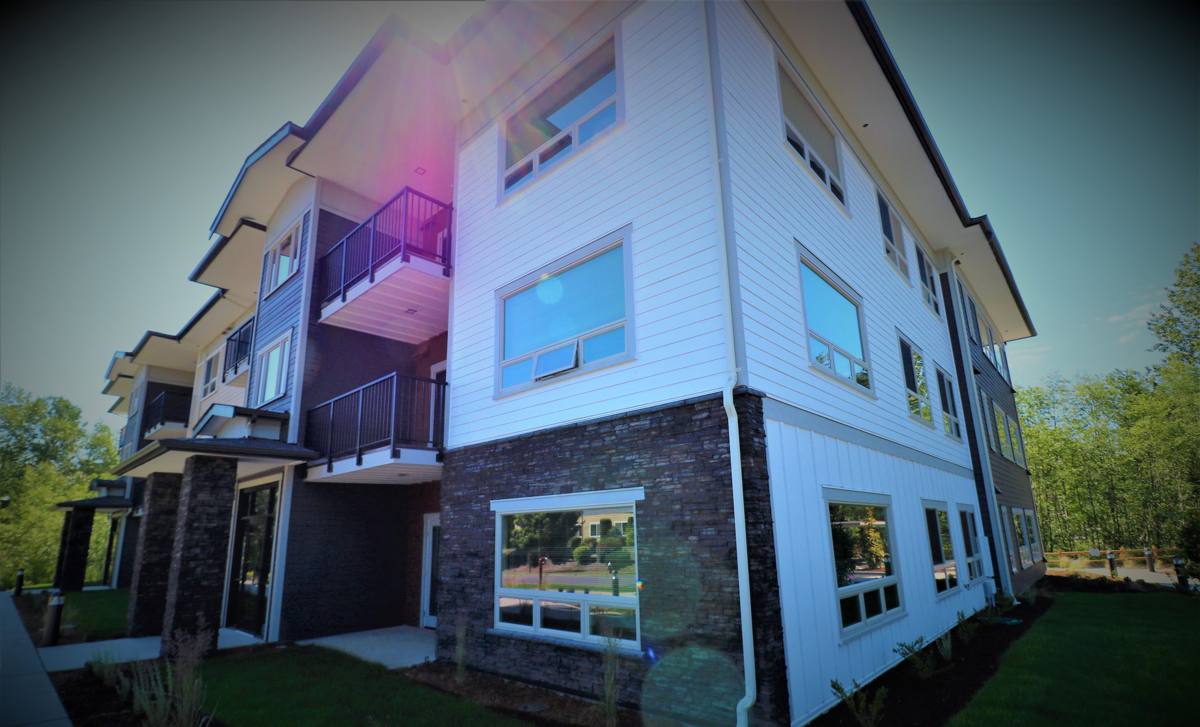
Manufacturing Footprint and Regional Engineering
James Hardie builds region-specific "HZ" formulations — HZ5 for the Pacific Northwest's wet, moderate-freeze climate versus HZ10 for hot, humid Southeast conditions. The board composition and moisture-management engineering are tuned to the climate it's shipped into. Allura does not offer that same degree of climate-zone-specific formulation across its lap siding lineup. That's not a defect in Allura's product; it's a difference in manufacturing philosophy. But for a coastal Whatcom County job facing salt air off Drayton Harbor and Semiahmoo Bay, driving winter rain, and a moss season that can run eight months of the year, we'd rather install a board that was engineered with exactly that exposure in mind.
Why Regional Engineering Matters Here
Fiber cement is dimensionally stable compared to wood, but it isn't immune to moisture cycling. Boards that spend more of the year damp — which is the norm this close to the water — need finishes and substrates that shed water fast and resist the kind of persistent surface moisture that feeds moss and algae growth. A product engineered against a national-average climate profile rather than a Pacific Northwest wet-climate profile is a harder sell to us when we're the ones standing behind the installation ten years later.
Factory Finish: The Part That Actually Determines How the Siding Ages
The cement board itself is only half the story. What protects it — and what determines how the house looks in year 12 — is the factory finish. James Hardie's ColorPlus finish is a baked-on, multi-coat finish applied and cured under controlled factory conditions, formulated specifically to resist UV fading and to hold up under repeated wet-dry cycling. It also carries its own dedicated finish warranty separate from the substrate warranty.
Allura also offers factory-primed and prefinished options, and their coating technology has improved over the years. Our hesitation isn't that Allura's finish is bad — it's that we haven't seen the same long-run consistency in touch-up matching, colorfastness, and field performance in wet coastal climates that we've come to expect from ColorPlus after years of installing it locally. When a finish underperforms, the homeowner is the one who inherits a mismatched repaint ten years earlier than expected, not the contractor.
Moss, Moisture, and the Semiahmoo Climate Factor
This region doesn't get hurricane-force weather, but it gets something arguably harder on siding: near-constant low-grade moisture. Salt-laden air off the water, long stretches of drizzle, minimal summer drying time under tree cover, and a moss season that starts early and ends late. Any siding product installed here spends more of its life damp than the same product would in a drier inland climate.
That reality changes what "good enough" means for a fiber cement product. A coating system or caulk joint that performs fine in a dry climate can fail years sooner here simply from the sheer number of wet-dry cycles it endures annually. We've built our whole installation approach — flashing details, joint treatment, ventilation gaps — around this climate, and we prefer to pair that approach with a substrate and finish system that we have the deepest, most consistent track record with in exactly these conditions.
Warranty Structure: Read Past the Headline Number
Both Allura and James Hardie advertise long warranties, and both are transferable to a new owner in some form. The differences show up in the details: what's covered (substrate only, or substrate and finish), how long each component of the warranty runs, what voids it (often improper installation, which is why installer certification matters), and how claims are actually processed. James Hardie's warranty structure is well documented, widely tested in the field, and something our crews are formally trained to install in compliance with. We know exactly what keeps that warranty intact because it's the product we've spent years installing to spec.
We can't offer that same depth of field experience with Allura's warranty terms, and we're not willing to sell a homeowner a 30-year promise on a product where we can't personally vouch for how smoothly that promise holds up in year 15.
Installation Sensitivity: The Product Is Only Half the Equation
Fiber cement siding — any brand — performs only as well as its installation. Improper nailing patterns, missing rain screen gaps, poor flashing at windows and transitions, or wrong fastener spacing can undermine even the best-engineered board. This is true of Hardie and Allura alike.
The practical issue is that our crews have installed thousands of linear feet of James Hardie product in this exact climate. We know its expansion behavior, its cut-and-seal requirements, and its flashing details cold. Switching between two different fiber cement systems on a rotating basis increases the chance of a crew defaulting to habits that suit one product but not the other. Standardizing on one system lets us get genuinely excellent at it, rather than adequate at two.
Cost Comparison: Where the Numbers Actually Land
Material cost is often the first — and sometimes only — reason homeowners ask about Allura. It's worth looking at the full picture rather than just the per-square-foot number.
| Factor | Allura Fiber Cement | James Hardie |
|---|---|---|
| Material cost | Typically somewhat lower upfront | Moderate premium over most alternatives |
| Climate-specific formulation | Limited regional variation | HZ5 formulation engineered for Pacific NW conditions |
| Factory finish system | Improving, less established local track record | ColorPlus, decades of PNW field performance |
| Installer familiarity locally | Less common in this region | Widely installed, well-understood by local crews |
| Long-term repaint/touch-up risk | Depends on finish and exposure | Generally lower with correct ColorPlus install |
A lower material cost can be a real advantage on a tight budget, and we won't pretend otherwise. But siding is a 20-30 year decision, and the gap in upfront cost tends to shrink — or reverse — once you account for repainting, touch-up matching, and how a finish holds up through years of Whatcom County weather.
Why We Standardized on James Hardie
We made a deliberate choice, several years back, to install one fiber cement system rather than quoting whatever a homeowner had heard about. James Hardie's non-combustible core, climate-specific HZ5 formulation for our region, the ColorPlus factory finish, and a warranty structure we understand inside and out won that decision. It's not that Allura is a bad product — it's that Hardie is the product we can install with full confidence, back with real accountability, and expect to still look right on a Semiahmoo home two decades from now.
What to Ask Any Contractor Before Choosing a Fiber Cement Product
- Is the siding formulated for your specific climate zone, or a national-average profile?
- Is the factory finish baked-on and separately warrantied, or field-applied paint?
- How many years — and how many local jobs — has this contractor installed this exact product?
- What voids the manufacturer's warranty, and how is that avoided in the installation details?
- How does the product's coating perform under repeated wet-dry cycling, not just UV exposure?
- Can the contractor show you the specific finish and trim lines they're proposing, not just a generic sample?
If you're weighing siding options for a home in Semiahmoo or anywhere in Whatcom County, we're happy to walk your property, talk through what the salt air and moss season have already done to your current siding, and give you a straight answer on what we'd install and why. Reach out for a free, no-pressure estimate — there's no obligation, just an honest look at your options.