 Semiahmoo Exterior
 Exterior Work Built for Cherry Point's Coastline
Cherry Point sits out on the edge of Whatcom County where the land meets the Strait of Georgia — a stretch of rural, waterfront, and semi-industrial property that doesn't get the same foot traffic from contractors that neighborhoods closer to Bellingham or Blaine do. That's part of the problem. Homes and outbuildings out here take a real beating from the marine environment, and a lot of exterior work gets done by whoever happens to be available that week rather than a crew that understands what this specific stretch of coastline does to a building over time.
We're a local exterior contractor working siding, roofing, windows, and decks throughout Semiahmoo and the surrounding Whatcom County coastline, including Cherry Point. We're not a call center dispatching a subcontractor from wherever — we know this shoreline, we know how the wind comes off the water here, and we build exteriors to hold up against it.
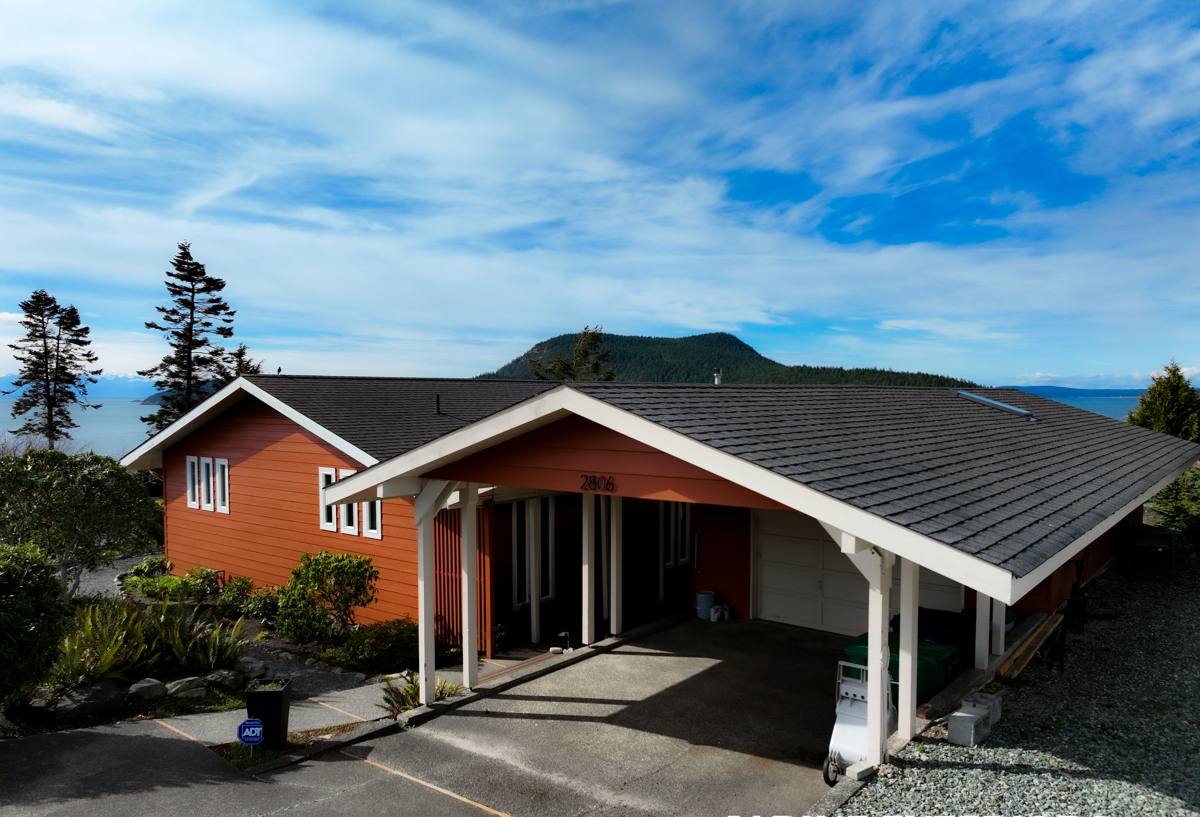
What the Cherry Point Climate Does to a Home
Three things define exterior wear out here: salt air, driving rain, and moss season that runs longer than most homeowners expect.
Salt Air and Corrosion
Being this close to the water means airborne salt is a constant, low-grade attack on anything metal or absorbent on the outside of your home. Fasteners corrode faster. Flashing pits and fails earlier than its rated life. Paint and finishes that would hold up fine twenty miles inland start chalking, fading, and lifting sooner near the shoreline. It's not dramatic — it's slow, and it's the kind of damage that's easy to ignore until it isn't.
Driving Rain
Cherry Point gets weather off the water that doesn't fall straight down — it comes in sideways, driven by wind, and finds every gap, seam, and lap that wasn't detailed correctly. Wind-driven rain is what exposes a bad flashing job or a poorly lapped siding installation. A roof or wall assembly that would pass in a calm, protected inland yard can leak here within a season or two if the water-management details weren't done right.
A Long Moss Season
Moss and algae growth on roofs and north-facing siding runs longer here than in drier parts of the state — the combination of marine humidity, shade from tree lines, and mild winters means moss doesn't fully die back the way it does elsewhere. Left unchecked, it holds moisture against roofing and siding surfaces for months at a time, which accelerates rot, granule loss on roofing, and finish failure on siding.
Siding: Why Material Choice Matters More Out Here
Siding is the first line of defense against everything above, and it's also where we're the most opinionated. We install James Hardie fiber cement siding exclusively. We do not install vinyl, LP SmartSide, Cemplank, Allura, primed spruce, or cedar — not because those products don't have a place somewhere, but because we've made a professional call about what actually performs in a salt-air, high-moisture coastal environment like Cherry Point, and we'd rather stand behind one system we trust completely than offer a menu of products with very different track records.
What Coastal Exposure Does to Common Alternatives
- Vinyl siding can warp, buckle, or become brittle with sun and temperature swings, and its seams and J-channels give wind-driven rain more places to find a way behind the cladding.
- Wood-based composite siding (LP SmartSide) is an engineered wood product — it performs well when installed and maintained exactly to spec, but any breach in the factory coating exposes wood fiber to moisture, and a long moss/algae season with sustained dampness is not a forgiving environment for that failure mode.
- Cedar and primed spruce are natural wood — beautiful, but they need real maintenance (recoating, caulking, moisture checks) to hold up near salt air, and skipping a cycle or two out in a rural area without regular upkeep is exactly how wood siding starts to fail.
- Other fiber cement brands (Cemplank, Allura) are technically similar to Hardie, but we've standardized on Hardie specifically for its ColorPlus factory finish, its climate-engineered HZ5 product line built for the Pacific Northwest, and the strength of its transferable warranty.
Fiber cement is non-combustible, doesn't absorb moisture the way wood-based products do, and holds its factory finish far longer under salt exposure and UV. Installed correctly — proper flashing, correct fastener spacing, correct clearance off grade and off roof lines — it's the product we're most comfortable putting our name behind on a Cherry Point property.
Roofing for a Marine Environment
Roofing out here has to manage two separate problems: keeping wind-driven rain out at every penetration and transition, and resisting moss growth long enough that you're not re-treating the roof every season. We pay close attention to underlayment quality, ice-and-water protection at valleys and eaves, and flashing details at every chimney, vent, and wall intersection — because on a roof exposed to salt air and sustained rain, the flashing details are almost always where failures start, not the field of the roof itself.
Moss Management Isn't Optional Here
We talk to Cherry Point homeowners about moss prevention as part of a normal roofing conversation, not as an upsell. Proper ventilation, zinc or copper strips where appropriate, and periodic gentle cleaning all extend the life of a roof in a climate where moss has a much longer growing window than it does further inland.
Windows: Sealing Out Wind-Driven Water
Window failures near the coast are rarely about the glass — they're about the seal between the window unit and the wall. Wind-driven rain will find a poorly flashed window opening and work its way in, and once water gets behind a window frame it can sit there causing rot and mold damage long before it shows up as a visible stain inside. When we replace windows in Cherry Point, we treat flashing and sealing as the actual scope of the job, with the window unit itself being only part of the equation.
What to Look for in a Coastal Window Replacement
- Correct flashing tape and drainage plane integration, not just caulk around the frame
- Sill pans that direct any intruding water back out rather than into the wall cavity
- Weatherstripping and glazing rated for the wind exposure of an open, waterfront lot
- Frame materials that won't corrode or degrade quickly under salt air exposure
Decks: Built to Survive Salt, Sun, and Standing Water
A deck near Cherry Point takes damage from every direction — salt air corroding fasteners and hardware, UV breaking down finishes faster than inland lots, and rain that doesn't dry off quickly in shaded or tree-lined yards. We build and repair decks with corrosion-resistant fasteners and hardware, proper drainage and airflow underneath the deck surface, and ledger and flashing details that keep water from tracking back into the house at the connection point — which is one of the most common and most expensive failure points on any deck.
Cost Factors for Exterior Projects in Cherry Point
| Project | Key Cost Drivers | Coastal Considerations |
|---|---|---|
| Siding replacement | Home size, number of stories, trim complexity, tear-off vs. overlay | Fiber cement material cost plus correct flashing at every penetration |
| Roof replacement | Roof pitch, square footage, layers to remove, underlayment spec | Upgraded flashing and moss-resistant details add modest upfront cost, save on maintenance |
| Window replacement | Number of openings, frame material, retrofit vs. full-frame | Sill pan and flashing labor is non-negotiable near the water |
| Deck build/repair | Square footage, height, railing style, decking material | Corrosion-resistant hardware and ledger flashing are essential, not optional |
Why a Local Crew Matters in a Rural Coastal Area
Cherry Point isn't a dense subdivision — it's a mix of rural, waterfront, and working land, and that means access, permitting, and site conditions vary a lot from property to property. A crew that's worked this stretch of Whatcom County coastline knows to check for things a generic out-of-area contractor might miss: how exposed a given lot is to prevailing wind and salt spray, whether tree cover is creating a moss problem on the north side of a roof, and what kind of water-management detailing a particular site actually needs versus what's just standard elsewhere. That local knowledge doesn't show up on an estimate line item, but it shows up in how the work performs five and ten years down the road.
What to Check Before Hiring an Exterior Contractor Here
- Do they carry proper Washington State contractor licensing and insurance?
- Can they explain how they'll handle flashing and water management specific to a coastal, wind-exposed site?
- Do they have experience with fiber cement installation specifically, not just siding in general?
- Will they put warranty terms — both manufacturer and labor — in writing before work starts?
- Are they familiar with moss and algae conditions specific to this part of Whatcom County?
Get a Free, No-Pressure Estimate
If you're planning siding, roofing, window, or deck work on a Cherry Point property, we're happy to come take a look, walk the exterior with you, and give you a straightforward assessment of what your home actually needs given its exposure and condition. There's no pressure and no obligation — just a local, honest read on your project. Fill out the form below to get started.