 Semiahmoo Exterior
 Why Wiser Lake Windows Take More Punishment Than the Spec Sheet Assumes
Most windows sold in this country are rated and marketed for a "typical" American climate — moderate humidity, a few freeze-thaw cycles, occasional storms. That's not what a window on a Wiser Lake home deals with. This part of Whatcom County sits under a long, wet marine weather pattern that moves inland off the Salish Sea near Semiahmoo, and it puts a different kind of stress on a window than a dry-climate spec sheet accounts for.
The combination that matters here is simple to describe and harder to design around: months of driving rain pushed sideways by wind, salt-tinged marine air that doesn't fully clear even well inland, and a moss and algae season that can run most of the year on shaded or north-facing walls. None of these are exotic problems. But stacked together, year after year, they're exactly what shortens the working life of a window's seals, hardware, and finish faster than the manufacturer's warranty language usually admits.
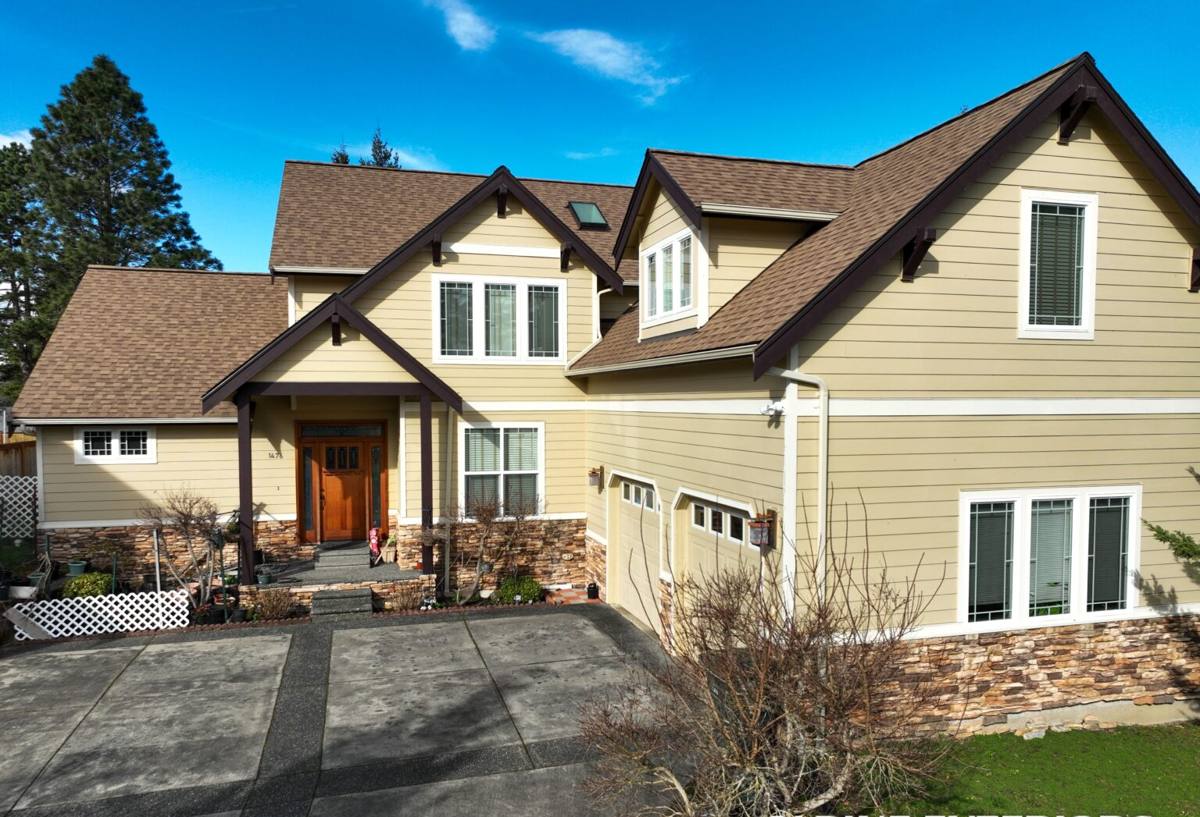
What "Energy-Efficient" Actually Means in This Climate
Energy efficiency in a window comes down to a handful of measurable properties, and it's worth understanding them before comparing products or quotes.
U-Factor
U-factor measures how much heat moves through the window — lower is better. In a climate like ours, where the heating season is long but not brutally cold, a mid-to-low U-factor window (often in the 0.27–0.30 range for good dual-pane units) is usually the practical sweet spot. Chasing the absolute lowest U-factor available often means paying for triple-pane performance built for colder climates than this one actually experiences.
Solar Heat Gain Coefficient (SHGC)
SHGC measures how much solar heat passes through the glass. Because Wiser Lake gets long stretches of overcast, low-angle light rather than intense direct sun for much of the year, a moderate SHGC glass package generally makes more sense here than the very low-SHGC coatings sold for hot, sun-heavy regions — those can leave a home feeling colder and darker than it needs to be through the winter.
Low-E Coatings and Gas Fills
A low-emissivity (Low-E) coating and an argon or krypton gas fill between panes both reduce heat transfer without adding bulk. These are standard on any decent replacement window today — the differences between manufacturers are usually in how well the coating and seal hold up over 15–20 years, not whether the coating exists at all.
The Three Things That Actually Wear Windows Out Here
Marine Air
Air moving inland off the Semiahmoo area carries a fine salt content that settles on exterior surfaces. On windows, this shows up first in hardware — hinges, cranks, and locking mechanisms that start to stick, pit, or corrode years before they would in a dry inland climate. Cheaper stamped-steel hardware is especially vulnerable; it's one of the first things worth checking on an aging window.
Wind-Driven Rain
Rain that falls straight down is relatively easy to shed. Rain that's pushed sideways by wind — which is common in storm systems moving through this part of Washington — finds its way into gaps that a straight-down rain never would. This is why flashing detail and sealant quality at installation matter as much as the window unit itself; a top-tier window installed with poor flashing will leak, and a modest window installed correctly usually won't.
Extended Moss Season
Shaded sills, north-facing walls, and anything under tree cover in this region can grow moss and algae for most of the year. Moss holds moisture against wood trim, sills, and cladding long after the rain has stopped, which accelerates rot at exactly the points where a window frame meets the house — the corners and the sill.
Signs Your Windows Have Started Losing Ground
Efficiency loss is usually gradual, so most homeowners notice the symptoms before they connect them to the window itself. Worth checking for:
- A noticeable draft or cold spot near the frame, even with the window fully closed and locked
- Fogging or a permanent haze between panes on a double-pane window — a sign the seal has failed and the gas fill is gone
- Hardware that's stiff, gritty, or corroded when you operate the lock or crank
- Visible moss, algae staining, or dark streaking on the sill or lower frame
- Soft or discolored wood trim around the window, especially at the bottom corners
- Daylight visible around the frame when the door or window is closed against a bright exterior
- A heating bill that's crept up without a clear reason, especially in rooms with older windows
- Condensation forming on the inside of the glass regularly during cold snaps
Any one of these on its own isn't necessarily an emergency. Several of them on the same window usually means the unit is past the point where repair makes more sense than replacement.
Choosing a Frame and Glass Package That Actually Holds Up Here
Frame material has a bigger effect on long-term performance in this climate than most homeowners expect, because it determines how the window handles years of damp exposure rather than just how it performs on day one.
| Frame Material | Moisture Tolerance | Maintenance | Best Fit |
|---|---|---|---|
| Vinyl | Good — won't rot, resists corrosion | Low; occasional cleaning | Most homes; strong value for the climate |
| Fiberglass | Very good — dimensionally stable, resists warping | Low | Larger openings or homes wanting a longer-term investment |
| Aluminum-clad wood | Good on the exterior face; interior wood still needs protection | Moderate — exterior clad, interior wood finish needs upkeep | Homes prioritizing a wood interior look |
| Bare wood | Poor without diligent upkeep in this rainfall pattern | High — regular repainting and sealing | Historic or period-accurate restorations only, with a clear maintenance plan |
We generally steer homeowners away from bare wood exteriors in this specific setting — not because wood windows are bad products, but because the maintenance burden of keeping exposed wood sealed against near-constant damp and moss exposure is a real, ongoing cost that most people underestimate going in. If the interior wood look matters to you, an aluminum- or fiberglass-clad exterior gets you that appearance without exposing bare wood to the weather.
What a Correct Installation Actually Involves
Most window "failures" in this climate aren't product failures — they're installation failures. The window itself can be excellent and still leak or underperform if it wasn't set up correctly for wind-driven rain.
Flashing and Moisture Management
A correct install starts below the window, not at it: a sloped sill pan that directs any water that does get past the window back outside, integrated with the home's weather-resistive barrier so water can't track down behind the siding. This step is invisible once the job is done, which is exactly why it's the step that gets skipped on rushed installs.
Sealing and Insulation
Gaps around the frame should be filled with a proper backer rod and low-expansion sealant, not just a bead of caulk over a canned-foam fill. Foam alone shrinks and cracks over time; done right, the sealant and insulation layer stays flexible through years of temperature and moisture swings without opening a gap.
Fastening and Squaring
A window that's out of square — even slightly — puts uneven stress on the sash and hardware, which is often where premature hardware wear and seal failure actually start. Shimming and fastening correctly at installation prevents this before it becomes a problem years later.
Our Process for Wiser Lake Projects
- On-site assessment. We look at each window's current condition, the exposure it gets (sun, wind, rain direction), and any existing trim or sill damage before recommending anything.
- Product and glass selection. We match frame material and glass package to that window's exposure — a north-facing window with heavy moss history gets a different recommendation than a sheltered south-facing one.
- Careful tear-out. Old frames come out cleanly, and we check the framing underneath for hidden rot or moisture damage before anything new goes in.
- Installation with proper flashing and sealing. This is the step that actually determines whether the window performs for the next 20 years, and we don't shortcut it.
- Final walkthrough. We test operation, check the seal, and walk the job with you before we consider it done.
What Affects the Cost
Window replacement pricing varies by project, but the factors that move the number are consistent:
| Factor | Why It Matters |
|---|---|
| Number of windows | Per-window cost typically drops on larger, whole-home jobs |
| Frame material | Vinyl is generally the most budget-friendly; fiberglass and clad-wood cost more upfront |
| Size and access | Second-story or hard-to-reach windows take more labor and equipment |
| Existing damage | Rot or moisture damage found at tear-out adds repair scope before the new window goes in |
| Glass package | Upgraded Low-E coatings or gas fills add modest cost for meaningful long-term efficiency |
As a broad range, homeowners in this area typically see installed costs somewhere in the low-to-mid four figures per window depending on size and material, with whole-home projects priced as a package rather than window-by-window. Any honest quote should walk you through what's driving your specific number rather than handing you a flat rate before ever seeing the house.
Why Hiring a Crew That Already Works This Area Matters
A window installer who mostly works drier inland climates will still build you a technically sound window — but they may not think twice about flashing detail for wind-driven rain, or flag a moss-damaged sill before it's covered up by a new frame. Working regularly in Whatcom County, including communities like Wiser Lake near Semiahmoo, means we've seen how this specific combination of marine air, sideways rain, and moss exposure actually plays out on real houses over real years, not just in a spec sheet.
That local pattern recognition is most of what separates a window install that holds up for two decades from one that starts showing problems in five years. It's not about a fancier product — it's about knowing what this climate does to a window and building the install to handle it from day one.
If your windows are showing any of the signs above, or you're just planning ahead, we're happy to take a look and give you a straightforward, no-pressure estimate. Use the form below to get started.