 Semiahmoo Exterior
 Storm Damage Roof Repair for Wiser Lake Homes
Wiser Lake sits inland from the Semiahmoo shoreline, but it doesn't escape what Whatcom County winters throw at a roof. Wind funneling off the water, long stretches of driving rain, and a moss season that can run eight months out of the year all add up to roofs that take more abuse here than in drier parts of the state. When a storm rolls through and knocks something loose, lifts a shingle, or drives water somewhere it shouldn't be, the repair needs to be done by someone who understands how these systems fail in this specific climate — not a generic patch job.
This page covers what storm damage actually looks like on a Wiser Lake roof, what a correct repair involves, and how we handle the work from first look to final check.
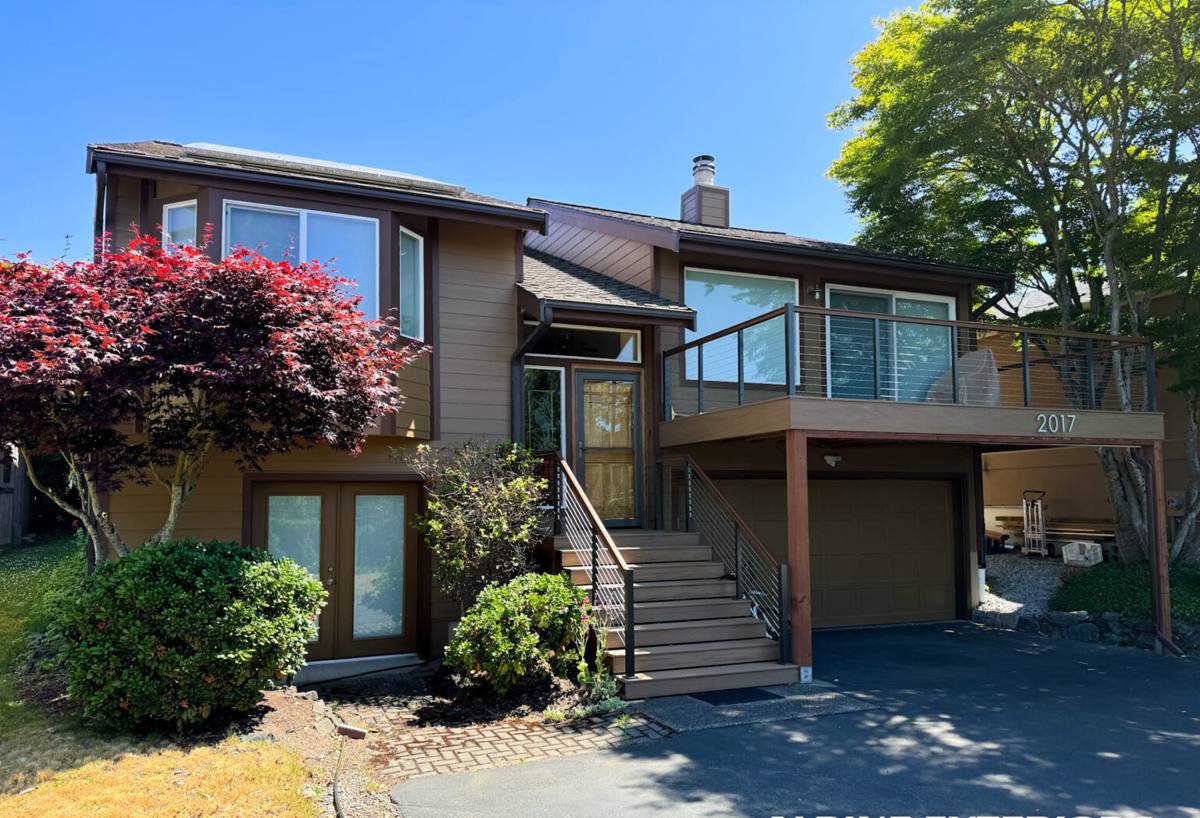
Why Wiser Lake Roofs Take a Different Kind of Beating
Every roof in Whatcom County deals with rain. What makes the Semiahmoo area and communities like Wiser Lake harder on roofing is the combination of factors working together rather than any one extreme event.
Wind-Driven Rain
Storms coming off the water don't just drop rain straight down — they push it sideways, under flashing, up beneath shingle tabs, and into any gap that wouldn't normally see water in a calmer climate. A roof that would hold up fine under vertical rain can leak under wind-driven rain if the underlayment, flashing laps, or fastening pattern aren't installed with that in mind.
Salt Air
Proximity to Semiahmoo Bay means salt-laden air travels further inland than most homeowners assume. Salt accelerates corrosion on exposed metal — flashing, fasteners, gutter hardware, vent caps — well before the roofing material itself is due for replacement. A roof can look fine from the ground while its metal components are quietly rusting through underneath.
Extended Moss Season
Shade, moisture, and mild temperatures make this region ideal for moss growth for most of the year. Moss doesn't just sit on the surface — it holds moisture against the roofing material, works into shingle edges, and lifts tabs enough for wind and rain to get underneath. A storm that would cause minor cosmetic damage on a clean roof can cause a real leak on a moss-covered one, because the moss has already compromised the seal.
What Storm Damage Actually Looks Like
Not all storm damage is obvious. Some of it announces itself with a stain on the ceiling; a lot of it doesn't show up until the next heavy rain, or the one after that. Homeowners in Wiser Lake should know what to look for after any significant wind or rain event.
- Shingles that are cracked, curled, torn, or missing entirely
- Granules collecting in gutters or at the base of downspouts
- Flashing around chimneys, vents, or skylights that's bent, lifted, or pulled away
- Soft spots or sagging when walking the attic (if safe to check)
- Water stains on ceilings or upper walls, especially near exterior corners
- Debris — branches, needles, moss clumps — built up in valleys where water is supposed to flow freely
- Gutters pulled loose from fascia or sagging under weight
- Daylight visible through the roof deck from inside the attic
Some of these are urgent. Others are early warnings. Either way, the sooner they're addressed, the smaller the repair stays.
What a Correct Storm Repair Involves
A storm repair isn't just replacing what's visibly broken. Wind and rain damage often extends beyond the obvious spot, and a repair that only addresses what's easy to see tends to fail again in the next storm.
Assessment First
Before any repair work starts, the roof gets a full inspection — not just the area where the damage was reported. Wind damage in particular often shows up in a pattern across a slope, not as a single isolated spot, and a leak's entry point is frequently several feet from where the stain shows up inside.
Underlayment and Deck Condition
If water has been getting in for any length of time, the underlayment and roof deck underneath the shingles need to be checked. Repairing the surface layer over a compromised deck just delays the same problem.
Flashing Integrity
Given how much of Wiser Lake's storm damage traces back to flashing — around chimneys, skylights, vent pipes, and roof-to-wall transitions — this gets specific attention. Flashing that's been loosened by wind but not fully separated can look fine and still be letting water through.
Matching Materials
Where shingles or other materials need replacing, we match existing material as closely as possible in type, weight, and where reasonable, color. A patch that doesn't match the surrounding roofing wears differently over time and stands out more than it needs to.
| Repair Type | Typical Cause | What's Involved |
|---|---|---|
| Localized shingle replacement | Wind lift, impact from debris | Remove damaged shingles, inspect underlayment, install matching replacements |
| Flashing repair or replacement | Wind-driven rain, corrosion, age | Remove old flashing, check deck for moisture, install new flashing with proper laps |
| Deck repair | Prolonged undetected leak | Cut out and replace compromised decking, verify surrounding areas are dry |
| Gutter and fascia repair | Wind, ice weight, debris load | Re-secure or replace hangers, correct pitch, clear blockages |
| Moss-related seal repair | Long-term moss growth lifting shingle edges | Remove moss, treat affected area, re-seal or replace lifted shingles |
Our Process, Start to Finish
- Contact and initial questions. We ask what happened, when, and what you're seeing — stains, missing material, sounds during the storm — to get a sense of scope before we're on site.
- On-site inspection. A full walk of the roof, not just the reported problem area, including flashing, valleys, and attic access where possible.
- Written findings. You get a clear explanation of what's damaged, what's causing it, and what we recommend — in plain language, not a sales pitch.
- Repair plan and estimate. A straightforward scope of work and cost range before anything is scheduled.
- Repair work. Completed by a crew that does this type of work regularly in this climate, with attention to matching materials and correcting the underlying cause, not just the symptom.
- Final walkthrough. We review the completed repair with you before calling the job done.
Materials and Why We're Selective
For storm repair work in a climate like this, we favor materials and methods that hold up specifically to wind-driven rain and salt exposure rather than whatever is cheapest to source. That means corrosion-resistant flashing and fasteners in areas exposed to salt air, and underlayment products rated for wind-driven moisture rather than standard felt alone. We're straightforward with homeowners about trade-offs — a higher-grade flashing or fastener costs more up front but avoids a repeat repair a few years down the line when standard hardware starts to corrode. We'd rather explain that trade-off honestly than sell a cheaper fix that doesn't hold up in this environment.
Insurance and Storm Claims
Many storm repairs in this area go through homeowners insurance. We can document damage with photos and a written assessment that supports a claim, and we're happy to work alongside your adjuster during the process. We're not a public adjuster and don't manage the claim itself, but we make sure the documentation reflects the actual condition of the roof so the claim isn't undersold or oversold.
Why a Local Crew Matters for Wiser Lake
A roofing crew that works Whatcom County regularly already knows how wind patterns off Semiahmoo Bay behave, which flashing details tend to fail first in this salt and moisture combination, and how aggressive the moss season really gets here compared to drier regions. That familiarity shows up in the repair — in where we look first during an inspection, in which materials we reach for, and in catching secondary damage that an out-of-area crew might miss because they haven't seen it fail this way before. It also means we're a known, reachable local business if a repair needs a follow-up look, not a name that shows up after a storm and is gone by the next one.
What Homeowners Can Check After a Storm
Before calling anyone, there are a few safe checks most homeowners can do from the ground or from inside the house:
- Walk the exterior and look for shingles, granules, or flashing pieces on the ground
- Check gutters and downspouts for visible damage or separation from the house
- Look at ceilings and upper walls for new staining, especially after heavy rain
- Check the attic (if accessible and safe) for daylight, dampness, or musty odor
- Note the date and general conditions of the storm for your own records
- Avoid climbing onto the roof itself — that's what an inspection is for
If any of these turn something up, it's worth getting a professional look sooner rather than later. Small storm damage left alone through another Whatcom County wet season rarely stays small.
Get a Free, No-Pressure Estimate
If your Wiser Lake home has taken storm damage — or you're not sure whether what you're seeing is storm-related — we're glad to take a look and give you an honest read on what's going on. The estimate is free, there's no pressure to move forward, and you'll walk away with a clear picture of your roof's condition either way. Reach out using the form below to get started.