 Semiahmoo Exterior
 Building for Drayton Harbor's Waterfront Climate
Drayton Harbor sits right where the Semiahmoo peninsula meets Boundary Bay and the Strait of Georgia, and that location shapes everything about how a home's exterior ages here. Homes close to the water take a steady diet of salt-laden air, wind-driven rain that hits siding sideways instead of straight down, and a moss season that can run eight months or longer under the tree cover and cloud ceiling typical of this part of Whatcom County. None of that is unusual for coastal Washington, but it does mean exterior materials and installation details that work fine forty miles inland can fail early right here on the harbor.
We work throughout Semiahmoo and the surrounding Whatcom County shoreline, and Drayton Harbor is a neighborhood we know well: the wind patterns off the bay, the moisture load under mature fir and cedar canopy, and the way south and west-facing walls take the worst of the weather while north-facing walls stay damp and shaded most of the year. That local knowledge changes how we scope a job, not just what we quote for it.
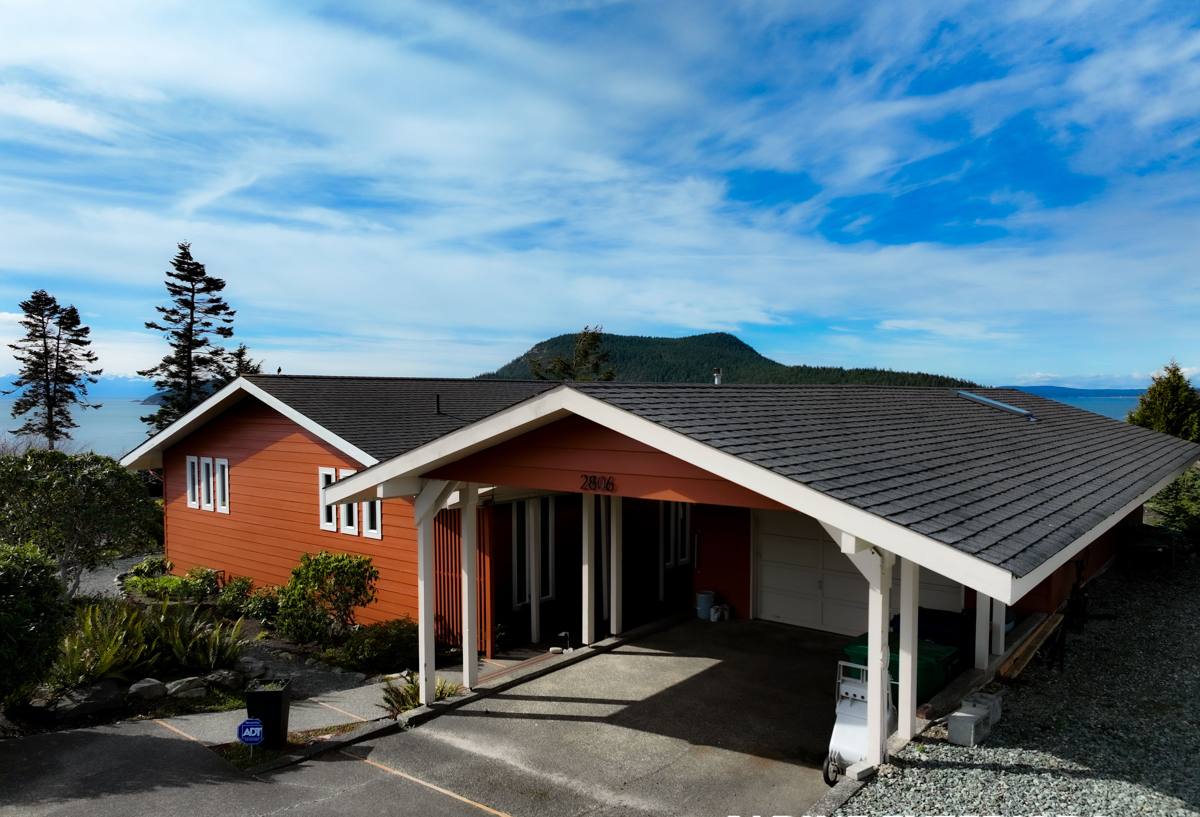
What Drayton Harbor Homes Are Up Against
Salt Air and Corrosion
Proximity to saltwater accelerates corrosion on fasteners, flashing, and any exposed metal trim. Cheap or improperly coated fasteners will bleed rust streaks down siding within a few years near the harbor. This is one of the reasons fastener selection and flashing details matter more here than they would on a home twenty miles inland — it's not a cosmetic choice, it's a longevity choice.
Wind-Driven Rain
Storms coming off the Strait of Georgia and Boundary Bay don't just fall on a house, they get pushed into it. Wind-driven rain finds every gap in flashing, every poorly lapped seam, and every joint where caulk was used instead of proper overlap. Exterior systems on the water side of the peninsula need to be detailed for lateral water intrusion, not just vertical runoff.
Moss, Mildew, and Shade
Between the marine humidity and heavy tree cover common in this area, roofs and north-facing siding stay damp far longer after a storm than they would in a drier or sunnier location. Moss doesn't just look bad — on roofing it lifts shingles and traps moisture against the deck, and on siding it holds water against the substrate long enough to cause real damage over time, especially on materials that swell or absorb moisture.
Temperature Swings and Wood Movement
Coastal Whatcom County doesn't see extreme heat, but the daily humidity swing between marine fog and afternoon sun still stresses wood-based products, causing expansion and contraction that eventually shows up as cracked caulk lines, popped nails, and warping at panel edges.
Siding: Why We Only Install James Hardie
We install James Hardie fiber cement siding exclusively. We don't install vinyl, LP SmartSide, Cemplank, Allura, or primed wood species like spruce or cedar clapboard — not because those products can't be installed correctly somewhere, but because we've made a professional call about what holds up on this coastline and we'd rather stand behind one system we know than offer a menu of products with different failure modes.
Fiber cement is non-combustible and dimensionally stable, meaning it doesn't swell, warp, or rot the way wood-based sidings can when they take on moisture year after year. James Hardie's ColorPlus factory finish is baked on under controlled conditions rather than field-applied, which matters in an area where a wide-open painting window is rare and a rushed field finish is a common source of early coating failure. Hardie also engineers its HZ5 product line specifically for climates like ours — freeze-thaw cycling, sustained moisture, and coastal exposure — rather than using a single generic formulation everywhere in the country.
The transferable warranty backing the product is also a real factor for waterfront homes, where resale buyers are often specifically asking what the siding is and how it's held up. A known, well-documented system with a strong track record answers that question better than a product the next buyer has to research from scratch.
Siding Comparison for Coastal Whatcom County
| Factor | James Hardie Fiber Cement | Vinyl / Wood-Based Alternatives |
|---|---|---|
| Moisture response | Dimensionally stable, engineered for wet climates | Wood-based products can swell, delaminate, or rot over time |
| Salt air exposure | Non-combustible, holds finish well near saltwater | Vinyl can chalk and become brittle; wood needs frequent recoating |
| Finish durability | Factory-baked ColorPlus finish | Field-applied paint or factory color that fades unevenly |
| Fire resistance | Non-combustible core material | Vinyl can deform under heat; wood is combustible |
| Long-term maintenance | Periodic caulk/inspection, no repainting cycle with ColorPlus | Repainting or recoating on a recurring schedule |
Roofing for a Wet, Shaded Peninsula
Roofs on the Semiahmoo peninsula deal with sustained moisture more than they deal with heat or hail. That changes the priority list: proper underlayment, ventilation that actually moves air through the attic, and valley and flashing details that shed water fast are more important here than they'd be in a drier climate. A roof that traps moisture under moss or debris will show granule loss, soft decking, and leaks years before its rated lifespan, regardless of what shingle brand is on it.
We look closely at ventilation on every reroof in this area, because a roof that can't breathe holds moisture against the underside of the deck even when the shingles above are doing their job. We also pay attention to how much tree cover shades a given roof section, since that directly affects how long moss and algae have to work between dry spells.
Windows: Sealing Out Wind-Driven Rain
Window failures on the water side of the peninsula are almost always about flashing and installation, not the glass unit itself. A window can be well-built and still leak if the flashing isn't lapped correctly to shed water downward and outward, especially on walls that take rain at an angle off the bay. We install with attention to head flashing, sill pans, and integration with the siding water-resistive barrier so the whole wall assembly works together instead of relying on caulk alone to keep water out.
Energy performance matters too, but on a coastal home the water-management details of the installation are usually the difference between a window that lasts and one that causes hidden rot behind the wall.
Deck Considerations Near the Harbor
Decks facing the water get the same salt-air and moisture exposure as siding, plus direct weather since they're horizontal. Fastener corrosion, ledger board flashing, and framing that can actually dry out between rains are the details that separate a deck that lasts from one that needs early repair. We build and repair decks with those specifics in mind rather than treating every deck the same regardless of exposure.
Why a Local Crew Matters Here
A crew that works this stretch of Whatcom County regularly knows which walls on a Drayton Harbor home take the worst weather, how long moss has to work on a shaded north slope, and which flashing details actually hold up against wind-driven rain off the strait versus what looks fine on paper. That's different from general exterior knowledge — it's specific to this peninsula's exposure and microclimate, and it shows up in fewer callbacks and materials that perform the way they're supposed to for decades, not just years.
What to Check Before Hiring an Exterior Contractor Near the Water
- Do they have experience specifically with coastal or waterfront exposure, not just general siding/roofing work?
- Can they explain their flashing and water-management approach in plain language, not just brand names?
- Are they licensed and insured to work in Washington, with references you can actually call?
- Do they stand behind one siding system they know well, or sell whatever the customer asks for?
- Will they walk your specific exposure (which walls face the water, how much shade you have) before quoting?
What to Expect From an Estimate
When we come out to a Drayton Harbor property, we're looking at more than square footage. We check which walls face the water and take the worst wind-driven rain, how much moss or algae growth is already present, whether existing flashing and fastener corrosion point to a bigger moisture problem, and how tree cover and shade affect drying time on different sides of the house. That assessment shapes the actual scope of work, not just a generic material swap.
If you're weighing a siding replacement, a reroof, new windows, or deck work on a home in or around Drayton Harbor, we're happy to come take a look and give you a straight, no-pressure estimate — fill out the form below and we'll set up a time to walk the property with you.