 Semiahmoo Exterior
 Exterior Work Built for California Creek's Conditions
California Creek sits in that low, green corner of Whatcom County where the land drains toward Semiahmoo Bay and Drayton Harbor. It's a beautiful place to own a home — mature trees, quiet roads, water close by — but that same setting is hard on the outside of a house. Salt-tinged marine air, wind-driven rain rolling in off the Strait of Georgia, and long stretches of gray, damp weather all work on siding, roofing, windows, and decks year after year. We've worked on homes throughout this part of Whatcom County long enough to know which problems show up here again and again, and we build our exterior work around preventing them, not just patching them after the fact.
Salt Air and Slow Corrosion
Being close to Semiahmoo Bay means homes in California Creek get a steady, low-level dose of salt-laden air, even a few miles inland. Salt air accelerates corrosion on fasteners, flashing, and any metal component on the exterior, and it can also speed up the breakdown of paint films and caulking. It's rarely dramatic — nobody notices salt air damage happening in real time — but over years it shows up as rust streaking, failed caulk joints, and coatings that chalk and fade faster than they would further inland.
Driving Rain and Wind
Storms coming off the Strait of Georgia and the Salish Sea don't just drop rain straight down — they push it sideways into walls, under laps, and around window and door openings. That kind of wind-driven rain finds every weak point in a building envelope: a poorly lapped siding joint, a window without proper flashing, a roof valley that wasn't detailed correctly. On a lot of homes those weak points don't leak right away; they let moisture in slowly, and the damage is already underway by the time it's visible from inside.
A Long Moss and Algae Season
Between the tree cover common in this area and the number of damp, low-light days Whatcom County gets each year, moss and algae have a long growing season on roofs, siding, and decking. Moss holds moisture against a surface and, on roofing, works its way under shingles and shakes. On siding and decking it stains and, if left unaddressed, contributes to premature wear. A lot of what looks like "just cosmetic" green or black growth is actually a sign that a surface is staying wet longer than it should.
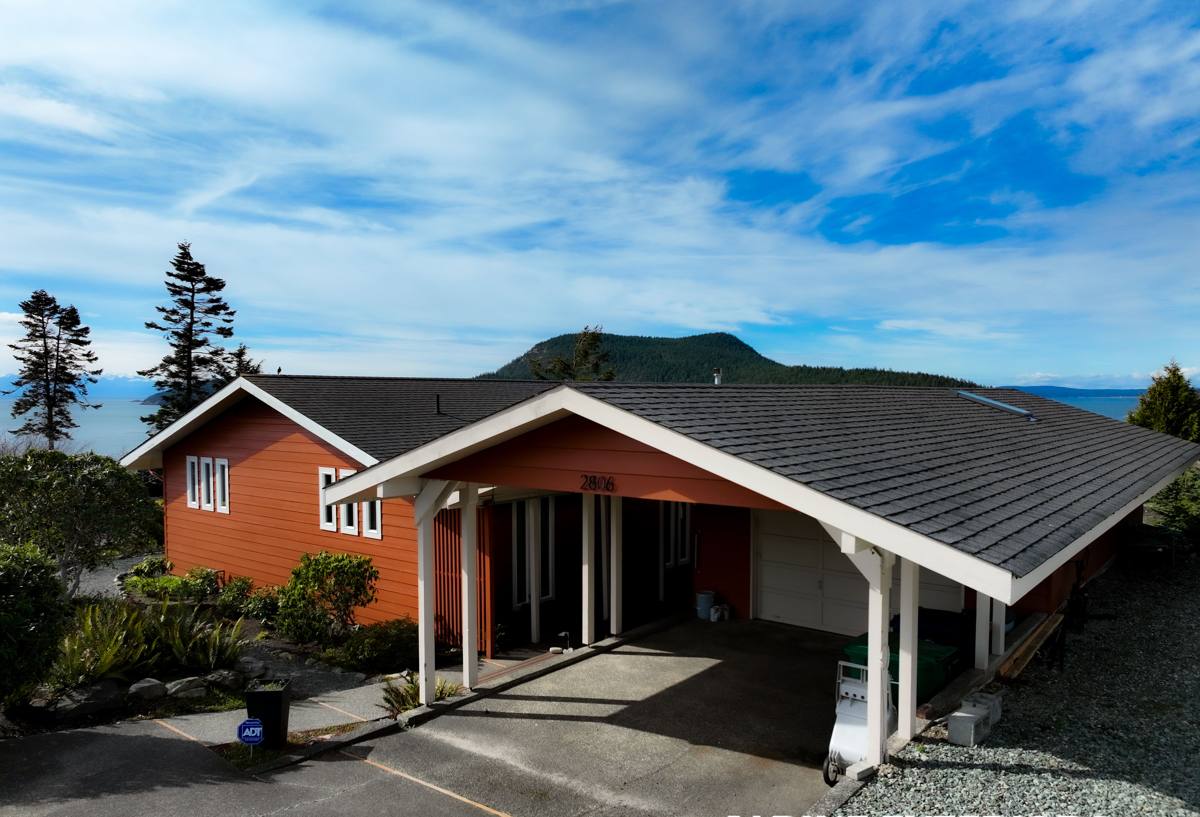
Siding That's Built for This Environment
We install James Hardie fiber cement siding exclusively — we don't offer vinyl, LP SmartSide, Cemplank, Allura, or primed wood species like spruce or cedar. That's a deliberate standard, not a lack of options, and it comes from watching how different siding materials actually hold up in coastal Whatcom County conditions over time.
Vinyl siding can warp and become brittle with temperature swings and UV exposure, and its seams and utility trim give wind-driven rain more opportunities to work behind the cladding. Wood and wood-based products like cedar and primed spruce look great when new, but they're organic materials in a climate that stays damp for months at a time — they need consistent refinishing and are more vulnerable to moisture absorption, swelling, and rot if maintenance slips even one season. Engineered wood products such as LP SmartSide close some of those gaps with treated strand substrate, but they're still wood-based and still carry edge-sealing and maintenance requirements that matter more here than in a drier climate.
James Hardie fiber cement is cement, sand, and cellulose fiber — it doesn't absorb water the way wood does, it won't rot, and it's non-combustible. Hardie's ColorPlus factory-applied finish is baked on under controlled conditions, which gives it better fade and moisture resistance than field-applied paint, and it's backed by a real transferable warranty. Hardie's HZ5 product line in particular is engineered for cold, wet climates like ours. It's not the cheapest siding material on the market, but in an environment that punishes anything that absorbs and holds moisture, it's the material we're willing to put our name behind.
Roofing for California Creek Homes
Roofs here have to shed a lot of water fast, resist moss colonization, and hold up under repeated wind events. We pay particular attention to underlayment quality, valley and flashing details, and ventilation — a roof that traps moisture in the attic is going to grow moss and deteriorate faster from the inside out, regardless of the shingle quality on top. Where tree cover is heavy, we'll also talk through moss-resistant options and realistic maintenance expectations rather than pretending any roof here will stay maintenance-free.
Windows That Handle Wind-Driven Rain
Old or poorly installed windows are one of the most common sources of hidden water intrusion in this area. It's rarely the glass — it's the flashing, the sill pan, and how the window integrates with the surrounding siding and weather-resistive barrier. We install and flash windows to shed wind-driven rain rather than just relying on caulk to stop it, and we pay attention to how the window opening ties into the broader wall assembly, since that's where most real-world leaks actually start.
Decks Built for a Wet, Shaded Climate
Decks in and around California Creek deal with the same moisture and moss pressures as the rest of the exterior, plus standing water and debris from nearby tree canopy. We build decking systems with drainage, ventilation, and material choice in mind so water doesn't sit against structural framing or under boards where it can't dry out. Whether it's a full rebuild or replacing worn decking on solid framing, the goal is a deck that dries out between storms instead of staying damp for weeks at a time.
Why a Local Crew Matters Here
A lot of exterior problems in this area aren't caused by bad materials — they're caused by details that don't account for the local climate: siding lapped without enough clearance, flashing sequenced wrong, ventilation that doesn't move enough air through a damp attic. A crew that works Whatcom County regularly recognizes these patterns because they see the same failure points on other homes nearby, not because of any special local secret. That familiarity shows up in the details — flashing choices, fastener spacing, drainage planning — that a generic installation approach can miss.
What to Expect From Us
Every project starts with a walk-around of the home, an honest look at what's driving the current wear, and a straightforward explanation of the options — including telling you when a repair is enough and a full replacement isn't necessary yet.
- On-site assessment of siding, roofline, window flashing, and deck condition
- Clear explanation of what's failing and why, in plain language
- Written estimate with material and labor broken out, no pressure to decide on the spot
- James Hardie fiber cement siding only — no vinyl, LP SmartSide, or unsealed wood species offered
- Attention to flashing, drainage, and ventilation details, not just the visible surface
- Realistic maintenance guidance for moss, moisture, and salt-air conditions specific to this area
Exterior Materials and Coastal Durability
| Material | Moisture Behavior | Salt Air / Coastal Fit | Maintenance Load |
|---|---|---|---|
| James Hardie fiber cement | Does not absorb water or rot; dimensionally stable when wet | Factory ColorPlus finish resists fading and moisture; HZ5 line built for cold, wet climates | Low — occasional cleaning, no refinishing cycle |
| Vinyl siding | Sheds water on the surface but seams and panels can allow moisture behind cladding | Can become brittle over time with UV and temperature cycling | Low, but limited repair options if damaged |
| Cedar / primed wood | Absorbs moisture; prone to swelling, cupping, and rot if finish fails | Requires consistent refinishing to hold up near salt air | High — regular painting or staining required |
| LP SmartSide (engineered wood) | Treated strand substrate resists moisture better than raw wood, but still wood-based | Cut edges and joints need careful sealing near coastal moisture | Moderate — edge sealing and periodic upkeep needed |
Cost Factors to Expect
Every home is different, but a few factors tend to drive cost on exterior projects in this area more than anything else: how much of the existing wall assembly, sheathing, or framing needs repair before new material goes on; how many windows, corners, and roof penetrations the siding has to be detailed around; the size and pitch of the roof; and how much of the existing structure — deck framing especially — is sound versus needing replacement. We walk through all of this during the estimate so there aren't surprises once work starts.
If your home in California Creek is starting to show the signs of salt air, moss, or wind-driven rain — fading or soft siding, moss buildup on the roof, drafty or leak-prone windows, a deck that stays damp — we're happy to take a look and give you a straightforward, no-pressure assessment and free estimate.