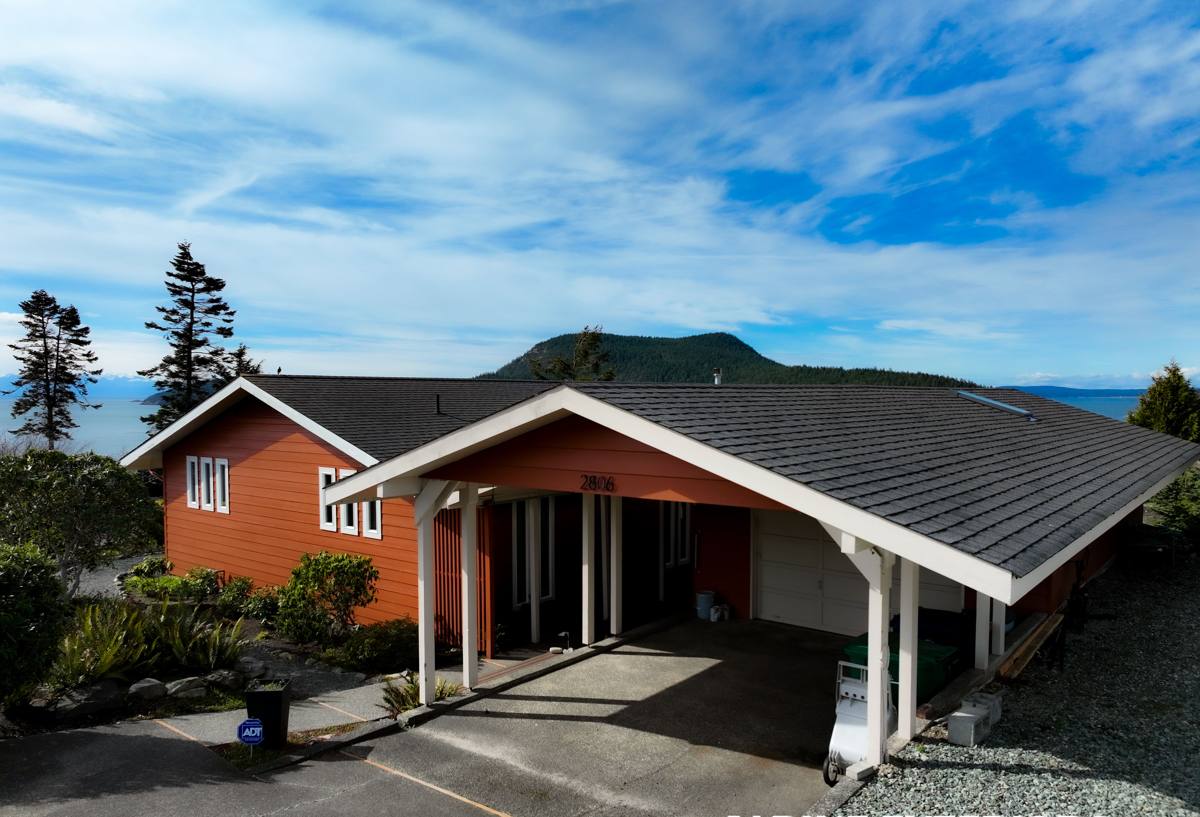
 Semiahmoo Exterior
 Building on a Peninsula: Why Point Roberts Homes Age Differently
Point Roberts sits on its own peninsula, surrounded on three sides by water and cut off from the rest of Whatcom County by the international border. That geography is part of what makes the community special, but it also means homes here take a steadier beating from the elements than houses just a few miles inland. Wind off the water carries salt spray onto siding and trim. Rain comes in sideways during winter storms instead of falling straight down. And the marine humidity that never really goes away for months at a time keeps roofs, siding, and decks damp long after a storm has passed.
None of this makes Point Roberts a bad place to own a home — it's why people love it. But it does mean the exterior of a house here needs to be built and maintained with the local conditions in mind, not treated like a generic Pacific Northwest build. We work throughout the Semiahmoo area and Whatcom County, and Point Roberts is one of the places where we see the clearest gap between homes that were built or repaired with the local climate in mind and homes that weren't.
What the Climate Actually Does to a House
Salt Air and Metal Fatigue
Salt-laden air corrodes exposed metal faster than plain rain does. Nail heads, flashing, gutter hardware, and any unprotected fasteners on the windward side of a house show rust and pitting years before their counterparts on an inland home. Once flashing starts to corrode, water finds its way behind siding and around window openings, and the damage often isn't visible until it's already inside the wall assembly.
Driving Rain and Wind-Driven Moisture
Wind off the water doesn't just bring rain — it pushes it. Driving rain gets forced sideways and upward under eaves, around window trim, and into any gap in siding or flashing that would stay dry in a calmer setting. This is why proper flashing details and correctly lapped siding matter more here than they would on a sheltered inland lot. A siding job that's "good enough" somewhere else can fail early on an exposed Point Roberts elevation.
The Long Moss Season
Point Roberts gets a genuinely long moss season. Shaded roof slopes, north-facing siding, and anywhere debris collects stay damp for extended stretches, and moss and algae take hold. Left alone, moss holds moisture against roofing material and siding surfaces, which shortens their working life and can lift shingles or shakes over time. Regular clearing and, where possible, exterior products that resist moss growth make a real difference over a 10- or 20-year span.
Siding: Why Fiber Cement Handles This Environment Better
We install James Hardie fiber cement siding exclusively, and Point Roberts is a good example of why. Fiber cement doesn't absorb moisture the way wood does, doesn't rot, and doesn't provide the same food source for moss and mildew that wood-based products can. It's also non-combustible, which matters anywhere with dry summer stretches and wildfire smoke drifting in from wider regional fire seasons.
We don't install vinyl siding, LP SmartSide, cedar, primed spruce, or composite panel products like Allura or Cemplank. Each of those has legitimate uses elsewhere, but on an exposed, salt-affected, high-moisture peninsula like this one, we've seen where they tend to fall short — vinyl can warp or crack under UV and temperature swings and offers little real protection against wind-driven water at the seams; wood-based and wood-adjacent products need consistent maintenance to keep moisture out, and a missed year or two of upkeep is where problems start. James Hardie's HZ5 product line is engineered specifically for wetter, harsher climates, and the factory-applied ColorPlus finish holds its color and resists the kind of chalking and fading that salt air accelerates on lesser finishes.
What Correct Installation Looks Like Here
- Properly lapped siding courses with correct fastener spacing to resist wind-driven rain intrusion
- Rust-resistant flashing and fasteners at every penetration and transition
- A drainage plane behind the siding so any moisture that does get past the surface has somewhere to go
- Caulking and sealant details built for long-term flexibility, not a one-time seal
- Trim details that shed water away from window and door openings rather than trapping it
Roofing for an Exposed, Moss-Prone Site
Roofs on Point Roberts do double duty: they need to shed heavy winter rain fast, and they need to resist the moss and algae growth that comes with a long damp season. We look at slope, shading, and airflow across a roof before recommending materials or a repair plan, because a fix that works on a sun-exposed south slope may not hold up on a shaded north slope thirty feet away on the same house.
Ventilation matters as much as the roofing material itself. A roof deck that can't breathe traps moisture underneath the shingles or panels, which shortens the roof's life from the inside out — something that's easy to miss during a quick visual inspection but shows up as premature failure years later.
Windows: Sealing Out Wind-Driven Water
Older or poorly flashed windows are one of the most common sources of water intrusion we find in exposed coastal homes. It's rarely the glass or the sash that fails first — it's the flashing and sealant around the opening. On a windward wall at Point Roberts, a gap that would be a minor nuisance elsewhere can become a real leak path during a winter storm.
When we replace windows, we pay close attention to flashing integration with the surrounding siding, not just the window unit itself. A high-quality window installed with poor flashing details will leak; a mid-grade window installed correctly usually won't.
Decks: Built for Wet, Salt-Exposed Air
Decks facing the water take on salt spray, near-constant dampness, and UV exposure in the same package. Fastener corrosion, ledger board rot, and slippery surface buildup from algae are the most common issues we see on Point Roberts decks. Composite decking materials and corrosion-resistant hardware hold up far better here than untreated or under-maintained wood, and proper ledger flashing at the house connection is critical — that's the single most common point of hidden rot on older decks in wet coastal settings.
Comparing Exterior Cladding Options for This Climate
| Material | Moisture Resistance | Maintenance Burden | Salt Air Durability |
|---|---|---|---|
| James Hardie Fiber Cement | High — does not rot or absorb water like wood | Low — factory finish holds up for years | Strong; HZ5 line engineered for wet climates |
| Vinyl Siding | Moderate — seams can allow water behind panels | Low, but limited lifespan in UV/temperature swings | Weaker seam performance under wind-driven rain |
| Cedar / Primed Spruce | Low without consistent upkeep | High — regular staining/sealing required | Vulnerable to moss, rot, and salt exposure |
| LP SmartSide / Composite Panels | Moderate — engineered wood core sensitive to moisture intrusion at cut edges | Moderate | Edge sealing is critical; a missed detail shortens lifespan |
Why a Local Crew Matters on Point Roberts
Point Roberts' geography creates real logistical realities for any contractor — border crossings, ferry and travel timing for materials, and scheduling around weather windows that close faster here than inland. A crew that regularly works the Semiahmoo and Whatcom County coastline understands those realities and plans around them instead of treating the peninsula as an afterthought. We also know which elevations on a typical Point Roberts lot take the brunt of the weather, which shapes how we sequence repairs and where we focus flashing and moisture-management details first.
A Practical Maintenance Checklist for Point Roberts Homeowners
- Inspect roof and siding for moss buildup at least twice a year, especially on shaded, north-facing surfaces
- Check flashing and caulking around windows and doors annually, before the winter storm season
- Clear gutters and downspouts regularly — clogged gutters push water back under roofing and siding
- Look for rust staining around fasteners and flashing as an early warning sign of metal corrosion
- Inspect deck ledger boards and fasteners yearly for signs of hidden moisture or corrosion
- Address small siding or trim gaps promptly — wind-driven rain finds small openings quickly
Get an Honest Look at Your Exterior
Whether you're dealing with early moss growth, suspect flashing problems, or you're planning ahead for a full siding, roofing, window, or deck project, we're glad to take a look and give you a straightforward assessment — no pressure, no upsell. Reach out for a free estimate and we'll walk your property with the Point Roberts climate in mind.