 Semiahmoo Exterior
 Building Decks That Hold Up in Wiser Lake
Wiser Lake sits in a part of Whatcom County where the weather doesn't do a deck any favors. Winters bring long stretches of driving rain, humidity stays high most of the year, and anything within reach of moist air and shade develops a moss and algae problem fast. Add in the salt-laden air that moves through this part of Washington from the nearby coastline, and you've got a combination that punishes decks built to a generic, one-size-fits-all spec. A deck that would last two decades in a dry inland climate can start showing rot, fastener corrosion, and surface failure in half that time here if it wasn't built with this specific climate in mind.
That's the difference between a deck that's just "installed" and one that's actually built for Wiser Lake. It starts with material choices, but it doesn't end there — framing, fastener selection, drainage, and even the orientation of the boards all matter when the deck is going to spend most of the year wet, shaded, or both.
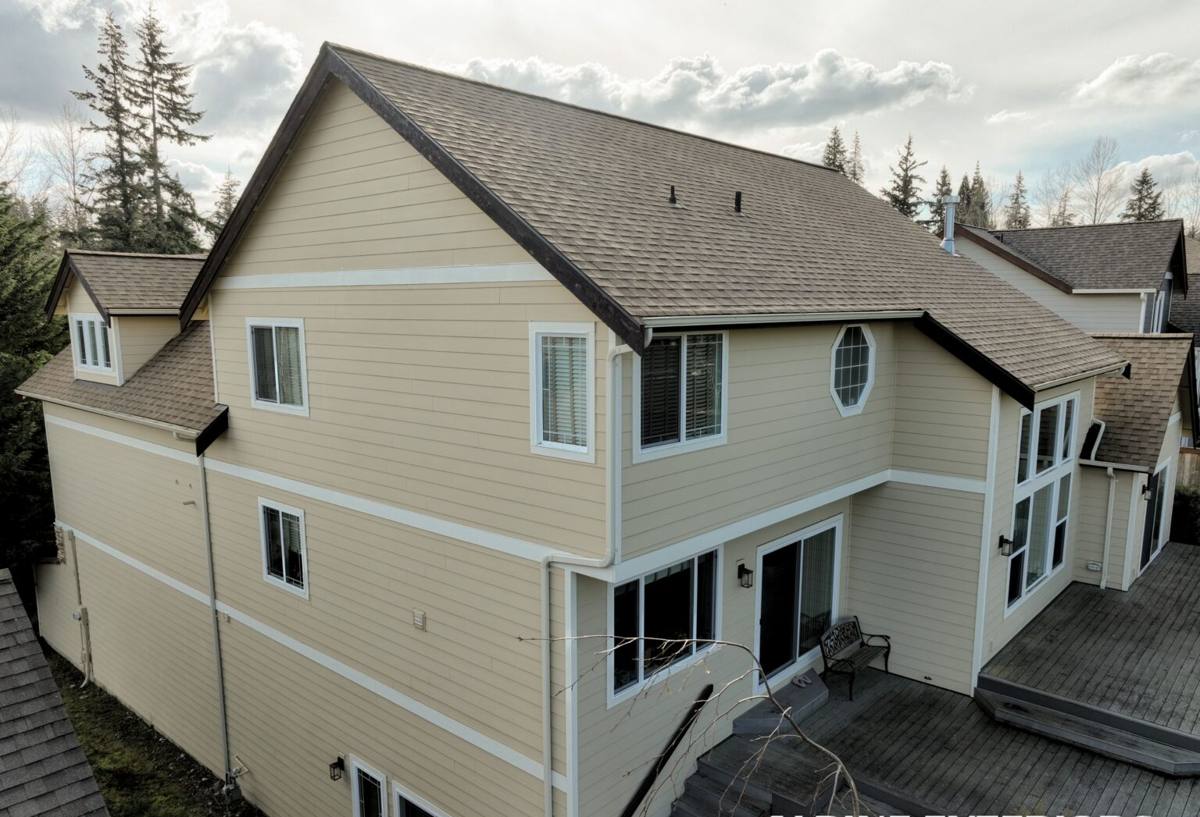
What Local Homes Actually Need From a Deck
Most of the deck problems we see out here trace back to the same handful of causes: moisture sitting where it shouldn't, hardware that wasn't rated for wet, high-tannin lumber contact, and surfaces that never fully dry out between rain events. A deck built for Wiser Lake needs to manage water actively, not just tolerate it.
Moisture Management Comes First
Every ledger board, every post base, and every board gap on a deck we build is treated as a moisture control point. That means proper flashing where the deck meets the house, post bases that hold wood off standing water, and board spacing that lets air move underneath the decking instead of trapping damp debris.
Moss and Algae Are a Design Problem, Not Just a Cleaning Problem
Shaded, north-facing, or tree-covered sections of a deck will grow moss no matter what you do — but the amount and how fast it comes back depends heavily on the decking material and how the deck is built. Solid drainage and airflow underneath the boards slow moss growth considerably compared to a deck sitting low and tight to damp ground.
Comparing Decking Materials for This Climate
There's no universally "best" decking material — there's a best material for your budget, your maintenance appetite, and how much shade and moisture your specific site sees. Here's how the common options actually perform in a wet, salt-air, moss-prone environment like Whatcom County.
| Material | Moisture Behavior | Moss/Algae Resistance | Maintenance | Typical Lifespan Here |
|---|---|---|---|---|
| Pressure-treated pine | Absorbs and releases moisture; can cup or check if not maintained | Low — needs regular cleaning and sealing | Annual cleaning, re-sealing every 1-3 years | 15-20 years with upkeep |
| Cedar | Naturally moisture-resistant, still needs sealing | Moderate — natural oils help but fade over time | Cleaning and oil/stain every 1-2 years | 15-20 years with upkeep |
| Composite decking | Doesn't absorb water into the board itself | Moderate to good depending on the product's surface texture | Periodic washing, no sealing or staining | 25-30+ years, manufacturer-dependent |
| PVC/capped decking | Fully sealed surface, minimal water absorption | Good — smoother capped surfaces shed moss more easily | Occasional washing | 25-30+ years, manufacturer-dependent |
Composite and capped boards cost more up front, but for a shaded or low-airflow lot near Wiser Lake, the reduced sealing and re-staining burden often makes up the difference over the life of the deck. Wood decking isn't wrong for this climate — it just requires an honest commitment to yearly maintenance that not every homeowner wants to take on.
What a Correctly Built Deck Involves
A deck is only as good as what's underneath it. Framing and fasteners are where most of the corners get cut on lower-quality installs, and they're also the parts you won't see again once the decking boards go down — so they need to be right the first time.
Footings and Framing
Footings need to be sized and set below frost depth per current code, with post bases that keep wood from sitting directly in soil or standing water. Joists and beams should be sized for the actual span and load, not just "close enough" — undersized framing shows up years later as bounce, sag, or squeaking.
Fasteners and Hardware
Salt air corrodes standard fasteners faster than most homeowners expect. We use hardware rated for exterior and coastal-adjacent exposure — hot-dip galvanized or stainless connectors, and fastener types matched to the decking material to avoid the black staining that happens when the wrong screw meets the wrong wood.
Flashing at the House Connection
The ledger board — where the deck attaches to the house — is the single most common source of hidden rot on older decks. Proper flashing here keeps water from tracking behind the ledger and into the rim joist and framing of the house itself, which is a repair that gets expensive fast if it's missed.
Our Process, Start to Finish
- On-site assessment: we look at sun exposure, drainage, existing structure (if replacing a deck), and how the space will actually be used.
- Design and material selection: we walk through decking options honestly, including what each one will cost you in upkeep, not just up front.
- Permitting: we handle the permit process where required based on deck height, size, and attachment to the structure.
- Footings and framing: the structural work that determines how the deck performs for the next 20-plus years.
- Decking, railing, and finish work: board installation, railing systems, stairs, and any built-in features.
- Final walkthrough: we go over care and maintenance specific to the material you chose before we consider the job done.
Maintenance That Actually Matters Here
Every deck material has an upkeep routine, and skipping it is how a 25-year deck becomes a 12-year deck. This is the baseline checklist we give homeowners in this area regardless of what material they chose:
- Sweep off standing leaves and debris regularly, especially in shaded areas — trapped organic matter holds moisture against the boards and feeds moss growth.
- Rinse or wash the deck surface at least once or twice a year to knock back early algae and grime before it sets in.
- Check fastener heads and railing connections annually for corrosion or loosening, particularly if the deck faces prevailing wind and salt air.
- Reseal or re-stain wood decking on the manufacturer or product-appropriate schedule — don't wait until the wood looks gray and dry.
- Keep gutters and downspouts near the deck clear so roof runoff isn't dumping extra water onto or under the deck structure.
- Inspect under-deck framing and post bases every year or two for signs of standing water or early rot.
Repairing, Rebuilding, or Replacing an Older Deck
Not every deck problem means starting over. We evaluate the framing first — if the structural bones are sound, sometimes the right move is replacing decking boards, railing, or fasteners rather than a full teardown. But if the ledger flashing has failed, footings have settled, or framing has soft spots from years of moisture exposure, patching the surface just hides a structural problem that will keep getting worse. We'll tell you honestly which situation you're in rather than defaulting to the bigger job.
Signs It's Time for a Rebuild, Not a Repair
Soft or spongy spots in the decking, visible gaps or staining at the ledger connection, posts that wobble at the base, and boards that have cupped or split throughout are all signs the structure — not just the surface — needs attention.
Why It Matters to Hire a Crew That Already Works This Area
A deck built to a generic national spec sheet doesn't account for what Whatcom County actually throws at it year-round. Crews who work regularly in and around Wiser Lake know which fastener grades hold up against the salt air, which decking products shed moss better on shaded lots, and where drainage tends to be a problem based on how the ground sits in this part of the county. That local pattern recognition is the difference between a deck that needs babying every year and one that just quietly does its job through another wet Pacific Northwest winter.
It also matters for permitting and code compliance — requirements around footing depth, guardrail height, and attachment methods are enforced locally, and a crew that pulls permits in this county regularly knows what inspectors here are actually looking for.
Get a Straightforward Estimate
If you're planning a new deck, replacing an aging one, or just not sure whether your current deck needs a repair or a rebuild, we're happy to take a look and give you a straight answer — no pressure, no upsell. Use the form below to request a free estimate for your Wiser Lake property.