 Semiahmoo Exterior
 Exterior Work in Peace Arch: A Different Kind of Climate Test
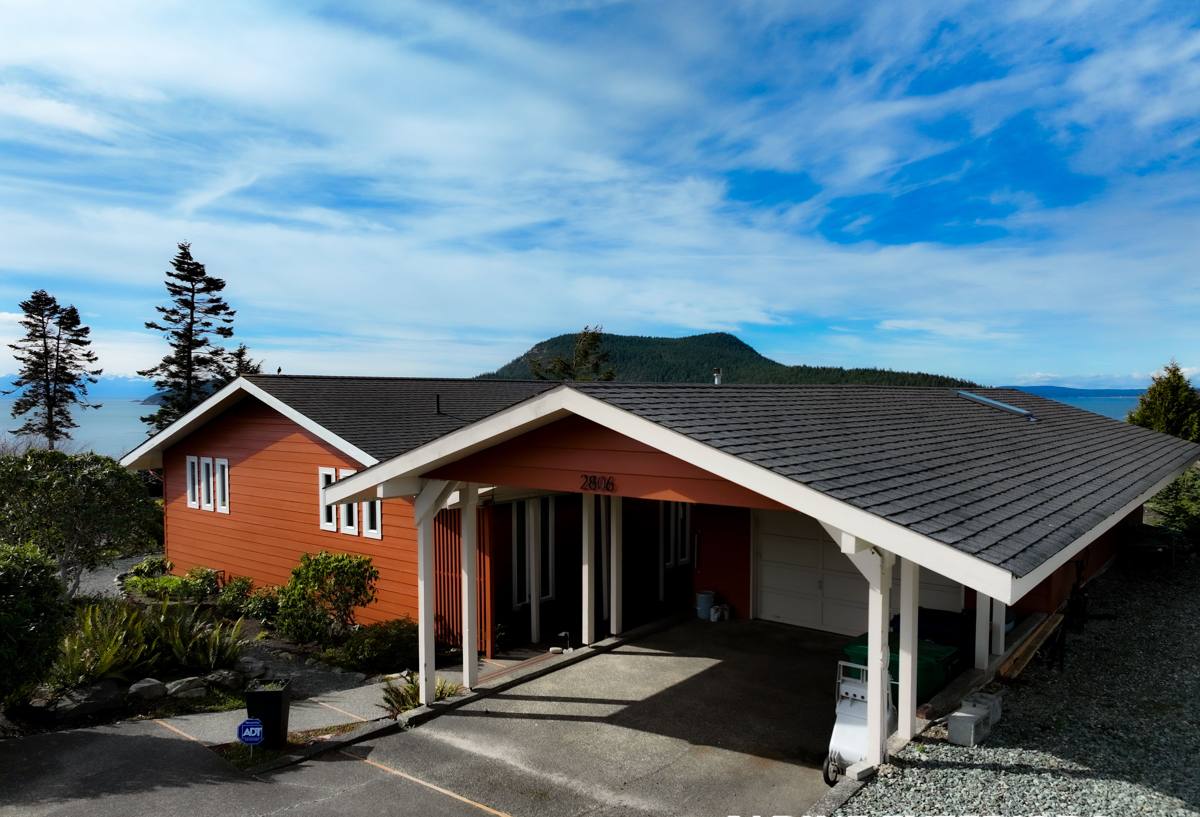
Peace Arch sits right at the edge of Semiahmoo Bay, about as close to saltwater and international border weather patterns as a Whatcom County neighborhood gets. Homes here take a beating that inland Bellingham or Ferndale properties simply don't see in the same combination: salt-laden air rolling off the bay, driving rain pushed in by marine wind systems, and a moss season that can stretch from October well into May. None of that is exotic or rare — it's just the tradeoff for living somewhere this scenic. But it does mean the exterior systems on a Peace Arch home need to be chosen and installed with that specific exposure in mind, not treated like a generic Pacific Northwest build.
We work this area regularly, which matters more than it sounds like it should. A crew that only shows up once for a bid and again for a punch list doesn't build a feel for how a particular street or lot orientation handles wind-driven rain, or where moss tends to gain a foothold first on a roof. A crew based in the region does.
What Salt Air Actually Does to a House
Salt air is corrosive in ways that aren't always visible until years in. It accelerates the breakdown of fasteners, flashing, and any exterior material that wasn't engineered to resist moisture intrusion at the fiber or coating level. Paint on wood trim chalks and fades faster near the water. Metal components — gutters, flashing, fastener heads — corrode ahead of schedule if they're not the right grade for coastal exposure. And any siding product with a weak point at the joints or field cuts gives salt-carrying moisture a way in.
This is one of the reasons we don't treat siding selection as a cosmetic decision. In a location like Peace Arch, the material itself either holds up to this environment for decades or it becomes a recurring maintenance line item.
Driving Rain and Wind-Driven Moisture
Storms coming off the Strait of Georgia and Semiahmoo Bay don't just drop rain — they push it sideways into wall assemblies, window frames, and roof edges. Homes on more exposed lots, especially those with a clear line to the water, take this directly. Proper flashing details, correctly lapped siding, and window units rated for wind-driven rain aren't optional upgrades here; they're the baseline for keeping water out of the wall cavity.
Moss, Moisture, and Roofs Through a Long Wet Season
Whatcom County's wet season is long, and Peace Arch's proximity to the water keeps humidity and shade-driven dampness lingering on north-facing roof slopes and under tree cover even between storms. That's exactly the environment moss and algae need. Left unchecked, moss doesn't just look bad — it lifts shingle edges, holds moisture against the roof deck, and shortens the useful life of the roofing material well before its rated age.
A roof built for this area needs the right combination of underlayment, proper ventilation to reduce trapped moisture, and a maintenance rhythm that keeps moss growth from getting a head start. We look at all three when we're on a roof here — not just the shingles themselves.
Signs a Peace Arch Roof Needs Attention
- Moss or dark streaking concentrated on north-facing or shaded slopes
- Granule buildup in gutters or at downspout outlets
- Soft spots or sagging along roof edges or valleys
- Daylight visible through the attic at roof board seams
- Shingles curling, cracking, or lifting at the tabs
- Rust staining below metal flashing or vent boots
Siding: Why We Install Only James Hardie
We standardized on James Hardie fiber cement siding for every home we side, and coastal exposure like Peace Arch's is a big part of why. Hardie is non-combustible, dimensionally stable in swings between wet and dry, and factory-finished with its ColorPlus coating system, which resists the fading and chalking that painted wood and some composite sidings show first when they sit this close to salt air. Hardie's HZ5 product line in particular is engineered for the kind of cold, wet, high-moisture climate that defines this stretch of Washington.
We don't install vinyl, LP SmartSide, or primed wood siding, and that's a deliberate standard, not an oversight. Vinyl can warp and become brittle with UV and temperature cycling, and its seams give wind-driven coastal rain an easy path in over time. Engineered wood products depend heavily on an intact factory coating; once that's compromised at a cut edge or fastener point, moisture can get into the wood substrate and cause swelling or deterioration, especially in a climate that rarely gives materials a long stretch to fully dry out. Primed wood siding requires the most ongoing maintenance of all — repainting, caulking, and moisture monitoring — which is a real and recurring cost in a place where rain is the default, not the exception.
None of those products are inherently bad choices everywhere. But for a Peace Arch exterior that needs to hold up against salt air, driving rain, and long stretches of dampness with minimal upkeep, fiber cement is the material we're willing to put our name behind. Hardie also backs its siding with a strong transferable warranty, which matters to homeowners who may sell in this desirable a location.
Windows: The Weak Point in Coastal Wind and Rain
Windows are one of the most common places we find water intrusion on homes near the bay. It's rarely the glass itself — it's flashing that wasn't integrated correctly with the wall's water-resistive barrier, or a window unit that isn't rated for the wind and water pressure this area actually sees. When we replace windows on a Peace Arch home, we pay close attention to flashing integration with the siding above and below the opening, since that's the detail that determines whether wind-driven rain stays out or works its way into the framing over a few wet seasons.
Decks: Built for Marine Exposure
A deck near Semiahmoo Bay faces the same salt air and moisture cycling as the rest of the exterior, plus direct UV and standing water from horizontal surfaces. Fastener corrosion, ledger board rot at the house connection, and slick moss buildup on decking boards are the most common issues we see on decks in this area. Composite decking with a marine-grade fastener system and correctly flashed ledger attachment holds up far better here than untreated or under-maintained wood, and it's what we generally recommend for anyone building or replacing a deck this close to the water.
Choosing a Local Contractor for This Kind of Exposure
A contractor who mainly works inland projects can still do competent work, but they won't necessarily know that a particular Peace Arch lot catches wind straight off the bay, or that certain roof orientations here hold moss longer than the textbook maintenance schedule assumes. Local, hands-on experience with this specific stretch of coastline is worth asking about directly when you're vetting bids.
Questions Worth Asking Any Contractor Bidding Your Peace Arch Home
- Have you worked on homes in this specific area, and what coastal-specific issues did you run into?
- What siding, roofing, and window products do you install, and why those specifically?
- Is your bid itemized by material, labor, and disposal, or is it a single lump sum?
- Are you licensed and insured in Washington, and can you provide proof directly?
- What does your warranty cover, and is it backed by you, the manufacturer, or both?
- How do you handle flashing and water-management details around windows and roof penetrations?
What Drives Cost on a Peace Arch Exterior Project
| Factor | Why It Matters Here |
|---|---|
| Exposure to wind and salt air | Waterfront and near-water lots often need heavier-duty flashing and fastener specs than sheltered inland homes |
| Existing moisture damage | Long wet seasons mean hidden rot or trapped moisture is more common in older siding and roofing |
| Roof pitch and access | Steeper or harder-to-access roofs common on view lots take longer to work safely |
| Material choice | Fiber cement, composite decking, and quality window units cost more upfront but reduce recurring maintenance |
| Scope of tear-off | Full removal of old siding or roofing versus overlay affects both cost and long-term performance |
A Simple Maintenance Rhythm for This Climate
Most exterior problems we see in this area didn't start as big problems — they started as small, unaddressed moisture entry points that had a long wet season to work with. A basic seasonal rhythm goes a long way:
- Clear moss from roof surfaces before it spreads, rather than after it's established
- Check and clean gutters ahead of the fall rains, when debris load is highest
- Look at caulking and flashing around windows and doors once a year
- Rinse salt residue off siding and railings periodically, especially on water-facing walls
- Inspect deck ledger boards and fasteners annually for corrosion or softness
If you're planning siding, roofing, window, or deck work on a home in Peace Arch, we're happy to walk the property, point out what we're actually seeing, and put together a straightforward, no-pressure estimate. There's no obligation — just a clear look at what your home needs and what it would take to address it.