 Semiahmoo Exterior
 Building for Blaine's Marine Climate
Blaine sits at the edge of Semiahmoo Bay, close enough to the water that salt-laden air is part of daily life, not an occasional visitor. Add Whatcom County's long, wet winters and the shoulder-season drizzle that can linger for weeks, and you have a climate that is genuinely hard on the outside of a house. Homes here don't fail because owners neglect them — they fail because the materials on the exterior were never matched to what this coastline actually does to a building year after year.
Salt air, driving rain, and a long moss season are the three forces we plan around on every Blaine project. None of them are dramatic on their own. It's the combination, repeated across decades, that separates exteriors that hold up from exteriors that need constant patching.
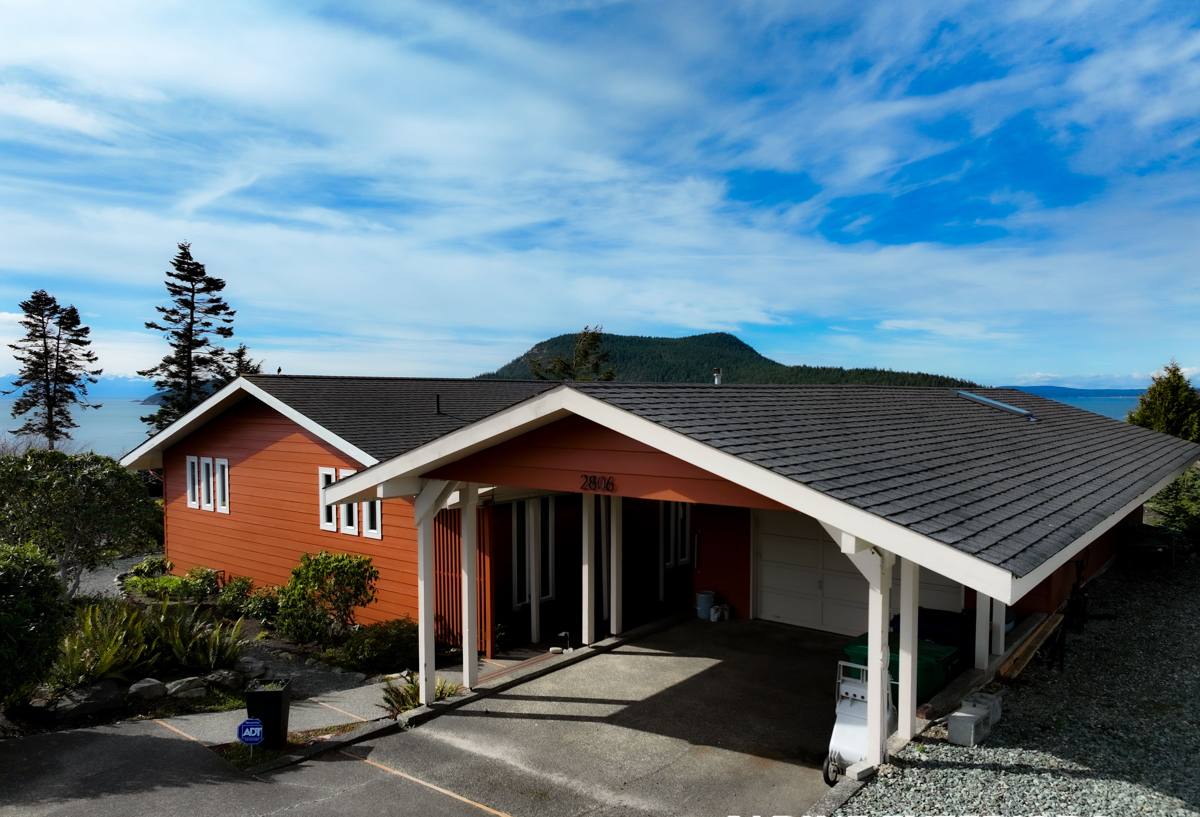
What Salt Air, Rain, and Moss Actually Do
Salt Air
Airborne salt is corrosive to metal fasteners, flashing, and hardware, and it accelerates the breakdown of certain paints and coatings. Siding and trim facing the water — or exposed to the prevailing wind off the bay — take a harder hit than the same materials would on an inland lot even a few miles away.
Driving Rain
Wind off the water doesn't just drop rain straight down — it drives it sideways into wall assemblies, window frames, and door thresholds. Any gap in the water-management details, a poorly lapped piece of house wrap, a caulk joint instead of proper flashing, becomes an entry point. Once water gets behind the cladding, it can travel and cause damage far from where it entered.
Moss and Sustained Moisture
Whatcom County's damp season runs long, and north-facing walls, shaded rooflines, and anything under tree cover stay wet for extended stretches. That's exactly the environment moss and algae need. On roofing it holds moisture against shingles and accelerates granule loss. On siding it traps dampness against the substrate, which is a real problem for any material that isn't built to handle sustained wet contact.
Siding for Blaine Homes: Why We Install James Hardie Only
We install James Hardie fiber cement siding exclusively. We don't offer vinyl, LP SmartSide, Cemplank, Allura, primed spruce, or cedar — not because those products don't have a place in the industry, but because we've made a professional call about what belongs on homes in this specific climate, and we'd rather stand fully behind one system than split our attention across several.
Where the Alternatives Fall Short Here
Vinyl siding is affordable and low-maintenance in mild conditions, but it's a petroleum-based product that can soften, warp, or crack under temperature swings and physical impact, and its seams and J-channels give wind-driven rain more places to work its way behind the panel. In a driving-rain environment like Blaine's, that's a real liability, not a theoretical one.
LP SmartSide and other engineered wood products use a wood-strand core. Wood-based siding depends on an intact factory coating and careful field sealing of every cut edge to keep moisture out — miss one edge, and the strand core can swell or delaminate. In a climate with a long moss season and near-constant ambient moisture, that margin for error is thinner than we're comfortable with.
Cedar and primed spruce are attractive natural materials, but bare or primed wood siding needs a disciplined repaint and recaulk schedule to keep water out, and salt air speeds up the breakdown of most exterior paint films. Cemplank and Allura are also fiber cement, and structurally similar to what we install — but we've standardized on one manufacturer, one warranty structure, and one factory finish system so every crew member installs to the same spec, every time, with no guesswork about which product's install rules apply.
Why James Hardie
James Hardie fiber cement is non-combustible, dimensionally stable across temperature and humidity swings, and resistant to moisture damage in a way wood-based products aren't. The HZ5 product line is engineered specifically for climates with freeze-thaw cycles and sustained moisture exposure, which describes this stretch of Whatcom County well. The ColorPlus factory finish is baked on under controlled conditions rather than field-applied, so it holds color and resists the fading and chalking that salt air and UV exposure cause on site-painted surfaces. Hardie also backs the product with a strong, transferable limited warranty — useful if you sell the home before the siding's functional life is up.
None of this means fiber cement is maintenance-free. It still needs periodic inspection of caulk joints, trim, and flashing details, and it still needs to be installed correctly — proper clearance from grade and hardscape, correct fastener pattern, correct flashing at every penetration. Installed to spec, it's the material we're most confident will still be doing its job in twenty years on a bay-front lot.
Roofing in a Wet, Mossy Climate
Roofing in Blaine has to manage two things simultaneously: shedding a lot of rain reliably, and resisting moss growth on the shaded and north-facing sections that stay damp longest. That means attention to underlayment quality, proper flashing at every valley, chimney, and vent penetration, and ventilation that lets the roof deck dry out between wet spells instead of staying saturated. Moss removal is routine maintenance almost everywhere in Whatcom County, but a roof installed with the right materials and detailing needs it far less often, and holds up better when it does grow.
Windows: Keeping Wind-Driven Rain Out
On a lot exposed to wind off Semiahmoo Bay, window performance is as much about installation as it is about the window unit itself. Flashing has to be integrated correctly with the house wrap and siding so water is directed out and down, never trapped behind the frame. We look at glazing performance for comfort and energy cost, but the installation details — proper flashing, sealed rough openings, correct shimming — are what actually keep driving rain from finding its way inside over time.
Decks That Hold Up to Salt Air
Decks facing the water take a combination of UV exposure, salt air, and standing moisture that inland decks rarely see. Fastener selection matters more here — hardware that isn't rated for coastal exposure corrodes faster and can stain or weaken the structure around it. Proper drainage and spacing between boards, along with materials chosen for wet-climate performance, keep a deck structurally sound and looking presentable for years instead of needing early board replacement.
Why a Local Crew Matters
A crew that works Whatcom County regularly knows which walls on a Blaine lot take the worst of the weather, how far moss creeps into a roofline in a given winter, and which installation details matter most on a site exposed to the bay. That local pattern recognition shows up in the small decisions — where extra flashing goes, how a corner detail gets handled — that determine whether an exterior holds up or needs early rework.
Cost Factors to Expect
Exterior project costs in this area depend heavily on exposure, existing damage, and scope. The table below outlines the main factors that move a project's price up or down — it isn't a quote, but it's a realistic starting point for a conversation.
| Factor | Why It Matters in Blaine |
|---|---|
| Wall exposure to wind/salt | Water-facing and prevailing-wind sides need more robust flashing detail, which adds labor |
| Existing moisture damage | Rot or delamination found once old siding or roofing comes off often requires sheathing repair |
| Roof pitch and complexity | Steeper, more cut-up rooflines take longer to flash and detail correctly |
| Number of window/door openings | Each opening needs its own flashing and sealing work |
| Deck size and site access | Waterfront and sloped lots can add site logistics and material handling time |
Planning Your Project
Whatever combination of siding, roofing, windows, or a deck you're considering, a few things make the process smoother and the result more durable:
- Have any existing moisture damage assessed before finalizing scope, not discovered mid-project
- Ask how flashing and water-management details will be handled at every penetration, not just what material goes on the surface
- Confirm what warranty coverage applies to materials versus labor, and whether it transfers to a future buyer
- Plan exterior work around the drier months when possible, though most tasks can be scheduled with the right prep
- Ask what maintenance the finished exterior will actually require going forward, not just at installation
If you're weighing options for a home in Blaine or elsewhere around Semiahmoo, we're happy to walk the property, talk through what your specific exposure calls for, and put together a straightforward estimate — no pressure, no upsell. The form below is the easiest way to get started.