 Semiahmoo Exterior
 Building New in Wiser Lake Means Building for Whatcom County Weather
Wiser Lake sits within the broader Semiahmoo and Whatcom County growth corridor, where new homes are going up on lots that face real marine weather. Salt-laden air moves in off the water, driving rain hits siding and window openings hard during fall and winter storms, and a long stretch of damp, low-light months keeps moss and algae active on anything that stays wet. None of that is a problem you solve after the fact. It's a problem you solve at the framing stage, when the window openings are cut and the units go in — because once siding, trim, and interior finish close over that work, it's hidden for the life of the house.
New-construction window installation is a one-shot job. There's no old window to compare against, no existing flashing to inspect and correct. Whatever gets built into the rough opening on a Wiser Lake home is what that opening will rely on for the next few decades of wind-driven rain and salt exposure. That's why the install method matters as much as the window itself.
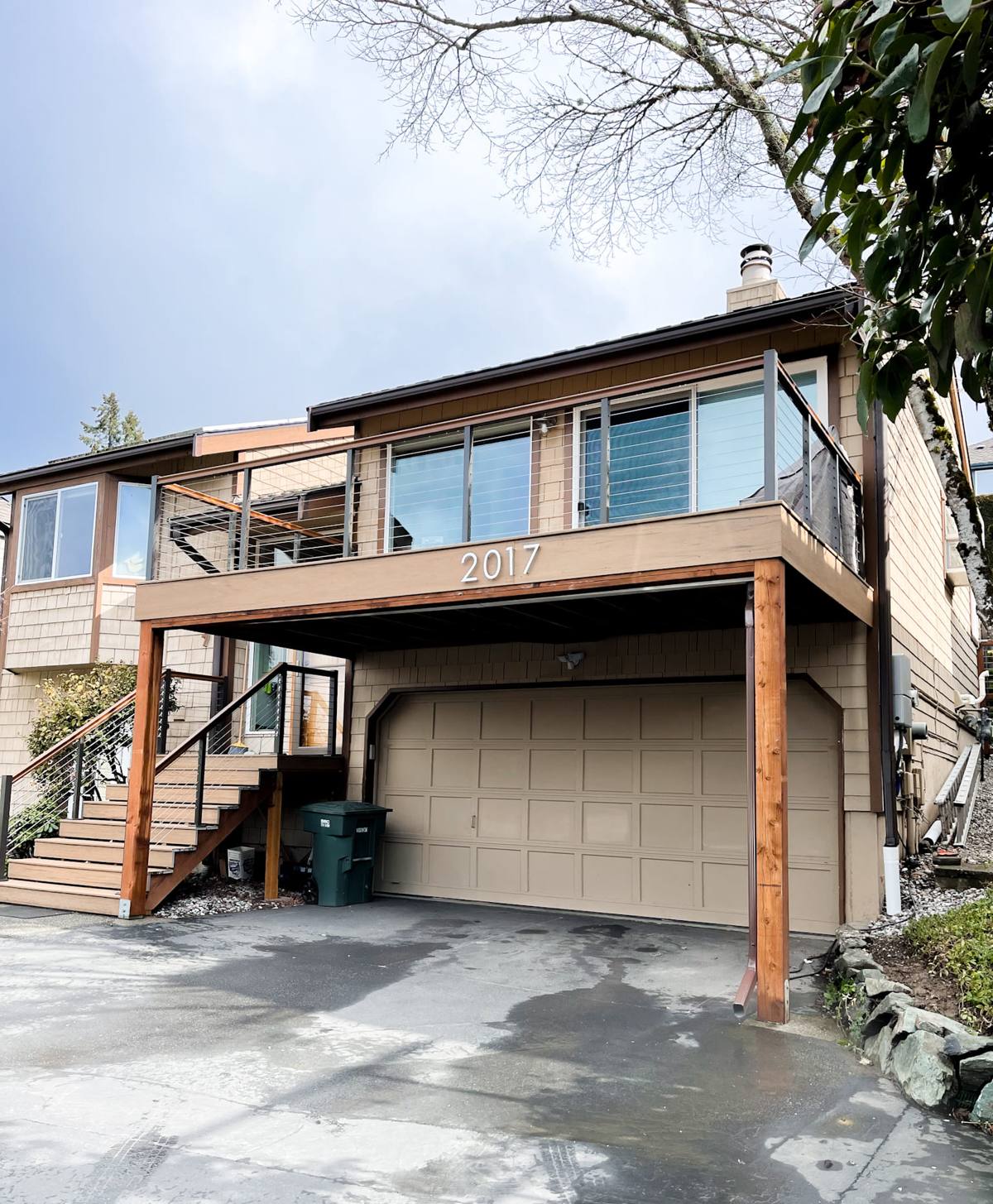
New-Construction Windows Are a Different Job Than Replacement
Replacement window work fits a new unit into an opening that's already been living in a wall for years — the flashing and trim are already established, for better or worse. New-construction windows are set before the exterior is finished, using a nailing-fin (flanged) frame that gets integrated directly into the wall's water-resistive barrier during framing. That gives us the chance to build the drainage path correctly from scratch, but it also means there's zero margin for skipped steps, because siding crews will close over this work within days or weeks.
A correct new-construction install starts with checking the rough opening against the window manufacturer's published rough opening dimensions — not "close enough," but within the actual tolerance the manufacturer allows for shimming and air sealing. Openings that are too tight distort the frame when the unit is fastened, which affects how the sash operates for years. Openings that are too loose leave gaps that are hard to seal and insulate properly. From there it's shimming for plumb, level, and square, fastening on the manufacturer's specified schedule, and insulating the perimeter gap with a low-expansion foam or backer rod system that won't bow the frame.
Why This Sequencing Protects the House
Every layer — sill pan, housewrap, flashing tape, window flange, siding — has to lap the one below it so water is always directed outward and down, never trapped behind the cladding. Get that shingle-lap sequence backwards anywhere on a Wiser Lake elevation that takes direct driving rain, and you've built a slow leak into the wall that won't show up until there's already damage behind the drywall.
Choosing a Frame Material That Holds Up Near Salt Air
There's no single "best" window frame material — there's a best fit for the exposure, maintenance appetite, and design of the specific home. Salt air is the variable that changes the calculus most in this area. It accelerates corrosion on unprotected metal hardware, fasteners, and screen frames faster than an inland Whatcom County location would see. That doesn't rule materials out, but it does change what we specify for hardware finish and cladding.
| Frame Material | Salt-Air / Moisture Behavior | Upkeep During Moss Season | Best Fit |
|---|---|---|---|
| Vinyl | Won't corrode; UV-stable formulations hold color well in this climate | Occasional rinse to clear algae film off sills and tracks | Budget-conscious builds, straightforward rectangular openings |
| Fiberglass | Dimensionally stable in temperature swings; resists pitting | Low; smooth surfaces shed moss growth easily | Larger openings, darker exterior colors, higher-exposure walls |
| Wood with a clad exterior | Good if cladding is fully intact; exposed end grain is a weak point | Watch exposed wood joints and sills closely in damp months | Homeowners set on an interior wood look who accept the upkeep |
| Bare (uncoated) aluminum | Prone to pitting and galvanic corrosion near salt air over time | Higher; finish needs monitoring | Generally not our first recommendation this close to the water |
This isn't a knock on any manufacturer — it's a trade-off every frame material carries, and our job is to steer a Wiser Lake build toward the option that matches its exposure instead of fighting it for the next twenty years. On hardware, we specify corrosion-resistant fasteners and finishes regardless of frame material, since hinges, cranks, and screen clips take the brunt of salt exposure even on a frame that itself holds up fine.
Flashing and Drainage: Where New-Construction Windows Actually Fail
When a new-construction window leaks, it's almost never the glass or the sash. It's a flashing detail that got rushed or skipped. Given how much driving rain this area sees in the wet months, we treat flashing sequence as the most important part of the install — more important than the brand of window sitting in the opening.
Sill Pan and Back Dam
Every opening gets a sloped sill pan with a back dam before the window ever goes in. That pan catches any water that gets past the window during a wind-driven storm and directs it back outside instead of letting it pool against the framing. Skipping the sill pan is one of the most common shortcuts in framing-stage window work, and it's invisible once the window is set — which is exactly why it has to be verified before that happens, not assumed.
Housewrap Integration, Not Just Caulk
The weather-resistive barrier (housewrap) has to lap over the window's nailing flange at the sides and head, shingle-style, so any water running down the wall sheds over the flange rather than behind it. Caulk and sealant tape supplement that layered approach — they don't replace it. We also leave the bottom of the flange able to drain rather than fully sealing it shut, so any incidental water that does get behind the cladding has somewhere to go instead of being trapped against the sill.
Meeting Washington's Energy Code Without Overspending
New construction in Washington has to meet the state energy code's window performance requirements, which set minimum standards for U-factor (how well the window resists heat loss) as part of the overall building envelope calculation. On a Wiser Lake build, we review the window schedule against the compliance path your builder or designer is using — prescriptive or performance-based — so the glazing package you order actually satisfies the permit, rather than finding out at inspection that it falls short.
Beyond the code minimum, condensation resistance is worth paying attention to in this climate. Long stretches of damp, mild weather mean interior-to-exterior temperature differences aren't extreme, but humidity is persistent — a window with poor condensation resistance will show it on the glass and frame through the wet months. Low-E coatings and argon-filled sealed units help on both fronts: better thermal performance and less surface condensation, without needing heavier framing or triple glazing that this climate usually doesn't justify on cost.
What Affects the Cost of a New-Construction Window Package
New-construction window pricing is a package price across every opening in the home, not a per-window number you can quote in isolation. A handful of factors move that total more than anything else.
| Cost Factor | Why It Matters |
|---|---|
| Frame material | Vinyl is typically the entry point; fiberglass and clad-wood cost more but shift maintenance and lifespan differently |
| Glazing package | Low-E coatings, argon fill, and impact-resistant options each add cost but change energy performance and durability |
| Operating style | Casements and awnings generally cost more than sliders or fixed picture units of the same size |
| Size and quantity | Larger openings and full-house window counts scale the package total directly |
| Custom shapes or sizes | Anything outside a manufacturer's standard sizing runs on a longer lead time and higher per-unit cost |
| Site access and stories | Second- and third-story openings take more time and equipment to set safely |
We walk through this with homeowners and builders before ordering, so the window schedule reflects an honest budget rather than a number that gets revised mid-build.
Coordinating With Your Builder or General Contractor
On a new build, window installation sits in the middle of a tight sequence — framing has to be done, the opening has to be verified, the windows have to be ordered with enough lead time (custom sizes and finishes can take several weeks), and installation has to happen before the siding crew shows up. When that timing gets compressed, flashing steps are the first thing that get rushed.
We review the approved window schedule against the actual plans before ordering — checking egress requirements for bedroom windows, tempered safety glass call-outs near doors, low sills, and wet areas, and confirming rough opening sizes match what framing actually built. Catching a mismatch on paper is a phone call. Catching it after the openings are framed is a schedule delay every trade behind us feels.
Our New-Construction Window Process
- Review the window schedule against approved plans, egress requirements, and safety glazing locations
- Verify rough openings against manufacturer specifications before ordering
- Coordinate ordering and lead times with your builder's overall schedule
- Install sloped sill pan flashing with a back dam at every opening
- Set the window plumb, level, and square; fasten on the manufacturer's specified schedule
- Integrate housewrap and flashing tape in proper shingle-lap sequence at jambs and head
- Insulate and air-seal the perimeter gap without bowing the frame
- Walk the install with your builder before siding closes over the work
A Pre-Install Checklist for Your Wiser Lake Build
Whether you're the homeowner or working alongside your builder, these are worth confirming before windows go in:
- Rough openings measured and matched against the window manufacturer's actual spec sheet
- Egress-compliant windows confirmed for every required bedroom
- Tempered safety glass locations confirmed near doors, low sills, and wet areas
- Frame material and hardware finish chosen with salt-air exposure in mind, not just appearance
- Sill pan flashing explicitly included in the install scope, not assumed
- Install scheduled before the siding crew arrives, with a weather window that avoids heavy driving rain
- Warranty documentation on both the window unit and the installation itself kept with your build file
Why Hire a Crew That Already Works Wiser Lake and Semiahmoo
A window installed correctly in a dry inland climate can still fail in a few years on a site that takes direct driving rain and salt-laden air. The difference isn't the window — it's whether the crew setting it understands what this specific stretch of Whatcom County throws at a building envelope over time, from moss creeping into sills during the wet months to hardware that corrodes faster than it would twenty miles inland. Crews that already work this area build that judgment into every step, from sill pan to final trim, instead of relearning it on your house.
If you're planning a new build in Wiser Lake or elsewhere around Semiahmoo, we're happy to walk through your window schedule and give you a straightforward, no-pressure estimate — just fill out the form below.