 Semiahmoo Exterior
 Birch Bay Sits Right Where the Weather Hits Hardest
Birch Bay faces the water, and that location shapes everything about how a home ages here. Homes along the bay and back through the surrounding neighborhoods take a steady combination of salt-laden air, wind-driven rain off the Strait of Georgia, and a wet season that runs long even by Pacific Northwest standards. None of that is unusual for Whatcom County, but Birch Bay gets it with fewer windbreaks than homes further inland, and that matters when you're deciding what to put on the outside of your house.
We're a Semiahmoo-based exterior contractor, and Birch Bay is inside our regular service area. We're not driving in from out of the county to bid a job and disappear — we see how these houses hold up over years, not just at the walkthrough.
Salt Air and Driving Rain
Salt air is corrosive to metal fasteners, flashing, and hardware, and it accelerates the breakdown of finishes that aren't built to resist it. Combine that with rain that comes in sideways during winter storms, and you get moisture finding its way into seams, joints, and any spot where a product or an installation wasn't built for the exposure. Vinyl siding can warp and fade faster in this kind of salt-and-sun cycling. Wood trim and untreated cedar take on moisture at end grain and cut edges, which is exactly where driving rain tends to land first.
The Long Moss Season
Whatcom County's moss season isn't a few weeks — it's most of the year on north-facing walls, shaded rooflines, and anything that doesn't get much direct sun. Moss and algae hold moisture against a surface long after the rain has stopped, and on the wrong material that constant damp exposure is what causes rot, coating failure, or steady cosmetic decline. It's one of the biggest differences between how a house looks in Arizona versus how it looks here after a decade.
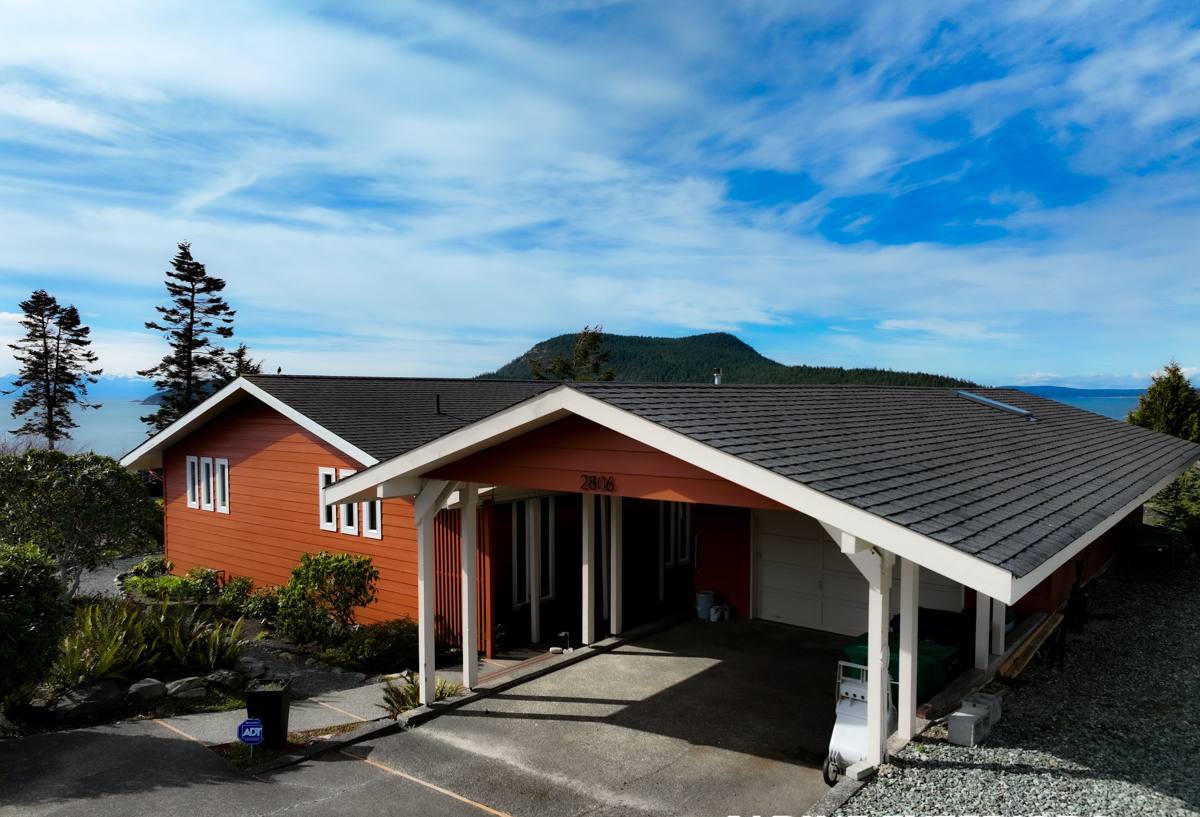
Siding That Can Actually Handle Birch Bay Weather
We install James Hardie fiber cement siding exclusively. We don't install vinyl, LP SmartSide, Cemplank, Allura, primed spruce, or cedar, and that's a deliberate standard, not a lack of options. Each of those alternatives has real strengths — cedar looks great when it's new, vinyl is inexpensive, LP SmartSide installs quickly — but each one also has a trade-off that shows up specifically in a climate like this one: wood-based products absorb moisture at cut edges and are vulnerable to the rot and moss growth this climate encourages; vinyl expands, contracts, and can become brittle with UV and temperature cycling over the years; and most of these products depend heavily on field-applied paint or coatings that need ongoing maintenance to keep water out.
James Hardie fiber cement is engineered from cement, sand, and cellulose fibers, which makes it non-combustible and dimensionally stable — it doesn't swell, warp, or rot the way wood-based siding can. Hardie's ColorPlus finish is baked on at the factory under controlled conditions, which gives a more consistent, durable finish than field-applied paint and comes with its own finish warranty. For a coastal, high-moisture area like Birch Bay, that combination of moisture resistance and factory-cured finish is the reason we standardized on it rather than offering a menu of options.
HZ5 Engineering for This Exposure
Hardie manufactures its siding in climate-specific HZ (HardieZone) formulations. The HZ5 version is engineered for regions that see more moisture and freeze-thaw cycling, which fits Whatcom County's coastal exposure better than a generic, one-size-fits-all product. Getting the right HZ formulation matters as much as the installation itself.
Roofing for a Coastal Whatcom County Home
Roofs in Birch Bay deal with the same driving rain and moss pressure as siding, but with more at stake if something fails, since a roof leak can go undetected for months before it shows up as a stain on a ceiling. We look closely at flashing details around chimneys, skylights, and roof-wall intersections, since those transitions are where wind-driven rain most often finds a way in. Ventilation matters too — a roof deck that can't breathe holds moisture longer, which feeds exactly the kind of moss and algae growth this area is known for.
We also pay attention to gutter and drainage performance specific to this region. Heavy winter rain events can overwhelm undersized or clogged gutters quickly, and water that backs up under a roof edge causes damage that's often blamed on the roofing material when the real cause was drainage.
Windows: Where Salt Air and Moisture Find the Weak Points
Window failures in coastal Whatcom County homes are rarely about the glass itself — they're about the seals, flashing, and frame materials around the glass. Salt air accelerates corrosion on lower-quality hardware and fasteners, and driving rain tests every seam around a window opening during a real storm in a way a mild afternoon shower never will. When we replace windows, proper flashing and integration with the surrounding siding matters as much as the window unit itself. A well-installed window with mediocre flashing will eventually leak; a well-flashed window is what actually keeps water out over the long run.
We also talk with Birch Bay homeowners about condensation, which is common in this climate due to the temperature and humidity swings between the marine layer and interior heating. Newer, properly installed windows with good seals reduce condensation buildup that can otherwise contribute to sill rot and mold around older, leaky frames.
Decks Built for Rain, Not Just Sun
A deck in Birch Bay spends more of the year wet than dry. That changes how we think about ledger board flashing, joist protection, fastener selection, and decking material. Standing water and prolonged dampness are what cause structural rot at ledger boards and joists — the parts of a deck you don't see until there's a problem. We flash ledger connections properly and use fasteners rated for the moisture and salt exposure this area sees, since undersized or wrong-material hardware corrodes faster here than it would inland.
Composite decking has become a popular option for homeowners who want to avoid the sanding, staining, and moss-scrubbing that wood decks demand in this climate, though a well-built and well-maintained wood deck still has its place. Either way, the framing and flashing underneath matter more than the decking surface on top.
Why a Local Crew Matters Here
A crew that works Whatcom County regularly knows what driving rain off the Strait actually does to a house over a winter, not just in theory. That shows up in small decisions — where extra flashing gets added, how a transition between siding and trim gets detailed, which side of a house needs the most attention for moss and moisture. It also means we're reachable if something needs a look after the job is done, rather than a phone number for a company that was only ever passing through.
What to Expect When You Hire Us
- A walk-through of your home's specific exposure — which walls take the most wind-driven rain, where moss tends to build up, and where past moisture damage shows
- A written scope that specifies materials, including the correct James Hardie HZ formulation for this climate zone
- Attention to flashing and moisture management details at every transition — roof-to-wall, window-to-siding, deck ledger-to-house
- A realistic timeline that accounts for Whatcom County's wet-season scheduling constraints
- A clear warranty explanation, including what's covered by the manufacturer versus our own workmanship coverage
Cost Factors to Understand Before You Budget
| Factor | Why It Affects Cost in Birch Bay |
|---|---|
| Exposure and orientation | North-facing and water-facing walls often need more moisture detailing and flashing work than sheltered walls |
| Existing damage | Hidden rot behind old siding or around windows, common after years of salt and moss exposure, adds repair scope once uncovered |
| Material choice | James Hardie fiber cement costs more upfront than vinyl but requires less ongoing maintenance in this climate |
| Access and site conditions | Waterfront and sloped lots common in Birch Bay can affect equipment access and labor time |
| Scope bundling | Combining siding, window, or deck work in one project can reduce redundant setup and staging costs |
Getting Started
Whether you're dealing with siding that's finally showing its age, a roof that's due for attention, windows that fog or leak during storms, or a deck that needs to be rebuilt right this time, we're glad to come take a look. We offer free, no-pressure estimates for Birch Bay homeowners — walk us through what's bothering you about your home's exterior, and we'll tell you honestly what we see and what we'd recommend.