 Semiahmoo Exterior
 Why Roofs Wear Differently Around Wiser Lake
Wiser Lake sits in a part of Whatcom County where tree cover, standing water, and shade work together against a roof. It's a different set of stresses than an open, wind-exposed lot closer to Semiahmoo Bay. Homes here often sit under mature conifers and deciduous trees close to the roofline, which means more shade, slower drying after rain, and a steady supply of needles and leaf litter collecting in valleys and behind chimneys. Add in the driving rain that rolls through this corner of Washington for much of the fall and winter, plus the salt-tinged air that moves inland off Semiahmoo Bay and Drayton Harbor, and you get a roofing environment that punishes anything installed carelessly or left unmaintained.
None of this means a roof at Wiser Lake is doomed to fail early. It means the materials, ventilation, and workmanship have to be matched to what the lake and the tree canopy actually do to a roof over the years, not just to what looks good going up.
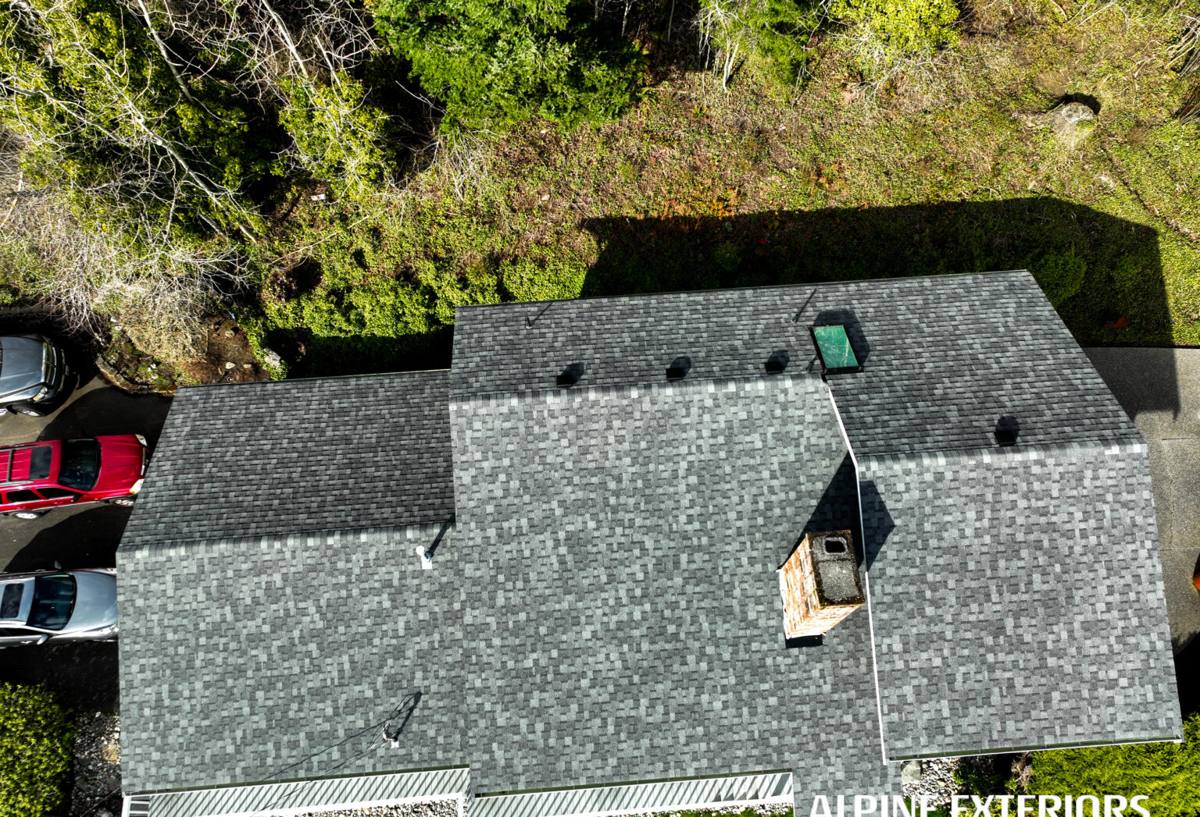
What the Local Climate Actually Does to a Roof
Moss and Algae Growth
Shaded, moisture-retaining roof sections are where moss gets a foothold first — typically the north-facing slopes and any area under overhanging branches. Moss holds water against the roofing material long after the rest of the roof has dried, and its root structure works into shingle mat and granule layers over time. On older or poorly ventilated roofs, this shows up as soft, spongy patches and premature granule loss years before the shingles were rated to wear out.
Driving Rain and Wind-Driven Water
Storms moving through Whatcom County don't always fall straight down. Wind-driven rain finds its way under improperly lapped shingles, undersized flashing, and old or missing ice-and-water barrier at eaves and valleys. A roof that's fine in a light shower can still leak during a sideways autumn storm if the underlayment and flashing details weren't done right the first time.
Long Wet-to-Dry Cycles
A long moss season means a long window where a roof is wet more often than it's dry. That constant damp-dry cycling accelerates the breakdown of asphalt shingles, stresses fasteners, and gives algae and moss more time to establish before a dry stretch ever knocks them back.
What a Correct Roof Replacement Involves
Full Tear-Off and Deck Inspection
We don't recommend layering new shingles over old roofing, especially on a lake-area home where moisture has likely already reached the decking in a few spots. A full tear-off lets us actually see the plywood or OSB underneath, replace any sections that have gone soft or delaminated, and confirm the deck is fastened properly before anything new goes down. Skipping this step just buries a problem under a new roof.
Underlayment and Ice-and-Water Protection
Given the amount of driving rain this area sees, we install self-adhered ice-and-water barrier at eaves, valleys, and around every penetration — chimneys, vent stacks, skylights — not just the code minimum. Over that, a synthetic underlayment gives a second line of defense across the whole roof deck before the finish material goes on.
Ventilation That Actually Balances
Intake at the eaves and exhaust at the ridge need to work together, not just exist. Under a tree canopy, a roof deck that can't breathe stays damp longer on the underside too, which invites rot and shortens the life of the new roofing from below. We check and correct ventilation as part of every replacement, not as an upsell.
Flashing and Detail Work
Most roof leaks start at a transition, not in the open field of shingles. Chimney flashing, sidewall flashing, valleys, and vent boots get new metal or rubber components sized and formed for that specific roof, sealed and lapped so wind-driven rain has nowhere to get behind them.
Choosing a Roofing Material for a Wiser Lake Property
There's no single "best" roofing material for every home here — it depends on tree cover, roof pitch, budget, and how much maintenance a homeowner wants to take on. Here's how the common options compare for a lake-adjacent, tree-shaded property in this climate:
| Material | Moss/Algae Resistance | Typical Lifespan Here | Maintenance Needs |
|---|---|---|---|
| Standard architectural asphalt shingle | Moderate — benefits from algae-resistant granules | 20-25 years with upkeep | Periodic moss removal, gutter clearing |
| Algae-resistant (copper/zinc granule) shingle | Better — granules actively resist algae growth | 25-30 years | Lower moss pressure, still needs debris clearing |
| Standing seam metal | High — smooth surface sheds moss more easily | 40-50+ years | Occasional debris clearing, minimal moss treatment |
| Wood shake | Low — retains moisture, moss-prone under trees | Highly variable, often shortened by shade | High — regular treatment and inspection required |
Under heavy tree cover, we're generally cautious about recommending wood shake, not because of any single failure but because of how moisture-retentive materials behave when they can't dry out for weeks at a time. It's a maintenance and moisture-management tradeoff more than anything, and we'll walk through it honestly for your specific roof.
Signs a Wiser Lake Roof Needs Replacement, Not Just Repair
Homeowners often ask whether a roof issue can be patched or whether it's time for a full replacement. A few signs tend to point toward replacement:
- Granule loss heavy enough that shingles look patchy or bald in sun-exposed and shaded areas alike
- Moss that returns quickly after cleaning, especially on the same slopes each season
- Soft or spongy spots underfoot when walking the roof, suggesting deck damage beneath the shingles
- Daylight visible through the attic roof deck, or damp insulation after storms
- Curling, cracking, or cupping shingles, particularly on south- and west-facing slopes
- Repeated flashing leaks around the same chimney or vent despite prior patch repairs
- A roof approaching or past the manufacturer's expected service life for this climate
If only one or two of these apply and the roof is otherwise sound, a targeted repair may be the right call. When several show up together, or the deck itself is compromised, replacement is usually the more cost-effective path over the next decade.
How Our Replacement Process Works
- On-site inspection — we walk the roof and attic, checking deck condition, ventilation, flashing, and moss or moisture patterns specific to your property's tree cover and exposure.
- Written estimate — a clear breakdown of material options, scope of work, and price, with tradeoffs explained rather than pushed.
- Material selection — matched to your roof's pitch, shade exposure, and budget, not a one-size-fits-all recommendation.
- Tear-off and deck repair — full removal of old roofing, deck inspected and repaired before anything new is installed.
- Underlayment, flashing, and ventilation — installed to handle driving rain and long wet seasons, not just minimum code.
- Final walkthrough — we review the completed roof with you, including care and maintenance specific to a lake-adjacent, tree-shaded property.
Why a Crew That Already Works Wiser Lake Matters
A roofing crew that's worked other properties around Wiser Lake and the surrounding Whatcom County communities already knows how tree cover and lake moisture behave on a roof deck — where moss tends to establish first, which valleys collect the most debris, and how much ice-and-water protection a given roof pitch actually needs in this climate. That's different knowledge than a crew that mostly works dry, open lots elsewhere in the state. It shows up in small decisions during the job: where extra flashing gets added without being asked, which vents get upsized, and how the tear-off is sequenced around weather that can turn quickly this close to the water.
It also matters for follow-up. A local crew is available for a warranty question or a post-storm check without a long drive, and understands the permitting and inspection expectations in this part of the county.
Protecting the Roof After Installation
A correctly installed roof still benefits from basic upkeep, especially under tree cover near the lake:
- Clear gutters and valleys of needles and leaves at least twice a year, more often under heavy conifer cover
- Trim back branches that overhang or touch the roofline to reduce shade and abrasion
- Have moss treated or removed before it spreads, rather than after it's established
- Check attic ventilation isn't blocked by insulation, which can trap moisture against the deck
- Schedule a roof check after major windstorms to catch lifted shingles or flashing early
These are small habits, but on a shaded, lake-adjacent roof they make a real difference in how many years you get out of a replacement before the next one's needed.
If your roof at Wiser Lake is showing moss, granule loss, or age, we're glad to take a look and give you a straightforward, no-pressure estimate — just fill out the form below and we'll get in touch.