 Semiahmoo Exterior
 Exterior Work in Laurel: Built for This Corner of Whatcom County
Laurel sits inland from Semiahmoo Bay but still gets the full weather package that defines this part of Whatcom County: moisture-loaded air pushing in off the water, long stretches of gray, and wind that drives rain sideways more often than most homeowners expect when they first move here. Houses in this area don't fail because the materials were bad on the day they were installed — they fail because the products chosen for them weren't built for a marine-influenced Pacific Northwest climate, or because the installation didn't account for how water actually moves through a wall assembly here.
We're a local crew that works this area regularly — Semiahmoo, Blaine, and the surrounding Whatcom County communities including Laurel. That matters more than it sounds like it should. An exterior contractor who mostly works dry-climate jobs or moves between regions doesn't build the same instincts for flashing details, drainage planes, and material selection that a crew working this specific coastline does year-round.
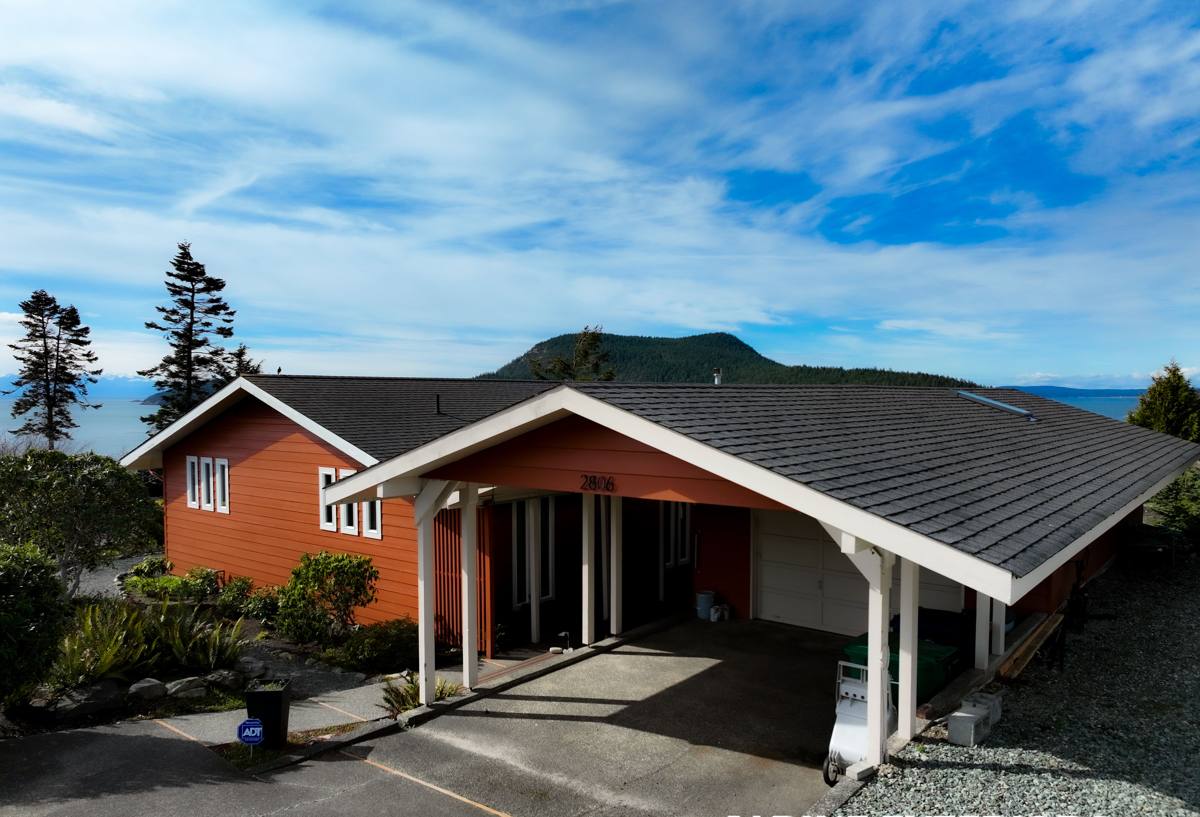
What Salt Air, Driving Rain, and Moss Season Actually Do to a House
Salt Air
You don't have to be right on the water to feel the effects of salt-laden air. It travels on wind, settles on exterior surfaces, and accelerates corrosion on anything metal — fasteners, flashing, gutter hardware, even factory finishes that aren't rated for it. Over years, that corrosion shows up as streaking, fastener bleed-through, and premature failure of trim and hardware that would have lasted much longer somewhere inland.
Driving Rain
This isn't gentle, vertical rainfall. Storms coming off the Strait of Georgia and the Salish Sea push rain horizontally against west- and southwest-facing walls. That means water gets forced into laps, seams, and joints that would stay dry in a calmer climate. Any siding, window, or trim detail that isn't installed with real attention to water-shedding and drainage will eventually let moisture behind the surface — and once it's behind the surface, the damage is happening where you can't see it.
Moss and Sustained Moisture
Whatcom County's moss season isn't really a season here — it's most of the year. Roofs, north-facing siding, and shaded decking stay damp for extended stretches, which is exactly what moss, algae, and rot organisms need to take hold. Materials that absorb moisture rather than shedding it are the ones that struggle most under these conditions, and the maintenance burden compounds every year that treatment gets skipped.
Siding That's Actually Engineered for This Climate
We install James Hardie fiber cement siding exclusively. That's not a brand preference stated for its own sake — it's a decision built around what actually holds up under Whatcom County conditions. Hardie's HZ5 product line is engineered specifically for climates with sustained moisture exposure and temperature swings, which describes this region well. It's non-combustible, it doesn't swell or rot from moisture the way wood-based products can, and its ColorPlus factory finish is baked on under controlled conditions rather than field-applied, which matters a lot when your siding is going to spend years absorbing salt air and driving rain.
We don't install vinyl siding, LP SmartSide, Cemplank, Allura, or unfinished wood siding like primed spruce or cedar. Each of those products has legitimate uses somewhere, but none of them are what we'd choose to put on a home in this specific climate, and we'd rather not install something we don't believe will perform here than take a job on a product we'd have reservations about.
| Factor | James Hardie Fiber Cement | Vinyl Siding | Wood-Based Siding (LP, cedar, primed spruce) |
|---|---|---|---|
| Moisture behavior | Doesn't absorb, swell, or rot | Doesn't absorb water, but can warp/gap in heat-cold cycles | Absorbs moisture; prone to rot without diligent upkeep |
| Salt air / corrosion resistance | Cement composite unaffected by salt | Plastic resists salt but can chalk/fade | Finish and fasteners vulnerable over time |
| Fire rating | Non-combustible | Combustible, can melt/deform | Combustible |
| Maintenance burden | Occasional wash, factory finish holds color | Low, but cracks/fades and can't be easily repainted | Repainting/sealing on a recurring cycle |
| Typical lifespan (installed to spec) | Multiple decades with strong transferable warranty | Moderate, shorter warranty on color/finish | Shorter without consistent maintenance |
If siding replacement is on your radar for a Laurel property, this is where the conversation usually starts — not with a product catalog, but with what your specific exposure looks like: which walls take the worst of the weather, what shade the north side sits in most of the year, and how the current siding has actually held up.
Roofing: The First Line of Defense Against Moss and Wind-Driven Rain
Roofs in this area take the brunt of both moss growth and wind-driven rain, which means underlayment quality, proper flashing at valleys and penetrations, and ventilation all matter more here than they would in a drier climate. A roof that looks fine from the ground can still be losing granules, holding moisture under moss growth, or letting wind-driven rain work its way under improperly lapped shingles at the edges. We look at ventilation and moisture management as part of any roofing job, not just the shingle itself, because a roof that traps moisture underneath will fail from the inside regardless of what's on top.
Windows: Where Driving Rain Finds the Weak Points
Windows are one of the most common places we find water intrusion on homes in this area, and it's almost never the glass itself — it's flashing, sealant that's degraded, or a window that was installed without proper attention to how water is supposed to drain away from the opening. In a climate with regular horizontal rain, a window's water management detailing matters as much as its energy performance. When we replace windows, we're paying close attention to how the opening integrates with the surrounding siding and weather barrier, not just swapping units in place.
Decks: Built to Handle Standing Moisture, Not Just Look Good
Decks in Laurel deal with the same sustained dampness that drives moss growth elsewhere on the house, plus foot traffic and structural loads. Drainage under and around ledger boards, proper flashing where the deck meets the house, and material choices that resist moss and rot are the difference between a deck that needs constant attention and one that doesn't. A deck that traps water against the house structure is a much bigger problem than a deck that just looks weathered.
Why a Local Crew Matters More Than It Seems
Exterior work isn't just about installing a product correctly in isolation — it's about understanding how water, wind, and salt move across a specific site over an entire year. A crew that works Semiahmoo, Blaine, and the surrounding Whatcom County area repeatedly develops a feel for which walls on which orientations take the worst weather, how moss actually behaves on local roofs through the wet months, and which installation details hold up versus which ones quietly fail two or three winters later. That's knowledge that's hard to get from a crew that's only in the area occasionally.
It also means accountability. If something needs a follow-up look after a hard winter, we're not far away and we're not hard to reach.
What to Expect Working With Us
- A walk-around assessment of your current exterior — siding, roofing, windows, and decking as applicable — looking specifically at moisture exposure and wear patterns tied to your site's orientation and shading.
- An honest conversation about what actually needs attention now versus what can be monitored.
- A written estimate that's specific to your home, not a generic package price.
- Installation done to manufacturer specification, with attention to the flashing, drainage, and water-management details that matter most in this climate.
A Quick Self-Check for Laurel Homeowners
Before you call anyone, it's worth doing a basic visual check of your own exterior. Here's what we'd look for first:
- Moss or algae buildup concentrated on north-facing or shaded roof sections and siding
- Streaking or discoloration around fasteners, trim, and metal flashing
- Soft spots, gapping, or visible warping on wood-based siding or trim
- Peeling or bubbling paint, especially on west- and southwest-facing walls
- Water staining on interior ceilings or walls near roof valleys or window headers
- Deck boards that stay damp long after rain has stopped elsewhere in the yard
- Caulking or sealant around windows that's cracked, shrunk, or missing sections
None of these mean something is a crisis, but they're the early signs that are worth having a professional look at before they turn into a bigger repair.
Let's Take a Look at Your Home
If you're in Laurel or anywhere else around Semiahmoo and Blaine and you're noticing any of the signs above — or you're just due for an honest assessment of where your siding, roof, windows, or deck stand — we're happy to come take a look. There's no pressure and no obligation. Fill out the form below and we'll get in touch to schedule a free estimate.