 Semiahmoo Exterior
 Siding Installation at Wiser Lake: What the Climate Demands
Homes around Wiser Lake sit in a part of Whatcom County that never really dries out. Winters bring long stretches of driving rain, spring and fall add heavy dew and fog off the surrounding water and low ground, and the tree cover that makes this area so pleasant to live in also means shade, moisture, and moss holding onto exterior walls far longer than they would in a drier climate. Add the salt-tinged air that moves through this whole corner of Washington and you have a combination that is genuinely hard on siding — not because any one factor is extreme, but because the exposure is constant, month after month, year after year.
That combination punishes the wrong siding choice quickly. Wood-based products swell, delaminate, or rot at the edges where water sits longest. Vinyl can hold up on price but does nothing to stop moss and mildew from taking over shaded north- and west-facing walls, and it becomes brittle over time in a way that shows on close inspection. The right material for a Wiser Lake home has to shed water aggressively, resist rot at the core, and hold a finish that doesn't need repainting every few years just to keep looking presentable.
Why We Only Install James Hardie Fiber Cement
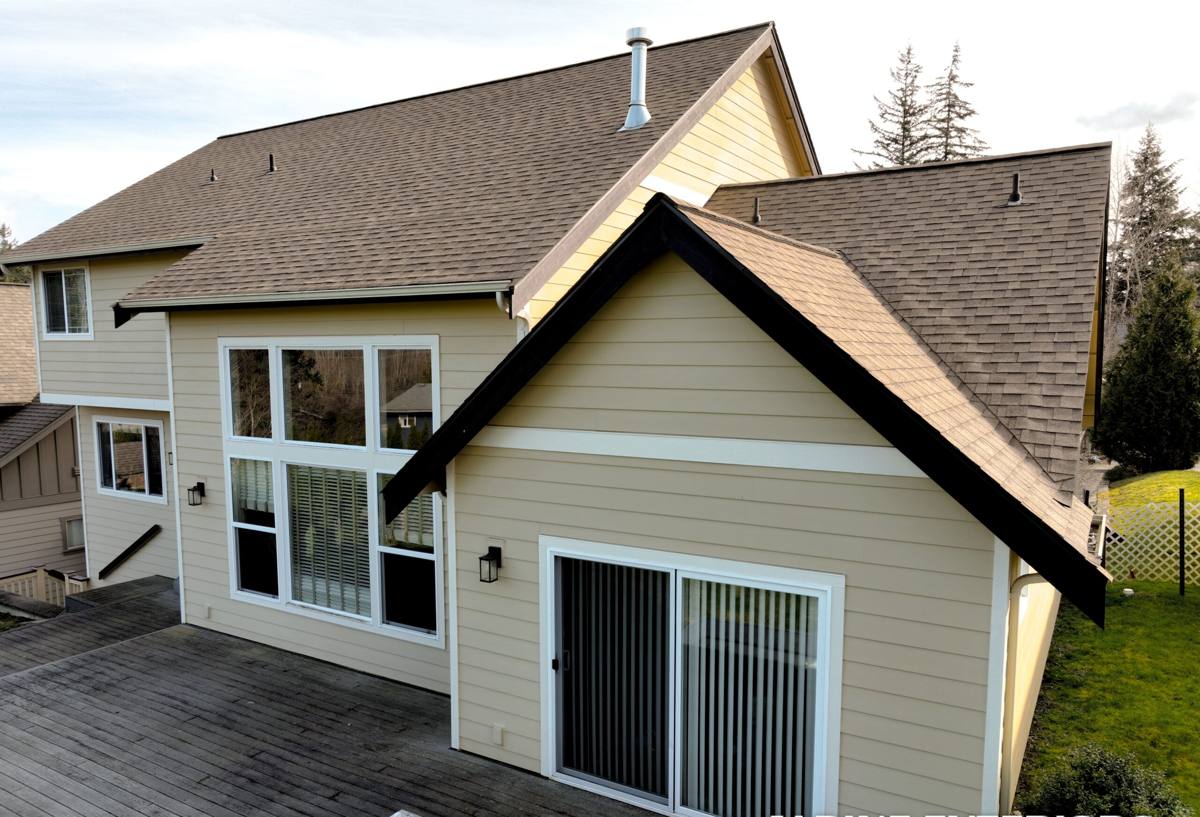
We install James Hardie fiber cement siding exclusively. We don't offer LP SmartSide, vinyl, Cemplank, Allura, primed spruce, or cedar as options, and that's a deliberate call, not a matter of convenience. Fiber cement is non-combustible, dimensionally stable, and doesn't feed moss and mildew the way wood-based products do. James Hardie's HZ5 product line is engineered specifically for the wetter, cooler climate zones of the Pacific Northwest, which matches what a Wiser Lake home actually experiences through the year.
The factory-applied ColorPlus finish is a big part of why we standardized on this product. It's baked on in a controlled environment rather than brushed or sprayed on site, so it resists fading and chipping far longer than field-applied paint, and it carries its own finish warranty separate from the substrate warranty. On a home exposed to constant damp and periodic salt-laden wind, that finish integrity matters more than it would somewhere drier.
What We're Not Saying About the Alternatives
Products like LP SmartSide and cedar have real strengths — cedar looks warm and traditional, LP is engineered wood with real structural properties, and vinyl is inexpensive and low-maintenance in mild climates. We're not claiming any of them are defective. Our position is narrower: given the moisture load and moss pressure specific to this region, we don't think they hold up as well over a 30-40 year ownership horizon as fiber cement does, and we'd rather install one product we can stand behind completely than offer several and hedge our recommendation.
What a Correct Siding Installation Involves
Siding installation is a water-management system, not just a cosmetic layer. On a Wiser Lake home, getting the underlying details right matters more than the brand of board on the wall. A correct installation includes:
- Removal of the old siding down to the sheathing, with a full inspection for rot, soft spots, or prior water damage before anything new goes up
- Repair or replacement of any compromised sheathing — covering over damaged wood just traps the problem
- A weather-resistive barrier installed correctly, lapped shingle-style so water is directed outward and down, never trapped behind the cladding
- Rainscreen or furring strips where called for, creating a drainage gap behind the siding so incidental moisture can escape instead of sitting against the panel
- Properly flashed windows, doors, and any wall penetrations — the majority of siding failures we see trace back to flashing, not the siding material itself
- James Hardie panels or lap siding installed to the manufacturer's fastening and clearance specifications, including correct nail placement and gaps at butt joints
- Caulking and sealant used only where Hardie's install guide calls for it — over-caulking joints that should be able to move causes cracking down the road
Skipping or rushing any one of these steps is how a siding job that looks fine at handoff starts failing in three to five years. In a climate like this one, poor water management doesn't show up as an obvious leak — it shows up as slow rot behind the wall that isn't visible until the siding comes back off.
Moss, Shade, and North-Facing Walls
Wiser Lake properties tend to have mature tree cover and plenty of shaded exterior walls, and that shade is exactly where moss and algae take hold first. Moss itself doesn't destroy fiber cement the way it can degrade wood fiber over time, but it does hold moisture against the surface longer and can stain a finish if left unchecked. Two things reduce this: proper drainage detailing behind the siding so the wall assembly itself dries out between rain events, and reasonable clearance between siding and grade, plantings, or structures so airflow can do its job. We account for tree cover and sun exposure on each elevation during the estimate, not just apply one blanket spec to every wall.
Our Process for Wiser Lake Homes
1. On-Site Assessment
We walk the exterior, check for signs of existing moisture intrusion, note shaded and exposed elevations separately, and look at trim, window, and roofline conditions that affect the siding scope.
2. Scope and Product Selection
We spec the correct James Hardie product — lap siding, panel siding, or a mix with trim — and the correct HZ climate designation, plus color and profile choices that fit the home.
3. Tear-Off and Sheathing Repair
Old material comes off, sheathing gets inspected and repaired as needed, and any rot or prior damage is addressed before the new barrier goes on.
4. Weather Barrier and Drainage Plane
Barrier, flashing, and drainage detailing go in first — this is the part of the job that determines how the house performs in year ten, not just year one.
5. Installation to Manufacturer Spec
Hardie siding is installed with correct fastening, clearances, and joint treatment, following James Hardie's published installation requirements rather than shortcuts that void the warranty.
6. Final Walkthrough
We review the finished job with the homeowner, confirm caulking, trim, and paint lines meet spec, and register the warranty paperwork.
Why a Crew That Already Works This Area Matters
A crew unfamiliar with Whatcom County's climate can install siding perfectly well on paper and still get the drainage and clearance details wrong, because those details are climate-specific. A crew that already works Wiser Lake and the surrounding area knows which elevations typically need extra attention to shade and moisture, how local moss growth patterns tend to develop, and what James Hardie's HZ5 spec actually requires in a climate this wet — not the generic national installation guide, but the version tuned for this region. That familiarity shows up in fewer callbacks and a job that's still performing correctly a decade out, not just on installation day.
Cost Factors for a Wiser Lake Siding Job
Every home is different, but the factors that move a siding installation estimate up or down are consistent. Rather than quote a number that doesn't reflect your specific home, here's what actually drives the cost:
| Factor | Why It Matters |
|---|---|
| Sheathing condition | Rot or water damage found during tear-off adds repair scope before new siding can go on |
| Home size and wall complexity | More corners, gables, and cutouts mean more labor and trim work per square foot |
| Product line and profile | Lap siding, panel siding, and specialty trim profiles carry different material costs |
| Existing siding removal | Multiple layers or difficult-to-remove material (like old stucco or heavy trim) add time |
| Drainage and flashing detail needed | Homes with prior moisture issues need more rebuild work at the sheathing and barrier stage |
| Access and site conditions | Steep grades, tree cover, or tight lot lines around Wiser Lake can affect staging and labor |
An accurate number only comes from seeing the home in person, which is why we walk every property before quoting rather than estimating over the phone.
Signs Your Wiser Lake Home May Need New Siding Soon
Not every home needs a full replacement immediately, but certain signs point toward planning for it rather than patching around it:
- Soft or spongy spots when you press on the siding, especially near the bottom courses or under windows
- Persistent moss or dark staining that returns quickly after cleaning
- Paint that's peeling or bubbling rather than just fading evenly
- Visible gaps, warping, or separation at seams and corners
- Interior signs like musty smells or discoloration on walls that share an exterior wall
Any of these are worth a look before they turn into sheathing or framing damage, which costs far more to fix than the siding itself.
If you're weighing a siding project for a Wiser Lake home, we're glad to walk the property, look at what your specific walls are dealing with, and put together a straightforward, no-pressure estimate — just fill out the form below.