 Semiahmoo Exterior
 Roofing in Wiser Lake Has Its Own Set of Problems
Wiser Lake sits in a part of Whatcom County where roofs take a beating that inland homes never see. You've got salt-laden air drifting in off the Semiahmoo shoreline, long stretches of driving rain that come in sideways more often than straight down, and a moss season that can run eight or nine months out of the year under the tree cover many Wiser Lake properties sit under. None of that is dramatic on its own. What it does is compound. A shingle roof that would last twenty-plus years in a dry inland climate is doing a different job here, and it needs to be built and maintained differently to hit that same lifespan.
This page is specifically about asphalt shingle roofing for homes in and around Wiser Lake — what the climate actually does to a roof out here, what a correctly installed system looks like, and how we approach the work when we're on your property.
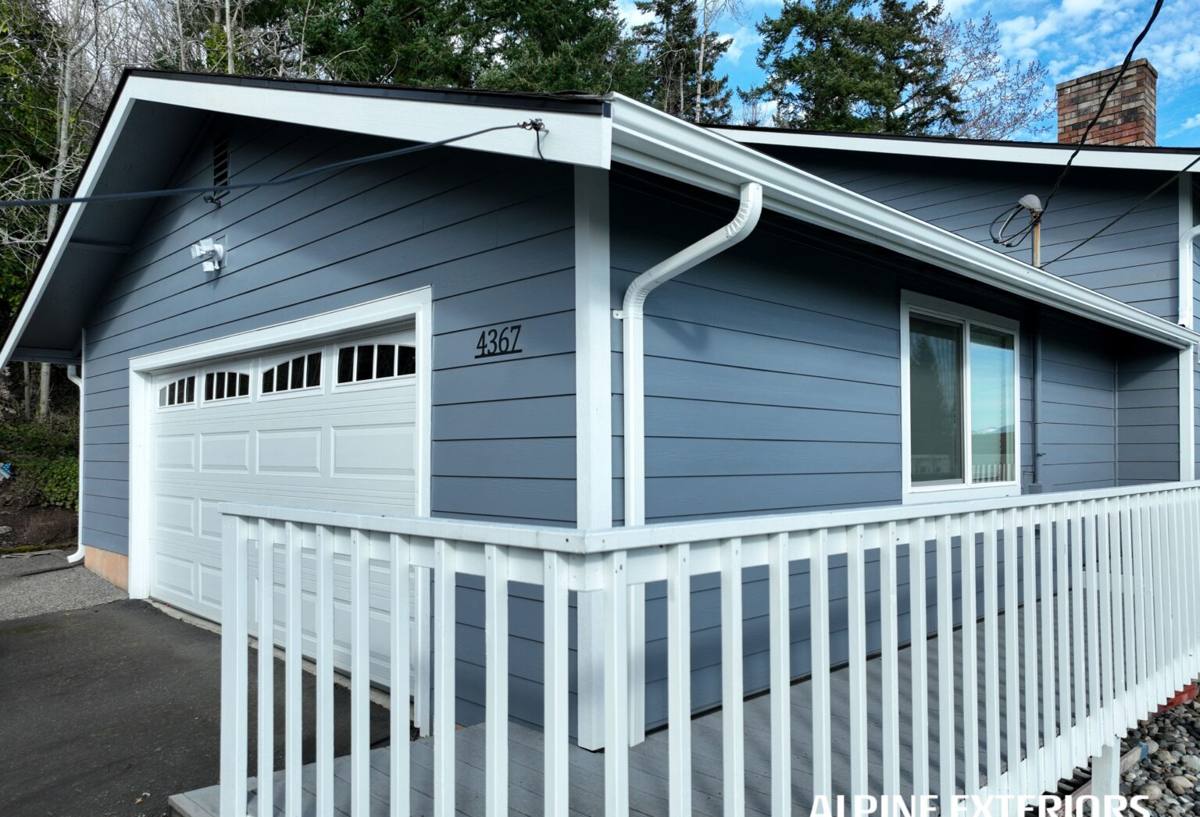
What Salt Air, Rain, and Moss Actually Do to a Shingle Roof
Salt Air
Homes closer to the water deal with airborne salt that settles on roofing, flashing, and fasteners. Over years, that accelerates corrosion on exposed metal — nail heads, flashing edges, vent boots — faster than it would happen elsewhere. It's not usually a dramatic failure; it's a slow erosion of the small metal details that keep a roof watertight.
Driving Rain
Whatcom County rain doesn't always fall straight down. Wind-driven rain pushes water sideways and upward under shingle edges, into valleys, and around any flashing that isn't detailed correctly. A roof that would shed water fine in a calm rain can leak in a Wiser Lake storm if the underlayment and flashing weren't built for wind-driven exposure.
Moss
Shade, moisture, and mild temperatures are exactly what moss wants, and a lot of Wiser Lake lots have tree cover that keeps roofs damp longer than open, sun-exposed sites. Moss doesn't just look bad — it lifts shingle edges as it grows, holds moisture against the shingle surface, and works its way into fastener lines over time. Left unaddressed for years, it shortens the roof's life well below what the shingle is rated for.
What a Correctly Built Roof Needs Out Here
None of the climate factors above are unusual for this part of Washington — they're just things a roof has to be built to handle, not surprises to react to after the fact. A shingle roof done right for Wiser Lake conditions includes:
- A synthetic underlayment rated for this climate, not felt paper, as the water-resistant layer beneath the shingles.
- Ice and water shield at vulnerable points — eaves, valleys, around chimneys and skylights — where wind-driven rain is most likely to find a way in.
- Corrosion-resistant flashing and fasteners, sized and detailed for a coastal-influenced climate rather than generic inland hardware.
- Balanced attic ventilation, so moisture from inside the house isn't trapped against the roof deck and shingles from underneath.
- Algae-resistant shingle granules where moss and algae pressure is high, which slows (not eliminates) organic growth compared to standard granules.
- Proper valley and edge metal work, since most driving-rain leaks trace back to a flashing detail, not the shingle field itself.
Skip any of these and the roof might look fine going in, but it's the first three or four years of a hard winter that expose the shortcuts.
Signs a Wiser Lake Roof Needs Attention
Most shingle roof problems don't announce themselves with an obvious leak right away. By the time water is showing up inside, the roof has usually been compromised for a while. Watch for:
| What You See | What It Usually Means |
|---|---|
| Moss growth on north-facing or shaded slopes | Normal for this climate, but left alone it lifts shingles and holds moisture — needs removal and monitoring |
| Granules collecting in gutters | Shingles are aging or were exposed to more wear than expected; UV and moisture cycling accelerates this |
| Curling or cupping shingle edges | Often ventilation-related, or the shingle is past its effective service life |
| Dark streaking | Algae growth — cosmetic at first, but a sign the roof surface stays damp longer than it should |
| Rust staining near flashing or fasteners | Metal components corroding faster than expected due to salt-air exposure — worth a closer look |
| Soft spots or sagging on the deck | Water has likely reached the roof deck itself — this needs prompt attention, not a wait-and-see approach |
Our Asphalt Shingle Roofing Process
Whether it's a full replacement or a section repair, the approach doesn't change — we don't cut steps just because a job is smaller.
- On-site inspection. We walk the roof (or use a lift/drone where pitch or access requires it), check the attic from inside where possible, and look at ventilation, decking condition, and existing flashing before recommending anything.
- Honest scope and estimate. You get a clear explanation of what's actually needed versus what's optional, with the reasoning behind each recommendation — not an upsell list.
- Tear-off and deck inspection. On a replacement, old material comes off down to the deck so we can check for rot, soft spots, or prior water damage that's invisible from the surface.
- Underlayment and flashing first. This is the layer that actually keeps water out. We install synthetic underlayment and ice-and-water shield at vulnerable points before a single shingle goes down.
- Shingle installation to manufacturer spec. Correct nail placement, exposure, and pattern — the details that determine whether a shingle roof performs to its wind rating or fails early.
- Ventilation check. We confirm intake and exhaust venting are balanced, adjusting where the existing setup is trapping moisture.
- Cleanup and walk-through. Magnetic sweep for nails, debris removed, and a final walk-through so you know what was done and what to watch for going forward.
Shingle Options for Wiser Lake Homes
We don't push one product line — the right shingle depends on your roof's exposure, budget, and how long you want to go between maintenance cycles.
| Type | Typical Lifespan | Best Fit For |
|---|---|---|
| 3-tab asphalt | 15–20 years | Budget-conscious projects, simpler rooflines, lower wind exposure |
| Architectural (laminate) asphalt | 25–30+ years | Most Wiser Lake homes — better wind resistance and a thicker profile that holds up to driving rain |
| Impact-rated / high-wind asphalt | 30+ years | Exposed lots, waterfront-adjacent properties, or homeowners wanting maximum durability |
For most Wiser Lake properties we lean toward architectural shingles as the practical middle ground — the added upfront cost over 3-tab is usually paid back in fewer callbacks and a longer service life under this climate's wind and rain load. That said, it's your roof and your budget, and we'll lay out the honest trade-offs either way rather than steering you toward the most expensive option by default.
What Drives the Cost
| Factor | Why It Matters |
|---|---|
| Roof size and pitch | Steeper roofs take longer to work safely and use more fall protection |
| Number of layers to remove | Tear-off of multiple existing layers adds labor and disposal cost |
| Deck condition | Rot or soft decking found during tear-off means repair or replacement before shingles go down |
| Roof complexity | Valleys, dormers, skylights, and chimneys all add flashing detail and time |
| Shingle grade chosen | 3-tab vs. architectural vs. impact-rated shingles carry different material costs |
| Access | Tree cover, tight lots, or steep driveways can affect equipment and staging |
We won't quote a number over the phone without seeing the roof — too many of these factors only show up in person, and a real estimate needs a real inspection.
Simple Maintenance That Extends the Roof's Life
- Have moss physically removed (not just treated) at the first sign of growth — don't let it establish under shade cover
- Keep gutters and valleys clear so water has a clean path off the roof during heavy rain
- Trim back overhanging branches to reduce shade, debris, and abrasion on the shingle surface
- Schedule a roof check after any major windstorm, especially if you notice shingle debris in the yard
- Have flashing and vent boots inspected every few years — these fail before the shingle field usually does
- Don't ignore small interior stains on ceilings or in the attic — catch a leak early and it's a repair, not a rebuild
Why a Crew That Already Works Wiser Lake Matters
A roofing crew that mostly works dry inland climates will often spec a roof the way they always do — because it's worked fine everywhere else they've installed it. That's not dishonesty, it's just a mismatch. Wiser Lake conditions — the salt air, the wind-driven rain, the moss pressure from tree cover — call for underlayment, flashing, and ventilation choices that aren't automatic everywhere in Washington, let alone outside it. Working this specific area regularly means we're not guessing at how a roof holds up here; we're building to what we've actually seen fail and what holds up over time in this exact climate.
If you're not sure whether your roof needs a repair, a partial re-cover, or a full replacement, that's exactly what the inspection is for. Reach out for a free, no-pressure estimate — we'll take an honest look and tell you what we'd actually recommend, using the form below.