 Semiahmoo Exterior
 Windows Built for Life Near Wiser Lake
Wiser Lake homes sit in a part of Whatcom County that never really dries out. Between the wind-driven rain that blows in off the water, the salt-tinged air that carries inland on a westerly breeze, and a moss season that can stretch from October well into spring, the windows on your home are doing more work than most homeowners realize. A window that's fine in a drier climate can fail early here if it wasn't built, sealed, and installed with this specific environment in mind.
This page covers what custom window replacement actually looks like for a Wiser Lake property — what the climate does to windows over time, what a correct installation involves, and why it matters that the crew doing the work already understands this area rather than treating it like any other job.
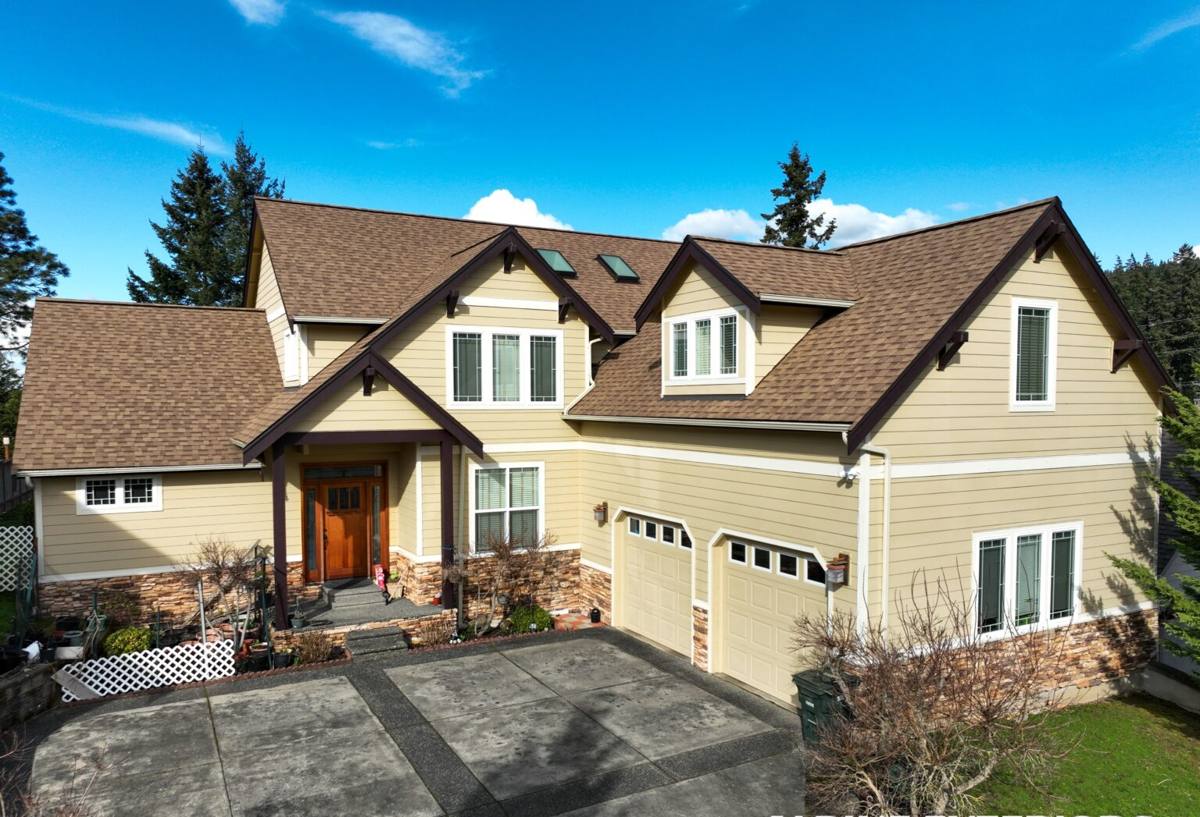
What the Climate Does to Windows Over Time
Driving Rain and Wind-Driven Moisture
Rain that falls straight down is easy on a building. Rain that's pushed sideways by wind is not. It gets forced into gaps around frames, under trim, and into any flashing detail that wasn't done right the first time. Over years, that repeated wetting is what causes rot in the framing around a window opening — long before most homeowners notice a problem with the glass itself.
Moss, Algae, and Constant Shade
Wiser Lake's tree cover and lake-effect humidity mean surfaces around your home stay damp longer than they would in a more open, sun-exposed lot. Moss and algae take hold on sills, on the tops of trim boards, and in corners where water sits instead of draining. Left alone, that growth holds moisture against wood and paint far longer than rain alone would, accelerating decay in exactly the areas a window depends on for a tight seal.
Humidity, Condensation, and Temperature Swings
Being near a lake adds ambient humidity on top of the region's normal rainfall. Combined with the temperature difference between a heated home and cold glass in winter, older or poorly sealed windows tend to fog, sweat, and eventually let moisture work its way into the frame itself. A properly specified glass package and a tight air seal cut this down significantly — but only if both are matched to the actual conditions of the site.
Signs Your Current Windows Are Losing the Battle
Most window failure is gradual, which is why homeowners often live with a declining window for years before addressing it. Watch for:
- Fogging or a permanent haze between panes — a sign the seal has failed and the gas fill (if any) is gone
- Soft or discolored wood at the sill or bottom corners of the frame
- Visible moss, algae, or dark streaking on the exterior trim around the window
- Drafts you can feel with a hand near the frame on a windy day
- Difficulty opening, closing, or locking — often a sign the frame has shifted or swollen
- Paint that keeps failing in the same spot no matter how often it's touched up
- A noticeable rise in heating costs without any other explanation
Any one of these on its own isn't necessarily urgent. Several at once, especially around the same window, usually means moisture has already gotten past the surface.
What a Correct Custom Window Installation Involves
"Custom" doesn't just mean the window is built to a non-standard size — though that's often part of it, especially in older Wiser Lake homes where openings were framed before modern standard sizing existed. It means the whole installation is planned around the specific opening, the specific wall assembly, and the specific exposure that window will face.
Removing and Inspecting the Opening
Before a new window goes in, the old one comes out and the framing gets inspected — not just glanced at. This is the point where hidden rot, prior flashing mistakes, or water staining get found and dealt with. Installing a new window over a compromised opening just hides the problem behind new trim for a few more years.
Flashing and Moisture Management
This is the single most important part of the job in a climate like ours, and it's also the part that's easiest to rush. Correct flashing directs any water that gets past the exterior cladding down and out, away from the framing, rather than letting it pool at the sill. A window can be top-quality and still fail early if the flashing beneath it wasn't sequenced correctly — house wrap, sill pan, side flashing, and head flashing all have to overlap in the right order, shingle-style, so gravity always wins.
Air Sealing and Insulation
The gap between the window frame and the rough opening needs to be sealed and insulated correctly — not stuffed with whatever's on hand. Too little insulation leaves a cold, drafty gap. Too much or the wrong material can compress and lose its effectiveness, or interfere with the window's ability to expand and contract with temperature.
Glass Package Selection
Double-pane windows with a low-E coating are the standard baseline for this climate and perform well for most homes. Triple-pane adds further insulation value and can help with condensation resistance on north-facing or heavily shaded openings — common around a wooded, lake-adjacent lot — but it comes at added cost and weight. The right call depends on the specific window's orientation and exposure, not a blanket rule for the whole house.
Frame Materials: How They Hold Up Here
Frame material matters as much as the glass, especially in a climate that stays damp for months at a time. Here's how the common options compare for a Wiser Lake property specifically:
| Frame Material | Moisture Performance | Maintenance | Typical Trade-Off |
|---|---|---|---|
| Vinyl | Won't rot; handles damp climates well | Low — occasional cleaning | Limited color/finish options; can't be repainted |
| Fiberglass | Excellent — very stable in wet, temperature-swinging conditions | Low | Higher upfront cost than vinyl |
| Wood-clad | Good if the exterior cladding and flashing are done right; the interior wood stays protected | Moderate — exterior clad needs inspection, interior wood needs occasional care | Highest cost; most traditional look |
| Solid wood | Most vulnerable to our rain and moss exposure without diligent upkeep | High — regular painting/sealing required | We recommend this only where appearance requirements make it necessary, and we're upfront about the maintenance commitment |
We don't push homeowners toward one material across the board. A shaded, moss-prone north wall and a sun-exposed south wall on the same house can reasonably get different recommendations.
What Affects the Cost of a Window Project
Every Wiser Lake home is different, so we won't quote a number without seeing the actual openings. In general, cost is driven by a handful of factors:
| Factor | Why It Matters |
|---|---|
| Number and size of openings | More straightforward math — more window, more material and labor |
| Frame material chosen | Vinyl, fiberglass, and wood-clad carry different material costs |
| Condition of the existing opening | Rot or flashing repair adds labor beyond a straight swap |
| Custom vs. standard sizing | Non-standard openings, common in older homes, cost more to source or build to |
| Glass package | Double-pane vs. triple-pane, low-E coatings, and gas fills all shift price |
Broadly, homeowners should expect a range depending on how many of these factors apply — which is exactly why we walk every job in person before giving a number.
How Our Process Works
- Free on-site walkthrough. We look at every opening being replaced, check the condition of the surrounding framing where visible, and talk through what you actually want out of the project.
- Honest recommendation. We tell you what materials and glass packages make sense for each specific window's exposure — not a one-size answer for the whole house.
- Written estimate. Clear pricing, no vague allowances, so you know what you're agreeing to before work starts.
- Removal and inspection. Old windows come out, and we tell you immediately if we find rot, mold, or prior flashing problems before covering anything back up.
- Correct installation. Proper flashing sequence, air sealing, and insulation — done the same way whether it's a single window or a whole-house replacement.
- Final walkthrough. We test operation, check seals, and make sure everything is clean and finished before we consider the job done.
Why It Matters That We Already Work Wiser Lake
A contractor who only sees a handful of jobs a year in this specific pocket of Whatcom County has to relearn the local conditions every time. A crew that regularly works Wiser Lake and the broader Semiahmoo area already knows what the moss growth pattern on a shaded lake-facing wall usually means, what flashing details tend to have been done wrong on homes of a certain age, and how much air-sealing margin actually holds up through a wet Pacific Northwest winter. That familiarity shows up in fewer surprises during the job and in windows that are specified correctly the first time, instead of a generic install that has to be revisited in a few years.
Maintaining Your Windows After Installation
A correct installation dramatically cuts down on maintenance, but it doesn't eliminate it. A little seasonal attention keeps new windows performing for their full service life:
- Rinse pollen, salt residue, and debris off exterior frames a few times a year, especially after windy stretches
- Check weep holes at the base of the frame periodically to make sure they aren't blocked by debris or moss
- Wipe down interior sills in winter if condensation collects, and address the humidity source if it's frequent
- Have caulking and exterior sealant inspected every couple of years — sealant is a wear item, not a permanent fix
If your Wiser Lake home has windows showing any of the signs above, or you're planning ahead for a project, we're happy to take a look and give you a straightforward, no-pressure estimate. There's no obligation — just an honest read on what your windows actually need. Use the form below to get started.