 Semiahmoo Exterior
 Siding That Has to Work in Wiser Lake's Conditions, Not Just Look Good on Install Day
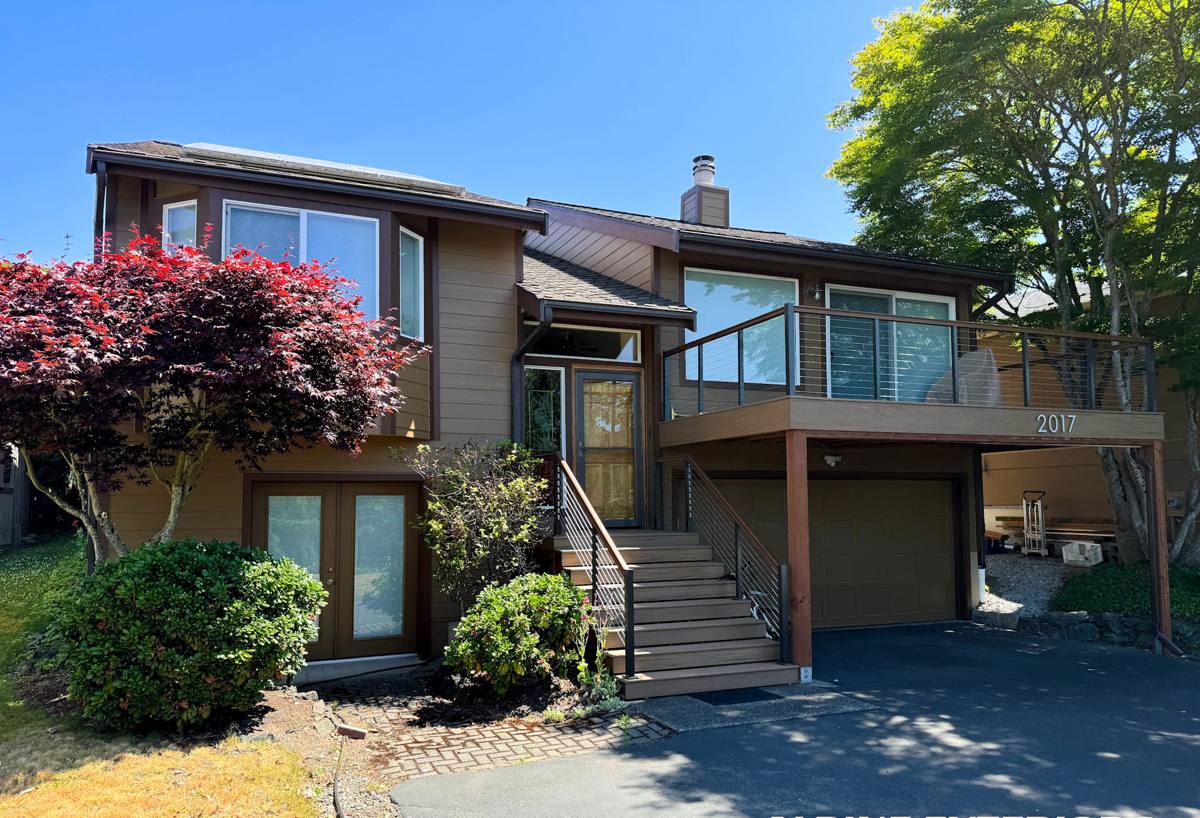
Wiser Lake sits inland from the water, but "inland" in Whatcom County doesn't mean sheltered. Weather systems move off the Strait of Georgia and Puget Sound and push salt-laden air and driving rain across this whole corner of the state, and homes here still pick up moisture and moss the way properties much closer to the shoreline do. Add in a moss season that can run most of the year in the shade of mature trees and cedar hedges common around Wiser Lake, and you have a climate that is genuinely hard on exterior cladding — even when a house never sees the actual coastline.
Homeowners in this area often assume siding problems are a coastal-only issue. They're not. Wind-driven rain, humidity that doesn't fully clear between storms, and organic growth on north- and west-facing walls are a year-round reality for Wiser Lake properties, and they wear down the wrong siding material faster than most people expect.
What Salt Air, Rain, and Moss Actually Do to a Wall System
These three factors don't damage siding in isolation — they compound each other:
- Salt-laden air accelerates corrosion on fasteners, flashing, and trim, and it degrades some paint and coating systems faster than inland-standard products are built to handle.
- Driving rain finds every gap in a wall system — around windows, at butt joints, behind poorly lapped trim — and once water gets behind siding, it doesn't dry out quickly in this climate.
- Moss and algae hold moisture against the wall surface for extended periods, which is exactly the condition that causes rot in wood-based products and premature failure in siding that isn't dimensionally stable.
Individually, any one of these is manageable. Together, over years, they expose weak points in a siding product's engineering — and they expose sloppy installation even faster.
Why We Install Only James Hardie Fiber Cement in This Area
Semiahmoo Exterior Company installs James Hardie fiber cement siding exclusively. We don't offer vinyl, LP SmartSide, primed spruce, cedar, or other fiber cement brands like Allura or Cemplank as alternatives, and that's a deliberate standard, not a sales default.
Vinyl and engineered wood products each have real trade-offs in a climate like this one. Vinyl can warp and become brittle with repeated freeze-thaw and UV cycling, and its seams are a long-term weak point for wind-driven rain. Engineered wood siding relies on treated wood fiber that is more moisture-sensitive than fiber cement, which matters directly given how much of the year Wiser Lake spends damp. Cedar looks the part but demands a maintenance schedule — refinishing, sealing, moss treatment — that most homeowners underestimate until they're several years in.
James Hardie fiber cement is a cement, sand, and cellulose fiber composite. It doesn't rot, it isn't attractive to pests, it holds paint and factory finish far longer than wood-based alternatives, and it's non-combustible, which carries real weight in a region where wildfire smoke seasons have become part of the summer. We chose to standardize on one manufacturer we trust rather than install five products with five different failure modes and warranty structures.
The Right Hardie Product Line for This Climate
James Hardie engineers its siding by climate zone under its HardieZone system, and homes here fall in the zone built for cooler, wetter Pacific Northwest conditions. That means a formulation and finish designed around moisture cycling and cooler temperatures, not the drier-climate blend used in the Southwest or Southeast. Getting the zone-correct product matters more than most homeowners realize — it's part of why we spec Hardie by region rather than treating siding as one generic product.
What a Correct Fiber Cement Siding Job Actually Involves
Fiber cement performs the way it's rated to perform only when it's installed to manufacturer specification. A large share of the siding failures we get called out to inspect aren't product failures — they're installation shortcuts. On a Wiser Lake home, the details that matter most include:
- Proper clearance from grade, decks, and roof lines so splash-back and standing moisture don't sit against the bottom course.
- Correct fastening — nail placement, spacing, and depth matter for both wind resistance and long-term panel integrity; overdriven or underdriven fasteners are a common defect we find on older re-sides.
- Weather-resistive barrier and flashing done first, with proper lapping at every penetration — windows, doors, hose bibs, vents — so the siding is the second line of defense, not the only one.
- Factory-finished ColorPlus panels where possible, which cuts down on field-cut caulked edges that are the first place moisture finds a way in.
- Butt joints and trim details sealed and lapped correctly rather than caulked and hoped for — caulk is a maintenance item, not a waterproofing strategy.
Skip any one of these and the siding may look fine for a season or two before the climate here finds the gap.
Our Process for a Wiser Lake Project
1. On-Site Assessment
We walk the exterior, check current siding condition, look at moisture history around windows and roof transitions, and evaluate tree cover and shade patterns that affect moss growth on specific walls.
2. Tear-Off and Sheathing Check
Old siding comes off and we inspect the sheathing underneath before anything new goes on. This is the point where hidden rot or water damage from a prior installation gets found and addressed — not covered up.
3. Weather Barrier and Flashing
We install or verify the weather-resistive barrier and flash every penetration before the first piece of Hardie siding goes up. This step is invisible once the job is done, which is exactly why it can't be rushed.
4. Hardie Installation to Spec
Panels or lap siding are installed to James Hardie's fastening and clearance requirements, with attention to butt joint placement and trim detailing suited to this climate.
5. Final Walkthrough
We walk the finished job with the homeowner, cover care basics, and confirm everything meets both our standard and the manufacturer's installation requirements — which also protects the transferable warranty.
What Drives Cost on a Fiber Cement Siding Project
Every home is different, so we don't quote sight-unseen — but these are the factors that most affect scope and cost on a project like this:
| Cost Factor | Why It Matters | Typical Impact |
|---|---|---|
| Tear-off vs. install over existing siding | Full removal allows sheathing inspection and repair; it's more labor but often necessary in this climate | Moderate–High |
| Hidden moisture or rot damage | Found only after old siding comes off; common on homes with prior wood or vinyl siding in wet-shaded areas | Variable |
| Siding profile (lap, panel, shingle-style) | Material and labor differ by profile; trim-heavy profiles take more install time | Moderate |
| Trim, fascia, and soffit work | Often bundled with siding replacement since it's exposed at the same time | Moderate |
| Home size, stories, and access | Multi-story homes and tight lot access add labor and equipment time | Moderate |
| Factory-finished ColorPlus vs. field-painted | ColorPlus reduces future maintenance and field-caulked joints | Low–Moderate upfront |
We walk through these line by line during your estimate so there's no guessing what you're paying for.
Maintenance and What to Expect After Installation
Fiber cement isn't zero-maintenance, but it's dramatically lower-maintenance than wood or engineered wood alternatives in this climate. Realistic expectations for a Hardie installation around Wiser Lake:
- Periodic rinsing to clear pollen, dust, and early moss growth before it establishes, especially on shaded north-facing walls.
- Visual checks after major windstorms for any loose trim or caulking that needs attention.
- ColorPlus factory finish holds color significantly longer than field-applied paint, reducing repaint cycles.
- Caulking at trim joints and penetrations should be inspected periodically and refreshed as needed — it's a small, cheap maintenance item when caught early.
Why a Crew That Already Works Wiser Lake Matters
Siding installation quality depends heavily on whether the crew understands the specific climate stresses they're building for. A contractor who mostly works drier inland regions may not instinctively over-flash a window the way this climate demands, or may not think twice about moss-prone shade patterns that are routine here. We work this part of Whatcom County regularly, which means we're not learning the region's moisture behavior on your project — we're applying what we already know holds up here.
That familiarity also shows up in smaller ways: knowing which orientations on a typical Wiser Lake lot get the least sun and the most moss, planning tear-off timing around this area's rain patterns, and setting expectations up front about what a correctly installed Hardie system should look and perform like five and ten years out.
What to Ask Before You Hire a Fiber Cement Siding Contractor
- Are they installing manufacturer-specified fasteners, clearances, and flashing details, or working off general practice?
- Will they inspect and repair sheathing before new siding goes on, not just install over existing damage?
- Do they install the climate-zone-correct Hardie product line for this region?
- Is the James Hardie warranty registered properly after installation, and does the contractor stand behind their own labor separately?
- Can they explain their weather barrier and flashing sequence in plain terms, without hand-waving?
- Do they have experience specifically in this climate, not just fiber cement installation in general?
If a contractor can't answer these clearly, that's worth knowing before, not after, the tear-off starts.
If you're considering fiber cement siding for a home in Wiser Lake, we're glad to take a look and walk you through what your specific property needs — no pressure, no obligation. Use the form below to request a free estimate.