 Semiahmoo Exterior
 Building for a Marine Neighborhood
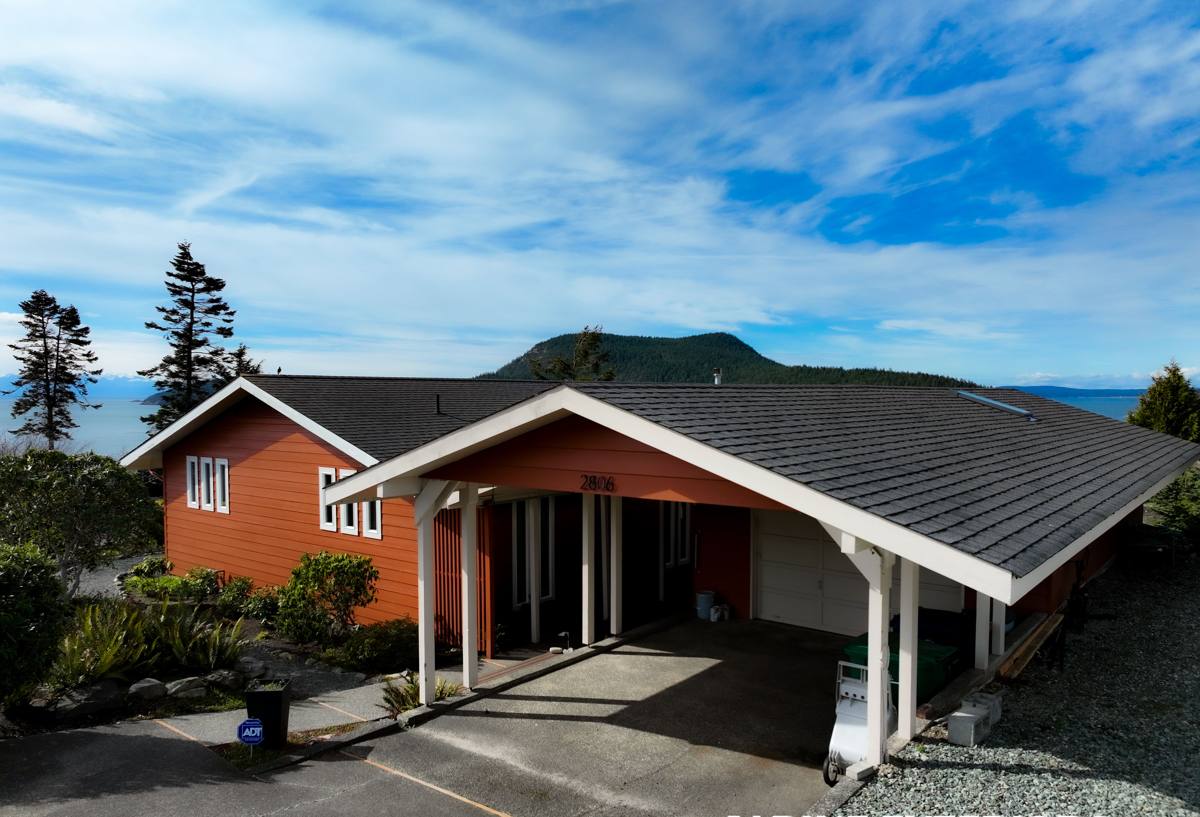
Blaine Harbor sits right where the land meets Semiahmoo Bay, and that location shapes everything about how a house ages there. Homes close to the water take on a different kind of weathering than houses a few miles inland — the air itself carries salt, the rain comes in sideways more often than it falls straight down, and the shade from evergreens combined with near-constant humidity keeps moss and algae active for most of the year. None of that means a home in Blaine Harbor is doomed to constant repair. It means the exterior has to be chosen and installed with that specific environment in mind, not treated the same as a build in a dry inland climate.
We work throughout Whatcom County, and Blaine Harbor is one of the areas where the difference between an exterior system built for coastal exposure and one that just happens to be installed near the coast shows up fastest — usually within the first few winters.
What Salt Air, Driving Rain, and Moss Actually Do to a House
Salt Air
Airborne salt is corrosive to exposed metal fasteners, flashing, and hardware, and it can accelerate the breakdown of paint films and low-quality coatings over time. It doesn't take a home to be beachfront for this to matter — Blaine Harbor's proximity to the bay means salt-laden air reaches homes well back from the water's edge, especially with the wind patterns common along this stretch of coastline.
Driving Rain
Rain that comes in at an angle behaves differently than rain falling straight down. It gets pushed under lap siding edges, around window flashing, and into any gap that wouldn't be a problem in a calmer climate. Wind-driven rain is one of the main reasons exterior products and installation details that work fine in a sheltered inland yard can fail on an exposed coastal lot — the water finds every shortcut.
Moss and Algae
Whatcom County's long, wet, mild winters give moss and algae a head start most of the year. Roofs, north-facing siding, decks, and anything shaded by trees stay damp longer, which is exactly what moss needs to establish. Left unmanaged, moss holds moisture against roofing and siding surfaces, which shortens their service life regardless of what they're made of.
Siding: Why We Only Install James Hardie
Siding takes the brunt of everything described above — salt, wind-driven rain, and constant moisture — for decades without a break. That's why we made a deliberate decision as a company: we install James Hardie fiber cement siding, and we don't install vinyl, LP SmartSide, cedar, primed spruce, Cemplank, or Allura. We want to be upfront about why, because it's a real trade-off decision, not marketing.
What the Alternatives Get Right
Vinyl is inexpensive and low-maintenance in mild conditions. Engineered wood products like LP SmartSide are lighter and easier to install quickly. Cedar and primed spruce offer a natural look many homeowners love. Each of these has a legitimate place in the market. Our objection isn't that they're bad products in general — it's that in a marine climate like Blaine Harbor's, their weak points line up almost exactly with what this environment throws at a house.
Where They Struggle Near the Water
Vinyl can warp or become brittle under repeated temperature swings and UV exposure, and its seams and butt joints are places wind-driven rain likes to work its way behind the cladding. Wood-based products, including engineered wood, are more vulnerable to moisture absorption and rot if any seal fails — and in a climate where moss and standing dampness are the norm rather than the exception, that failure point matters more than it would somewhere dry. Cedar requires ongoing staining or sealing to hold up, and salt air accelerates the breakdown of most standard coatings.
Why We Standardized on Hardie
James Hardie fiber cement is non-combustible, dimensionally stable, and doesn't absorb moisture the way wood-based products do. Hardie's HZ5 product line is engineered specifically for climates like ours — cold, wet, and coastal-influenced — and the factory-applied ColorPlus finish holds its color and resists fading and chipping far better than field-applied paint, which matters when salt air is working against every coating on the house. The warranty is transferable, which protects resale value, and installed to Hardie's spec — correct clearances, fastening, and flashing details — it's built to perform in exactly the conditions Blaine Harbor delivers year after year.
Roofing for a Wet, Mossy Climate
Roofing in Blaine Harbor has to manage two things at once: shedding a lot of rain efficiently and resisting moss growth through long stretches of overcast, damp weather. That means attention to underlayment quality, proper ventilation to reduce trapped moisture in the attic, and flashing details at every valley, chimney, and penetration — the places roofs most commonly leak first. We also look at roof design and shading on the property, since heavily shaded north-facing slopes are where moss takes hold fastest and where a maintenance plan matters most.
Windows: Keeping Wind-Driven Rain Out
Windows fail in coastal climates less because of the glass and more because of the seal and flashing around the frame. Wind-driven rain will find a poorly flashed window opening and push water behind the trim, where it can sit against wall framing unnoticed for years. When we replace windows, the flashing and integration with the surrounding siding matters as much as the window unit itself — a good window installed with careless flashing details will leak in this climate eventually.
Decks Built to Handle Coastal Moisture
Outdoor living spaces in Blaine Harbor deal with the same combination of salt air, rain, and shaded dampness as the rest of the exterior. Fasteners and hardware exposed to salt air need to be rated for it, ledger connections and flashing where the deck meets the house need to be done correctly to prevent hidden rot, and material choice — whether wood or composite — should account for how much sun and shade the specific deck location gets. A deck built without those details in mind tends to show problems at the connections and hardware first, well before the decking boards themselves are the issue.
Comparing Exterior Priorities by Component
| Exterior Component | Biggest Local Risk | What We Prioritize |
|---|---|---|
| Siding | Wind-driven rain behind joints, salt-accelerated coating failure | James Hardie fiber cement, correct clearances and fastening |
| Roofing | Moss growth on shaded slopes, valley and flashing leaks | Proper ventilation, quality underlayment, careful flashing |
| Windows | Water intrusion around frame, not through the glass | Correct flashing integration with siding |
| Decks | Hardware corrosion, hidden rot at ledger connections | Salt-rated fasteners, sound ledger flashing |
Why a Local Crew Makes a Real Difference
A crew that works across Whatcom County regularly, rather than one passing through, knows which details actually matter for a given lot — whether a home sits exposed to bay wind or tucked behind trees, how much moss pressure a particular roof orientation is likely to see, and which failure points show up first in this specific climate. That knowledge shapes decisions on material selection, flashing details, and where to spend attention versus where standard practice is already enough. It's the difference between an exterior that's technically installed correctly on paper and one that's actually built for where it sits.
A Simple Homeowner Maintenance Checklist
Even the right materials installed correctly benefit from some basic seasonal attention in a climate like this. A short list worth keeping in mind:
- Rinse salt residue and grime off siding periodically, especially on sides of the house facing the water or prevailing wind
- Keep gutters clear so rain sheds properly instead of backing up under roofing or siding edges
- Trim back tree cover where practical to reduce shade and moisture that feeds moss growth
- Have moss treated on roofing and shaded siding before it builds up thickness, not after
- Check deck hardware and ledger areas yearly for early signs of corrosion or softness
- Inspect window and door trim for cracked caulk or gaps after major storms
Getting Started
Every property in Blaine Harbor sits a little differently relative to the water, the wind, and tree cover, and that affects what an exterior actually needs. If you'd like a straightforward look at your siding, roofing, windows, or deck — what's holding up, what's worth watching, and what your options are — we're happy to walk the property and give you a free, no-pressure estimate.