 Semiahmoo Exterior
 Exterior Work Built for Sumas Homes
Sumas sits at the northern edge of Whatcom County, and homes here spend most of the year dealing with moisture in one form or another — long stretches of steady rain, damp air that never fully clears, and the kind of shaded, tree-lined lots that keep moss and mildew going strong from fall through spring. Add in the salt-tinged air that drifts inland off the Salish Sea corridor on windier days, and you've got a climate that's genuinely hard on the outside of a house. Siding, trim, roofing, and window seals all take a slow, steady beating whether a home is a few decades old or brand new.
We're a local exterior contractor working the Semiahmoo and greater Whatcom County area, and Sumas is part of our regular service territory. We handle siding, roofing, windows, and decks — the four systems that do the most work keeping water, wind, and rot out of a home. This page walks through what we typically see on Sumas homes, how our process works, and why we've standardized on one siding product instead of offering the usual lineup of options.
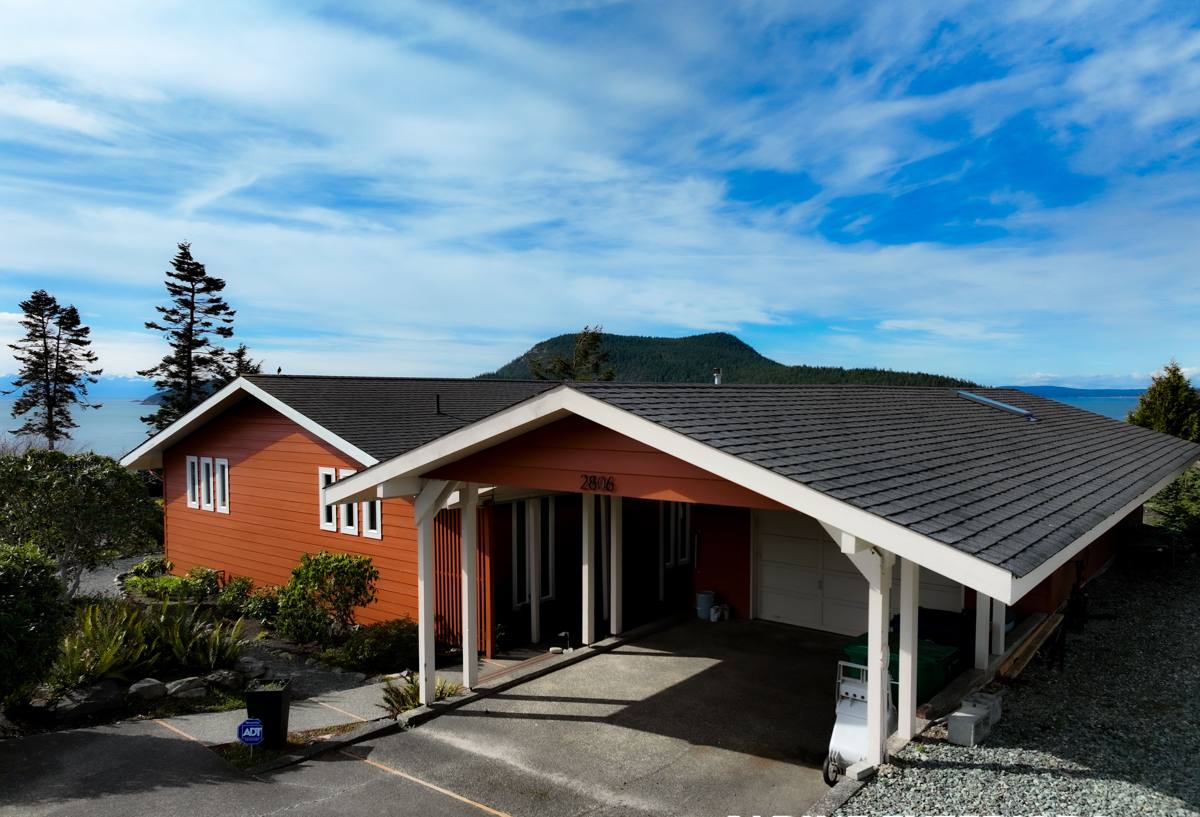
What the Climate Does to a Sumas Home Over Time
Nobody in this part of Washington needs to be told it rains a lot. What's less obvious is how that moisture actually damages a house — it's rarely a single storm, it's the cumulative effect of hundreds of gray, damp days where wood-based materials never fully dry out between soakings.
Moss, Mildew, and Constant Dampness
Shaded siding, north-facing walls, and roof valleys that don't get direct sun are where moss and algae take hold first. On wood siding or older composite products, that growth holds moisture directly against the surface, and over years that translates into soft spots, delaminating paint, and eventually rot at seams and butt joints. Roofs see the same thing along the north slope and anywhere debris collects near a chimney or dormer.
Driving Rain and Wind-Driven Water
Storms coming through this part of Whatcom County don't always fall straight down — wind pushes rain sideways into wall assemblies, and that's where poor flashing, gapped trim, or failed caulk joints become real problems. Water doesn't need a big opening to get behind siding; a hairline gap at a window head or a butt joint that's opened up half a millimeter is enough over a wet season.
Freeze-Thaw and Temperature Swings
Sumas gets colder overnight stretches than coastal Whatcom towns, being farther from the moderating effect of open water and closer to the foothills. That means more freeze-thaw cycling on trapped moisture — water gets into a crack, freezes, expands, and widens that crack a little more each winter. It's slow, but it's relentless.
Siding: Why We Only Install James Hardie
We get asked fairly often why we don't offer vinyl, LP SmartSide, or one of the other fiber cement brands like Allura or Cemplank. It's a fair question, and the honest answer is that we made a deliberate call to specialize rather than offer everything.
Vinyl
Vinyl siding is affordable and low-maintenance in a basic sense, but it's a thin plastic product that expands and contracts with temperature, can crack in a hard impact, and fades over time with UV exposure. In a climate this wet, vinyl also doesn't offer much resistance to moss and algae staining, and it's not repairable in the way fiber cement is — a damaged panel usually means a full replacement of that section.
LP SmartSide and Engineered Wood
Engineered wood siding has improved a lot over the years, but it's still a wood-based product at its core, which means it's more sensitive to sustained moisture exposure than fiber cement. In a place like Sumas where damp weather can stretch on for weeks, wood-based siding needs more diligent maintenance — caulking, painting, and prompt attention to any edge damage — to avoid swelling or soft spots down the line.
Other Fiber Cement Brands
Products like Allura and Cemplank are legitimate fiber cement options, and we're not going to tell you they don't work. Our decision to install James Hardie exclusively comes down to their factory-applied ColorPlus finish, their HZ5 product engineering for Pacific Northwest climate conditions, and the depth of their installer network and warranty backing. Standardizing on one product also means our crews install it the same correct way every time, rather than switching techniques between different manufacturers' specs.
What James Hardie Gets Right for This Area
- Non-combustible fiber cement — doesn't feed a fire the way wood-based siding can
- ColorPlus factory finish resists fading and holds up to repeated wet-dry cycling far better than field-applied paint
- HZ5 formulation is engineered specifically for high-moisture, freeze-prone climates like the Pacific Northwest
- Doesn't support moss and mildew growth the way wood or wood-composite siding does
- Transferable warranty that carries real weight if you sell the home down the line
Roofing in a High-Moisture, Moss-Prone Area
Roofing failures in Whatcom County rarely happen suddenly — they build slowly through moss holding moisture against shingles, granule loss from years of wet-dry cycling, and flashing that's degraded around chimneys, vents, and valleys. On a Sumas roof, we pay particular attention to:
- Valley and flashing condition, since that's where wind-driven rain concentrates
- Moss and organic buildup on shaded slopes, which holds water against the roofing material
- Ventilation, since a poorly vented attic traps moisture that condenses and damages roof decking from underneath
- Ice and snow load readiness for the occasional cold snap that pushes through the foothills
A roof replacement or repair is also the right time to address any siding or trim damage near the roofline, since these systems interact directly at eaves, valleys, and wall-roof intersections.
Windows: Sealing Out Wind-Driven Moisture
Older single-pane or early double-pane windows are common in this area's housing stock, and they're often where a house loses the most energy efficiency and lets in the most moisture. Failed seals show up as fogging between panes, drafts, or soft trim around the frame. When we replace windows, we're not just swapping glass — we're re-flashing the opening correctly so water can't track behind the new unit, which matters enormously in a climate with this much sideways rain.
Decks: Built to Handle a Long Wet Season
A deck in Sumas spends more of the year damp than dry. That affects everything from board spacing (for drainage and airflow) to fastener choice (corrosion-resistant hardware is not optional here) to the structural ledger connection, which is one of the most common failure points on older decks when it wasn't flashed correctly at installation. We build and repair decks with this climate in mind rather than treating it as an afterthought.
How We Work: Assessment, Plan, Install
| Step | What Happens |
|---|---|
| Initial walkthrough | We look at siding, trim, roofline, windows, and any deck structures, noting moisture damage, moss buildup, and failed seals or flashing |
| Honest scope | We tell you what needs attention now versus what can wait, and explain why — no upselling work that isn't needed |
| Written estimate | Clear pricing and materials, including why we recommend James Hardie where siding work is involved |
| Installation | Crews trained on correct flashing, fastening, and sealing details specific to this climate — not generic install methods |
| Final walkthrough | We review the completed work with you before calling the job done |
Why a Local Crew Matters Here
Exterior work in a climate like this isn't generic. A crew that mostly works drier inland regions or the other side of the mountains may not think twice about a small gap in flashing that would be a real problem after a Whatcom County winter of sustained rain. Knowing how water actually moves through wall assemblies and roof systems in this specific climate — where it comes from, where it collects, and where it does damage — comes from doing this work here, repeatedly, season after season. That's the value a local, specialized crew brings that a broader regional outfit often can't match.
Cost Factors to Expect
Every home is different, but a few things consistently move the price on exterior projects in this area:
| Factor | Why It Matters |
|---|---|
| Extent of existing moisture damage | Rot or soft sheathing found during tear-off adds repair scope before new material goes on |
| Home size and wall complexity | More corners, gables, and trim details mean more labor and material |
| Access and site conditions | Tree cover, slope, and staging space affect crew efficiency |
| Material selection | Siding profile, roofing type, and window grade all shift the budget |
| Scope bundling | Combining siding, trim, and roof work in one project can reduce overall cost versus doing each separately over time |
Signs It's Time to Call
- Moss or dark streaking that keeps returning after cleaning
- Soft or spongy spots on siding or deck boards
- Visible gaps at trim, window frames, or siding joints
- Granule buildup in gutters or bald patches on roof shingles
- Fogging or drafts around older windows
- Peeling or bubbling paint, especially on north-facing walls
If you're noticing any of these signs on a Sumas home, or you're just planning ahead for exterior work, we're happy to take a look. We offer free, no-pressure estimates — there's a form below to get started.