 Semiahmoo Exterior
 Roofing Around Wiser Lake: A Different Set of Conditions
Homes near Wiser Lake deal with a roofing environment that's tougher than it looks from the ground. You've got moisture sitting low over the water most mornings, tree cover on a lot of lots that keeps shingles shaded and slow to dry, and the same salt-tinged, wind-driven rain that works its way inland from the Semiahmoo shoreline through Whatcom County. None of that is dramatic on its own. Together, over years, it's what turns a roof that should last two decades into one that's failing at twelve or fourteen years.
A new roof installation done right for this area isn't just "put shingles on a house." It's a set of decisions about ventilation, underlayment, moss resistance, and edge detailing that specifically account for the fact that this roof will spend a lot of its life damp, shaded, and exposed to blowing rain rather than dry heat.
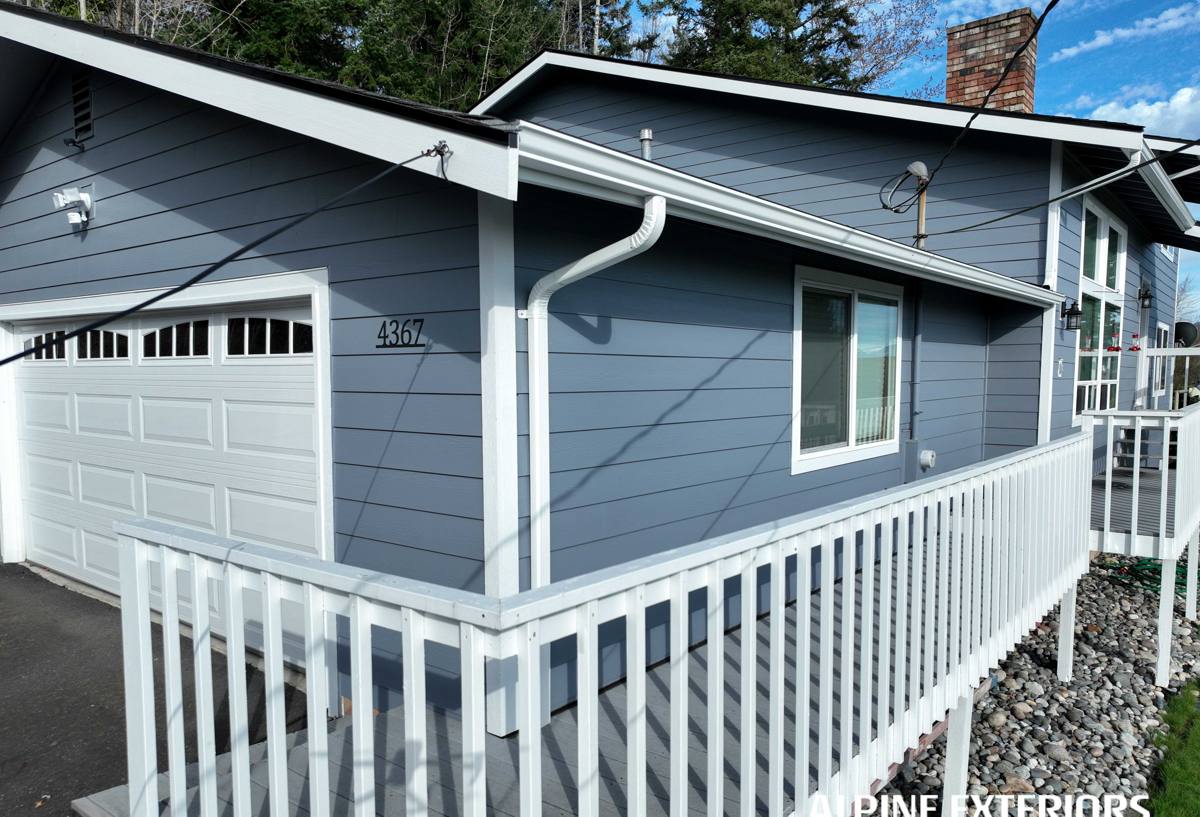
What Wiser Lake's Climate Does to a Roof Over Time
Moss and Shade
Lakeside and tree-lined lots hold moisture longer than open, sunny sites. Moss doesn't just sit on top of shingles — its rhizoids work into the granule layer and lift shingle edges, which is how small leaks start. A roof installed without moss-resistant materials or proper airflow underneath will grow moss again within a few seasons, no matter how good the shingle brand is.
Driving Rain and Wind
Rain around the lake rarely falls straight down. Wind pushes it sideways into eaves, valleys, and any place where flashing or underlayment was cut corners on. Standard nailing patterns and minimal underlayment coverage that might get away with it in a drier inland climate don't hold up here.
Long Wet Season
Whatcom County's roofing season is genuinely short. A roof here spends more months of the year wet than dry, which means slow drying, more freeze-thaw cycling in cold snaps, and more time for any small installation flaw to turn into rot before anyone notices.
Signs a Wiser Lake Roof Needs Replacement, Not Another Repair
- Granule loss showing as bald patches or granules collecting in gutters and downspouts
- Moss or dark algae staining that comes back within a year or two of cleaning
- Soft or spongy spots underfoot when walked, especially near valleys or the north-facing slope
- Daylight visible through the attic roof deck, or damp insulation below it
- Shingles cupping, curling, or cracking at the edges
- Repeated flashing leaks around chimneys, skylights, or where the roof meets a wall
- A roof approaching or past 20 years old, regardless of how it looks from the driveway
If a roof shows two or more of these, patch repairs are usually a delay, not a fix. Wet decking under a shaded, moss-prone roof doesn't dry out and heal itself — it spreads.
What a Correct New Roof Installation Involves
Tear-Off and Deck Inspection
We remove the old roofing down to the deck rather than layering over it. That's the only way to actually see what condition the plywood or OSB sheathing is in — and around Wiser Lake, finding soft or delaminated decking under an old roof is common enough that we plan for it, not treat it as a surprise change order.
Underlayment Built for Wet Climates
We use synthetic or ice-and-water-shield underlayment at eaves, valleys, and penetrations — the spots where wind-driven rain actually gets in. This is the layer that keeps a roof watertight even if a shingle gets damaged or lifted, and it matters more here than in drier regions.
Ventilation That Actually Balances
Proper intake at the eaves and exhaust at the ridge keeps the attic and roof deck drier year-round, which slows moss growth from underneath and prevents the trapped moisture that rots decking from the inside. A lot of older Wiser Lake homes have ridge vents with no matching intake, which does very little. We correct that balance as part of the installation, not as an upsell.
Flashing and Edge Detail
Chimneys, skylights, valleys, and roof-to-wall transitions are where most leaks actually originate — not the open field of shingles. We install new flashing rather than reusing old, corroded pieces, and pay particular attention to valleys given how much water a lake-area roof moves in a single storm.
Moss-Resistant Shingles
Where the roof gets shade for a meaningful part of the day — common on tree-lined Wiser Lake lots — we install algae- and moss-resistant shingle lines with copper or zinc granules built in, rather than standard shingles that will need chemical treatment or manual moss removal every year or two.
Material Comparison for This Area
| Material | Typical Lifespan Here | Moss/Moisture Behavior | Best Fit |
|---|---|---|---|
| Standard asphalt shingle | 15–20 years | Moderate moss risk without treatment; needs regular cleaning | Budget-focused, sunnier lots |
| Algae-resistant asphalt shingle | 20–25 years | Built-in copper/zinc granules resist moss and algae growth | Shaded or lake-adjacent lots — our default recommendation |
| Architectural/dimensional shingle | 25–30 years | Thicker profile sheds water faster, better wind rating | Homes wanting longer life and higher wind resistance |
| Metal roofing | 40+ years | Sheds moss and moisture almost entirely; minimal maintenance | Owners planning to stay long-term or minimize upkeep |
We don't push one material as universally "best." A shaded lot two doors from the water and a sunny open lot a quarter mile up the road can reasonably end up with different recommendations, and we'll walk you through why.
Our Installation Process
1. On-Site Assessment
We inspect the existing roof, attic, ventilation, and any problem areas in person before quoting anything. Photos and a written scope go with the estimate so you know exactly what's being replaced and why.
2. Written Scope and Material Selection
You get a clear breakdown of tear-off, decking allowance, underlayment type, shingle or metal selection, flashing, and ventilation work — no vague "roof replacement" line item.
3. Tear-Off and Deck Repair
Old roofing comes off, the deck gets inspected, and any soft or damaged sheathing is replaced before anything new goes down. This is priced honestly as we find it, not padded in advance or hidden after the fact.
4. Underlayment, Flashing, and Ventilation Install
These layers go in before the finish roofing and are what actually keep a Wiser Lake roof dry for the long haul — this is where the climate-specific work happens, not just in the shingle brand.
5. Finish Roofing Installation
Shingles or metal panels go on to manufacturer spec, with attention to nailing pattern and exposure — details that affect wind rating and warranty validity, not just appearance.
6. Final Walkthrough and Cleanup
We walk the property with you, check gutters and downspouts for debris from the job, and do a magnetic sweep for stray nails before we consider the job finished.
Cost Factors for a Wiser Lake New Roof
| Factor | Why It Matters Here |
|---|---|
| Roof size and pitch | Steeper pitches and larger footprints need more material and labor time |
| Deck condition | Rot from long-term moisture exposure often isn't visible until tear-off |
| Material choice | Algae-resistant and metal options cost more upfront but less in maintenance |
| Tree cover and access | Shaded, tree-heavy lots can mean more cleanup and moss-prevention detailing |
| Ventilation upgrades | Correcting unbalanced intake/exhaust adds modest cost but meaningfully extends roof life |
| Number of penetrations | Chimneys, skylights, and vents each need proper flashing, which adds labor |
We'd rather walk a homeowner through where their money is actually going than quote a flat number with no context. Broad ranges only get accurate once we've seen the roof.
Why a Crew That Already Works Wiser Lake Matters
A roofer who mainly works drier, sunnier parts of the region can still put on a technically fine roof — and still get moss and moisture problems back within a few years, because the underlying assumptions about ventilation and materials were built for a different climate. Working this specific area regularly means knowing which lots need extra moss protection before it's asked for, which older homes commonly have undersized ventilation, and how wind-driven rain actually moves off the lake in a storm. That's not something you get from a manufacturer's install manual — it's from doing the work here, repeatedly, and seeing what holds up and what doesn't.
Before You Get a Quote: A Practical Checklist
- Note whether your roof is fully sun-exposed, partially shaded, or mostly shaded by trees
- Check your attic (or ask us to) for daylight, damp insulation, or musty smell
- Look at your gutters for granule buildup, which signals shingle wear
- Know roughly how old your current roof is, if you have that history
- Decide whether you're planning to stay long-term (favors longer-lifespan materials) or not
- Ask any contractor directly about underlayment type and ventilation plan, not just shingle brand
These six items take a homeowner ten minutes to check and make the on-site estimate faster and more accurate.
Ready to Talk About Your Roof?
If your roof is showing moss that keeps coming back, granule loss, soft spots, or is simply getting old, we're happy to come take a look. The estimate is free, there's no pressure to sign anything on the spot, and you'll get a written scope that spells out exactly what your roof needs and why — not a generic number. Use the form below to get started.