 Semiahmoo Exterior
 Marietta's Exterior Challenge: Salt, Rain, and Moss That Never Quits
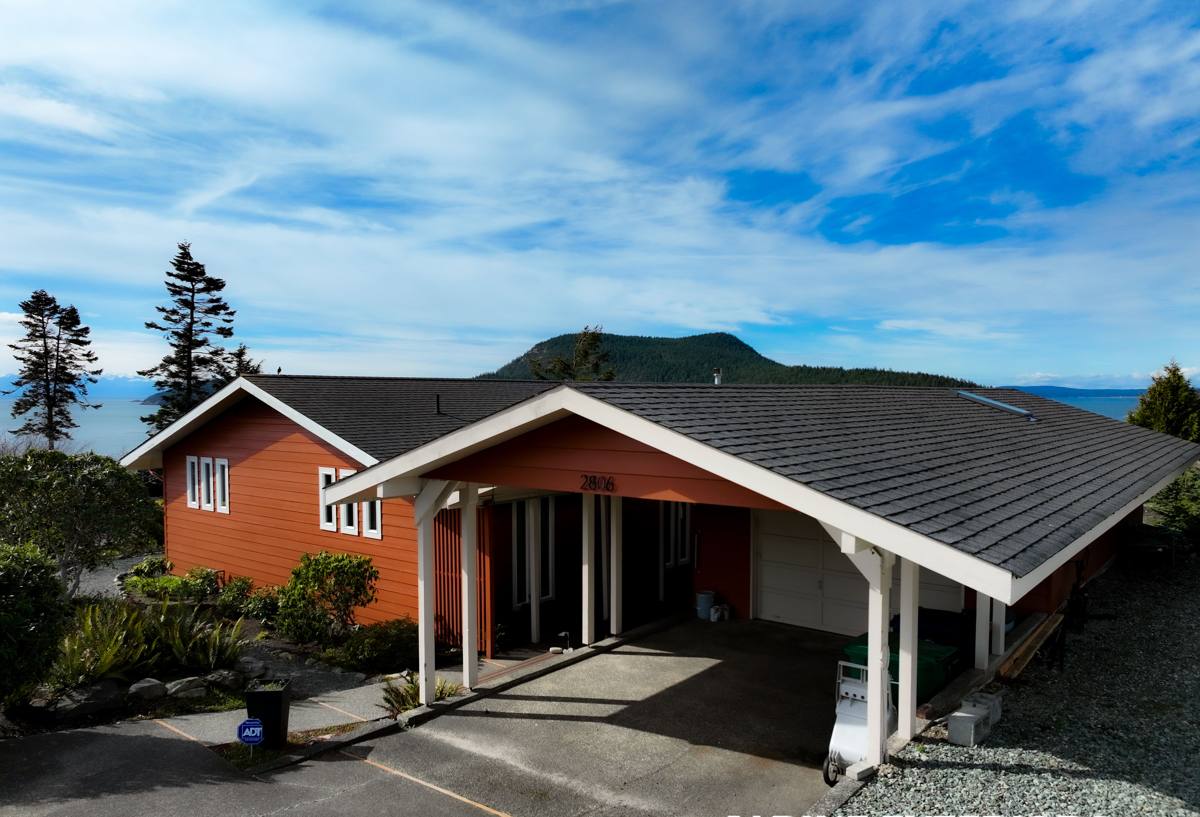
Marietta sits close enough to Semiahmoo Bay and the broader Whatcom County shoreline that homes here deal with a specific combination of stresses most inland Washington towns never see. Salt-laden air moves in off the water and settles on siding, trim, gutters, and fasteners. Add Whatcom County's long wet season — months of driving rain broken up by short, bright summers — and you get a climate that is patient but relentless. It doesn't destroy a house in one storm. It works on it year after year, finding every weak seam, every underprimed cut edge, every spot where moisture can sit instead of shed.
Moss is the most visible symptom. North-facing walls, shaded rooflines, and anything tucked under tree cover in or around Marietta grows moss faster than drier parts of the state, and moss isn't just cosmetic — it holds water against the surface it's growing on, which is exactly what wood-based and poorly sealed siding products can't tolerate long-term. That's the backdrop for every exterior decision we make on a Marietta home: what will actually hold up here, not just what looks good on install day.
Why a Local Crew Matters More Than It Sounds Like It Should
Exterior work isn't one-size-fits-all across Washington. A crew that mostly works dry-side jobs east of the Cascades will make different assumptions about flashing, ventilation, and material choice than a crew that works the Whatcom County coastline every week. We're a local outfit — Semiahmoo Exterior Company works this corner of the state, including Marietta, as our regular territory, not an occasional stop.
That matters in practical ways:
- We know which sides of a Marietta house typically take the worst wind-driven rain and plan flashing and water management accordingly.
- We're not guessing at moss patterns — we've seen which roof pitches and tree-shaded walls need extra attention.
- We can get to your job, and back to it if something needs a follow-up look, without treating it as a special trip.
- We carry manufacturer training and warranty backing specific to the products we install, so the paperwork holds up if you ever need it.
Siding: Why We Only Install James Hardie
We install James Hardie fiber cement siding exclusively. We don't install vinyl, LP SmartSide, Cemplank, Allura, primed spruce, or cedar — not because those products have no merit anywhere, but because after years of exterior work in this climate, we don't think they hold up the way homeowners expect them to in a marine environment like Marietta's.
The trade-offs with common alternatives
Vinyl siding is inexpensive and easy to install, but it's a petroleum-based product that expands and contracts with temperature swings, can crack in impact, and tends to fade over time — none of which improves in a salt-air setting. Wood-based engineered siding (like LP SmartSide) and untreated wood species (primed spruce, cedar) perform fine when installation and maintenance are perfect, but they're wood at the core, and wood's biggest enemy is sustained moisture — which is precisely what a long, damp, moss-friendly season delivers. Cut edges, nail penetrations, and any gap in the factory coating become entry points, and once moisture gets into a wood-based product, swelling and rot can follow. Other fiber cement brands like Cemplank and Allura are legitimate competitors to Hardie, but we've standardized on one product line so we can guarantee installation quality, warranty terms, and color-match consistency across every job.
What James Hardie gets right for this coastline
James Hardie fiber cement siding is non-combustible, doesn't swell or rot the way wood-based products can, and comes with a factory-applied ColorPlus finish that's baked on and warranted against fading in ways field-applied paint isn't. Hardie also makes climate-engineered HZ product lines built for different regions — a real consideration for a place that swings between wet coastal winters and drier, sunnier summers. It's not a miracle product and it still requires correct installation — proper clearances, flashing, and fastening — to perform the way it's designed to. But when it's installed to spec, it's the siding we're comfortable standing behind with a strong transferable warranty.
| Material | Moisture behavior | Maintenance | Our stance |
|---|---|---|---|
| James Hardie fiber cement | Non-combustible, doesn't rot or swell | Low — factory finish, occasional wash | What we install |
| Vinyl | Won't rot, but cracks and fades | Low, but limited repair options | Not installed |
| LP SmartSide / engineered wood | Vulnerable at cut edges and gaps | Moderate — coating upkeep matters | Not installed |
| Cedar / primed spruce | Absorbs moisture, prone to rot untreated | High — regular sealing/staining | Not installed |
Roofing: The First Line of Defense Against Moss and Rain
A Marietta roof does more work than a roof in a dry inland town. It's shedding water for a much larger share of the year, and it's the surface most exposed to moss growth on shaded pitches. We look at three things on every roofing job: the underlying decking condition, the flashing detail at every penetration and valley, and ventilation — a roof that can't breathe traps moisture underneath the shingles, which accelerates rot from the inside even when the surface looks fine.
Moss removal and prevention come up constantly in this area. Physical moss removal without damaging the roofing material, combined with zinc or copper strip installation near ridgelines, is a more durable approach than chemical treatments alone, which wash off and need reapplication. If your roof is already past the point of simple maintenance, we'll tell you honestly whether it's a repair or a replacement situation — we don't upsell a full tear-off when a targeted repair will hold.
Windows: Sealing Out Wind-Driven Rain
Windows are one of the most common failure points on coastal Washington homes, and it's rarely the glass — it's the flashing and sealant around the frame. Wind-driven rain off the bay can find its way behind poorly flashed window trim and travel into wall cavities, where it does damage long before anyone sees a stain on drywall. When we replace or install windows in Marietta, we pay particular attention to head flashing and the water-resistive barrier integration around the rough opening, because that detail matters more here than the window brand itself.
Signs a Marietta home's windows may need attention
- Soft or discolored trim around the window frame
- Drafts or fogging between panes on double-glazed units
- Visible gaps or cracked sealant at the exterior perimeter
- Difficulty opening or closing that suggests frame swelling
Decks: Built for Wet-Weather Reality
A deck near Semiahmoo Bay faces the same moisture and moss pressure as the roof and siding, plus the added stress of standing water on horizontal surfaces and ground-level contact with damp soil. Proper spacing between deck boards, correct fastening that doesn't trap water at the joint, and ledger board flashing where the deck meets the house are the details that determine whether a deck lasts one decade or three. We also pay attention to under-deck drainage and airflow, since a deck built low to wet ground without ventilation becomes a long-term moisture trap regardless of the decking material itself.
How a Project Typically Works
1. Walkthrough and honest assessment
We look at the actual condition of your siding, roof, windows, or deck — not just the surface — and tell you what we find, including if something doesn't need full replacement yet.
2. A clear, written scope
You'll know what's being done, what materials are involved, and roughly what it will cost before work starts.
3. Installation to manufacturer spec
Especially with James Hardie siding, correct installation — clearances, fastening pattern, flashing — is what makes the warranty mean anything. We don't cut corners here.
4. Cleanup and a final walkthrough
You see the finished work before we consider the job done.
A Quick Checklist Before You Hire Anyone
- Ask what siding, roofing, or window products they actually install and why — a contractor who only pushes one option should be able to explain the reasoning.
- Confirm they're licensed and insured to work in Washington state.
- Ask how they handle flashing and moisture management specifically, not just "we install X brand."
- Get the warranty terms in writing, including whether it's manufacturer-backed or just a workmanship guarantee.
- Ask whether they regularly work in your specific area — coastal experience isn't universal across contractors.
What Marietta Homeowners Should Prioritize First
If you're deciding where to start, prioritize whatever is currently letting moisture in — a compromised roof section, failing window seals, or siding with visible gaps or soft spots — over cosmetic concerns. Moss and salt exposure are steady, background pressures, but active water intrusion is the thing that turns a maintenance item into a structural repair. A local assessment can usually tell you within an hour which category your situation falls into.
If you're in Marietta and want a straight answer on what your siding, roof, windows, or deck actually need, we're happy to take a look. Reach out for a free, no-pressure estimate using the form below.