 Semiahmoo Exterior
 Building Decks for Wiser Lake's Weather, Not Against It
Wiser Lake sits in the part of Whatcom County where marine air off the Strait of Georgia and Semiahmoo Bay meets the wet, mossy interior climate of the lowlands. Homes here don't just deal with rain — they deal with driving rain that comes in sideways during winter storms, salt-laden air that finds its way into every exposed fastener and joint, and a moss season that can stretch from October well into May. A deck that's built the same way you'd build one in a dry inland climate will show problems within a few years: soft spots, rusted hardware, slick algae buildup, and boards that cup or split. A deck built for this specific environment holds up because every material and detail was chosen with that environment in mind.
This page is about one thing: deck building for homes in and around Wiser Lake. Not a generic overview of decks everywhere — what actually matters for a deck that has to survive Whatcom County winters year after year.
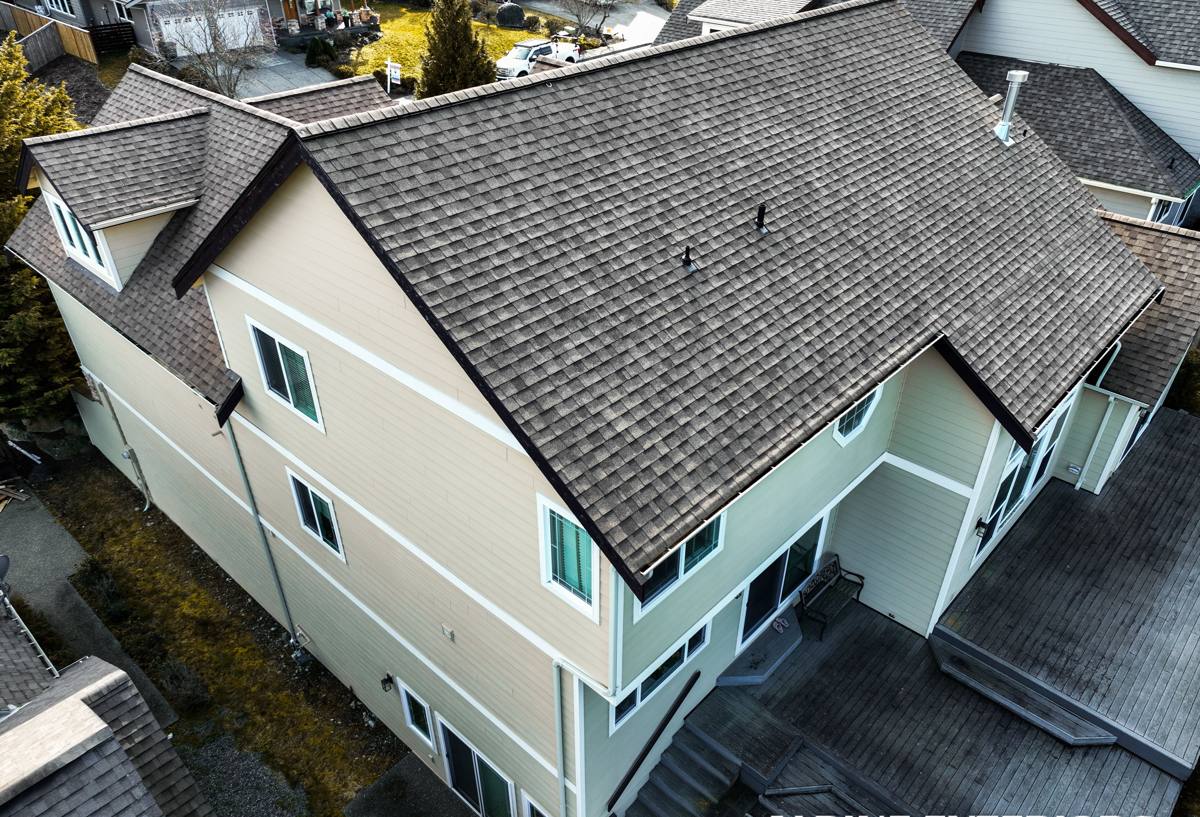
What Local Homes Actually Need From a Deck
Before we talk about lumber species or fastener grades, it helps to understand what a deck in this area is actually up against over its lifetime.
Moisture That Doesn't Let Up
The Pacific Northwest doesn't get hurricanes, but it gets something arguably harder on a structure: months of steady, low-intensity moisture. Wood that stays damp for weeks at a time is far more vulnerable to rot than wood that gets soaked once and dries out fast. Deck framing near Wiser Lake needs to be built with drainage and airflow as first-order design goals, not afterthoughts.
Salt Air on Metal
Proximity to Semiahmoo Bay and the Strait means airborne salt reaches inland further than most homeowners expect, especially on exposed, elevated decks. Standard zinc-coated deck screws and joist hangers that would be fine in a landlocked state can start showing rust streaks within a season or two out here. That rust isn't just cosmetic — it weakens the connection long before the wood around it fails.
Moss and Algae Underfoot
Shaded decks near mature trees, or decks on the north side of a house, can grow a slick coat of moss and algae within a single wet season if the boards don't dry between rains. That's a slip hazard as much as a maintenance headache, and it's one of the most common complaints we hear from homeowners who had a deck built by a crew unfamiliar with this climate.
What a Correct Deck Build Involves
Framing and Structural Wood
Ground contact and near-ground contact framing members need to be rated for the exposure they'll actually face — not the minimum the lumber yard has in stock. Beams, posts, and any wood within splash distance of grade should carry the appropriate pressure-treated rating, and every cut end or field drill point needs to be field-treated with sealant before it's buried in the structure. This is a step that's easy to skip and impossible to inspect once the decking is down.
Decking Material Options
There's no single "right" decking material for Wiser Lake — the right choice depends on your budget, how much upkeep you want to do, and how much sun or shade the deck gets. Here's how the common options actually compare in this climate:
| Material | How It Handles This Climate | Maintenance | Typical Lifespan Here |
|---|---|---|---|
| Pressure-treated wood | Good if properly sealed and re-sealed; prone to splintering and moss growth if neglected | Annual cleaning, re-sealing every 1-2 years | 10-15 years |
| Cedar | Naturally rot-resistant, ages well visually, but softer and needs consistent upkeep | Cleaning and oiling every year or two | 15-20 years |
| Composite decking | Handles moisture and moss growth well; some early-generation products stained or absorbed moisture at cut edges | Periodic washing, no sealing | 25+ years |
| PVC/capped composite | Fully sealed surface, best resistance to moss staining and moisture | Occasional washing | 25-30+ years |
We don't push one material on every homeowner. We'll walk through the honest trade-offs — cedar looks and feels great but asks more of you every year; composite and PVC cost more up front but ask almost nothing of you after installation. What matters is that whichever material you choose, it's installed correctly for how it behaves when wet.
Moss, Algae, and Drainage Details That Actually Matter
Most moss and slip problems on decks aren't a decking material failure — they're a design failure. Boards installed tight with no gap, joists without adequate airflow underneath, and decks built low to grade with poor drainage all but guarantee moss within a couple of wet seasons. Correct board spacing lets water shed instead of pooling, proper joist spacing and blocking allow air to move underneath the deck so wood can actually dry between storms, and grading beneath and around the deck should direct water away rather than letting it sit. On lower decks or decks near grade, we also look at whether the ground beneath needs its own drainage path — a detail that's often skipped entirely on quick installs.
Railings, Fasteners, and Hardware for This Environment
Hardware is where a lot of decks quietly fail years before the wood does. For homes near Wiser Lake, we spec fasteners and structural connectors rated for the moisture and salt exposure they'll actually see — stainless or heavy hot-dip galvanized hardware rather than the standard coated screws that are fine in drier climates. Railing posts and connections take the most weather exposure and the most physical stress, so they get extra attention at both the fastening and the flashing. A railing that's structurally solid but rusting at every screw head within two years isn't a deck we consider done right.
Our Process, Start to Finish
1. On-Site Assessment
We walk the property, look at sun and shade exposure, drainage patterns, and how the deck will connect to the house, and talk through what you actually want to use the space for.
2. Design and Permitting
Deck size, height, and proximity to property lines all factor into whether a permit is required under Whatcom County building rules, and decks near a lake or shoreline can carry additional setback considerations. We handle the permitting process so you don't have to chase it down yourself.
3. Footings and Framing
Footings are set below frost depth and sized for the actual load of the deck. Framing goes up with treated lumber, sealed cut ends, and hardware rated for this climate — this is the stage where a deck's real lifespan is decided, even though it's the least visible once the project is done.
4. Decking, Railing, and Finish Work
Decking is installed with correct spacing for drainage and material expansion, railings are set and finished, and any stairs or lighting are completed. We walk the finished deck with you before we consider the job done.
Maintenance Reality for Wiser Lake Homeowners
Even a well-built deck needs some seasonal attention in this climate. Here's what we recommend regardless of which material you choose:
- Sweep leaves and debris off the deck regularly in fall — trapped organic matter is what feeds moss growth
- Rinse or wash the surface at least once or twice a year to clear early moss and algae before it takes hold
- Check railing posts and stair connections annually for movement or corrosion at fastener points
- Reseal wood decking on the schedule appropriate to the species — don't wait until it's visibly graying and cracking
- Keep gutters and downspouts near the deck clear so runoff isn't dumping extra water onto or under the structure
- Clear debris from underneath the deck periodically so airflow isn't blocked and moisture can escape
What Affects the Cost of a Deck Build Here
| Factor | Why It Matters in This Climate |
|---|---|
| Decking material | Composite and PVC cost more upfront but reduce long-term maintenance in a wet, moss-prone climate |
| Deck height and footing depth | Frost depth and elevation change how much structural work footings require |
| Hardware and fastener grade | Salt-air-rated hardware costs more than standard coated fasteners but avoids early corrosion |
| Drainage and grading work | Sites with poor natural drainage may need additional grading or a drainage path under the deck |
| Permitting requirements | Size, height, and proximity to property lines or the lake can affect permit scope and timeline |
We give straightforward, itemized estimates so you can see exactly where the cost is going and where you have room to adjust based on your budget.
Why a Crew That Already Works This Area Matters
A deck builder who mainly works dry inland climates will often default to standard-grade materials and fasteners because that's what works where they usually build. In Wiser Lake, that same build can start showing rust and moss problems within a couple of years. Working this specific area repeatedly means we already know which fastener grades hold up, how local drainage and grading tend to behave, what Whatcom County's permitting process actually requires for a given lot, and where moss takes hold fastest on a typical property here. That local pattern recognition is the difference between a deck that needs real attention in year three and one that's still solid in year twenty.
If you're planning a new deck or replacing one that hasn't held up to the weather out here, we're happy to take a look and walk you through your options. Estimates are free, there's no pressure, and you'll get a clear, honest picture of what your project actually needs before you decide anything.