 Semiahmoo Exterior
 Asphalt Shingle Roofing Built for Marietta's Coastline
Marietta sits close enough to the water that its roofs live a different life than roofs twenty miles inland. Homes here take on salt-laden air off the bay, long stretches of driving rain through the fall and winter, and a moss season that can run most of the year in shaded, north-facing sections of a roof. Asphalt shingles remain one of the most practical, cost-effective roofing choices for this kind of exposure, but only when they're specified, installed, and maintained with this exact climate in mind. A shingle roof that would perform fine in a drier, inland part of Whatcom County can fall short here if the installer treats Marietta the same as anywhere else.
We work in this area regularly, which means we're not guessing at what the coastline does to a roof over time. We see the early signs of granule loss from wind-driven rain, the moss colonies that start in shaded valleys and north slopes, and the soft, slow damage that salt air does to exposed metal fasteners and flashing long before a homeowner notices a leak. This page focuses on one thing: what a correctly built asphalt shingle roof looks like for a Marietta home, and why the details matter more here than in most places.
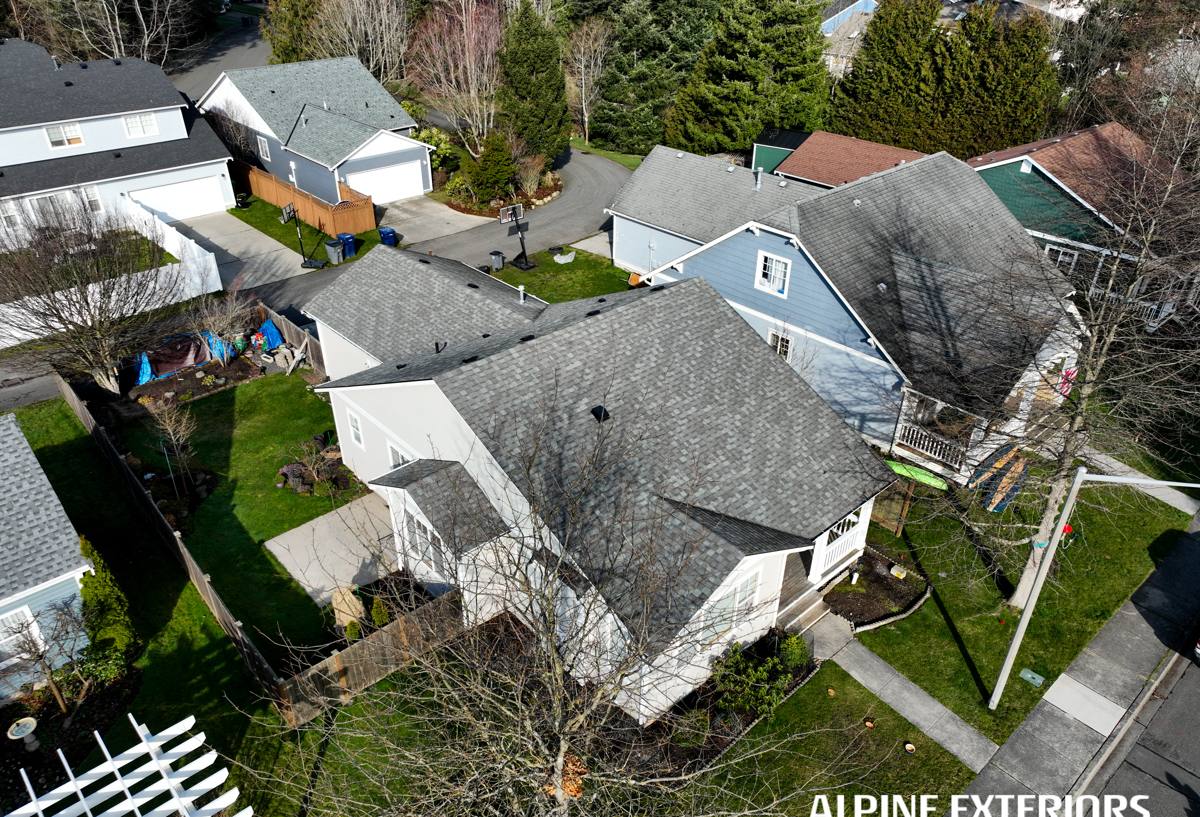
What Marietta's Climate Actually Does to a Roof
Salt Air and Metal Fatigue
Proximity to Semiahmoo Bay means airborne salt reaches roofs even without a direct ocean view. Salt accelerates corrosion on exposed metal — nail heads, flashing edges, vent housings, and drip edge — well before the shingles themselves show their age. A roof can look fine from the ground while its flashing and fasteners are quietly corroding underneath. This is why fastener and flashing material selection matters as much as the shingle brand on a coastal Whatcom County home.
Driving Rain and Wind-Driven Water
Rain in this part of Washington doesn't always fall straight down. Wind off the water pushes it sideways, which means water finds its way under standard-lapped shingles, around poorly sealed penetrations, and into valleys that weren't detailed with enough underlayment overlap. A roof built for a calmer inland climate, with minimal ice-and-water shield and standard lap coverage, is more likely to develop slow leaks here than the same roof built with coastal-grade detailing.
Moss, Shade, and Organic Growth
Marietta's tree cover and marine humidity create ideal conditions for moss and algae on shaded roof slopes. Moss isn't just a cosmetic problem — as it grows, its root structure lifts shingle edges, holds moisture against the roof deck, and accelerates granule loss. A roof with poor airflow and no moss-resistant strategy will show moss within a few seasons in shaded sections, even if the rest of the roof looks new.
What a Correct Asphalt Shingle Job Involves Here
A roof that's going to hold up in Marietta needs more than a good shingle nailed to the deck. The system underneath and around the shingles is where most coastal roofing failures actually start. A properly built roof for this area includes:
- A synthetic underlayment rated for extended UV and moisture exposure, not the minimum felt underlayment
- Ice-and-water shield extended further into valleys and eave lines than a standard inland install would call for
- Corrosion-resistant fasteners and flashing — stainless or heavy-coated options over standard galvanized where budget allows
- Properly lapped step and counter-flashing at every wall intersection and chimney, sealed rather than just caulked
- Balanced intake and exhaust ventilation to reduce trapped moisture that feeds moss and mildew
- Shingles with a algae/moss-resistant granule treatment on shaded or north-facing slopes
- Careful nailing pattern and placement, since improperly set fasteners are one of the top causes of early wind and rain intrusion on coastal roofs
None of this is exotic. It's the same asphalt shingle system used across the country, just specified and installed with the understanding that this roof will spend its life near salt air and heavy rain rather than in a mild, dry climate.
Our Process for a Marietta Roof
1. Roof and Site Assessment
We start by looking at slope exposure, existing moss or algae patterns, ventilation, and the condition of flashing and fasteners — not just the shingles. Shade patterns and prevailing wind direction on your specific lot matter for how we detail the roof.
2. Tear-Off and Deck Inspection
A full tear-off lets us check the deck for soft spots, moisture staining, or rot that's often hidden under older shingles, especially around valleys and penetrations where coastal moisture tends to concentrate first.
3. Underlayment and Flashing Detail
This is where a coastal roof either gets built right or doesn't. We extend water-resistant underlayment coverage in vulnerable areas and install flashing sized and sealed for wind-driven rain, not just standard vertical rainfall.
4. Shingle Installation
Shingles go down with attention to nailing pattern, exposure, and sealant activation — asphalt shingle sealant strips need proper heat and pressure to bond, which we account for in cooler, damp installation conditions common here.
5. Ventilation and Moss Prevention Review
Before we finish, we confirm intake and exhaust ventilation is balanced and note any slopes that will need periodic moss treatment given their shade exposure.
6. Walkthrough and Documentation
We walk the finished roof with you, explain what was done differently for the coastal exposure, and leave you with a clear picture of what maintenance, if any, the roof will need going forward.
Comparing Shingle Tiers for a Coastal Whatcom County Home
| Factor | Standard 3-Tab / Builder Grade | Architectural / Laminate | Premium Algae-Resistant Architectural |
|---|---|---|---|
| Wind resistance | Lower rated, more prone to lifting in gusty coastal wind | Higher wind rating, better mat construction | Highest wind rating in most product lines |
| Moss/algae resistance | None built in | Sometimes available as upgrade | Copper or zinc granules built in to resist growth |
| Expected lifespan in this climate | Shorter, especially on shaded slopes | Moderate to long with proper ventilation | Longest, particularly on moss-prone slopes |
| Upfront cost | Lowest | Mid-range | Highest per square |
| Best fit | Rarely recommended on exposed coastal slopes | Good general-purpose choice for most Marietta homes | North-facing, heavily shaded, or high-moss-history roofs |
We generally steer coastal homeowners away from basic 3-tab shingles on exposed or shaded slopes — not because the product is defective, but because its wind rating and lack of algae resistance make it a poor match for this specific climate. That's a professional recommendation based on trade-offs, not a claim that any manufacturer's product fails.
Signs Your Marietta Roof Needs Attention
Coastal roofs tend to show trouble in patterns you can catch early if you know what to look for:
- Dark streaking or green-black patches on shaded slopes — early algae or moss growth
- Granules collecting in gutters or downspouts after storms
- Shingle edges that look lifted, curled, or cupped, especially after windy weather
- Rust staining around vent pipes, flashing, or metal fixtures
- Interior ceiling stains near chimneys, skylights, or wall-roof intersections
- Visible moss buildup thick enough to hold a footprint
Catching these early is far less costly than waiting for an active leak, since most coastal roof failures start as slow moisture intrusion rather than sudden damage.
Maintenance That Actually Matters Here
Asphalt shingle roofs in Marietta benefit from a maintenance rhythm that's a little more active than what you'd need further inland. A yearly or twice-yearly check of moss-prone slopes, gutter and downspout clearing before the heavy fall rains, and periodic inspection of flashing and fasteners will catch most problems while they're still cheap to fix. Pressure washing shingles is not something we recommend — it strips granules and shortens shingle life. Soft, low-pressure moss treatment and manual clearing is the safer approach for extending the life of the roof.
Why Hiring a Crew That Works This Area Matters
A roofing crew that mostly works dry, inland jobs will default to standard underlayment coverage, standard fastener specs, and standard ventilation — because that's what works where they usually build. On a Marietta roof, those defaults leave gaps. We know which slopes on a coastal lot tend to hold moss, how far wind-driven rain typically pushes under standard flashing details, and which shortcuts show up as leaks two or three winters later instead of on install day. That familiarity with Whatcom County's marine climate is the difference between a roof that's built to spec and a roof that's built for where it actually sits.
Get an Honest Look at Your Roof
If you're not sure whether your current roof is holding up to Marietta's salt air and rain, or you're planning a replacement and want it done right for this climate, we're happy to take a look. Reach out for a free, no-pressure estimate — we'll walk the roof, explain what we see, and give you a straight answer, whether that means a full replacement, targeted repairs, or just a maintenance plan to get more years out of what's already up there.