 Semiahmoo Exterior
 Why Marietta Decks Wear Differently Than Decks Inland
Marietta sits close enough to Semiahmoo Bay and Drayton Harbor that salt-laden air is part of daily weather, not an occasional event. Add Whatcom County's long wet season and the shade from mature evergreens common in this part of the county, and you get a combination that's tough on outdoor wood and hardware: constant moisture, slow drying times, and airborne salt that speeds up corrosion on anything metal. A deck built the same way here as it would be twenty miles inland simply doesn't age the same way.
That's not a reason to avoid having a deck — it's a reason to repair and maintain one with the local conditions in mind. Most of the deck failures we see in Marietta aren't dramatic. They're small, ignored problems — a soft board, a rusting bracket, a patch of moss that never dries out — that get worse every wet season until they become structural.
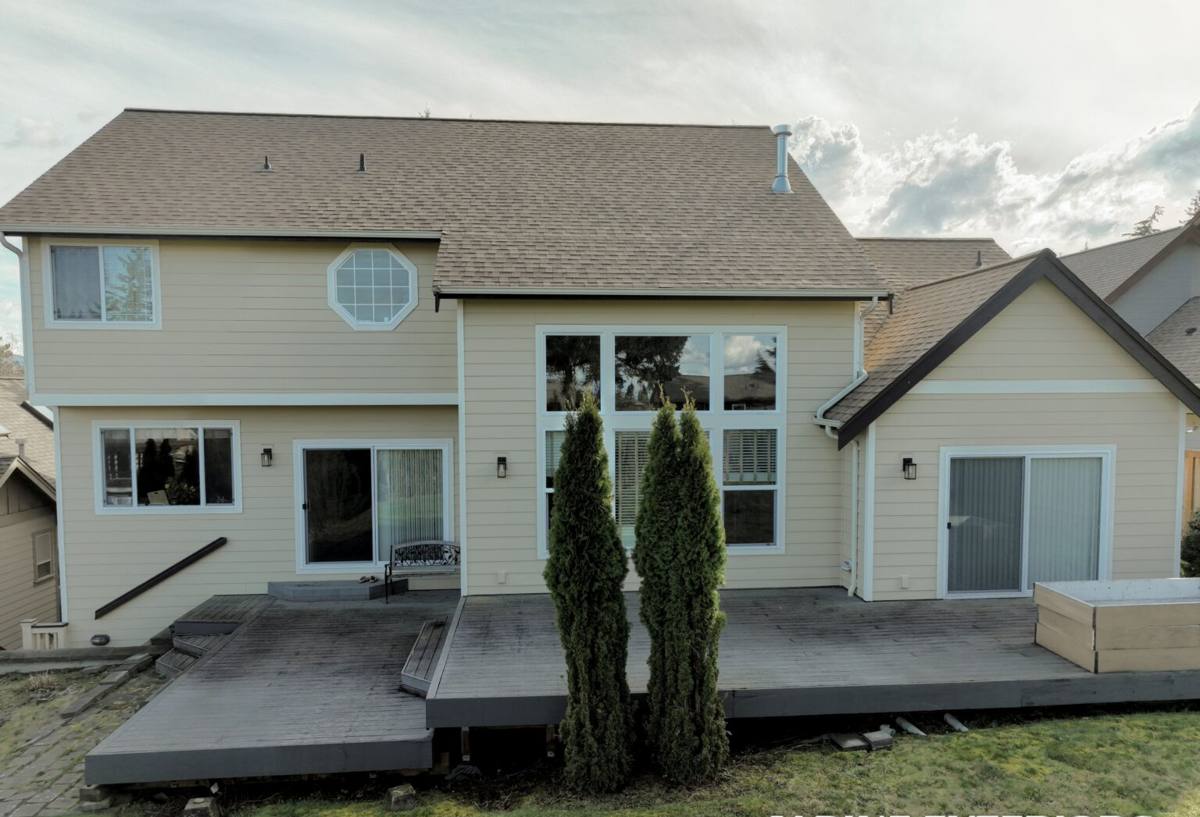
What Salt Air, Rain, and Moss Actually Do to a Deck
Each of these three factors damages a deck in a different way, and understanding the difference matters when you're deciding what actually needs to be repaired.
- Salt air accelerates corrosion on fasteners, joist hangers, and any exposed metal railing hardware. Once a fastener starts rusting, it loses holding strength long before it looks obviously bad from a few feet away.
- Driving rain pushed sideways by coastal wind gets into joints and seams that would stay dry in a calmer climate — around ledger boards, post bases, and butt joints in decking.
- Moss thrives in shaded, damp spots and holds water directly against wood fibers. It also makes boards slick, which is a safety issue as much as a materials one.
Individually, none of these is unusual for the Pacific Northwest. Together, and applied continuously along the water, they shorten the useful life of an untreated or poorly maintained deck.
Signs a Marietta Deck Needs Repair — Not Just a Cleaning
A pressure wash and a fresh coat of sealant fixes the way a deck looks. It doesn't fix any of the following, all of which we see regularly on repair calls in this area:
- Boards that feel soft, spongy, or flex noticeably when you walk on them
- Rust staining bleeding out from screw heads or bracket edges
- Gaps opening up where the deck meets the house (ledger board separation)
- Railings or posts that wiggle more than they should when pushed
- Persistent moss or algae in the same spots every year, even after cleaning
- Discoloration or a slightly different sound (a dull thud instead of a solid knock) when tapping a board
- Visible daylight or gaps between joists and the framing they attach to
Any one of these is worth a look. More than one usually means the damage has moved from cosmetic to structural, which changes the scope of the repair.
What a Correct Deck Repair Actually Involves
A repair that only replaces the boards you can see, without checking what's underneath, tends to fail again within a season or two in a climate like this one. Here's what we check and address on a Marietta repair.
Ledger Board and Flashing
The ledger board — where the deck attaches to the house — is the single most common source of hidden rot, because water tends to collect right at that seam. Correct repair means checking the flashing behind it, not just the board itself. If flashing is missing, damaged, or was never installed correctly, replacing boards without fixing the flashing just delays the same failure.
Framing, Joists, and Hardware
Joists and beams underneath the visible decking take on moisture from below and often show damage before the surface boards do. Metal joist hangers and structural fasteners near the coast corrode faster than people expect — we check these for rust-through, not just surface staining, and replace with coated or stainless hardware rated for coastal exposure where it matters most.
Decking Boards and Fasteners
Whether your deck is wood or composite, individual board replacement should match the existing material's behavior — wood swells and shrinks with moisture, composite doesn't, and mixing repair techniques between the two causes problems later. Fastener choice matters as much as the board: the wrong screw in a salt-air environment can rust and stain the deck around it within a year or two.
Railings, Posts, and Stairs
Railings take constant hand contact and structural load, so post rot at the base — often hidden under a post cap or trim — gets a specific check. Stair stringers are inspected the same way, since they carry concentrated weight and are often the last thing anyone thinks to check.
Repair or Replace? What Actually Decides It
Not every damaged deck needs to be torn out. The honest answer depends on where the damage is and how much of the structure it's reached.
| Factor | Leans Toward Repair | Leans Toward Replacement |
|---|---|---|
| Location of damage | Isolated boards or a single post | Ledger board, multiple joists, or main beams |
| Age of the deck | Under 10-15 years, framing sound | Original framing near or past its service life |
| Extent of moss/rot | Surface-level, recent | Long-term, soft wood throughout |
| Fastener condition | Localized rust | Widespread corrosion in structural hardware |
| Cost relative to new | Repair is a fraction of replacement cost | Repair cost approaches most of a rebuild |
We'll always tell you honestly which side of that table your deck falls on. A deck with isolated damage and sound framing almost always makes more financial sense to repair. A deck with rot reaching the structural members is money better spent on a rebuild that's done right the first time for this climate.
Materials That Hold Up Near Semiahmoo Bay
Material choice on a repair matters more here than it would somewhere drier. A few standards we hold to on Marietta jobs:
- Fasteners: stainless steel or heavy hot-dip galvanized, not standard coated screws, anywhere exposed to salt air or standing moisture.
- Flashing: corrosion-resistant flashing at the ledger board, installed so water sheds away from the house rather than behind the siding.
- Wood repairs: matched species and grade to the existing deck, with cut ends sealed before installation — an exposed, unsealed cut end is where rot starts fastest.
- Composite repairs: matched to existing board profile and color line where possible, since manufacturers change these over time and mismatches are hard to hide.
We're not going to tell you one decking product is universally "better" — wood and composite both have a place, and the right call depends on your deck's age, budget, and how much upkeep you want to do. What we won't do is patch a coastal-exposed deck with hardware or flashing that isn't rated for the environment it's sitting in, because that repair won't last and we'd rather tell you that upfront than sell you a fix that fails again in two winters.
Our Repair Process
- Inspection: we check the visible decking, then get underneath to look at joists, beams, ledger flashing, and post bases — the parts most homeowners can't easily see themselves.
- Honest scope: you get a clear picture of what's cosmetic, what's structural, and what your real options are, including repair-versus-replace where relevant.
- Plan and permitting check: if the repair involves structural framing changes, we check whether Whatcom County permitting applies before work starts.
- Repair: damaged material is removed and matched, hardware is upgraded where the original was undersized or wrong for the exposure, and flashing is corrected if it's contributing to the problem.
- Cleanup and walkthrough: site is cleaned, and we walk the finished repair with you so you know what was done and what to watch going forward.
Why a Crew That Already Works Marietta Matters
Deck repair done by someone unfamiliar with this stretch of Whatcom County often treats every deck the same, regardless of exposure. A crew that already works Marietta and the surrounding Semiahmoo area knows which details get skipped on decks built without the coastline in mind — where flashing tends to fail first, which fastener choices don't hold up, and which shaded spots on a lot will keep growing moss no matter how many times they're cleaned. That local pattern recognition is the difference between a repair that fixes the visible problem and one that fixes the actual cause.
After the Repair: Keeping Moss and Moisture From Coming Back
A good repair buys you time, but ongoing care in this climate is what makes it last. A short seasonal routine goes a long way:
- Clear leaves and debris from between boards before wet weather sets in — trapped debris holds moisture against wood and feeds moss growth.
- Rinse or sweep shaded, north-facing areas more often, since these dry out slower and grow moss first.
- Reseal or refinish wood decking on the schedule appropriate for its product — coastal exposure often shortens the interval compared to inland recommendations.
- Check fastener heads and metal hardware once a year for early rust staining, before it spreads.
- Keep gutters and downspouts near the deck clear, since overflow directed onto or under a deck accelerates every problem above.
None of this replaces a proper repair when framing or hardware has already failed — but it stretches the life of a repair that's been done correctly.
If you're seeing soft spots, rust stains, or a deck that just doesn't feel as solid as it used to, we're happy to take a look. We offer a free, no-pressure estimate — walk us through what you're noticing, and we'll tell you honestly what it needs. Use the form below to get started.