 Semiahmoo Exterior
 Storm Damage Roofing in Marietta: A Different Set of Problems Than Inland Repairs
Marietta sits close enough to the water that a roof here fights a different battle than one twenty miles inland. Wind off the Strait and Semiahmoo Bay drives rain sideways into laps and flashing that were only ever designed to shed water falling straight down. Salt-laden air accelerates corrosion on anything metal — nail heads, flashing seams, vent boots with metal collars. And Whatcom County's long, wet moss season means organic growth is working on the roof surface nearly year-round, not just in a short shoulder season. When a windstorm or heavy rain event hits, it's rarely one clean, obvious problem. It's usually storm damage landing on top of a roof that was already being worn down by the local climate.
That combination is why storm damage repair in Marietta needs to be diagnosed carefully, not just patched at the visible spot. A missing shingle after a windstorm is the easy part to see. What matters more is what's happening underneath it, and whether the storm exposed a weakness that was already there.
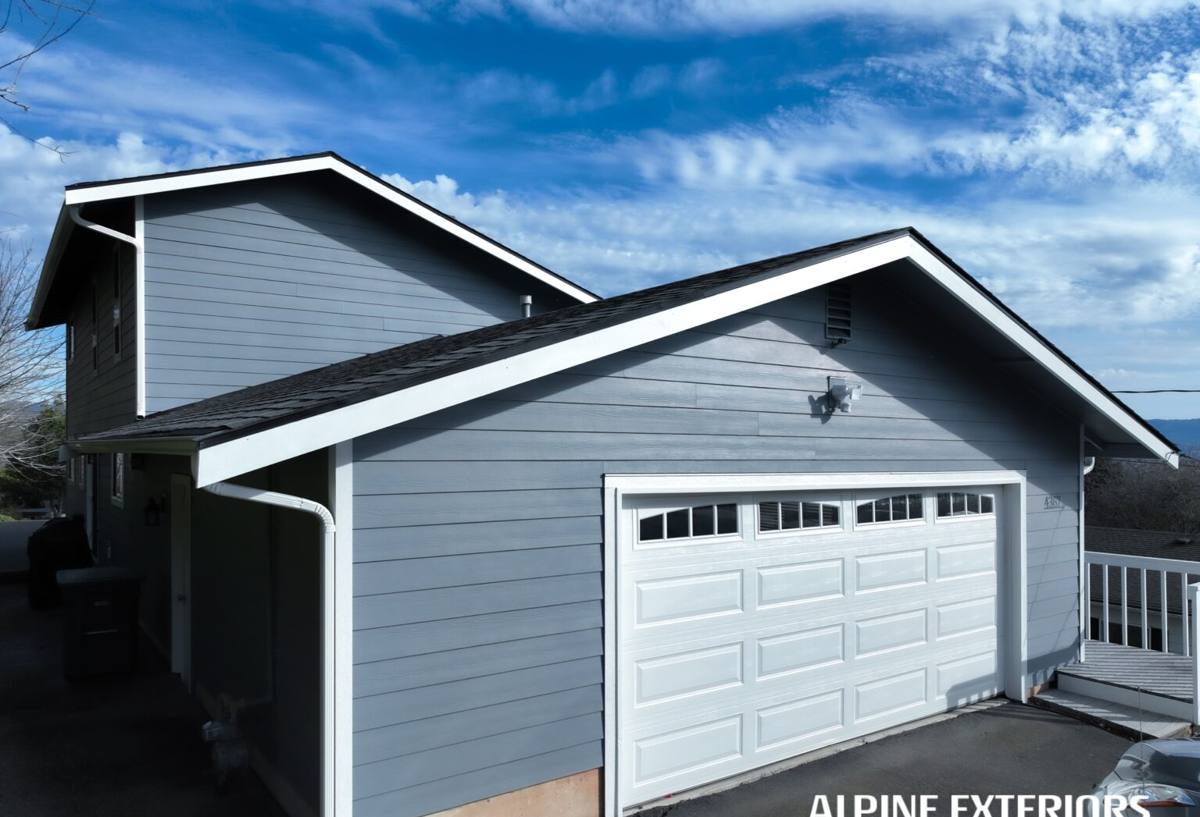
What Storm Damage Actually Looks Like on a Semiahmoo-Area Roof
Homeowners often expect storm damage to be dramatic — a tree limb through the roof deck, a section of shingles peeled back like a page. Sometimes it is. More often, it's subtler:
- Shingles lifted or creased at the tab, with the sealant strip broken but the shingle still mostly in place
- Wind-driven rain forced up under flashing at chimneys, skylights, and roof-to-wall transitions
- Granule loss on the windward slope from sustained wind and rain abrasion
- Fastener backout, where nails have worked loose enough to let water track down the shank
- Debris impact — small punctures or bruised shingles from branches, cones, or wind-carried debris
- Moss or moisture-holding debris in valleys that trapped water during the storm and pushed it under the shingle edge
The last two on that list are the ones that get missed most in Marietta specifically. A roof with moss buildup in the valleys or along the north-facing slope holds water longer after a storm, and that trapped moisture finds every weak seam in the underlayment. A storm doesn't have to tear anything off to cause real damage here — it can just be the event that finally pushes water through a spot that was already compromised.
Why Salt Air Changes the Repair, Not Just the Damage
Proximity to Semiahmoo Bay means metal components age faster than they would inland. Galvanized fasteners, exposed flashing edges, and vent boot collars corrode from the outside in, and once a fastener is compromised it stops holding the shingle down the way it should — which is exactly what lets wind get underneath it in the next storm. When we're repairing storm damage on a Marietta roof, we're checking fastener condition and flashing metal condition as part of the job, not treating them as separate from the storm repair itself.
Our Storm Damage Assessment Process
We don't quote a storm repair from the ground or from a photo you send us. A roof that looks fine from the driveway can have lifted shingles, broken seals, or exposed underlayment that you'd never spot without getting up there. Our process is straightforward:
- Full roof walk, not a spot check. We inspect the whole roof, not just the area you noticed damage on — wind damage is rarely limited to one section.
- Check every penetration. Chimneys, vents, skylights, and roof-to-wall flashing are the most common places storm-driven rain gets in, so we check them regardless of where the visible damage is.
- Assess the underlayment where shingles are missing or lifted. If water has already reached the underlayment or deck, that changes the scope of the repair.
- Document everything with photos. This protects you if you're filing an insurance claim, and it gives you a clear record of what we found and what we're proposing to fix.
- Written scope and estimate before any work starts. No surprise add-ons once we're up there.
Emergency Tarping and Stabilization
If a storm has left an active leak or exposed deck, the first priority isn't the permanent repair — it's stopping water intrusion. A properly installed tarp, secured at the ridge and weighted or fastened correctly at the edges, buys time to do the repair right instead of rushing it while rain is still coming. A poorly secured tarp can actually make things worse, funneling water to a new spot or blowing loose in the next windstorm. If your Marietta home has an active leak, get in touch and we'll prioritize stabilizing it before anything else.
Repair vs. Replacement: How We Decide
Not every storm-damaged roof needs a full replacement, and we don't default to recommending one. The decision comes down to how much of the roof's service life is left and how widespread the damage is relative to the roof's condition overall.
| Factor | Points Toward Repair | Points Toward Replacement |
|---|---|---|
| Roof age | Under 12-15 years, in otherwise good condition | Near or past expected shingle lifespan |
| Damage extent | Isolated to one slope or a few sections | Spread across multiple slopes |
| Granule loss | Minimal, localized to storm-affected area | Widespread thinning across the field |
| Underlayment condition | Dry, intact where exposed | Saturated or deteriorated in multiple spots |
| Moss/organic growth | Light, surface-level | Established growth lifting shingle edges roof-wide |
| Matching materials | Current shingle line still available | Discontinued — patch would visibly mismatch |
We'll walk you through where your roof lands on that table before we recommend anything. If a repair is the honest answer, that's what we'll propose — a full replacement isn't the right call just because it's a bigger job.
How We Do the Repair Itself
Removing and Replacing Damaged Shingles
Damaged shingles are removed cleanly, including any that are cracked or creased but still attached — a shingle that's been flexed by wind often loses its seal even if it doesn't look torn. We don't reuse fasteners or shingles that have been compromised, and we match the replacement shingle profile and color as closely as the current product line allows.
Flashing and Penetration Repair
Given how much of the damage in Marietta traces back to wind-driven rain at flashing points, we treat flashing repair as central to the job, not an afterthought. That means correcting the lap direction, resealing or replacing corroded metal, and making sure step flashing at chimneys and walls is actually stepped correctly rather than caulked over as a shortcut. Caulk is a maintenance item, not a substitute for proper flashing geometry.
Underlayment
Where shingles are removed and the underlayment is exposed, we check it for saturation or damage before covering it back up. Underlayment that's already breaking down gets replaced in that section rather than left in place under new shingles — putting a good shingle over compromised underlayment just delays the next leak.
Fasteners
We use corrosion-resistant fasteners appropriate for a coastal environment, and we make sure nailing patterns meet the shingle manufacturer's spec — under-nailing is one of the most common reasons a roof loses shingles in the next windstorm instead of holding through it.
Moss and Debris Clearing
If moss or trapped debris contributed to the failure, we clear it as part of the repair and talk with you about a maintenance schedule that fits Whatcom County's moss season, so the next storm isn't working against a roof that's already holding moisture.
Working With Your Insurance Claim
Many storm repairs in this area are insurance claims, and we understand that process adds its own stress on top of a leaking roof. We provide clear photo documentation of the damage, a detailed written scope of work, and we're glad to meet with your adjuster on site if that's useful. We're not a public adjuster and we won't promise a claim outcome — that's between you and your insurer — but we'll make sure the documentation accurately reflects what the storm actually did to your roof.
What to Do Right After a Storm
- Photograph any visible damage from the ground — don't get on the roof yourself
- Check attic or ceiling for water stains, even if you don't see obvious roof damage
- Note the date and approximate time of the storm for your records and any claim
- Clear gutters and downspouts if it's safe to do so from the ground — clogged drainage makes any existing damage worse
- Call for an inspection promptly; a small leak left through a second storm often becomes a much bigger repair
- Avoid DIY tarping on a steep or wet roof — it's not worth the fall risk
Why It Matters That We Already Work in Marietta
A crew that regularly works roofs in Marietta and the wider Semiahmoo area already knows which flashing details tend to fail first in this exposure, how fast moss re-establishes on a north-facing slope this close to the water, and what fastener corrosion actually looks like a few years into a coastal roof's life — versus a crew coming from an inland area seeing it for the first time. That familiarity shows up in the repair itself: fewer callbacks, correct flashing the first time, and an honest read on whether a repair will actually hold through the next winter's storms or whether you're better served putting that money toward a longer-term fix.
We're not interested in overselling a replacement when a repair will genuinely do the job, and we're not interested in a quick patch that fails in six months either. Our goal is a repair that matches what your roof and this climate actually need.
If your Marietta home has storm damage — or you're not sure whether what you're seeing is storm-related or just wear from another wet Whatcom County winter — we're happy to take a look. Reach out using the form below for a free, no-pressure estimate.