 Semiahmoo Exterior
 Board & Batten Siding for Marietta Homes
Marietta sits right up against the salt water and weather of Semiahmoo, and that location shapes what a siding job needs to do here. Board and batten is one of the most requested looks in this part of Whatcom County — the vertical lines read as clean, coastal, and a little more custom than lap siding — but the look only holds up if the material and the installation are matched to what this coastline actually throws at a house. We install board and batten siding using James Hardie fiber cement exclusively, and this page walks through what that means for a home in Marietta specifically.
This isn't a general overview of board and batten siding. It's about what the style needs to do on a Marietta property: resist salt-laden air moving off the water, shed driving rain that comes in sideways during winter storms, and stay ahead of the moss and algae growth that a long damp season encourages on north-facing and shaded walls.
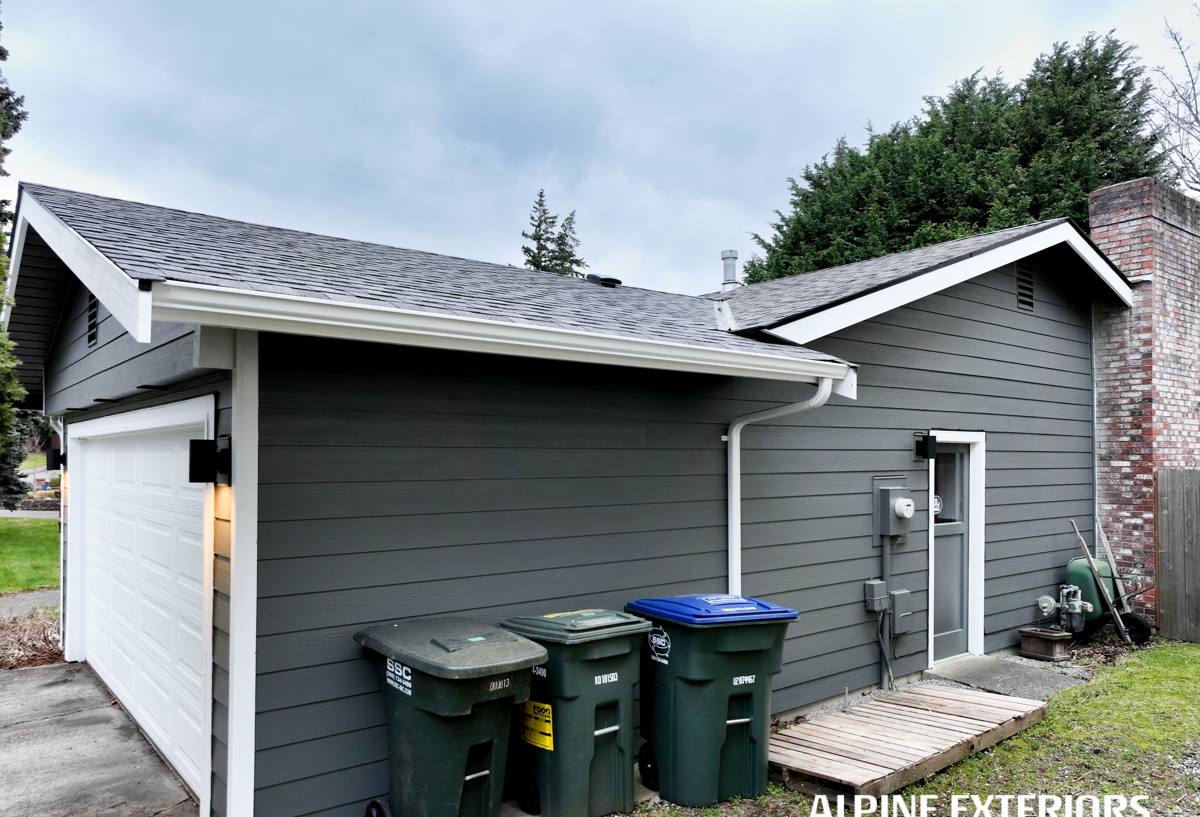
What Marietta's Climate Does to Vertical Siding
Board and batten has more seams than a standard lap profile — every batten strip is a fastening line, and every seam is a place water can try to get behind the cladding if it isn't detailed correctly. In a climate like Marietta's, that detail work matters more than it would somewhere dry.
Salt Air
Properties close to Semiahmoo Bay deal with airborne salt that settles on exterior surfaces year-round, not just during storms. Salt accelerates corrosion on exposed metal fasteners and trim, and it can degrade some paint and coating systems faster than inland exposure would. Siding, fasteners, and flashing all need to be chosen with that in mind.
Driving Rain
Wind off the water pushes rain into wall assemblies horizontally, not just straight down. Board and batten's vertical battens can actually help shed water well when they're installed with correct overlap and a properly lapped weather-resistive barrier underneath — but if the housewrap detailing or flashing is sloppy, those same seams become entry points instead.
Moss Season
Whatcom County's damp stretch runs long, and shaded or north-facing walls in Marietta can stay wet for days at a time. Moss and algae need that sustained moisture to take hold, and once they do, they hold water against the siding surface even longer. Material choice and finish quality directly affect how much a wall fights this on its own versus how much maintenance it demands from the homeowner.
What a Correct Board & Batten Install Actually Involves
The finished look of board and batten is simple — vertical panels with battens covering the seams — but a correct install has several layers most homeowners never see:
- Weather-resistive barrier: A continuous, properly lapped housewrap behind the siding, installed shingle-style so water drains down and out rather than in.
- Flashing at every penetration: Windows, doors, hose bibs, vents, and any other wall penetration get flashed so water is directed out over the siding, not behind it.
- Correct fastener spacing and depth: James Hardie publishes exact fastener schedules for board and batten applications, and going off-spec — too few fasteners, wrong penetration depth, wrong fastener material — is one of the most common causes of early siding failure.
- Rain screen or proper ventilation gap where called for: Especially relevant on walls that face prevailing weather, giving any moisture that does get behind the cladding a path to dry out.
- Factory-finished panels installed to keep that finish intact: Field-cutting, caulking, and touch-up all need to follow James Hardie's application guidelines so the ColorPlus finish's warranty stays valid.
Skipping any one of these doesn't show up on day one. It shows up two, five, or ten years later as staining, soft spots, or paint failure — usually in the same corners where wind-driven rain hits hardest.
Why We Install Only James Hardie Fiber Cement
We don't offer LP SmartSide, vinyl, Cemplank, Allura, primed spruce, or cedar board and batten. That's a deliberate standard, not a lack of options, and it's worth explaining honestly rather than just stating it.
| Material | How It Handles Marietta's Climate | Long-Term Trade-Off |
|---|---|---|
| James Hardie fiber cement | Non-combustible, engineered moisture and freeze-thaw resistance, factory ColorPlus finish resists salt-air fading | Higher upfront material cost than vinyl or engineered wood |
| Wood (cedar, primed spruce) | Natural look, but absorbs moisture readily in a wet, salt-air climate | Repainting, caulking, and rot repair on a recurring cycle |
| Vinyl | Low maintenance, budget-friendly, but can warp or fade under sustained sun/salt exposure and doesn't hold the true board and batten shadow line as well | Limited lifespan in coastal wind exposure, seams can loosen over time |
| LP SmartSide / engineered wood | Wood-based core is more moisture-sensitive than fiber cement; edge sealing at every cut is critical in a wet climate | Installation must be flawless to avoid swelling at seams and edges |
Every one of those materials has legitimate uses somewhere. Our position is specific to what Marietta's combination of salt air, wind-driven rain, and long damp seasons does to a wall assembly over decades, not just years. James Hardie's HZ5 product line is engineered for the Pacific Northwest's freeze-thaw and moisture cycle, the fiber cement core doesn't feed moss and algae growth the way wood does, and the factory-applied ColorPlus finish holds color and resists cracking better than field-applied paint on wood substrates. It's also non-combustible, which matters more every wildfire season the region has.
Our Process on Marietta Projects
- On-site assessment: We look at your home's actual exposure — which walls take direct weather off the water, where moss has already established, and where existing siding shows early failure.
- Tear-off and inspection: Once old siding comes off, we inspect the sheathing and framing underneath for hidden water damage before anything new goes up. This is often where the real story of a home's siding history shows up.
- Weather barrier and flashing: New housewrap, flashing at every penetration, and any rain screen detailing the wall assembly calls for.
- Panel and batten installation: James Hardie board and batten panels installed to manufacturer fastening specs, with attention to the seams and corners that take the brunt of driving rain.
- Trim, caulking, and finish check: Final detailing so the factory finish stays intact and the whole assembly is sealed correctly.
- Walkthrough: We go over the finished work with you directly, including what maintenance (if any) it actually needs going forward.
Signs a Marietta Home May Need New Siding
- Persistent moss or algae streaking on north-facing or shaded walls that comes back within a season of cleaning
- Soft or spongy spots when you press on siding near the bottom courses or around windows
- Paint that's peeling or bubbling rather than just fading evenly
- Visible gaps opening up at seams, corners, or where battens meet panels
- Rust staining running down from fasteners or trim
- A musty smell or discoloration on interior walls that back up to exterior siding
Any one of these is worth a look. Several together usually means water has been getting behind the siding for a while, and a repair job is really a siding replacement conversation.
Maintenance in a Salt-Air, Moss-Prone Climate
James Hardie board and batten is genuinely low-maintenance compared to wood, but "low-maintenance" isn't "no-maintenance" in Marietta's climate. A yearly rinse-down to clear salt residue and any early moss growth, keeping gutters and downspouts clear so water isn't sheeting down the wall face, and a periodic look at caulking around windows and trim will keep the assembly performing the way it's designed to for decades. None of that is labor-intensive — it's a fraction of what a wood board and batten exterior demands in this same location.
Why a Local Crew Matters for This Job
Board and batten siding done wrong doesn't fail everywhere at once — it fails first at the specific seams and corners that catch the most wind-driven rain, which in Marietta usually means the walls facing the water. A crew that already works this stretch of Whatcom County knows which elevations on a typical Marietta home take that exposure hardest, how the moss season here behaves differently than it does even a few miles inland, and what James Hardie's HZ5 specifications actually require in this weather — not a generalized install, but one built for this coastline. That local, repeated experience is what keeps a board and batten installation performing the way it's supposed to at year fifteen, not just at the final walkthrough.
If you're weighing new siding or replacing a board and batten exterior that's starting to show its age, we're glad to come take a look and give you a straightforward, no-pressure estimate — just fill out the form below.