 Semiahmoo Exterior
 Metal Roofing Built for Marietta's Coastal Conditions
Marietta sits close enough to the water that salt air is part of daily life, not an occasional nuisance. That changes what "a good roof" means here compared to a roof twenty miles inland. Fasteners, flashings, and panel coatings that hold up fine in a drier climate can start showing corrosion or streaking within a few seasons when they're getting salt-laden moisture on top of Whatcom County's normal rain load. If you're considering metal roofing for a home in Marietta, the material choice and the installation details matter more here than almost anywhere else in the region.
We work on homes in this area regularly, and this page covers what actually matters for a metal roof going on a Marietta home: what the climate demands, what a correct installation looks like, and how to think about cost and long-term maintenance before you sign anything.
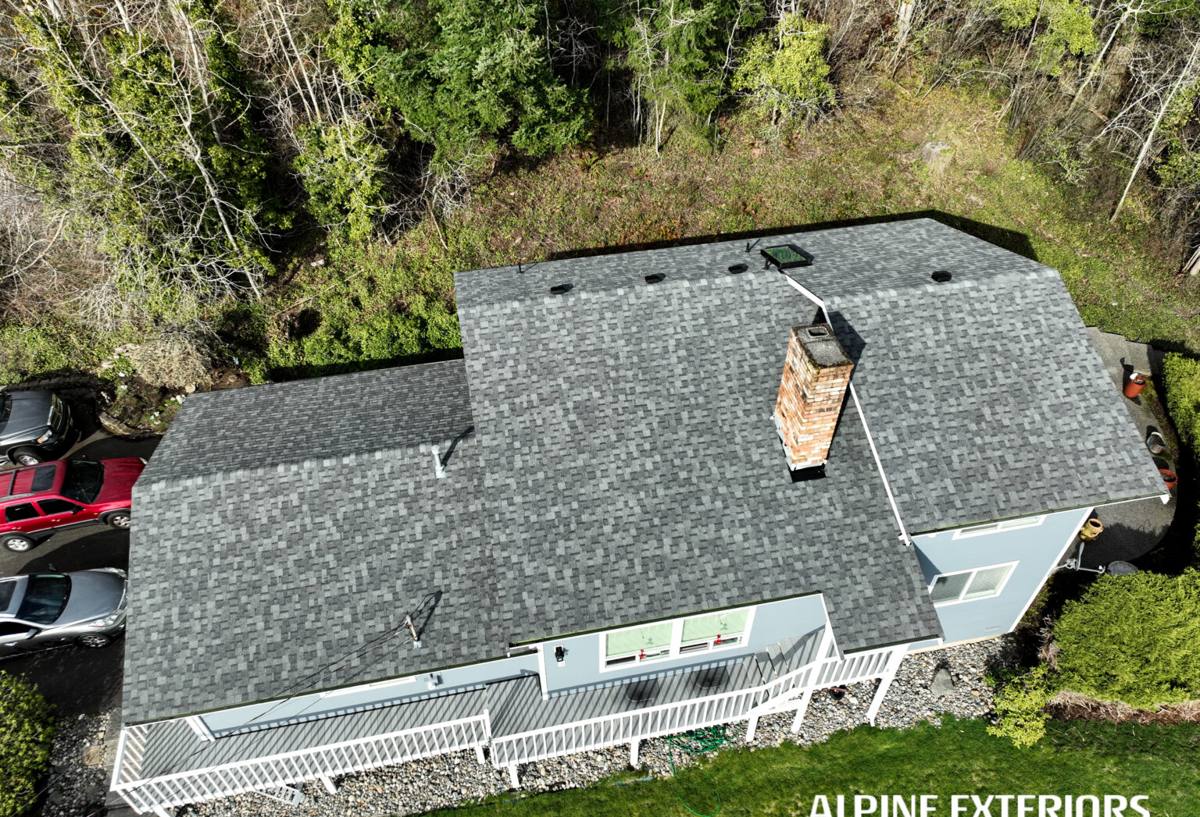
Why Marietta's Climate Is Tougher on Roofs Than People Expect
Three things stack up against roofing materials here, and they compound each other:
- Salt air: Airborne salt accelerates corrosion on exposed metal, especially at cut edges, fasteners, and any spot where a coating has been scratched during handling or installation.
- Driving rain: Wind-driven rain off the water doesn't just fall straight down — it pushes sideways under laps, around penetrations, and into any flashing detail that was cut corners on.
- Long moss season: Whatcom County's damp, mild winters give moss and algae a long window to establish themselves. On roofs with a lot of shade or tree cover, that season can stretch across most of the year.
None of these individually are unusual for the Pacific Northwest. What makes Marietta specific is having all three at once, close to the water. A roofing system that's rated for "coastal exposure" in a catalog isn't automatically rated for this particular combination — the installation has to account for it too.
What Salt Exposure Actually Does to a Roof Over Time
Salt doesn't damage a metal roof all at once. It works slowly, usually starting at the weak points: exposed fastener heads, panel end cuts, and any place where a protective coating is thin or damaged. Left alone, that slow corrosion eventually shows up as rust streaking, loosened fasteners, or pinholing at panel edges. The fix isn't a thicker roof — it's the right alloy and coating system, paired with fastener choices and edge details that don't leave raw metal exposed to the air.
What a Correct Metal Roofing Job Looks Like Here
A metal roof is only as good as the parts you don't see once it's finished. For a Marietta home, we pay particular attention to a handful of details that get skipped on rushed jobs:
Fasteners and Edge Treatment
Standard fasteners can become the weak point on a coastal roof well before the panels themselves show wear. We use fastener types matched to the panel material to avoid galvanic corrosion — mixing incompatible metals is one of the more common shortcuts that causes early rust staining. Cut edges get sealed rather than left bare, since a raw edge is where salt air does the most damage first.
Underlayment and Moisture Management
Because wind-driven rain can push water sideways under laps, the underlayment beneath the panels matters as much as the panels themselves. A synthetic, self-adhering underlayment at eaves, valleys, and penetrations gives you a second line of defense if wind ever forces water past the metal surface — which happens during the region's stronger storm systems.
Flashing at Every Penetration
Chimneys, vents, skylights, and wall transitions are where roofs actually fail, far more often than the open field of panels. Each penetration gets custom-fitted flashing rather than a generic boot or a bead of sealant standing in for proper metalwork. Sealant is a backup, not a substitute for correct flashing geometry.
Ventilation
Good ventilation reduces the moisture buildup in the attic that feeds moss and algae growth from the underside and helps the roof deck dry out between rain events. On homes with mature tree cover, which is common in this area, ventilation is one of the more overlooked factors in how long a roof stays clean.
Metal Roofing Options: How They Compare for Coastal Homes
Not every metal roofing product is built the same way, and the differences matter more here than in a drier inland location. Below is an honest comparison of the main options we install or discuss with homeowners in this area.
| Type | Coastal Durability | Maintenance | Typical Use Case |
|---|---|---|---|
| Standing seam steel (coated) | Very good with proper coating and fastener selection | Low — occasional debris clearing | Most common choice for full re-roofs in this area |
| Aluminum standing seam | Excellent — naturally corrosion-resistant | Low | Homes closest to the water or with prior corrosion issues |
| Exposed-fastener metal panels | Fair — fasteners are the weak point over time | Moderate — fastener checks needed periodically | Budget-conscious projects, outbuildings, shops |
| Stone-coated steel | Good, but coating integrity at cuts is critical | Low to moderate | Homeowners wanting a shake or tile look |
We don't push one product on every roof. The right choice depends on how close the home sits to open water, how much shade and moisture the roof deals with, and what the homeowner wants to spend upfront versus over the life of the roof.
Our Process for a Marietta Metal Roof
- On-site assessment: We look at the existing roof deck, ventilation, tree cover, and exposure to wind and water before recommending anything.
- Material selection: Based on that assessment, we walk through panel type, coating, and color options suited to the home's specific exposure.
- Tear-off and deck inspection: Old roofing comes off and the deck gets inspected for rot or soft spots, particularly around valleys and eaves where moisture tends to collect.
- Underlayment and flashing installation: This is the stage that determines how the roof performs in wind-driven rain — done right, it's invisible; done wrong, it's the source of every future leak call.
- Panel installation: Panels go on with fastener spacing and edge treatment appropriate to coastal exposure.
- Final walkthrough: We go over ventilation, warranty paperwork, and basic maintenance expectations before we consider the job done.
Cost Factors for Metal Roofing in Marietta
Metal roofing costs more upfront than asphalt shingles, but the calculation looks different once you factor in this area's climate. A handful of variables drive the price on any given home:
- Roof complexity: More valleys, penetrations, and roof planes mean more flashing labor, which is where quality and cost both concentrate.
- Panel material: Aluminum typically costs more than coated steel but needs less long-term attention in salt-heavy air.
- Deck condition: Rot or soft decking found during tear-off adds cost but shouldn't be skipped — building over a bad deck defeats the purpose of a durable roof.
- Access and pitch: Steeper roofs or difficult site access add labor time.
- Ventilation upgrades: Homes with inadequate attic ventilation often need upgrades alongside the roofing work, which affects both cost and long-term moss resistance.
Broadly, metal roofing on a typical single-family home runs meaningfully higher than a comparable asphalt shingle job, with the gap narrowing over the life of the roof due to lower maintenance and replacement frequency. Anyone quoting a number without seeing your roof and deck condition first isn't giving you a real estimate.
Living with a Metal Roof: What Maintenance Actually Looks Like
One reason homeowners in this area choose metal is that it demands less of them long-term than shingle roofing does — but "low maintenance" isn't "no maintenance." A short seasonal checklist keeps a metal roof performing the way it should:
- Clear debris from valleys and around penetrations, especially after fall leaf drop.
- Check for moss or algae buildup where the roof stays shaded most of the day.
- Look at fastener heads periodically for early signs of rust staining, particularly on exposed-fastener systems.
- Confirm gutters and downspouts are clear so water isn't backing up under eave flashing.
- After any major windstorm, a quick visual check for lifted panels or displaced flashing is worth the ten minutes.
Why a Crew That Already Works Marietta Matters
Metal roofing installation isn't exotic, but coastal installation done correctly requires knowing which shortcuts will show up as problems in two years instead of twenty. A crew that regularly works homes in this part of Whatcom County has already seen how salt air, wind-driven rain, and moss season interact on real roofs nearby — not in a training manual, but on jobs down the street. That familiarity shows up in small decisions: which fastener to use, how much underlayment overlap a given valley needs, where ventilation tends to fall short on homes with heavy tree cover in this area.
It also matters when something needs attention after the fact. A local crew can get to a flashing question or a warranty item without treating it as a special trip, because Marietta is part of the regular service area, not an outlier.
Signs Your Current Roof May Be Struggling in This Climate
If you're not sure whether it's time to consider metal roofing, a few warning signs are worth a closer look, whatever your current roofing material is:
- Persistent moss growth that returns within a season or two of cleaning
- Rust staining running down from fasteners or flashing on an existing metal roof
- Damp spots or discoloration on interior ceilings after wind-driven rain events
- Visible corrosion or pitting at panel edges or exposed metal trim
- Gutters and downspouts that stay clogged despite regular cleaning, suggesting granule or debris shedding from an aging roof
Any one of these on its own isn't necessarily an emergency, but a few together usually mean the roofing system is past the point where patching makes sense.
If you're weighing metal roofing for a home in Marietta, we're glad to take a look and give you a straight answer about what your roof actually needs — no pressure, no inflated urgency. Use the form below to request a free estimate and we'll walk the roof with you before recommending anything.