 Semiahmoo Exterior
 Building Decks for Marietta's Particular Kind of Weather
Marietta sits close enough to the water that homes here take on a different set of problems than decks built further inland. Salt-laden air off the bay accelerates corrosion on anything metal, driving rain off the Strait finds its way into every gap and seam that isn't detailed correctly, and the long gray stretch of fall through spring gives moss and algae months to establish themselves on any surface that stays damp. A deck built to a generic spec — the kind you'd see in a big-box how-to guide — will usually look fine for the first year or two. It's what happens in years three through eight that separates a deck built for this specific stretch of Whatcom County from one that wasn't.
We build and repair decks in Marietta and the surrounding Semiahmoo area regularly, which means we're not guessing at what holds up here. We're working from what we've actually seen fail, and what's actually still standing ten years later on homes with the same exposure.
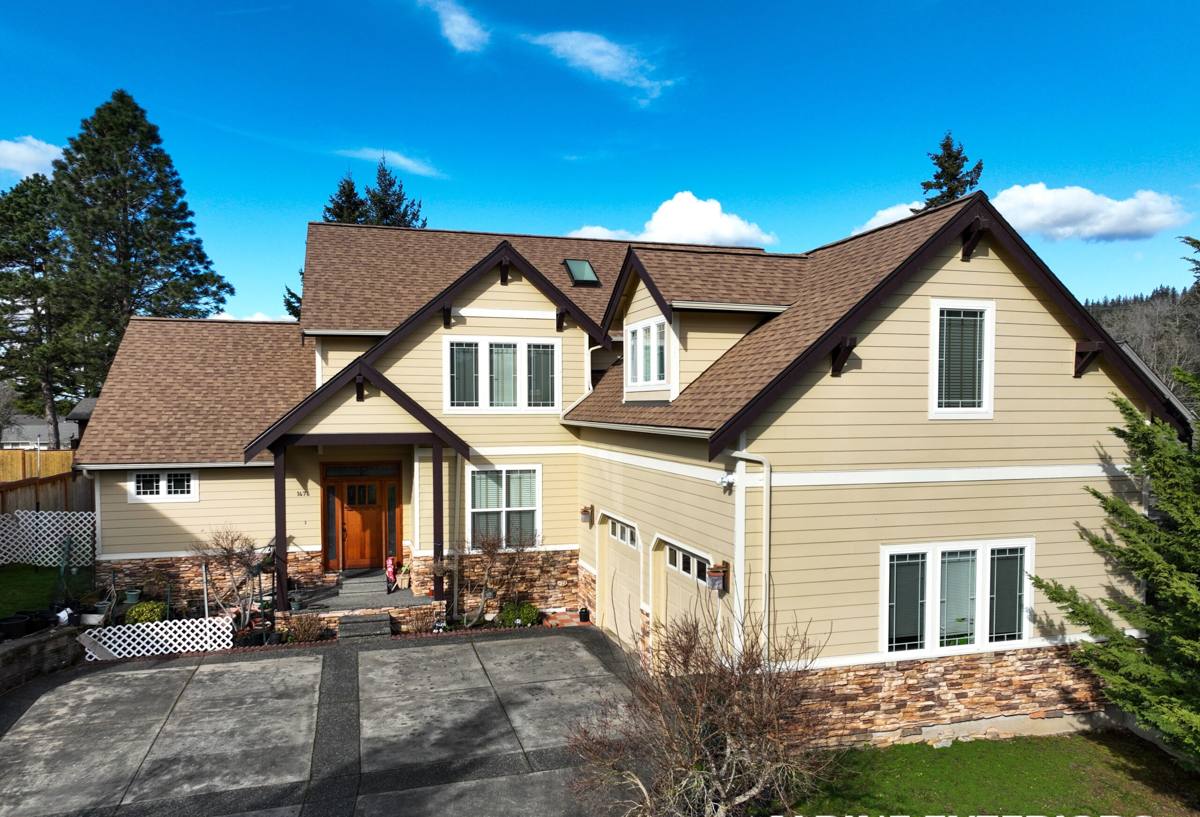
What Local Homes Actually Need From a Deck
Three things drive almost every deck decision we make in this area: moisture management, corrosion resistance, and airflow underneath and between boards. Get those three right and most of the rest — the look, the layout, the railing style — is just preference. Get them wrong and you're looking at soft boards, rust-streaked fasteners, and a slick, moss-covered surface within a few winters.
Moisture Management
Driving rain off the water doesn't just fall straight down — it comes in at an angle and gets pushed under railings, into ledger connections, and behind any trim that isn't flashed properly. Every point where the deck meets the house is a place water can get trapped against wood framing if it isn't detailed with proper flashing and drainage gaps.
Corrosion Resistance
Standard zinc-coated fasteners and hardware corrode faster in salt-influenced air than they would twenty or thirty miles inland. That's not a knock on any particular product — it's just physics. Hardware rated for coastal or treated-lumber exposure costs a bit more up front and saves you rust-stained boards and weakened connections later.
Airflow
Moss and algae need two things to take hold: moisture and shade. A deck built low to the ground with no ventilation underneath, or with boards spaced too tight, holds both. Proper joist spacing, board gapping, and clearance underneath the structure let air move through and dry things out between storms, which is most of what keeps moss from ever getting a foothold.
Decking Material Comparison for This Climate
There's no single "best" decking material for Marietta — there's a best material for your budget, your maintenance appetite, and how close your lot sits to the water. Here's how the common options actually compare under the conditions we see locally.
| Material | Moisture/Moss Behavior | Maintenance | Typical Lifespan Here |
|---|---|---|---|
| Pressure-treated pine | Absorbs moisture readily; needs sealing to resist moss and cupping | Annual cleaning, re-seal every 2-3 years | 15-20 years with upkeep |
| Western red cedar | Naturally moisture and insect resistant; still needs surface protection against moss | Cleaning and re-oiling every 1-2 years to hold color | 20-25 years with upkeep |
| Composite decking | Doesn't absorb moisture into the core, but surface film can host moss/algae if shaded and damp | Periodic cleaning; no sealing needed | 25-30+ years, brand-dependent warranty |
| Aluminum or PVC decking | Effectively immune to rot and moss growth; can be slick when wet | Occasional wash; no sealing | 30+ years |
For most Marietta homeowners we talk to, the decision comes down to composite versus cedar: composite for people who want to stop thinking about maintenance, cedar for people who want the natural look and don't mind the upkeep schedule. Both are honest choices — we'll walk through the real trade-offs for your specific site and sun exposure rather than push one product line.
Framing, Fasteners, and Footings — Where Decks Actually Fail
Almost every deck failure we get called out for in this area traces back to one of three things, and it's rarely the decking boards themselves.
- Footings set too shallow or without proper drainage, letting frost and saturated soil shift posts over time
- Ledger boards attached to the house without adequate flashing, allowing water to track into the rim joist and sill
- Standard fasteners used in a marine-influenced environment, leading to rust streaks and weakened joints years before the wood itself would have failed
None of these show up on a walk-through inspection from the surface. They show up when a board feels spongy, when you notice rust bleeding through paint near a post base, or when a railing starts to feel loose. Building it right the first time — correct footing depth, proper ledger flashing, coastal-rated fasteners — costs more in materials and labor up front but is the difference between a deck that needs real attention at year 20 versus one that needs it at year 8.
Railings, Stairs, and Code Requirements
Whatcom County follows the same baseline structural and safety requirements as the rest of the state's building code — guard height, baluster spacing, stair rise and run, and footing depth all have to meet spec regardless of style. Beyond the code minimums, a few choices matter more here than they would in a drier inland climate:
Railing Material
Wood railings need the same moisture and corrosion attention as the deck frame. Metal railing systems hold up well but should use coastal-rated hardware and finishes to avoid rust bleed at the connection points.
Stair Tread Surface
Stairs are where moss and wet-surface slip risk matter most, since they're the one part of a deck people use with real weight shifting on a single foot. We pay particular attention to tread texture and drainage on stairs for that reason.
Our Process, Start to Finish
We keep the process straightforward because most homeowners just want to know what's happening and when.
- On-site assessment — we look at your existing deck (if there is one), your home's exposure to wind and rain, sun and shade patterns, and what you actually want to use the space for.
- Design and material walkthrough — we go over layout options and the real trade-offs between decking materials, with honest numbers on maintenance and lifespan, not just upfront cost.
- Written estimate — clear scope, materials, and timeline before any work starts.
- Permitting — we handle the permit process where required so you're not stuck navigating county paperwork.
- Construction — proper footings, flashing, and fastener selection built in from the start, not treated as upgrades.
- Final walkthrough — we go over the finished deck with you, including basic maintenance guidance specific to the material you chose.
Keeping Moss and Moisture From Taking Over
Even a well-built deck needs some seasonal attention in this climate. Most of it is simple and doesn't require a contractor — it just requires actually doing it before moss gets established rather than after.
- Sweep debris and organic buildup out of board gaps before fall rains set in
- Rinse the surface periodically through the wet months rather than letting moss spores sit and take hold
- Check and clear any drainage gaps or scupper points so water isn't pooling anywhere on the surface
- Inspect fastener heads and post bases once a year for early rust staining
- Re-seal or re-oil wood decking on the schedule appropriate to the species — don't wait until it's visibly gray and dry
- Trim back overhanging vegetation that keeps sections of the deck shaded and damp
Why Hire a Crew That Already Works Marietta
A contractor who mostly builds decks in drier, inland parts of the state isn't wrong about deck-building in general — they're just working from a different set of assumptions about what fails and when. We build and repair decks specifically in Marietta and the broader Semiahmoo area, which means our fastener choices, flashing details, and material recommendations are calibrated to what this exact stretch of coastline does to a structure, not to a national average. That's the difference between a deck that needs its first real repair at year eight and one that doesn't need attention until year twenty.
If you're planning a new deck or need an honest look at an existing one, we're happy to come take a look. Reach out for a free, no-pressure estimate using the form below — we'll walk the site, answer your questions directly, and give you a clear picture of what the job actually involves before anything is decided.