 Semiahmoo Exterior
 Roofs in Marietta Take a Different Kind of Beating
Marietta sits close to the water in Whatcom County, and that location shapes what a roof has to survive here. Salt-laden air off the water works into fasteners, flashing seams, and exposed metal edges faster than it would inland. Driving rain — the kind that comes in sideways during a winter blow rather than falling straight down — finds every weak lap, every under-driven nail, and every place where sealant has started to crack. And the region's long stretch of wet, shaded weather each year gives moss and algae months at a time to get established on north-facing slopes and anywhere debris collects. None of this means a Marietta roof is doomed to constant trouble. It means the repair work has to account for these conditions specifically, not just patch the visible symptom and move on.
A roof repair done without that context tends to fail again within a season or two. One done with it — correct flashing details, the right fastener choice, proper attention to moss and drainage — holds up the way it should for the remaining life of the roof.
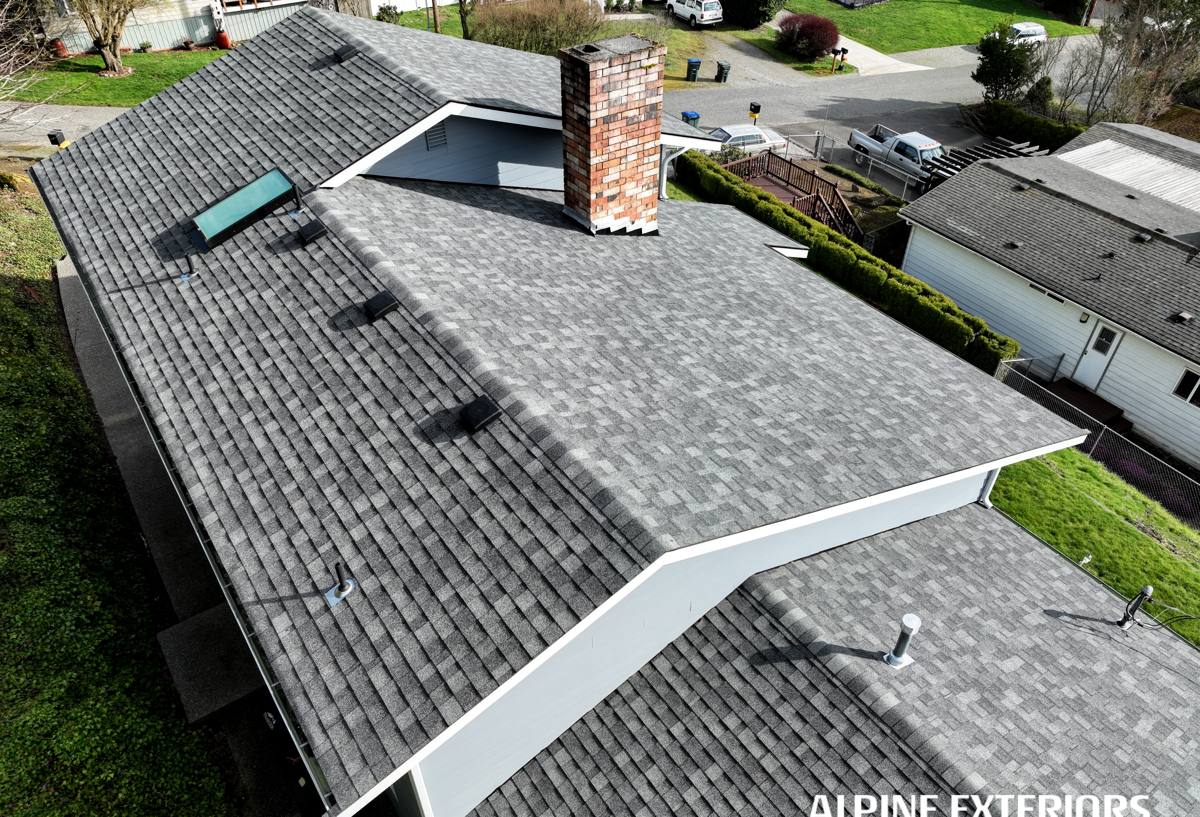
Signs a Marietta Roof Needs Repair Now
Most roof repairs get called in after a leak shows up inside the house, but by that point the underlying damage is usually further along than the ceiling stain suggests. Catching problems earlier keeps the repair smaller and cheaper. Watch for:
- Granules collecting in gutters or at downspout outlets — a sign shingles are wearing thin
- Dark streaking or thick moss growth, especially on shaded or north-facing slopes
- Curling, cracked, or lifted shingle edges, particularly on slopes that catch the prevailing wind and rain
- Rusted, lifted, or separated flashing around chimneys, skylights, vents, and roof-to-wall transitions
- Soft spots or slight sagging when walked (a sign of wet, deteriorating decking underneath)
- Daylight visible through the roof deck from inside the attic
- Water stains on ceilings or in the attic that appear only during heavy rain or wind-driven storms
Any one of these on its own might just need a targeted repair. Several showing up together, or damage that's spread across more than one slope, usually points to a bigger conversation about the roof's remaining service life — and we'll always tell you honestly which situation you're in.
Repair vs. Replacement: A Quick Gut Check
| Situation | Usually a Repair | Usually Points to Replacement |
|---|---|---|
| Age of roof | Under 15-18 years (asphalt) | Approaching or past manufacturer's rated life |
| Extent of damage | Isolated to one area or slope | Spread across multiple slopes |
| Decking condition | Solid, no soft spots | Soft, spongy, or visibly rotted |
| Moss/algae staining | Surface growth, shingles intact underneath | Growth has lifted or degraded the shingle mat |
| Prior repair history | First or second repair on this roof | Recurring leaks in different spots each year |
What a Correct Repair Actually Involves
A roof repair isn't just swapping a few shingles and calling it done. Done right, it addresses the whole system at the point of failure, not just the piece that's visibly damaged.
Flashing First
In a marine climate, flashing is usually the real point of failure even when shingles get blamed. Salt air accelerates corrosion on lower-grade metal, and driving rain exploits any gap where flashing has pulled away from a chimney, wall, or vent pipe. A correct repair means re-bedding or replacing flashing with corrosion-resistant material and properly lapping it with the surrounding roofing — not just running a bead of caulk over the problem and hoping it holds through the next storm.
Matching the Existing Roof
Whenever possible, repair material should match the existing shingle profile, color, and exposure so the patch blends in rather than becoming a visible mismatch. On older roofs where exact matches aren't available, we'll walk you through the closest reasonable option and set expectations up front rather than surprise you after the work is done.
Underlayment and Decking
Once shingles are pulled back, we check the underlayment and decking underneath. If water has been getting in for a while, the plywood or planking underneath can be soft or delaminated even if it looks fine from the attic side. Replacing damaged decking and installing proper underlayment at that spot is what actually stops the leak — reshingling over a compromised deck just delays the same repair.
Fastening for Wind and Salt
We use fasteners and fastening patterns suited to a coastal wind exposure, not just whatever meets minimum code. Under-driven or corroding nails are one of the most common causes of repeat leaks we see on older Marietta-area roofs.
Moss, Algae, and the Long Wet Season
Whatcom County's climate gives moss a long runway — shaded slopes can stay damp for months at a stretch, and once moss gets a foothold it holds moisture directly against the shingle surface, which shortens the shingle's life and can lift edges enough to let water underneath. Moss removal during a repair has to be done carefully: scraping too aggressively can strip granules and damage the shingle mat itself, which does more harm than the moss was doing. We remove growth by hand rather than pressure-washing it off, then treat the area to slow regrowth without leaving a residue that stains siding or harms plantings below.
For roofs with chronic moss problems, we'll also talk through longer-term options — trimming back overhanging branches, improving airflow across the roof plane, or installing zinc or copper control strips near the ridge, which release trace amounts of metal ions that inhibit regrowth as rain washes over them.
How Our Repair Process Works
- Inspection. We get on the roof (not just a look from the ground) and check the full slope, not only the spot where the leak shows up inside.
- Diagnosis and honest scope. We identify the actual source of the problem — often it's flashing or a failed seal, not the shingle field itself — and tell you plainly whether it's a repair or something bigger.
- Written estimate. You get a clear scope and price before any work starts, no surprise add-ons once we're up there.
- Repair work. Damaged materials come out, decking is checked and replaced where needed, and new materials go in matched to the existing roof and the site conditions.
- Cleanup and check. We clear debris, check gutters and downspouts near the repair area, and walk the finished work with you if you'd like.
Repair Materials: What We Use and Why
| Component | Standard Choice | Why It Matters Here |
|---|---|---|
| Fasteners | Corrosion-resistant roofing nails, hand or gun-set to spec | Salt air degrades lower-grade metal fasteners over time |
| Flashing | Metal flashing matched to existing gauge/finish | Most repeat leaks trace back to failed flashing, not shingles |
| Underlayment | Synthetic or felt matched to roof type and slope | Backs up the shingle layer if wind-driven rain gets past it |
| Sealant | Roofing-grade sealant, used at seams and penetrations only | Sealant is a detail, not a substitute for proper flashing work |
We don't rely on sealant or caulk as the primary fix for a leak. It has its place at small penetrations and seams, but on its own it degrades in UV and temperature swings faster than a mechanically correct flashing or shingle repair — and using it as a shortcut just means the same leak reappears in a year or two.
What Drives the Cost of a Roof Repair
Repair costs vary enough by situation that we won't quote a number without seeing the roof, but the main factors are consistent:
- How the roof is accessed — steep pitch, height, and safety setup all affect labor time
- How much decking, if any, needs to be replaced underneath the damaged area
- Whether the repair involves flashing at a chimney, skylight, or wall — these details take more time than field shingle work
- How well the existing material can be matched, and whether specialty material needs to be sourced
- The extent of moss or algae removal needed before the repair itself can be done
Straightforward, single-area repairs on an accessible roof are typically the least expensive category of roofing work. Repairs involving decking replacement, complex flashing, or multiple damaged areas cost more, for the same reason a bigger job always does — more material, more labor, more time.
Why Local Experience Matters for This Kind of Work
A crew that already works in Marietta and the wider Semiahmoo area knows which slopes take the worst of the wind-driven rain, how fast moss comes back on a shaded north side, and which flashing details tend to fail first in salt-air conditions. That's not something you can fully substitute with a general roofing checklist — it comes from doing the work here, repeatedly, and seeing which repairs hold up and which ones need to be redone. It also means we're not guessing at material choices; we're using what's already proven out on roofs with the same exposure as yours.
It also matters for response time. Roof problems in this climate rarely wait for a convenient moment — a bad windstorm or an atmospheric river event can turn a small flashing gap into an active leak overnight. Working locally means we can get to a Marietta roof quickly when that happens, rather than scheduling around a long drive.
Maintaining a Roof After Repair
A repair holds up longer with a little basic upkeep, especially in a climate that stays damp for a good part of the year:
- Keep gutters and downspouts clear so water isn't backing up against the roof edge
- Trim back branches that overhang the roof to cut down shade and debris buildup
- Have the roof looked at after major windstorms, not just on a fixed annual schedule
- Address small moss patches early, before they spread across a whole slope
- Keep an eye on flashing around chimneys and vents, since it typically wears out before the shingle field does
If you're dealing with a leak, staining, or moss buildup on a Marietta roof, we're glad to come take a look and give you a straightforward, no-pressure estimate — including an honest answer if what you actually need is smaller, or bigger, than what you called about. Use the form below to get started.