 Semiahmoo Exterior
 Marietta Sits Right Where the Weather Gets Serious
Marietta is a waterfront community, and that location cuts both ways. The views and the access to Drayton Harbor and Semiahmoo Bay are part of why people live here — but that same proximity to open water means homes take a harder hit from the elements than a house ten miles inland ever will. Salt-laden air moves off the water daily, driving rain comes in sideways during winter storms, and the shoulder seasons bring long stretches of damp, low-light weather where moss and algae get a foothold on anything that stays wet. Windows are one of the first parts of a house to show the wear from that combination.
We work on homes throughout Whatcom County, but Marietta and the broader Semiahmoo area get a specific kind of attention from us because the failure patterns here are consistent and predictable once you've seen enough of them. This page covers what that wear actually looks like, what a correct replacement job involves, and how we handle these projects.
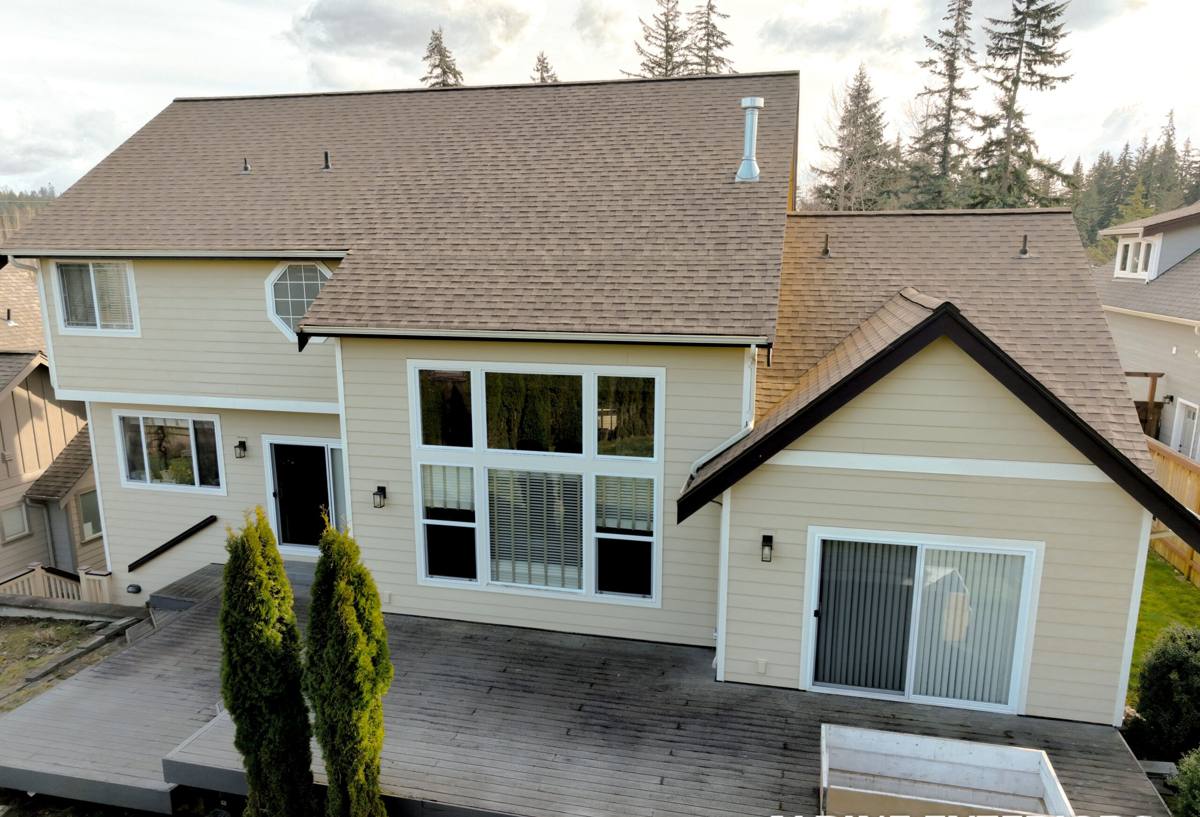
What Salt Air, Driving Rain, and Moss Season Actually Do to a Window
Corrosion on Frames and Hardware
Salt air is mildly corrosive to metal, full stop. Aluminum frames, steel reinforcement inside vinyl frames, and especially window hardware — locks, hinges, balances, screws — take the brunt of it. On a Marietta home a few blocks from the water, we regularly find hardware that's pitted, stiff, or seized well before the glass or frame itself has failed. Once hardware stops working smoothly, homeowners often force windows open and closed, which accelerates frame and seal damage.
Seal and Glazing Failure
Modern insulated glass units rely on a sealed air or gas gap between panes, held together by an edge seal. Constant humidity cycling — wet mornings, drying afternoons, wet again by evening — stresses that seal faster than it would in a drier inland climate. The tell is fogging or a hazy film between the panes that won't wipe off. Once a seal fails, the insulating value of that unit is gone, and it's not something that can be repaired — the glass unit has to be replaced.
Wood Rot and Moss Growth Around Openings
Driving rain finds any gap in flashing or caulking and pushes water into places it was never meant to reach. Around window openings, that means rot in the framing lumber, sill, and trim before it ever becomes visible on the interior. Add in a long moss season — moss and algae thrive in the shaded, damp conditions common on north- and west-facing walls near the water — and you get surfaces that hold moisture against the building even longer than they otherwise would. By the time you can see black staining, soft trim, or a window that's started to stick, there's usually been water intrusion happening for a while.
Signs a Marietta Home Needs Replacement, Not Just Repair
Not every window problem means full replacement. But in a coastal microclimate like this one, waiting too long on a repairable issue often turns it into a replacement anyway, because the surrounding framing degrades. Here's what tells us a window has crossed that line:
- Fogging or haze permanently trapped between panes of double- or triple-glazed units
- Frame that's soft, spongy, or visibly rotted at the sill or corners
- Windows that won't stay open, won't latch, or take real effort to operate
- Visible daylight or a noticeable draft around the sash when closed
- Condensation forming on the interior glass or frame regularly, even in mild weather
- Paint or finish failing repeatedly in the same spot despite repainting
- A musty smell near the window that suggests moisture is getting into the wall cavity
- Noticeably higher heating bills with no other explanation
If you're only seeing one or two of these, and the frame is otherwise sound, a repair or reseal might genuinely be enough. We'll tell you that if it's true — we don't have a reason to push replacement on a window that has years left in it.
Choosing Window Materials for a Home Near Semiahmoo Bay
Material choice matters more here than it would for a house a few miles inland, because the frame is dealing with salt exposure and constant moisture cycling on top of normal weathering. Here's how the common options hold up in this specific setting:
| Material | Coastal Durability | Maintenance | General Cost Range |
|---|---|---|---|
| Vinyl | Good — won't corrode or rot; UV exposure can cause slow fading over many years | Low; occasional cleaning, no painting | Lower to mid |
| Fiberglass | Very good — dimensionally stable, resists moisture and salt exposure well | Low; can be painted if desired | Mid to higher |
| Aluminum | Fair — strong but prone to corrosion and pitting near salt air over time without quality coatings | Moderate; watch for corrosion at hardware and joints | Lower to mid |
| Wood / wood-clad | Fair to good depending on cladding; exposed wood needs real upkeep in this climate | High if unclad; moderate if properly clad and flashed | Higher |
Vinyl and fiberglass are what we recommend for most Marietta homes, simply because they don't corrode and they handle the humidity cycling well without ongoing maintenance. Wood-frame windows can still be the right call for a specific architectural look, but they need cladding that's actually detailed correctly at the joints — an unclad or poorly clad wood frame in this location will show rot faster than almost anywhere else in the county. We'll walk through the trade-offs honestly rather than steering every project to one product line regardless of fit.
What a Correct Window Replacement Job Involves
Flashing and Weatherproofing Come First
The window unit itself is only part of the job. Most of the water damage we find in this area traces back to flashing that was missing, cut short, or installed in the wrong order relative to the house wrap and siding. A correct install means flashing the sill pan, jambs, and head in a shingled sequence so water is always directed outward and down, never trapped behind the siding. This step gets skipped more often than homeowners realize, because it's invisible once the trim goes back on.
Accurate Sizing and Air Sealing
We measure for the actual rough opening, not a generic size, and account for whatever settling or slight irregularity the existing framing has — common in older homes throughout Whatcom County. The gap between the window frame and the rough opening gets sealed and insulated properly, not just caulked over on the visible surface, so you're not paying for a well-rated window that still leaks air around its edges.
Glass and Hardware Selection for This Climate
Low-E coatings and argon or krypton gas fills help with energy performance year-round, but in this location we also pay attention to hardware material and finish quality, since that's what tends to fail first from salt exposure. Corrosion-resistant hardware costs a little more up front and saves a service call a few years down the road.
Cleanup and Disposal
Old windows, packaging, and any rotted trim or framing material we remove gets hauled off the property. You shouldn't be left dealing with debris or a pile of old glass units after the crew leaves.
Our Process for a Marietta Window Replacement Project
- On-site assessment. We look at each window individually — frame condition, signs of moisture intrusion, hardware wear — rather than assuming every unit on the house needs the same treatment.
- Honest scope and estimate. You get a clear breakdown of what's being replaced, what material and glass package we recommend and why, and a written estimate before any work starts.
- Scheduling around the weather. Window replacement means the opening is exposed for a period of time. We plan around forecasted rain and driving-wind days rather than starting a job and hoping the weather holds.
- Removal and inspection of the opening. Once the old window is out, we check the rough opening and sill for hidden rot or water damage before anything new goes in. If we find something, we tell you before proceeding, not after.
- Install with proper flashing sequence. New window set, shimmed and squared, flashed correctly, and sealed and insulated at the perimeter.
- Trim, finish, and final check. Interior and exterior trim work completed to match the home, then a final operational check on every unit — locks, latches, smooth operation.
- Walkthrough and cleanup. We review the finished work with you and clear the site of debris and old materials.
Why a Crew That Already Works in Marietta Matters
A contractor who's worked this specific stretch of the county knows what to expect before the first window comes out. That means recognizing early which homes are likely to have hidden sill rot based on age and orientation, knowing which flashing details actually hold up against wind-driven rain off the bay, and not being surprised by conditions that a crew from outside the area might treat as unusual. It also means we're not learning the local weather windows on your project — we already know which weeks tend to bring the driving rain that makes an open wall assembly a bad idea, and we schedule around that instead of around it becoming a problem.
Familiarity with the area also means fewer surprises on timeline and access — narrow lots, waterfront setbacks, and the general layout of Marietta's older housing stock are things we've worked around before, not things we're figuring out for the first time on your job.
Energy Efficiency and Comfort Gains Worth Expecting
Beyond stopping water intrusion, replacing failed or aging windows typically brings a noticeable drop in drafts and a more even indoor temperature, especially in a house that's been fighting damp Pacific Northwest winters through leaky old frames. Current window products with proper Low-E glass and tight air sealing perform meaningfully better than units installed a few decades ago, even ones that look fine from the outside. The comfort difference is often the thing homeowners notice first — cold spots near windows disappearing, less condensation on the glass on cold mornings — before they see it reflected in a lower heating bill.
Let's Look at Your Windows
If you're dealing with fogged glass, stuck hardware, drafts, or you just want an honest read on how much life your current windows have left, we're glad to come take a look. The estimate is free, there's no pressure attached to it, and if a repair genuinely makes more sense than replacement, we'll say so. Use the form below to get started.