 Semiahmoo Exterior
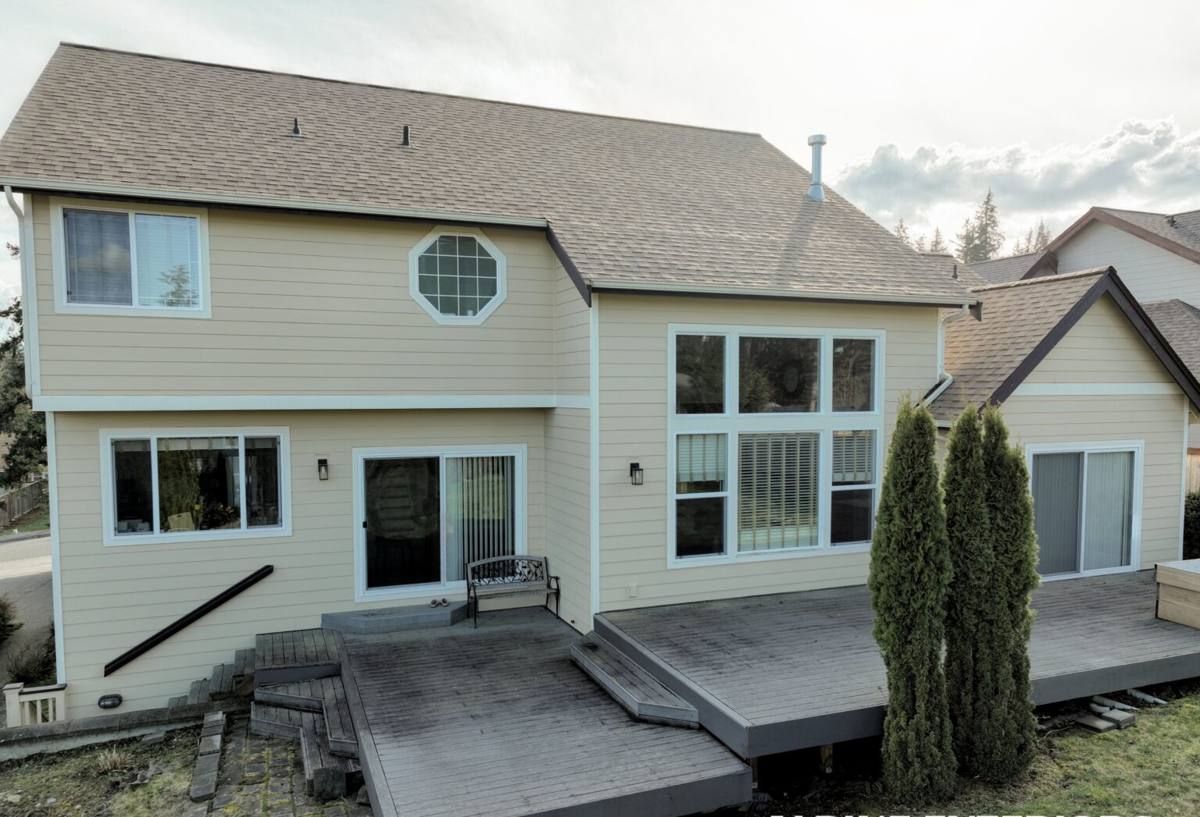
 Marietta's Climate Is Tougher on Decks Than It Looks
Marietta sits close enough to the water that salt-laden air is a daily fact of life, not an occasional event. Add Whatcom County's long wet season, driving rain that comes in sideways off Semiahmoo Bay, and the deep shade many lots carry from mature evergreens, and you have a recipe for decks that age fast if they're not built for the conditions. Salt air accelerates corrosion on anything metal. Constant moisture feeds moss, algae, and mildew. And because our wet season runs long, a deck here doesn't get the extended dry stretches that decks in drier climates use to shed trapped moisture.
None of this means composite decking is a bad fit for Marietta — it's actually one of the better options for this exact climate. But "composite decking" isn't one product with one install method. Getting a deck that actually holds up here depends on choices most homeowners never get asked about: fastener grade, ventilation under the boards, how the substructure is protected, and how the perimeter is detailed to shed water instead of trapping it.
What Marietta Homes Actually Need From a Deck
We look at every Marietta composite deck through three lenses: how it handles salt exposure, how it handles constant moisture, and how it resists the moss and algae growth that's nearly guaranteed on a shaded, damp lot near the water.
Salt Air and Hardware
Salt air doesn't just affect fences and railings near the shoreline — it travels. Fasteners, joist hangers, and structural screws that aren't rated for coastal exposure can start corroding within a few seasons, long before the decking itself shows any wear. On a Marietta deck, we treat every piece of exposed or semi-exposed metal as if it's getting direct salt exposure, because over the life of the deck, it effectively is.
Moisture Management
Composite boards themselves don't rot, but the framing underneath them can if water gets trapped against it. Whatcom County's rainfall pattern means the substructure needs real airflow and a way to shed water quickly, not just a vapor barrier and hope. This matters more here than in drier parts of the state, where a framing mistake might take a decade to show up. In a Marietta yard, it can show up in three or four wet seasons.
Moss and Algae
Shaded, moisture-heavy lots grow moss on almost any horizontal surface — decking included. The board's surface texture and the gaps between boards both affect how much moss gets a foothold and how easy it is to clean off. This is one of the biggest practical differences between decking products, and it's worth understanding before you pick a board.
Composite, Wood, and PVC: What Actually Fits Here
We install composite decking as our standard recommendation for most Marietta projects, but it's worth being honest about the trade-offs rather than just selling one product. Here's how the common options compare specifically for a salt-air, high-moisture, moss-prone site.
| Material | Salt Air Resistance | Moss/Algae Behavior | Maintenance Load |
|---|---|---|---|
| Capped composite | Strong — cap layer resists staining and corrosion-driven fading | Grows on the surface if shaded; cleans off without damaging the board | Occasional wash; no sealing or staining |
| Uncapped/first-gen composite | Moderate — more prone to surface wear over time | Can hold moisture at the surface, encouraging growth | Periodic cleaning; more surface maintenance than capped boards |
| Pressure-treated wood | Weak — fasteners and the wood itself corrode/degrade faster near salt air | Absorbs moisture, feeds moss and mildew readily | Annual sealing/staining, regular moss treatment |
| PVC (cellular) | Strong — fully synthetic, doesn't corrode | Low absorption; moss is easier to rinse off | Low, but higher upfront cost and a different look/feel than wood-grain composite |
For most Marietta homeowners, capped composite hits the right balance of upfront cost, low long-term maintenance, and genuine resistance to what this climate does to a deck. We don't install pressure-treated wood as a primary decking surface in this area anymore — not because it can't be made to work, but because the annual upkeep it demands to actually hold up against salt air and moss is more than most homeowners want to sign up for.
What a Correct Composite Deck Build Involves
The decking boards get the attention because they're what you see, but most of what determines whether a deck lasts is underneath them.
Framing and Ledger Attachment
The ledger board — where the deck attaches to the house — is the single most important structural connection on the project, and it's also the point most exposed to wherever water runs off your roof and siding. Correct flashing here isn't optional trim work; it's what keeps water from tracking behind the ledger and into your home's framing.
Joist Protection
We use joist tape or an equivalent moisture barrier on top of the framing before boards go down. In a dry climate this is a nice-to-have. In Marietta's rainfall, it's the difference between framing that lasts the life of the deck and framing that needs attention in ten years.
Fasteners and Hardware
Structural screws, joist hangers, and hidden fastener clips need to be rated for coastal/high-moisture exposure — typically stainless steel or an equivalent coated fastener, not standard galvanized hardware. This is a small line-item cost difference that has an outsized effect on how the deck holds up near the water.
Ventilation
Low-clearance decks (close to grade) trap moisture underneath if they're not detailed correctly. We plan for airflow under the deck at the design stage, not as an afterthought, especially on shaded lots where things dry slowly to begin with.
Our Process for a Marietta Composite Deck
- On-site assessment — we look at drainage, shade exposure, existing structure (if it's a replacement), and how exposed the site is to wind-driven rain and salt air.
- Design and board selection — we walk through composite options and finishes based on your budget and how the space will be used, not just what's popular.
- Permitting — decking work typically requires a permit through the applicable jurisdiction; we handle this so it's not on you to track down.
- Demo (if replacing an old deck) — we check the ledger, posts, and footings for hidden rot or corrosion before building on top of them.
- Framing and moisture protection — ledger flashing, joist tape, and coastal-rated hardware go in before any decking is installed.
- Decking installation — boards, fascia, and railing installed with attention to expansion gaps, which matter more in our temperature swings than people expect.
- Final walkthrough — we go over basic care and answer questions before we call the job done.
Living With a Composite Deck Near Semiahmoo Bay
Composite is low-maintenance, not no-maintenance. A few honest habits keep it looking right and extend its life in this climate.
- Sweep or rinse debris off the surface regularly — wet leaves and needles left sitting are what feed moss growth on shaded boards.
- Wash the deck surface with a soft-bristle brush and mild soap a couple of times a year; avoid pressure washing directly into board grooves, which can drive water and grime deeper rather than out.
- Check railing posts and fastener points annually for any early corrosion, especially if your lot has more direct wind or salt exposure than most.
- Keep gutters and downspouts clear so runoff isn't dumping extra water onto or near the deck structure.
- Trim back overhanging branches where practical — more sun on the deck surface means faster drying and less moss.
- Address any standing water or slow-draining spots under the deck early; it's much easier to fix before it becomes a framing issue.
What We See Go Wrong on Older or DIY Decks
A lot of the repair calls we get in this area trace back to a handful of recurring issues: standard hardware used instead of coastal-rated fasteners, ledger boards flashed poorly (or not at all), and framing built without any moisture barrier under the decking. Individually, each of these might not fail for years. Together, in Marietta's climate, they tend to surface as soft framing, rusted hardware, or a deck that stays damp and mossy no matter how often it's cleaned. Most of these are cheap to prevent at build time and expensive to fix later.
Why a Crew That Already Works This Area Matters
A contractor who mostly builds decks in drier inland climates will still build you a structurally sound deck — but they may not default to coastal-rated hardware, extra ledger flashing, or ventilation planning unless you ask for it specifically. Working regularly in Whatcom County's coastal communities means we've already seen how salt air, moss, and driving rain affect decks over time, and we build for that from the first framing decision rather than treating it as an upgrade. It also means we know the local permitting process and typical inspection requirements, so that part of the project doesn't become a bottleneck.
Cost Factors for a Marietta Composite Deck
Every project is different, but the main cost drivers we see on composite deck jobs in this area are: total square footage, whether it's new construction or a tear-out and rebuild, height and railing requirements, board tier (entry-level capped composite versus premium lines), and site access for materials and equipment. We're happy to walk through where your project falls on that range during an in-person assessment rather than guessing over the phone.
If you're planning a new deck or replacing one that's showing its age, we're glad to come take a look and put together a straightforward, no-pressure estimate. Use the form below to get started.