 Semiahmoo Exterior
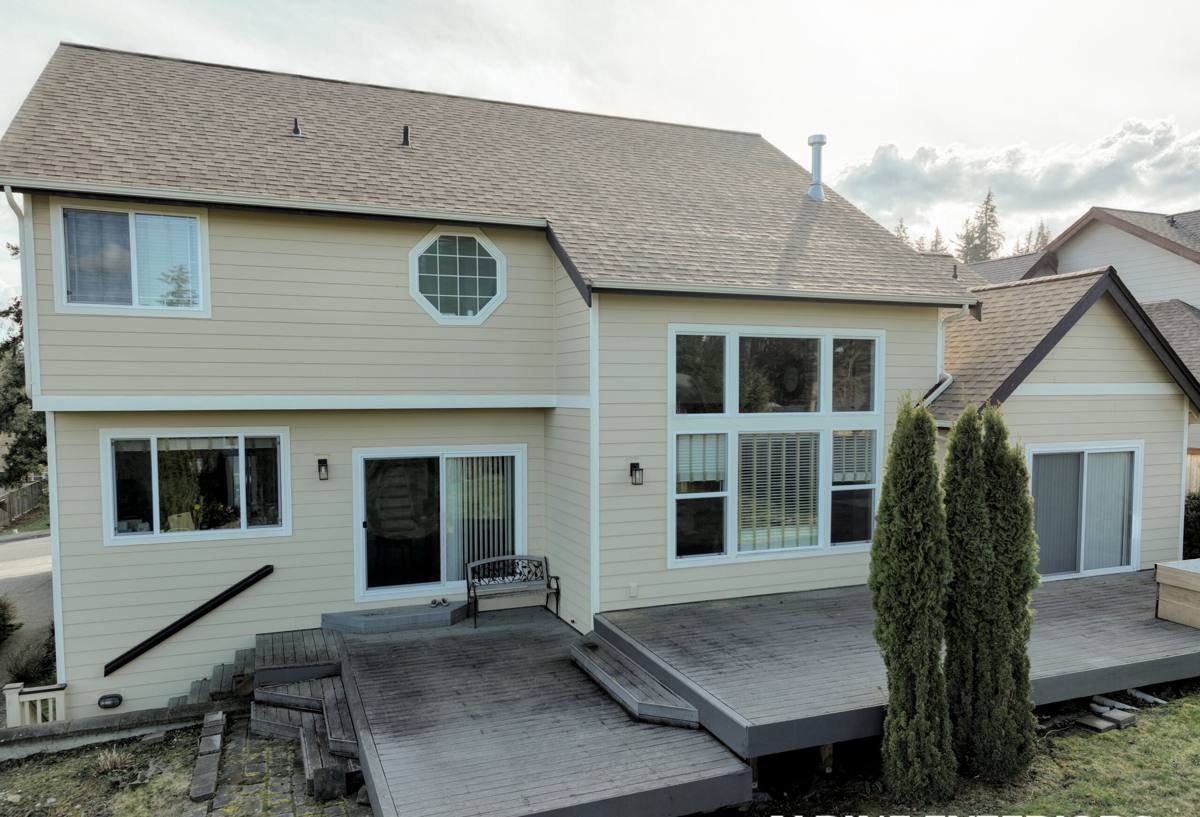
 Building a Deck That Holds Up in Marietta
Marietta sits close enough to the water that salt air is part of daily life, and that changes what a deck needs to survive. Add Whatcom County's long wet season, driving rain off the water, and months of shade that keep moss and algae going strong, and you have a climate that is genuinely hard on outdoor structures. A deck built the way it would be in a dry inland town will show problems here years earlier — soft spots, rust streaks, slick surfaces, and fasteners that back out or corrode. Building correctly for Marietta from the start costs less over time than fixing a deck that was never designed for this coastline.
What This Climate Actually Does to a Deck
It helps to understand the specific stresses at work before talking about materials and methods, because every decision below traces back to one of these:
- Salt air accelerates corrosion in fasteners, brackets, and any exposed metal hardware, especially where wind carries moisture off the water directly onto the structure.
- Driving rain doesn't just fall straight down here — wind pushes it sideways and up under railings, ledger boards, and stair stringers, finding gaps that vertical rain never would.
- Extended moss and algae season means shaded decking surfaces stay damp for days after a storm, which softens wood fiber over time and makes footing slick and dangerous.
- Freeze-thaw swings, while milder here than inland, still open and close tiny cracks in coatings and caulk each winter, which is how water eventually gets past a finish that looked fine in summer.
None of these problems show up on day one. They show up in year three or four, which is exactly why so many decks in this area look fine from a distance but fail an honest inspection underneath.
Framing and Structure Built for the Coast
The part of a deck nobody sees is the part that determines how long it lasts. In Marietta we treat the substructure — ledger board, joists, beams, posts, and footings — as the part worth over-building, because it's the most expensive part to fix later.
Ledger Attachment and Flashing
The ledger board, where the deck attaches to the house, is the single most common failure point on any coastal deck. Water that gets behind an improperly flashed ledger doesn't just rot the ledger — it can travel into the house's wall framing. A correct install uses proper flashing, a water-resistive barrier detail, and structural fasteners rated for exterior and coastal exposure, not just whatever was in the truck.
Fasteners and Hardware
Salt air is hard on standard galvanized hardware. We use stainless steel or heavy-duty coated fasteners and connectors rated for coastal or salt-exposure environments on every structural connection — joist hangers, post bases, and ledger bolts included. It costs more upfront than standard hardware, and it's the difference between hardware that's still solid in fifteen years and hardware that's rusting through in five.
Footings and Post Bases
Footings need to sit below frost depth and be sized for the actual load and soil conditions on the lot, not just a standard spec. Post bases should hold the post above the decking surface and off standing water — wood sitting directly in a wet footing area is one of the fastest ways to start rot at the base of an otherwise sound structure.
Choosing the Right Decking Surface
This is where most homeowners have a real decision to make, and there isn't one universally correct answer — there's a correct answer for a given budget, look, and maintenance appetite.
| Decking Type | How It Handles This Climate | Maintenance Reality |
|---|---|---|
| Pressure-treated wood | Affordable and workable, but needs a quality sealant reapplied regularly or moisture and moss take hold fast in shaded areas | Highest — annual inspection and periodic re-sealing |
| Cedar | Naturally rot-resistant and handles moisture well, but graying and surface softening happen faster in constant damp shade | Moderate to high — regular cleaning and refinishing |
| Composite decking | Very stable in wet, salty conditions and resists rot outright, though lower-quality composites can still get slick with algae in deep shade | Low — periodic cleaning, no sealing or staining |
| PVC/synthetic decking | Fully non-organic, so it doesn't feed moss or algae growth and has no rot risk at all | Lowest — cleaning only |
We install all of the above and won't push a homeowner toward the most expensive option out of habit. A cedar deck maintained on a real schedule can look excellent for decades. A composite or PVC deck is simply the lower-maintenance path for a homeowner who wants to spend weekends doing something other than deck upkeep — that's a legitimate and common choice out here given how long the wet season runs.
Drainage and Surface Water Management
A deck that sheds water properly is a deck that resists moss, rot, and slip hazards all at once. This is one of the most overlooked parts of deck building in wetter climates.
- Decking boards need consistent, correct spacing so water drains through rather than pooling on the surface.
- The deck frame should have a slight slope away from the house so water doesn't collect against the ledger.
- Any under-deck area should be graded or drained so it doesn't become a standing-water pocket that keeps the framing above it perpetually damp.
- Stair treads and any partially shaded sections benefit from decking profiles with better traction, since these areas hold moss and algae longest.
Railings, Stairs, and Hardware in Salt Air
Railings and stair components take more direct weather exposure than the deck field itself, especially where wind-driven rain hits them at an angle. Metal railing systems need a coating genuinely rated for coastal exposure, and any wood components should get the same fastener standard as the framing. Cheaper hardware on railings is a false economy — it's a safety component, and it's also the most visible thing on the whole structure once it starts to corrode.
Our Process for a Marietta Deck Project
The process is straightforward, but each step matters for a deck that's built to last on this coastline rather than just built fast.
- On-site assessment — we look at sun exposure, wind exposure, drainage patterns, and how close the site sits to salt-laden air, since that shapes hardware and material recommendations.
- Design and material selection — we walk through decking, railing, and structural options honestly, including trade-offs in cost, maintenance, and lifespan.
- Permitting — deck projects typically require a permit; we handle that process rather than leaving it to the homeowner.
- Demolition or site prep — including proper disposal of any old structure, and inspection of ledger and framing areas that may have hidden damage.
- Framing and structural work — footings, posts, beams, joists, and ledger flashing, built with coastal-rated hardware throughout.
- Decking, railing, and stairs — installed to the spec and material chosen in design, with attention to spacing and drainage.
- Final walkthrough — we go over care and maintenance specific to the material installed, so the homeowner knows what upkeep, if any, is expected.
A Practical Pre-Project Checklist
Before any deck project starts, it's worth confirming these points with whoever is doing the work:
- Is the ledger board flashing detail specified, or just assumed?
- What grade and type of fasteners and connectors are being used — are they rated for coastal or salt exposure?
- Are footings sized for the actual soil and load, or just a generic minimum?
- Is there a drainage plan for both the deck surface and the area underneath it?
- What's the realistic maintenance schedule for the decking material being chosen, and is that a fit for the homeowner's actual habits?
- Is a permit being pulled, and who is responsible for that process?
Why Local Experience in Marietta Matters
A deck built from a generic national spec sheet doesn't account for how much moisture this specific stretch of Whatcom County coastline deals with, or how far salt air travels inland on a windy day. A crew that already works in and around Semiahmoo and Marietta has seen which fastener grades actually hold up here, which decking materials handle the shaded, damp corners of local lots, and where drainage tends to go wrong on the lot types common in this area. That local pattern recognition is the difference between a deck that needs real repair work in year five and one that's still solid decades later.
If you're planning a new deck or replacing one that's showing its age, we're happy to take a look and talk through honest options for your property. Use the form below to request a free, no-pressure estimate.