 Semiahmoo Exterior
 Marietta Siding: Built for Where It Actually Sits
Marietta sits close enough to the water around Semiahmoo and Drayton Harbor that its houses take a different kind of weather than homes even a few miles inland. Salt-laden air off the bay works on fasteners and finishes year-round. Driving rain off Puget Sound and the Strait pushes water sideways into wall assemblies during winter storms, not just straight down. And the long, wet Whatcom County shoulder seasons keep north- and shade-facing walls damp enough, long enough, that moss and algae get a real foothold on any siding that can't shed moisture and dry out quickly. None of this is exotic — it's just what siding on this stretch of coastline has to deal with, and it's why the installation matters as much as the product.
A siding job that would hold up fine in a drier part of the state can fail early here if the water management details are skipped. That's the whole focus of this page: what a correct siding installation looks like specifically for a Marietta home, and why we handle it the way we do.
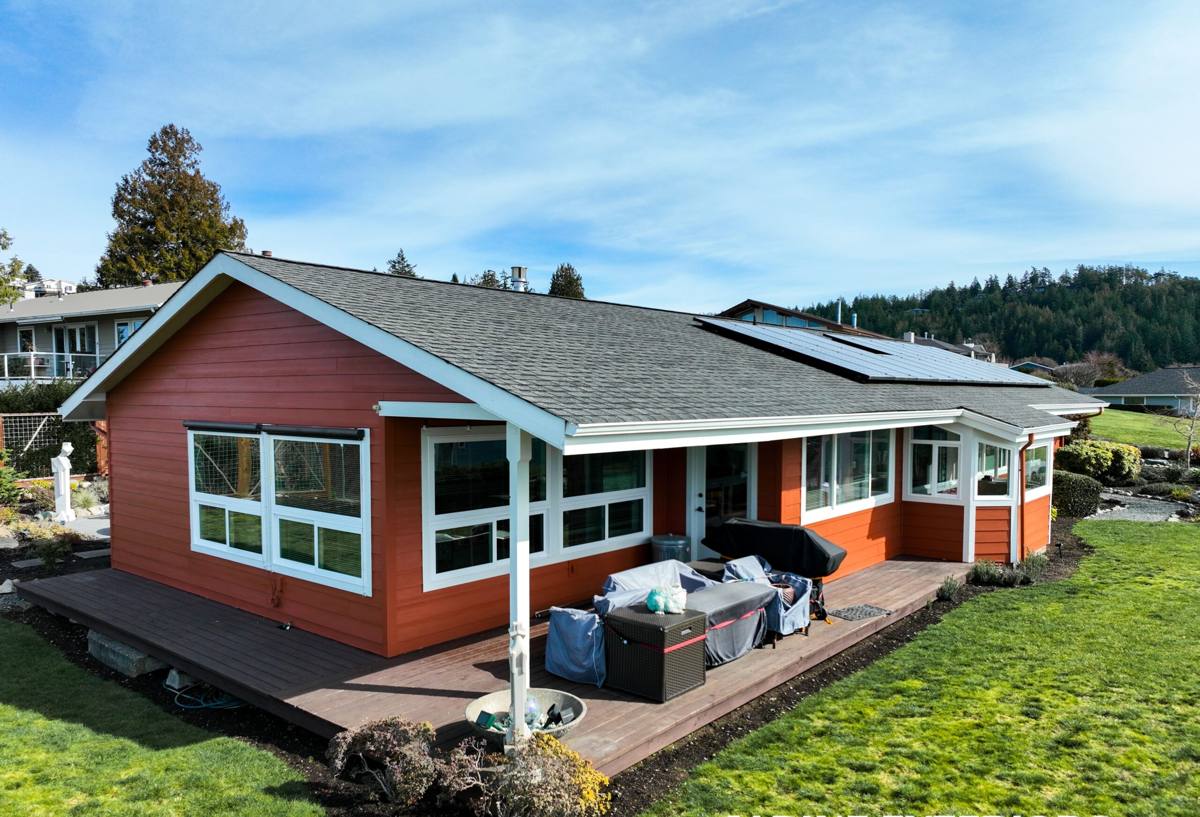
What Marietta's Climate Actually Demands From Siding
Salt Air and Metal Components
Salt air accelerates corrosion on anything metal — nail heads, flashing, trim fasteners. Cheap or under-spec fasteners can start bleeding rust stains through paint within a few years in a location like this. Every fastener and flashing detail needs to be rated for the exposure, not just whatever is standard inland.
Driving Rain and Wind-Driven Moisture
Wind off the water doesn't let rain fall straight down — it drives it into laps, seams, and penetrations. Siding systems here need generous overlaps, correctly lapped house wrap, and flashing at every window, door, and trim transition that assumes water will hit it sideways, not just from above.
Moss, Algae, and Prolonged Dampness
Shaded and north-facing walls in this part of Whatcom County can stay damp for days after a storm. Siding that traps moisture against the substrate — or that doesn't have a way for incidental water to drain and the wall to dry — becomes a moss and algae magnet, and eventually a rot risk underneath.
What a Correct Installation Actually Involves
The material gets most of the attention, but most siding failures we get called out to inspect trace back to installation shortcuts, not the product itself. A correct job on a Marietta home includes:
Water Management Comes First
Before a single piece of siding goes up, the wall needs a continuous weather-resistive barrier, properly lapped shingle-style so water sheds down and out. Every window, door, and penetration gets flashed and integrated into that barrier — not caulked over as an afterthought. Where conditions call for it, a drainage gap behind the siding gives incidental moisture somewhere to go and lets the wall dry, instead of holding water against the sheathing.
Fastening and Fit
Fastener type, spacing, and placement all affect how well siding performs against wind-driven rain and how long the finish lasts in salt air. Panels and planks need correct clearances from grade, roof lines, and decks so water doesn't wick up from below or pool where two surfaces meet. Field cuts need to be sealed and primed per manufacturer spec — an exposed cut edge is one of the most common places we see early failure start.
Trim, Caulking, and Transitions
Every outside corner, inside corner, and butt joint is a place water can get behind the siding if it's not detailed correctly. Quality caulk in the right joints, correct trim profiles, and proper backing at transitions all matter more here than they would somewhere with a drier, calmer climate.
Why We Install Only James Hardie Fiber Cement
We standardized on James Hardie for every home we side, and Marietta's climate is a good example of why. It's a non-combustible fiber cement product, so it doesn't feed a fire the way some other exterior claddings can. The ColorPlus factory finish is baked on under controlled conditions, which holds up better against the fade and wear that salt air and sun exposure cause over time than a field-applied paint job does. And Hardie's HZ5 product line is specifically engineered for wetter, harsher climate zones like ours — it's built to handle moisture cycling and humidity better than the standard HZ10 line meant for drier regions.
Fiber cement also doesn't feed moss and algae growth the way some organic or wood-based products can, and it doesn't swell, delaminate, or rot the way products with wood content can when they take on repeated moisture. Combined with a strong, transferable warranty, that's why it's the only product we put on homes — not because every alternative is bad, but because this is the standard we're willing to stand behind after we've seen what this climate does to a wall over 15, 20, 30 years.
Our Installation Process
- Inspection and assessment — we look at the existing siding, wall assembly, and any moisture or rot issues before quoting anything, so there are no surprises once tear-off starts.
- Tear-off and sheathing check — old siding comes off and the sheathing underneath gets inspected for damage. Any rot or soft spots get repaired before we move forward, not covered up.
- Weather-resistive barrier installation — a new, continuously lapped barrier goes on, integrated with flashing at every window, door, and penetration.
- Drainage detail as needed — depending on wall orientation and exposure, we build in the drainage path the wall needs to shed and dry out properly.
- Hardie installation to manufacturer spec — correct fastener type and spacing, correct clearances, sealed field cuts, and proper trim details throughout.
- Final inspection and walkthrough — we go over the finished job with the homeowner before calling it done.
Signs a Marietta Home Needs Siding Replaced
Not every issue means a full re-side, but these are the signs worth having a professional look at, especially on a home this close to the water:
- Visible warping, buckling, or panels pulling away from the wall
- Persistent moss or algae growth that keeps returning after cleaning
- Soft spots, discoloration, or a musty smell near exterior walls, especially on shaded sides
- Paint that's peeling, bubbling, or chalking faster than expected
- Visible rust streaking from fasteners or trim
- Gaps opening up at seams, corners, or trim joints
- Rising energy bills that suggest the wall assembly isn't performing the way it should
Cost Factors for a Marietta Siding Installation
Every home is different, and we won't quote a number without seeing the house, but these are the factors that most affect the scope and cost of a siding installation project in this area:
| Factor | Why It Matters |
|---|---|
| Home size and story height | More wall area and higher stories mean more material, labor, and staging/access work. |
| Tear-off vs. new construction | Removing and disposing of old siding, plus repairing any sheathing damage found underneath, adds time and cost. |
| Trim and architectural detail | Homes with more corners, dormers, and trim transitions take longer to flash and finish correctly. |
| Siding profile chosen | Lap siding, panel siding, and shingle-style Hardie products differ in material and labor cost. |
| Existing moisture or rot damage | Repairs found during tear-off are addressed before new siding goes on, which can affect the timeline and cost. |
| Site access and exposure | Waterfront and wind-exposed walls sometimes call for extra flashing or drainage detail. |
Why a Crew That Already Works Marietta Matters
Siding contractors who mostly work drier, inland areas don't always build in the drainage and flashing margin that a Semiahmoo-area home needs. A crew that already works Marietta and the surrounding Whatcom County coastline knows which walls take the worst of the wind-driven rain, which sides of a house stay damp long enough to grow moss, and how much salt exposure the fasteners and trim need to be rated for. That's not something you get from a spec sheet — it's from having done this work, on homes like this, in this specific climate, over and over.
It also means fewer surprises during the project. Local crews already know how weather windows work in this area, what permitting looks like in Whatcom County, and how to sequence a job so an unexpected rain event doesn't undo a day's progress.
Caring for Your Siding After Installation
Fiber cement siding installed correctly is low-maintenance, but "low" isn't "none." A rinse-down once or twice a year clears salt residue and slows moss growth before it takes hold. Keep an eye on caulked joints and trim over the years, and have any landscaping trimmed back so foliage isn't holding moisture against the wall. Beyond that, correctly installed Hardie siding is built to handle what this climate throws at it for decades.
If your Marietta home's siding is showing its age, or you're planning ahead for a replacement, we're happy to take a look and walk you through what your home actually needs — no pressure, no obligation. Reach out below for a free estimate.