 Semiahmoo Exterior
 Why Decks Wear Out Faster in Marietta
Marietta sits close enough to the water that salt-laden air is part of daily life, not an occasional thing. That air finds every exposed fastener, every joint, and every spot where a coating has worn thin, and it speeds up corrosion in ways that homeowners further inland never have to think about. Add Whatcom County's long stretch of driving rain each fall and winter, plus a moss and algae season that can run eight or nine months out of the year in shaded yards, and you have a climate that is genuinely harder on a wood deck than most of the country deals with.
None of this means a deck in Marietta is doomed to fail early. It means the deck has to be built and maintained with that climate in mind from the start. A lot of the decks we get called out to look at were built with methods that work fine in a dry climate but don't hold up here — undersized ledger flashing, standard carbon-steel fasteners instead of coated or stainless hardware, and decking boards laid tight enough that water and debris have nowhere to drain.
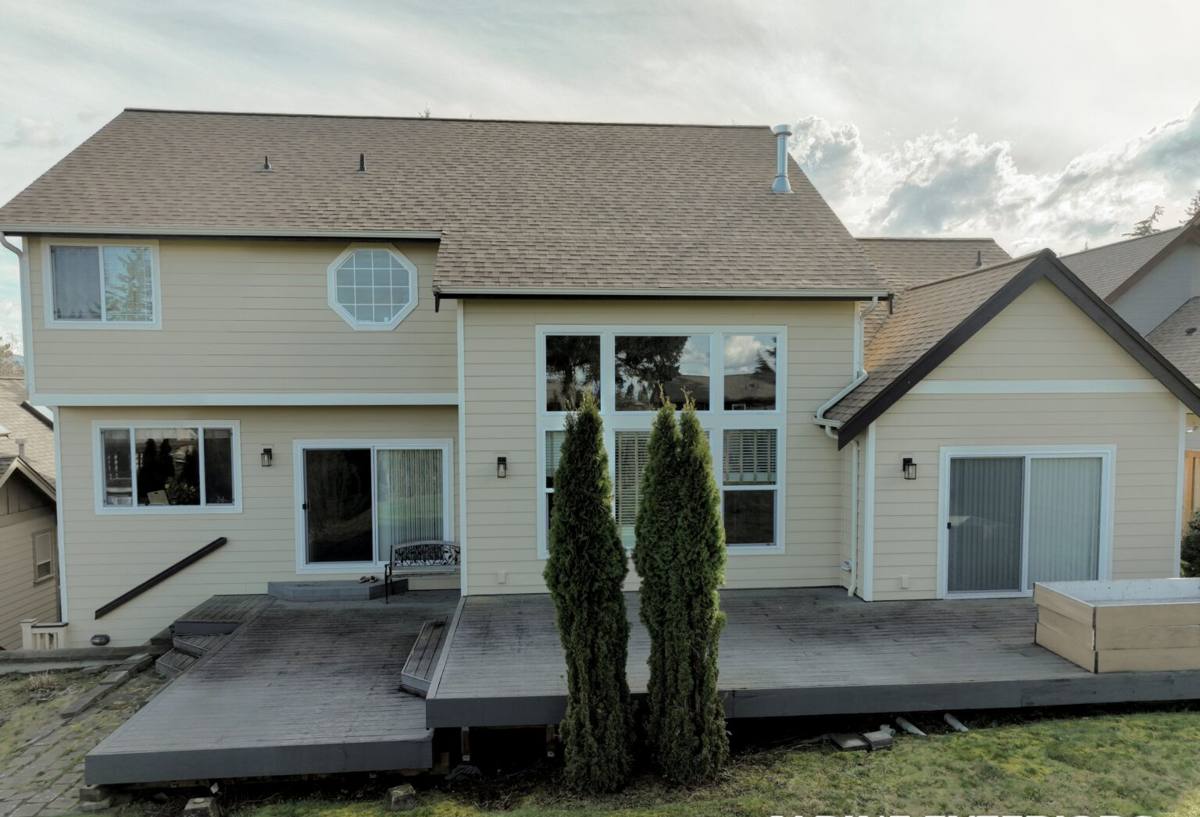
Repair or Full Replacement? Reading the Signs
Not every tired-looking deck needs to come out. Sometimes a handful of boards, a cracked stair stringer, or a loose railing post is a repair job. Full replacement becomes the right call when the problems are in the structure itself rather than the surface.
- Soft, spongy, or spreading spots in the decking that go beyond one or two boards
- Rot or rust at the ledger board where the deck attaches to the house
- Posts or joists that show soft wood when probed with a screwdriver
- Visible mold or moss buildup that keeps coming back within weeks of cleaning
- Railings or stairs that flex or feel unstable under normal weight
- A deck older than 20-25 years built before current attachment and flashing standards
If the problems are limited to the surface boards and the framing underneath probes solid, resurfacing can be a reasonable middle option. Once the framing itself is compromised, patching the surface just hides a structural problem that will keep getting worse.
What a Correct Deck Replacement Actually Involves
A deck replacement done right is mostly about what happens before a single new board goes down. The visible decking is the part everyone notices, but the framing, flashing, and fasteners underneath are what determine whether the new deck lasts 10 years or 30.
Structure Below the Surface
This starts with the ledger board connection to the house, which has to be properly flashed so water sheds away from the house framing rather than collecting behind it — a common failure point on older decks in wet climates. Joists need adequate size and spacing for the span and expected loads, footings need to sit below frost depth and bear on solid ground, and any wood in contact with concrete or soil needs to be rated for that exposure.
Fasteners and Hardware
In a salt-air environment, the hardware matters as much as the lumber. Standard galvanized fasteners can corrode faster near the water than they would a few miles inland. We spec stainless steel or heavy-duty coated fasteners and connectors rated for the specific decking and framing material being used, because a deck is only as strong as the metal holding it together, and that metal is the first thing salt air attacks.
Choosing Decking Material for a Salt-Air Climate
Material choice matters more here than in a dry inland climate, because whatever goes down has to handle constant moisture, salt exposure, and shade-driven moss growth without becoming a maintenance burden. There isn't one right answer for every homeowner — it comes down to how much upkeep you want to do and what budget you're working with.
| Material | Moisture Behavior | Maintenance | Typical Lifespan |
|---|---|---|---|
| Pressure-treated wood | Can absorb water and cup or splinter if not sealed regularly | Annual cleaning and re-sealing recommended | 10-15 years |
| Cedar | Naturally rot-resistant but still needs sealing in wet climates | Sealing every 1-2 years, regular cleaning | 15-20 years |
| Capped composite | Resists moisture absorption well; shell protects the core | Periodic washing to keep moss and mildew from taking hold | 25-30+ years |
| PVC/cellular decking | Does not absorb moisture; fully synthetic | Lowest upkeep; occasional washing | 25-30+ years |
We're upfront with homeowners about the trade-offs. Wood costs less up front but demands consistent sealing to hold up against our rain and salt air, and skipping a season or two of maintenance shows up fast as graying, cupping, or splinters. Composite and PVC products cost more initially but hold their look and structural integrity with far less attention, which is why we see more homeowners near the water choosing them for full replacements rather than repeat repairs on wood.
Our Deck Replacement Process
We keep the process straightforward because homeowners deserve to know what's happening at each step, not just get a finished deck at the end.
- On-site evaluation — we inspect the existing structure, ledger connection, footings, and framing to confirm what actually needs replacing versus what can stay.
- Material and design conversation — we walk through decking, railing, and fastener options based on your budget, sun/shade exposure, and how much maintenance you want to do long-term.
- Permit and code check — we confirm what Whatcom County requires for your specific project before work starts.
- Demolition and disposal — old decking and framing removed, with attention to what's underneath (utility lines, irrigation, existing damage to the house).
- Rebuild — proper ledger flashing, correctly sized and spaced framing, corrosion-resistant hardware, then the decking and railing system.
- Final walkthrough — we go over the finished deck with you, including what maintenance it actually needs going forward.
Permits and Code Considerations in Whatcom County
Deck replacement projects in Whatcom County typically require a permit once the work goes beyond simple surface board swaps, especially when framing, footings, or the ledger connection are being replaced. Requirements can vary based on deck height, size, and whether it's attached to the house or freestanding. We handle the permit process as part of the job so homeowners aren't left guessing whether their project is compliant, and so the finished deck is built to hold up to inspection as well as weather.
What Drives the Cost of a Deck Replacement
Every deck replacement quote comes down to a handful of variables. Understanding them helps homeowners see why two decks of similar size can come in at very different price points.
| Factor | Why It Matters |
|---|---|
| Deck size and shape | More square footage and complex angles or multiple levels increase material and labor |
| Decking material | Wood costs less upfront; composite and PVC cost more but need far less long-term upkeep |
| Framing condition | Rot or damage found in joists, beams, or footings once demo starts can add scope |
| Height and railing requirements | Taller decks and code-required railing systems add material and labor |
| Ledger and flashing work | Proper flashing at the house connection is non-negotiable in this climate and adds labor time |
| Stairs and access | Additional stairs, landings, or difficult site access add time and cost |
We give homeowners a real number after seeing the site and the existing structure, not a rough guess over the phone, because the condition of what's underneath the old decking often changes the scope more than anything else.
Why a Crew That Already Works Marietta Matters
A contractor who works this specific area regularly already knows what the salt air and rain do to fasteners, flashing, and framing over time, because they've opened up enough old decks to see the failure patterns firsthand. That experience shows up in small decisions — which hardware grade to spec, how much drainage gap to leave between boards, where extra flashing attention pays off — that a crew unfamiliar with this climate might not think twice about. It also means realistic timelines that account for our wet-season scheduling, and a crew that's already dealt with local permitting rather than learning it project by project.
Keeping Your New Deck Ahead of the Weather
Whatever material you choose, a little regular attention keeps a new deck performing the way it should for its full lifespan.
- Sweep leaves and debris off the deck surface regularly, especially in fall
- Wash down the surface once or twice a year to stay ahead of moss and mildew before it takes hold
- Check and reseal wood decking on the schedule recommended for the specific product used
- Inspect railings and stair connections annually for looseness
- Keep gutters and downspouts clear so runoff isn't dumping extra water onto or near the deck
- Trim back overhanging branches to cut down on shade-driven moss growth
If you're weighing a repair against a full replacement, or just want an honest read on what your current deck actually needs, we're happy to come take a look. The estimate is free, there's no pressure to move forward, and you'll get a straight answer about what your deck needs and why — just fill out the form below.