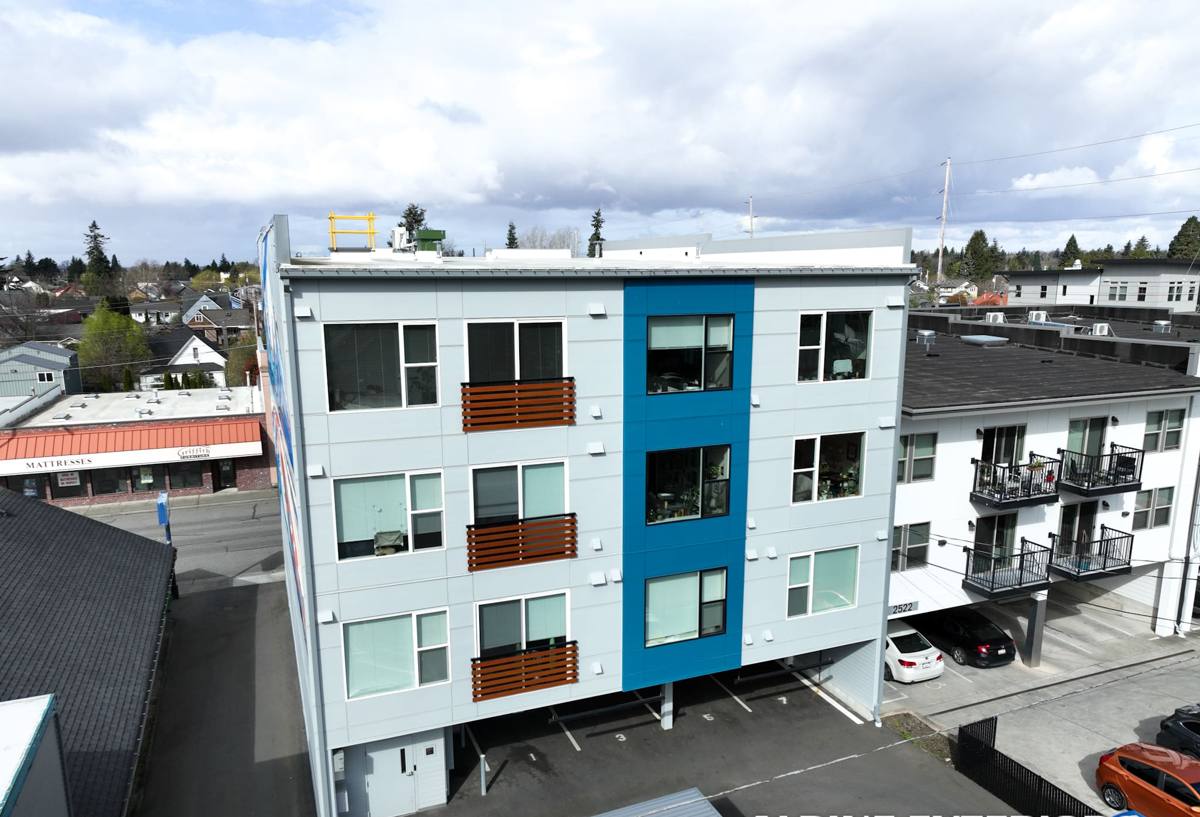
 Semiahmoo Exterior
 Window Installation in Marietta: Built for Whatcom County Weather
Marietta sits low and close to the water, in the stretch of Whatcom County where Semiahmoo Bay's salt air, Pacific storm systems, and a wet, mossy climate all converge on the same houses. Windows here don't fail the way they do inland. They fail at the corners, at the sill, at the hardware, and usually from the outside in — long before a homeowner notices anything from inside the house. Installing a window correctly in this environment isn't just about swapping glass; it's about managing water, salt, and moisture at every layer of the opening.
This page covers what window installation actually involves for a Marietta home, what the local climate demands from the work, and how our process is built around those conditions rather than around a generic install checklist that ignores where you live.
What Coastal Whatcom County Does to Windows
Every region has its own way of wearing down a house. In Marietta, three factors do most of the damage, and they compound each other.
Salt Air and Hardware Corrosion
Proximity to Semiahmoo Bay means a steady dose of salt-laden air moving inland, especially during winter storms. Salt accelerates corrosion on anything metal — window locks, balance mechanisms, screws, and especially lower-grade aluminum or unclad components. A window that would last decades in a dry inland climate can develop stiff, corroded hardware in a fraction of that time here if it wasn't specified or sealed with that exposure in mind.
Wind-Driven Rain
Rain in this part of Washington rarely falls straight down. Storms off the water push rain sideways into wall assemblies, and that horizontal force finds any gap in flashing, caulking, or trim. A window that's watertight against a light drizzle can still leak under wind-driven rain if the flashing details weren't done correctly at installation. This is the single biggest cause of hidden water damage we see in older Marietta homes.
Moss Season and Prolonged Dampness
Whatcom County's long wet season keeps exterior surfaces damp for months at a time, and moss doesn't need much of a foothold — a rough sill edge, a gap in caulk, or a shaded north-facing wall is enough. Moss and algae hold moisture against wood trim and sills, which speeds up rot in exactly the areas that are hardest to inspect without pulling trim off.
Signs a Marietta Home May Need New Windows
Most window problems here show up gradually, and homeowners often adjust to them without realizing how much is being lost in comfort and energy costs. Common signs include:
- Fogging or a permanent haze between panes, meaning the seal has failed and the insulating gas has escaped
- Soft or discolored wood trim around the window frame, especially at the bottom corners
- Drafts you can feel near the frame even when the window is fully latched
- Windows that are difficult to open, close, or lock — often a sign of corroded hardware or a warped frame
- Visible gaps between the window frame and siding or trim
- Interior condensation on cold mornings, which can point to poor insulating performance
- A musty smell near the window that doesn't clear with ventilation
Any one of these on its own may not mean full replacement is urgent. Several together, or any sign of soft wood at the sill, usually means it's time for a closer look.
What a Correct Window Installation Actually Involves
A window installation is only as good as the parts nobody sees once the trim goes back on. This is where most of the long-term performance is decided.
Removal and Rough Opening Inspection
Once the old window is out, the rough opening gets inspected for rot, moisture staining, or prior water damage — problems that are invisible until the window is physically removed. Any compromised framing or sheathing gets addressed before a new window ever goes in. Installing a new window into a damp or damaged opening just hides the problem for a few more years.
Flashing and Water Management
This is the step that matters most in a climate with driving rain. Flashing tape and sill pans are installed to direct any water that gets past the window back out, not into the wall cavity. The sequencing matters: each layer needs to overlap the one below it, shingle-style, so water always sheds outward and downward. Done out of order, flashing can actually trap water instead of directing it out.
Setting, Shimming, and Sealing
The window gets set level, plumb, and square, shimmed at the correct load points, and fastened per the manufacturer's specifications — over-fastening or under-fastening both shorten a window's service life. Low-expansion foam and backer rod fill the gap between frame and rough opening for insulation, and exterior sealant is applied at the specific joints the manufacturer calls for, not just wherever there's a visible seam.
Trim, Finish, and Final Water Testing
Exterior trim and caulking are finished last, matched to the existing siding profile where possible. On exposed or storm-facing walls, we check the finished opening for any path water could take before calling the job done.
Choosing a Window Type for a Marietta Home
There's no single "best" window — the right choice depends on exposure, budget, and how much maintenance a homeowner wants to take on. Here's how the common frame materials compare for coastal Whatcom County conditions:
| Frame Material | Salt Air / Moisture Performance | Maintenance | Typical Fit for Marietta |
|---|---|---|---|
| Vinyl | Good — won't corrode or rot | Low; occasional cleaning | Strong all-around choice for most homes, especially storm-exposed walls |
| Fiberglass | Excellent — very stable in wet, salty conditions | Low | Good for homes with heavy direct water exposure or larger openings |
| Wood (unclad) | Poor without diligent upkeep — prone to rot near the coast | High; regular painting/sealing | Best reserved for sheltered walls or homes committed to ongoing maintenance |
| Wood-clad (vinyl or aluminum exterior) | Good on the exterior face; interior wood still needs care | Moderate | Workable where a wood interior look is wanted, with realistic upkeep expectations |
| Aluminum | Fair — conducts cold and can corrode without a quality finish | Low to moderate | Less common here due to condensation and corrosion risk in a wet climate |
For most Marietta homes, especially anything with direct exposure toward the water, vinyl or fiberglass frames offer the best balance of durability and low upkeep. We're upfront when a homeowner is considering an option — like unclad wood on a storm-facing wall — that will demand more maintenance than they may be expecting; that's a trade-off worth knowing before the order is placed, not after.
Cost Factors to Expect
Every home and window count is different, but the main variables that move the price of a window installation project are consistent:
| Factor | Why It Affects Cost |
|---|---|
| Frame material | Fiberglass and higher-end vinyl typically cost more than entry-level vinyl |
| Window size and glazing (double vs. triple-pane) | Larger openings and additional glass layers add material and labor cost |
| Number of windows replaced at once | Doing multiple windows in one project typically lowers the per-window cost |
| Condition of the rough opening | Rot or framing repair found during removal adds labor beyond the standard install |
| Trim and siding matching | Custom trim profiles or siding repair around the opening add finish work |
| Access and story height | Second-story or hard-to-reach windows require more setup and safety measures |
We give straightforward, itemized estimates so a homeowner knows exactly what's driving the number, rather than a flat quote with no explanation behind it.
Our Window Installation Process
- On-site assessment: We look at each window opening from both sides, checking for existing water damage, drafts, and the general condition of the surrounding trim and siding.
- Honest recommendation: We walk through frame material and glazing options suited to that specific wall's exposure, along with a clear estimate.
- Scheduling around weather: Openings are only exposed to the elements for as short a window of time as possible, and we plan installation days around the forecast rather than pushing through active rain.
- Careful removal: Old windows come out cleanly, with the rough opening inspected before anything new goes in.
- Flashing, setting, and sealing: Installed per manufacturer specification, in the correct sequence, every time.
- Finish work: Interior and exterior trim is completed and matched to the existing home.
- Final walkthrough: We check operation, seal integrity, and cleanup with the homeowner before considering the job done.
Why It Matters to Hire a Crew That Already Works Marietta
Window installation looks similar on paper anywhere in the country, but the details that actually matter — flashing sequence, sealant choice, hardware finish, how much slope to build into a sill — change based on the exposure a home actually faces. A crew that regularly works homes near Semiahmoo Bay already knows which walls take the brunt of winter storms, which older Marietta homes tend to have moisture issues behind the trim, and how to spot early rot before it becomes a structural repair. That local pattern recognition is hard to substitute for, no matter how good a crew is on paper.
It also matters for accountability. A crew based in the area is easy to reach if a question comes up after the job, and has a reputation in the community worth protecting — which tends to show in how carefully the work gets done the first time.
Maintaining New Windows Through Moss Season
A correctly installed window still benefits from basic upkeep in this climate. A few habits go a long way:
- Rinse salt residue and grime off exterior frames a few times a year, especially after winter storms
- Keep gutters and downspouts clear so runoff doesn't pool against window sills
- Check exterior caulking annually for cracking or separation, particularly on storm-facing walls
- Remove moss or algae buildup from sills and trim promptly rather than letting it sit through the wet season
- Operate locks and hardware periodically in winter so they don't seize from disuse and moisture
None of this replaces a correct installation, but it extends the life of one considerably in a climate this wet.
Get a Straightforward Estimate
If windows in your Marietta home are drafty, fogged, hard to operate, or showing soft trim at the sill, we're glad to take a look and give you an honest read on what's going on — no pressure, no inflated scope. Use the form below to request a free estimate.