 Semiahmoo Exterior
 Board & Batten Siding Built for Drayton Harbor's Water-Facing Climate
Homes around Drayton Harbor and the broader Semiahmoo area sit right at the edge of the Salish Sea, in a corner of Whatcom County where salt-laden air, wind-driven rain, and long gray stretches of humidity are simply part of living near the water. That combination is tougher on exterior siding than most homeowners expect. Salt air accelerates corrosion on fasteners and hardware that aren't rated for it, driving rain off the harbor pushes moisture sideways into seams and laps that would stay dry in a more sheltered inland setting, and a moss season that can run from early fall through spring keeps north-facing and shaded walls damp for days at a stretch. Board and batten siding, with its long vertical boards and narrow battens covering the seams, can be a beautiful and durable choice in this climate — but only when it's designed and installed with these specific conditions in mind.
This page is about one service in one place: board and batten siding installed correctly for Drayton Harbor homes. We're not going to give you a generic rundown of a popular siding style. We're going to walk through what this climate actually demands from a vertical siding system, what a correct installation involves, and why the crew you hire — and the product they install — both matter more here than they would in a drier, more sheltered part of the state.
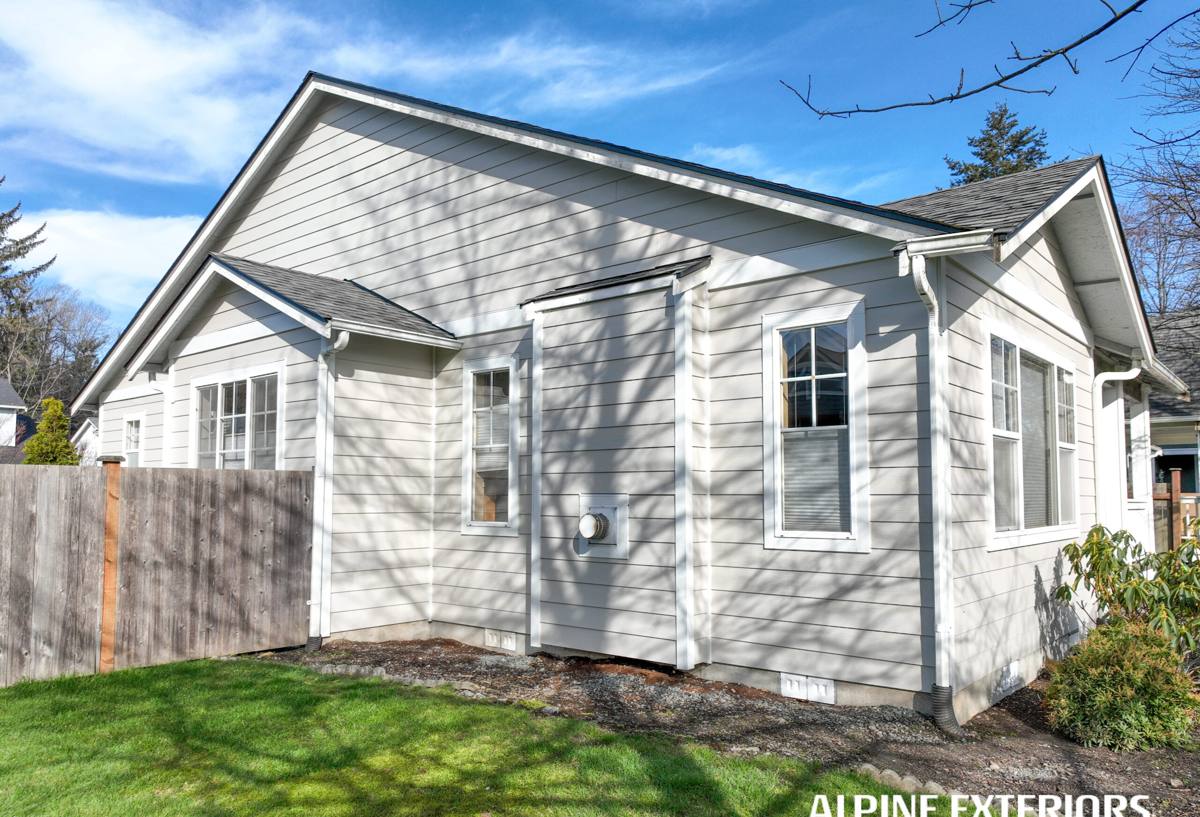
Why Board & Batten Suits Harbor-Area Homes
Board and batten has deep roots in coastal and farmhouse architecture, and it reads naturally on homes near the water — the strong vertical lines complement docks, boathouses, and the general working-waterfront character you see around Drayton Harbor. It also pairs well with the mix of architectural styles common in the area, from craftsman cottages to newer builds, without looking out of place next to more traditional lap siding on neighboring homes.
Beyond looks, the profile has a practical upside when it's built correctly: a well-detailed board and batten wall has fewer horizontal ledges than lap siding for water to catch on as it runs down the face of the house. The trade-off is that the seams between boards run vertically, parallel to the direction water travels in wind-driven rain, so those seams and the battens covering them have to be detailed with real discipline. Get that detail wrong and you've built a siding style that channels water exactly where you don't want it. Get it right, and it sheds water about as well as any lap profile while giving the home a distinctly different look.
What a Correct Installation Requires in This Climate
Water Management Behind the Boards
Everything starts with what's underneath the visible siding. A weather-resistant barrier goes over the sheathing first, lapped shingle-style so water is always directed outward and down, never into a seam. Behind the boards themselves, a rainscreen gap — a thin drainage space created with vertical furring strips — lets any moisture that does get past the face of the siding drain down and out instead of sitting against the sheathing. In a climate with this much sustained damp weather, that gap is not optional detailing; it's the difference between siding that dries out between storms and sheathing that stays wet long enough to cause real problems underneath.
Fastener Pattern and Batten Spacing
Battens need to land over solid backing — typically studs or the furring strips of the rainscreen — not just centered decoratively over each seam. Fastener spacing and setback from board edges follow the manufacturer's engineering, not a "looks about right" approach, because under-fastened or misplaced fasteners are one of the more common causes of boards working loose or cupping over time in a wet, wind-exposed setting. We also pay attention to where face-nailing is required versus where boards can be blind-nailed, since that affects both appearance and how the assembly handles seasonal movement.
Flashing at Windows, Doors, and Trim
Every penetration in the wall — windows, doors, hose bibs, light fixtures — needs its own flashing detail that directs water back out over the surface below it, not just a bead of caulk over the gap. Kick-out flashing where a roofline meets a wall is especially important here, since it's one of the most common places we find water damage on older homes in wet coastal climates when it's been missed or installed shallow. Caulk has a role, but it's a secondary seal, not the primary water management strategy — a wall that depends on caulk staying perfect for years in salt air and constant rain is a wall that will eventually fail.
Why We Install Only James Hardie for Board & Batten
We install James Hardie fiber cement exclusively, and for board and batten specifically that means HardiePanel vertical siding paired with HardieTrim battens, engineered for the wetter, harsher end of the Pacific Northwest climate range. A few reasons this matters for a Drayton Harbor project specifically:
- Dimensional stability — fiber cement doesn't swell and shrink with moisture the way wood-based products do, which matters on a coast where humidity rarely drops for long.
- Factory-applied ColorPlus finish — the color and topcoat are baked on at the factory under controlled conditions, holding up better against sun, salt, and moisture than field-applied paint on raw boards and battens.
- Non-combustible material — fiber cement doesn't feed a fire, a meaningful consideration anywhere in Washington with wildfire season becoming a more regular concern.
- Warranty backing — a manufacturer-backed, transferable warranty that reflects confidence in long-term performance, not just initial appearance.
We're often asked why we don't offer board and batten in vinyl, LP SmartSide, or traditional cedar and primed spruce, since all three are common and can look similar to fiber cement from the curb. The honest answer is about long-term behavior in exactly the conditions Drayton Harbor sees. Vinyl board and batten is a thin, flexible material that can show waviness and telegraph what's behind it as temperatures swing, and it doesn't hold the crisp shadow lines of a true board and batten profile as well as a rigid material does. LP SmartSide uses an engineered wood substrate that, while treated, still relies on cut edges and joints being sealed and maintained correctly — a maintenance dependency we'd rather not build a coastal, high-moisture installation around. Cedar and primed spruce are genuinely attractive but require an ongoing cycle of staining or repainting to keep moisture out of the wood grain, a cycle that's demanding in a climate with this much sustained dampness and shade-driven moss growth. None of these are bad products in the right setting. We simply won't put our name behind an installation we don't think will hold up the way we want it to on a harbor-facing wall.
Our Process for Drayton Harbor Board & Batten Projects
- On-site assessment — we walk the home and note which walls take the most direct wind and rain off the water, where shade and moss pressure are heaviest, and where existing moisture damage may already be hiding under old siding.
- Tear-off and sheathing check — once the old siding is off, we inspect the sheathing for rot or soft spots before anything new goes on. Covering up a problem is worse than finding it.
- Weather barrier and rainscreen installation — the drainage plane goes in first, correctly lapped and sealed at every penetration.
- Board and batten installation to manufacturer spec — panels and battens fastened per James Hardie's engineering, with flashing detailed at every window, door, and roof-to-wall intersection.
- Trim, caulking, and touch-up — finish work done where the system calls for it, not as a substitute for proper flashing underneath.
- Final walkthrough — we go over the finished work with the homeowner before calling the job done.
Board & Batten Material Comparison for a Salt-Air Climate
| Factor | James Hardie Fiber Cement | Vinyl | Wood / Primed Spruce / Cedar |
|---|---|---|---|
| Moisture behavior | Dimensionally stable, engineered for wet climates | Doesn't absorb moisture but can warp with temperature swings | Absorbs moisture; prone to swelling, cupping, rot at seams |
| Salt air resistance | Strong with correct fasteners and finish | Fair; can chalk and become brittle over time | Weak; accelerates finish breakdown and grain damage |
| Maintenance cycle | Occasional wash; repaint on a long cycle if ever needed | Low maintenance but limited repair options if damaged | Repaint/restain every few years to stay protected |
| Fire resistance | Non-combustible | Combustible | Combustible |
| Appearance longevity | Factory finish holds color and sharp lines | Can look wavy or thin; limited profile depth | Attractive when new; fades and grays without upkeep |
Maintenance in a Salt Air, High-Moss Climate
Even the right siding, installed correctly, benefits from basic seasonal attention in a place with this much sustained moisture and shade. A short annual checklist goes a long way:
- Rinse siding once or twice a year to clear salt residue and airborne grime, especially on walls facing the water.
- Check north-facing and heavily shaded walls for early moss or algae growth and clean it before it spreads.
- Keep gutters clear so overflow doesn't run down the face of the siding during heavy rain.
- Trim back trees and shrubs that keep a wall shaded and damp longer than the rest of the house.
- Look at caulking around windows and trim once a year and have any cracked or missing sections redone before the wet season sets in.
- Watch for streaking or dark staining at the base of walls, which can signal a drainage or grading issue rather than a siding problem.
What Affects the Cost of a Board & Batten Project
Every home is different, and we don't publish blanket pricing because the honest cost depends on real variables. Here's what actually moves the number:
| Cost Factor | Why It Matters |
|---|---|
| Home size and number of stories | More wall area and taller walls mean more material and labor, plus added equipment for upper stories. |
| Tear-off vs. new construction | Removing existing siding, inspecting sheathing, and disposing of old material adds time compared to new builds. |
| Trim and window/door complexity | More openings and architectural detail mean more flashing and cutting work. |
| Board width and reveal choice | Wider boards and battens can reduce seam count but affect material quantities and layout planning. |
| Site access | Waterfront lots, steep grades, or tight setbacks near the harbor can affect staging and equipment access. |
| Existing damage | Rot or moisture damage found during tear-off adds repair work before new siding can go on. |
Why a Crew That Already Works Drayton Harbor Matters
Siding installation isn't uniform across Whatcom County. A crew that regularly works Drayton Harbor and the Semiahmoo area already knows which walls typically catch the worst of the wind-driven rain, how much moss pressure to expect on shaded sides of a lot near the water, and how to sequence a project around this region's wet-season weather patterns rather than learning it on your job. That familiarity shows up in the details — where extra flashing attention gets paid, which fastener and hardware choices hold up against salt air over time, and how to plan a tear-off so a home isn't left exposed longer than necessary during an unpredictable stretch of coastal weather. It also means fewer surprises with local permitting and inspection expectations, since we're not figuring that out for the first time on your project.
If you're weighing board and batten siding for a home in the Drayton Harbor or Semiahmoo area, we're happy to walk the property, look at what your walls actually face in terms of sun, shade, and weather exposure, and give you a straight, no-pressure estimate using the form below.