 Semiahmoo Exterior
 Building New in Drayton Harbor Means Building for the Water
Drayton Harbor sits right where fresh construction meets marine weather. If you're framing a new home or a major addition here, the windows you choose and how they're installed will decide whether that house stays dry and comfortable for the next thirty years or starts fighting rot, corrosion, and condensation within the first decade. New-construction windows are not the same product installed the same way as a replacement window in an existing wall, and getting that distinction right at the framing stage is the whole game.
We install new-construction windows on builds throughout the Semiahmoo area, including Drayton Harbor lots exposed to wind off the water. This page covers what that job actually involves here, not in a generic inland subdivision.
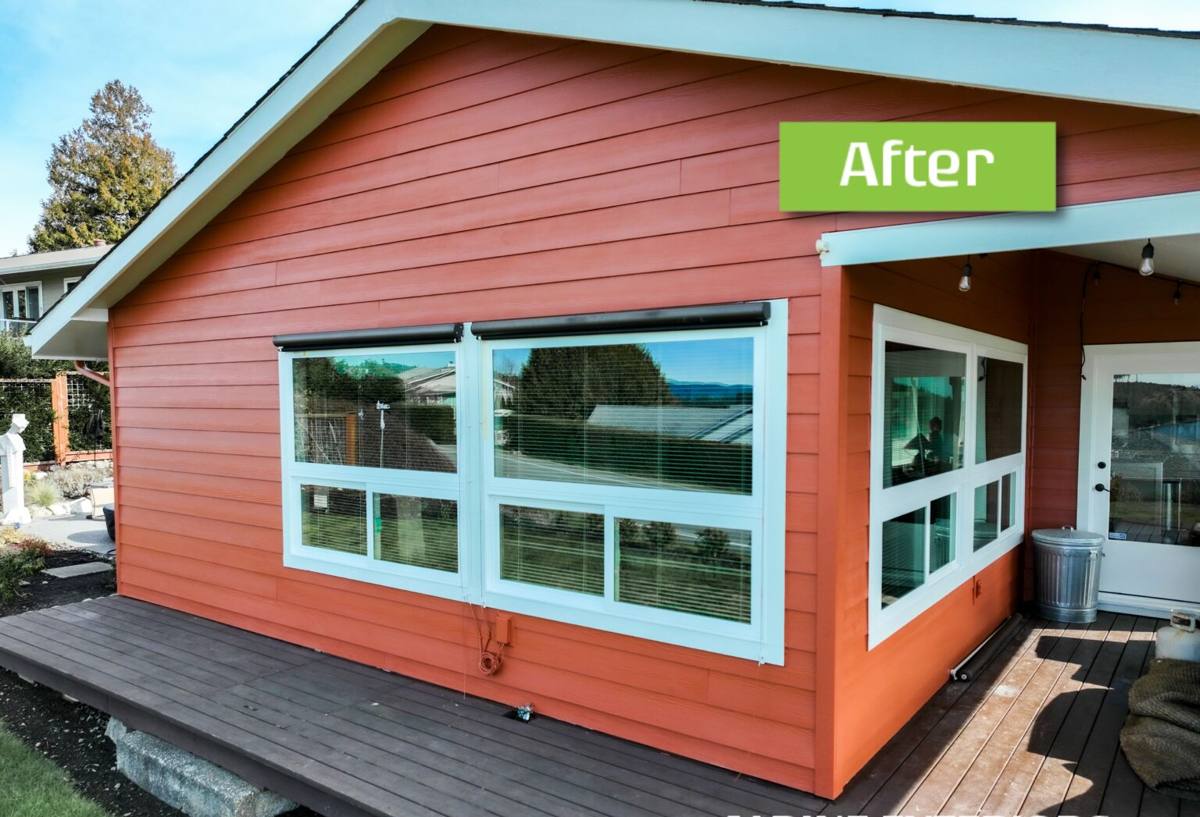
Why New-Construction Windows Are a Different Job Than Replacements
A new-construction window has a nailing fin (sometimes called a nail flange) around its perimeter. That fin gets fastened to the sheathing before the weather-resistive barrier (WRB) and siding go on, which means the window becomes part of the wall's water-management system rather than being dropped into an existing opening. This only works correctly if it happens in the right order, with the right materials, at the right point in the build sequence.
Why Sequencing Matters
Every layer around the window opening has to lap correctly, like shingles on a roof, so water is always directed outward and down, never trapped behind the siding. If the window goes in before the sill pan is set, or the WRB is taped in the wrong order, or the siding crew closes up the wall before flashing is inspected, the mistake gets buried. On a replacement job you can sometimes catch and correct a bad detail later. On a new build, once the siding is on, you often can't.
What Drayton Harbor's Climate Actually Demands
This isn't generic Pacific Northwest advice. Drayton Harbor's specific exposure — open water, onshore wind, and a long wet season — puts three distinct loads on a window installation that a contractor working mostly inland subdivisions may not think about daily.
Salt Air and Hardware Corrosion
Homes near the harbor and the Strait get airborne salt that inland Whatcom County builds don't see. Over time it attacks unprotected fasteners, hinges, and cheap cladding finishes. This affects fastener selection (corrosion-resistant screws, not standard construction staples), hardware finish quality, and how we handle any exposed metal trim.
Wind-Driven Rain
Rain that comes in sideways off the water tests window flashing in a way that a calm, sheltered lot never will. A window opening that's "close enough" on a protected inland lot can leak on a harbor-exposed wall the first time a real winter storm rolls through. This is why sill pan flashing and proper head flashing with an integrated drip cap aren't optional extras here — they're the baseline.
Moss Season and Sustained Moisture
Whatcom County's long wet season keeps exterior surfaces damp for months at a stretch. That sustained moisture load is what grows moss on roofs and north-facing siding, and it's also what finds any gap in a window's water management over years of freeze-thaw and wet-dry cycling. A marginal install might not leak in year one. It's years two through ten where sequencing mistakes show up as stained drywall or soft sheathing.
Getting the Water Management Right
This is the part of the job that never shows once the trim is on, and it's the part that matters most.
Sill Pan Flashing
Every rough opening gets a sloped sill pan so any water that gets past the window — and eventually, some always will — drains back out to the exterior instead of sitting on the sill or wicking into the framing.
WRB and Flashing Integration
The weather-resistive barrier, the flashing tape at the jambs and head, and the window's nailing fin all have to lap in the correct shingle-style order. Head flashing goes over the WRB above the window; jamb flashing laps over the sill pan and under the head flashing. Done out of order, it invites water in instead of shedding it.
Sealant as Backup, Not Primary Defense
Caulk and sealant are the last line of defense, not the plan. A window that depends on a bead of sealant to stay dry will eventually leak once that sealant ages, shrinks, or gets missed in a touch-up. Correct flashing sequencing keeps water out even if the sealant isn't perfect.
Frame Material and Glass Choices for a Harbor-Exposed Build
There's no single "best" window material — the right call depends on your budget, your home's exposure, and how much long-term maintenance you want to take on. Here's how the common options actually compare for a Drayton Harbor build.
| Frame Material | Salt Air / Corrosion | Maintenance | Typical Cost Position |
|---|---|---|---|
| Vinyl | Good — no metal corrosion risk in the frame itself | Low; rinse periodically to clear salt film | Lower |
| Fiberglass | Very good — dimensionally stable, resists pitting | Low | Mid to upper |
| Wood-Clad (aluminum or vinyl clad) | Depends on cladding and seal quality at joints | Higher — interior wood needs upkeep, clad seams need periodic inspection | Upper |
| Bare Aluminum | Poor in marine air unless heavily anodized/finished | Higher near salt exposure | Varies |
For lots with direct exposure toward the harbor, we generally steer homeowners toward vinyl or fiberglass frames with quality hardware finishes, and we're careful about where bare or lightly finished aluminum trim gets used. That's a maintenance and longevity call, not a knock on any manufacturer — every material has trade-offs, and the right one depends on how exposed your specific site is and how much upkeep you want to do.
Glass Package
Double-pane, low-E glass with argon fill is the standard baseline for new construction in this climate. On more exposed elevations or larger openings, a slightly higher-performance glass package can reduce condensation risk on cold, humid mornings — a real consideration given how often this area sits in that damp, moss-season air.
Our New-Construction Window Installation Process
- Rough opening check. We verify each opening is square, plumb, and correctly sized before any window arrives on site — this is the step that prevents field modifications later.
- Sill pan flashing. Sloped pan flashing goes in first so any water that gets past the window drains back out.
- WRB and flashing tape integration. Jamb and head flashing are lapped in the correct order with the weather-resistive barrier, before the window is set.
- Window set and shim. The unit is set plumb, level, and square, shimmed at the correct load points, and fastened per the manufacturer's schedule — not just "enough nails to hold it."
- Fin and flashing seal. Nailing fins are sealed and taped per the flashing plan, with attention to corner details, which are the most common failure point on any window.
- Head flashing and drip cap. Installed over the top of the window and lapped under the WRB above it.
- Interior air seal. A proper low-expansion foam or backer rod and sealant at the interior gap controls air leakage and condensation risk without bowing the frame.
- Final inspection before siding closes the wall. This is the last chance to catch anything, and we treat it that way.
Cost Factors Worth Planning Around
Every build is different, so we won't quote a number here that doesn't mean anything without seeing your plans. What actually moves the price on a new-construction window package:
| Factor | Why It Matters |
|---|---|
| Frame material | Vinyl, fiberglass, and clad-wood carry different material and labor costs |
| Number and size of openings | Larger units and more openings mean more flashing detail work, not just more glass |
| Exposure of the elevation | Harbor-facing walls may warrant upgraded flashing details or hardware finishes |
| Glass package | Upgraded low-E coatings or gas fills add cost but reduce condensation and energy loss |
| Site access and build schedule | Coordinating with framers and siding crews affects labor efficiency |
Checklist: What a Correct New-Construction Window Job Includes
- Rough openings verified square, plumb, and correctly sized before windows arrive
- Sloped sill pan flashing at every opening
- WRB and flashing taped in correct shingle-lap order — sill, jambs, then head
- Corrosion-resistant fasteners used throughout, especially on harbor-facing walls
- Window set plumb, level, square, and shimmed at manufacturer-specified load points
- Head flashing with drip cap installed and properly lapped
- Interior air seal completed without bowing the frame
- Final flashing inspection completed before siding closes the wall
Why Hiring a Crew That Already Works Drayton Harbor Matters
A window contractor who mostly works sheltered, inland lots can install a technically correct window and still get the details wrong for this site — because "correct" here has to account for wind-driven rain and salt exposure that an inland job never tests. Working this area regularly means knowing which elevations need extra attention, which hardware finishes hold up, and how the local wet season stresses a wall assembly over years, not just on install day.
It also means understanding how Whatcom County's building department reviews window and flashing details during framing inspections, so nothing gets flagged or has to be reopened after the siding crew has already moved on.
Coordinating With Your Build Schedule
New-construction windows have to land at the right point in the framing sequence — not before the rough openings are finalized, and not so late that it holds up siding and interior trades. We work directly with builders and homeowners acting as their own general contractor to slot window installation into the schedule without becoming the bottleneck, and we flag any framing issues we spot before they become expensive to fix later.
If you're framing a new home or addition near Drayton Harbor and want a window package that's actually built for this site's exposure, we're glad to walk the plans with you and provide a free, no-pressure estimate. There's a short form below to get started.