 Semiahmoo Exterior
 Roofing on the Water's Edge
Drayton Harbor sits right where the Semiahmoo Peninsula meets Whatcom County's shoreline, and that location shapes everything about how a roof ages here. Homes close to the harbor take on a combination most inland roofs never see: salt-laden air moving off the water, long stretches of driving rain pushed in by coastal wind, and shaded, damp conditions that let moss and algae take hold and stay. A roof that would last two decades a few miles inland can start showing real wear well before that timeline out here, especially if it wasn't built with this specific exposure in mind.
This page is about one thing: replacing a roof correctly on a home in or near Drayton Harbor. Not a generic overview of roofing — the actual decisions that matter when the job site is this close to Semiahmoo Bay.
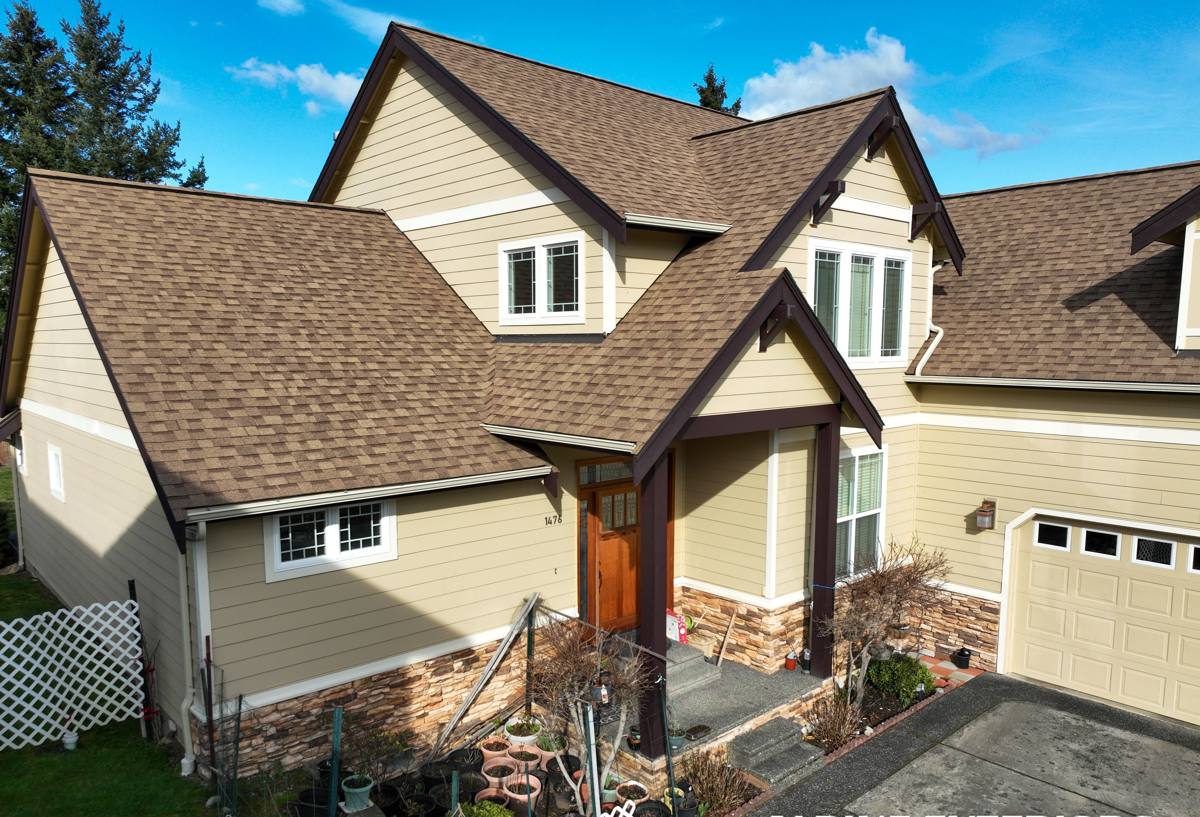
What Salt Air, Rain, and Moss Actually Do to a Roof
Salt Air
Airborne salt is corrosive to exposed metal. Nails, flashing, vent caps, and fasteners that aren't rated for coastal exposure can start to corrode years ahead of schedule. Once a fastener or flashing seam fails, water finds its way underneath the roofing material, and the damage is often happening well before it's visible from the ground.
Driving Rain
Rain that comes in mostly straight down is one problem. Rain that's being pushed sideways by wind off the water is a different one — it gets forced up under shingle tabs, into valleys, and around flashing details that would be fine in calmer weather. Roofs here need underlayment, flashing, and shingle sealing that account for wind-driven moisture, not just gravity.
Moss Season
Whatcom County's wet, mild winters and shaded, north-facing roof slopes are close to ideal growing conditions for moss and algae. Moss holds moisture against the roofing surface long after the rain has stopped, works its way under shingle edges as it grows, and can lift material enough to let water in. A roof with poor ventilation and airflow is more likely to stay damp and grow moss faster than one that's breathing properly underneath.
Signs a Drayton Harbor Roof Is Ready for Replacement
Not every roofing problem means a full replacement — some are fixable with a repair. But there's a point where patching stops making sense and a full tear-off is the honest recommendation. Signs worth taking seriously:
- Granule loss showing up in gutters or downspouts in significant amounts
- Shingles that are cupping, curling, or cracking, especially on the sides exposed to the harbor wind
- Moss that keeps returning to the same areas within a season or two of cleaning
- Soft spots, sagging, or visible deflection in the roof deck
- Rusted, corroded, or lifting flashing around chimneys, vents, and valleys
- Daylight visible through the roof deck from the attic, or damp insulation
- A roof that's approaching or past the manufacturer's expected service life for this climate
- Multiple past repairs in different areas, suggesting the underlying material is failing broadly rather than in one spot
What a Correct Replacement Involves Here
A roof replacement that's built for this exposure isn't just swapping old shingles for new ones. The details underneath the shingles do most of the work of keeping a harbor-adjacent home dry.
Full Tear-Off, Not Overlay
We remove the existing roofing material down to the deck rather than layering new shingles over old. That lets us actually inspect the decking for rot or soft spots, confirm the framing is sound, and start the new roof on a clean, solid base — something layering over an old roof can't give you.
Underlayment Built for Wind-Driven Rain
A synthetic underlayment with strong water-shedding performance, properly lapped and sealed, is the backup layer that protects the home if wind pushes rain past the shingles. In a location like this, that backup layer isn't optional — it's doing real work most years.
Ice-and-Water Membrane at Vulnerable Points
Eaves, valleys, and areas around penetrations get self-adhering waterproof membrane, not just standard underlayment. These are the spots where driving rain and moss moisture cause the most trouble, and they deserve the extra layer of protection.
Corrosion-Resistant Flashing and Fasteners
Around chimneys, skylights, walls, and valleys, we use flashing and fasteners rated to hold up against salt air rather than standard-grade materials that corrode faster this close to the water.
Balanced Ventilation
Intake at the eaves and exhaust at the ridge, sized correctly for the roof, keeps air moving underneath the roofing material. That airflow helps the deck dry out between rain events and makes the surface less hospitable to moss — a detail that's easy to skip and costly to skip.
Choosing a Roofing Material for This Exposure
There's no single "best" material for every home — it depends on budget, roof pitch, how much moss and salt exposure the specific site gets, and how long you want to go before the next replacement. Here's how the common options actually compare for a Drayton Harbor property:
| Material | Moss & Algae Resistance | Salt Air Durability | Typical Lifespan Here |
|---|---|---|---|
| Standard asphalt composition | Moderate — benefits from algae-resistant granules | Good, with quality fasteners and flashing | 18–25 years |
| Algae-resistant (AR) asphalt | Better — granules treated to resist algae staining | Good | 20–28 years |
| Standing seam metal | Excellent — moss struggles to hold on smooth metal | Very good with coastal-rated coatings and fasteners | 40+ years |
| Cedar shake | Poor without diligent upkeep — porous surface holds moisture | Requires regular treatment near salt air | Varies widely with maintenance |
We're upfront that we steer most Drayton Harbor homeowners away from cedar shake unless they're committed to an ongoing maintenance schedule. It's not that cedar is a bad product — it's that its natural porosity and moisture-holding tendency work against it in exactly the conditions this location produces most: shade, salt moisture, and long wet seasons. That's a maintenance-burden and moisture-behavior tradeoff we'd rather be honest about upfront than let a homeowner discover the hard way.
What Affects the Cost of a Roof Replacement
Every roof is different, so we don't post fixed prices — but the variables that move the number up or down are consistent. Knowing them ahead of time makes for a more useful conversation when we come out to look at your roof.
| Factor | Why It Matters |
|---|---|
| Roof size and pitch | Steeper roofs take longer to work safely and use more material per square foot of coverage |
| Number of layers to remove | Tearing off two layers of old roofing costs more in labor and disposal than one |
| Decking condition | Rot or soft spots found during tear-off need repair before new roofing goes down |
| Material choice | Standard asphalt, algae-resistant asphalt, and metal carry different material costs |
| Roof complexity | Valleys, dormers, chimneys, and skylights all add flashing work and labor time |
| Access | Tight lots, tall roofs, or limited staging area can affect equipment and labor needs |
How We Approach a Replacement
- On-site inspection — we walk the roof and attic, check the decking, ventilation, and flashing, and note anything specific to the site's exposure.
- Written estimate — a clear scope of work and material recommendation, with the reasoning behind it, not just a number.
- Tear-off and deck inspection — old material comes off, the deck gets a real look, and any needed repairs are addressed before anything new goes down.
- Underlayment and waterproofing — membrane at vulnerable areas, underlayment across the field, installed with the wind and rain direction this location sees in mind.
- Flashing, ventilation, and roofing installation — corrosion-resistant materials at every penetration, correct ventilation, and the new roofing material installed to manufacturer spec.
- Final walkthrough — we go over the finished roof, the gutters, and cleanup with you before calling the job done.
Keeping a New Roof Healthy Through Moss Season
A correctly installed roof still benefits from a little upkeep in this climate. Keeping gutters clear so water doesn't back up under the eaves, trimming back overhanging branches that keep a roof shaded and damp, and having moss growth removed before it spreads are all reasonable habits for a harbor-adjacent home. We're glad to walk new customers through what a sensible maintenance rhythm looks like for their specific roof and site — it's usually less involved than people expect once the roof itself is built right.
Why Local Experience Matters for This Job
A roof replacement is only as good as the details underneath it, and those details should change based on where the house sits. A crew that mostly works drier, inland conditions may not default to coastal-rated fasteners, upgraded membrane at the valleys, or ventilation sized for a moss-prone slope — not out of carelessness, but because it's simply not what their usual jobs call for. Working Drayton Harbor and the surrounding Semiahmoo area regularly means we see how roofs here actually fail, not just how they're built in a manual, and we build accordingly from the first day of the tear-off.
If your roof is showing wear, or you'd just like an honest opinion on where it stands, we're happy to come take a look. The estimate is free, there's no pressure attached to it, and you'll get a straight answer about whether you need a full replacement, a repair, or a few more years — use the form below to get started.