 Semiahmoo Exterior
 Why Drayton Harbor Decks Take Extra Punishment
Drayton Harbor sits right on the water in Semiahmoo, and that closeness to the harbor is exactly why so many homes here have decks worth protecting in the first place. The problem is that the same salt air making those evenings outside worthwhile is also working against the wood, the fasteners, and the finish, day after day. Add in the driving rain that comes off the water through much of the year and a moss season that can stretch from fall through spring, and a deck in this part of Whatcom County simply ages differently than one built fifty miles inland.
That doesn't mean a Drayton Harbor deck is destined to fail early. It means the repair has to account for local conditions rather than treat this like a generic backyard job. A patch or fastener swap that would hold up fine in a dry inland climate can come apart here in a couple of seasons if it skips the details that matter for salt exposure and near-constant moisture.
What the Climate Actually Does to a Deck
Three conditions drive most of the deck repair calls we get in this area:
- Salt-laden air speeds up corrosion on fasteners, joist hangers, and any exposed metal hardware, often well before the wood around it shows obvious damage.
- Frequent, wind-driven rain works its way into end grain, screw holes, and the seams where boards meet, keeping wood wetter for longer stretches than a dry-climate deck ever sees.
- A long moss and algae season holds moisture against the deck surface and in the gaps between boards, slowing evaporation and giving rot a head start in spots that aren't visible just by looking down.
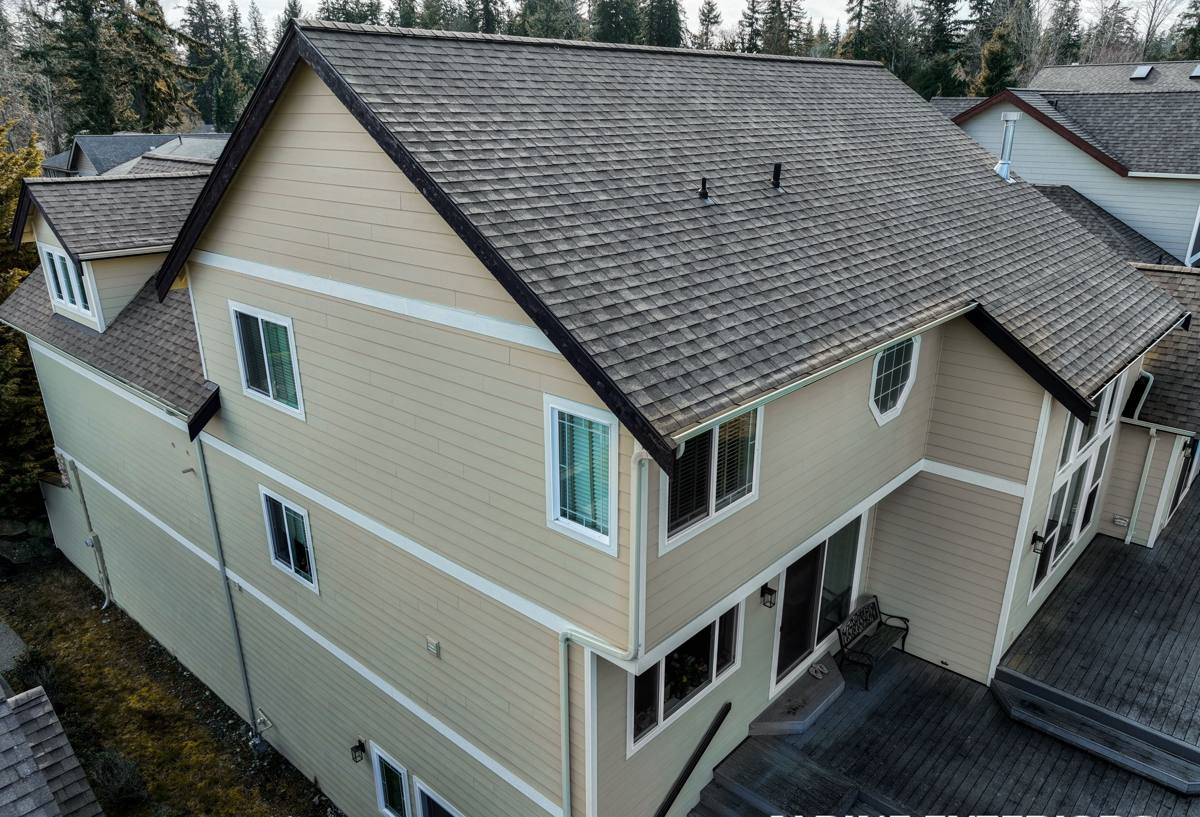
Signs a Deck Needs Repair, Not a Full Replacement
Most decks don't fail all at once. They fail in sections — a ledger connection here, a run of boards there — and catching that early is usually the difference between a repair invoice and a full teardown.
Structural Warning Signs
These are the ones that matter most, because they affect whether the deck is safe to stand on:
- Noticeable bounce or give when you walk across certain sections
- Soft or spongy spots in decking boards, especially near the house or along the rim joist
- Any gap or movement where the deck's ledger board meets the house
- Posts, railings, or stair stringers that wobble or shift under load
- Rust streaks bleeding out from screw heads, brackets, or joist hangers
Surface and Cosmetic Signs
These matter too, even when the structure underneath is still sound, because they're often the early warning that structural problems are coming:
- Graying, checking, or splintering across the decking boards
- Persistent moss or algae film that keeps coming back after cleaning
- Popped or backed-out fastener heads
- Discoloration or dark staining around fastener locations, which usually means moisture is getting trapped there
What a Correct Deck Repair Job Actually Involves
A repair that's done right doesn't stop at replacing the boards you can see. It works from the ground up.
Starting Below the Surface: Framing and Substructure
Before we touch a single decking board, we check the framing — the ledger connection, the joists, the beams, and the posts or footings underneath. This is where the real structural problems usually live, and it's also the part homeowners can't easily inspect themselves. In a high-moisture climate, rot at the ledger or at joist ends can be well advanced while the decking above still looks presentable.
Fasteners and Hardware
Salt air is hard on ordinary hardware, and mismatched or under-rated fasteners are one of the most common causes of repeat repair calls we see on decks near the water. Where framing connections and hardware need replacing, we use fasteners and connectors rated for corrosive, coastal-adjacent exposure rather than standard interior-grade parts — it costs a bit more up front, but it's the difference between a repair that lasts and one you're paying for again in a few years.
Decking Boards
Individual board replacement only makes sense when the framing underneath is sound. We replace boards that are cupping, splitting, or soft, and we pay attention to spacing and drainage between boards — tight, swollen spacing is one of the biggest reasons water and moss sit on a deck surface instead of shedding off it.
Railings and Stairs
Railings and stair stringers take a lot of stress and see a lot of weather exposure on relatively thin structural members. We check post connections, baluster attachment, and stringer condition as part of any repair scope, since a railing that looks fine but has a compromised post connection is a safety issue, not a cosmetic one.
Repair vs. Replace: What Actually Drives the Decision
Homeowners often ask us to just give a number before we've looked at the deck, but the honest answer is that the repair-versus-replace decision comes down to a handful of specific factors.
| Factor | Leans Toward Repair | Leans Toward Replacement |
|---|---|---|
| Framing condition | Solid, dry, no rot at ledger or joists | Rot or soft spots at multiple structural points |
| Extent of damage | Isolated to a few boards or one railing section | Spread across most of the deck surface or substructure |
| Age of the deck | Under 15-20 years, built to a reasonable standard | Original construction is outdated or undersized for current code |
| Fastener and hardware condition | Mostly sound, isolated corrosion | Widespread rust and failing connections |
| Homeowner's plans | Happy with current material and look | Wanting to move to composite or a different layout anyway |
In practice, a lot of Drayton Harbor decks fall somewhere in the middle — sound framing but hardware and a run of boards that need attention. That's the sweet spot where a targeted repair genuinely extends the life of the deck instead of just deferring a bigger job.
Choosing Materials for This Climate
When boards or railing components need full replacement, the material choice matters more here than it would in a drier climate.
Pressure-Treated Wood
Pressure-treated lumber is a reasonable, budget-friendly choice, but it needs more attention in a salt-air, high-moisture environment — regular cleaning to keep moss from taking hold, and periodic sealing to keep water out of end grain and fastener holes. Skipping that upkeep is where a lot of wood decks in this area run into trouble early.
Composite Decking
Composite boards handle constant moisture and moss growth better than wood in most cases, and they don't need the same sealing schedule. Our standard is to still use corrosion-resistant fasteners and proper framing prep underneath composite boards — the board material doesn't fix a framing or hardware problem, and installing composite over a compromised substructure just hides the issue instead of solving it.
Neither material is automatically the right call for every homeowner — it depends on budget, how much upkeep you want to take on, and how long you plan to stay in the home. We'll walk through the honest trade-offs for your specific deck rather than push one option.
Our Deck Repair Process
- Inspection. We check framing, ledger connection, hardware, and decking condition, including areas that aren't obvious from a casual walk-through.
- Written scope and estimate. You get a clear picture of what needs repair, what's optional, and what we'd recommend based on the deck's condition and age.
- Structural repairs first. Any framing, ledger, or hardware issues get addressed before cosmetic work, since that's what the rest of the deck depends on.
- Board and railing replacement. Damaged decking, balusters, and stair components are replaced with attention to spacing and drainage.
- Finish and cleanup. Sealing or finishing where applicable, and a final walk-through so you know what to expect going forward.
Why Hiring a Crew That Already Works Drayton Harbor Matters
A deck repair crew that mostly works inland jobs doesn't always think about salt-air hardware or moss-driven moisture the same way a crew that works this shoreline regularly does. We've seen what happens when standard-grade fasteners go into a deck near Drayton Harbor, and we've seen how quickly moss reclaims a surface that wasn't sloped or spaced with drainage in mind. That local pattern recognition shapes what we look for during an inspection and what we recommend for materials and hardware — it's not something you get from a crew that treats every deck the same regardless of where it sits.
It also means a faster, more accurate estimate. Because we already know what tends to fail first on decks in this part of Semiahmoo and the surrounding Whatcom County shoreline, we're not guessing at scope once we're on-site.
Keeping a Repaired Deck in Good Shape
A repair holds up longer when it's paired with some basic seasonal upkeep. A simple routine goes a long way in this climate:
- Sweep off standing debris and organic buildup regularly, especially heading into the wetter months
- Clean moss and algae off the surface before it has a chance to spread and hold moisture against the boards
- Check fastener heads and railing connections once or twice a year for early signs of rust or movement
- Keep gutters and downspouts near the deck clear so runoff isn't draining directly onto it
- Reseal wood decking on the schedule appropriate for the product, rather than waiting until it visibly grays
- Address small issues, like a loose board or a popped screw, as soon as you notice them, before moisture gets a foothold
If your deck in Drayton Harbor is showing any of the signs above, or it's just due for an honest look after another wet season, we're glad to come take a look. The estimate is free, there's no pressure attached to it, and you'll walk away with a clear, straight answer about what your deck actually needs — use the form below to get started.