 Semiahmoo Exterior
 Drayton Harbor Roofs Take a Different Kind of Beating
If you own a home near Drayton Harbor, you already know your roof works harder than one a few miles inland. The combination of salt-laden air off the water, driving rain that comes in sideways during winter storms, and a moss season that runs longer here than almost anywhere else in Whatcom County means roofing materials age differently on this stretch of coastline than they do elsewhere. A shingle or fastener rated for a "normal" Pacific Northwest climate can wear out faster when it's also absorbing salt spray and staying damp for weeks at a time.
Storm damage repair here isn't just about patching what broke in the last windstorm. It's about understanding why that spot failed first, and whether the surrounding roof is a few storms behind it. We work on homes around Semiahmoo and Drayton Harbor regularly, and the damage patterns we see are consistent enough that we can usually tell you what's going on before we're even fully up on the roof.
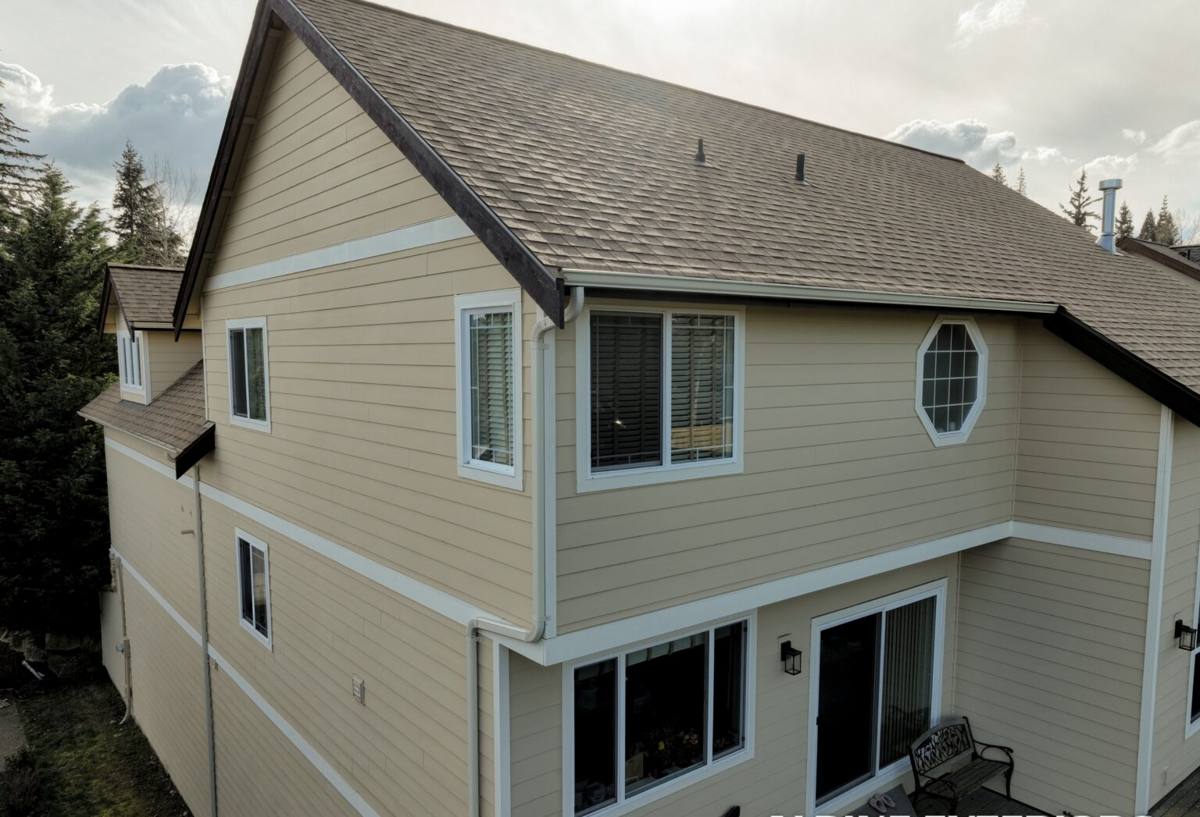
What Storm Damage Actually Looks Like on These Roofs
Storm damage isn't always a dramatic hole or a tarp-worthy emergency. Most of what we get called out for falls into a few recognizable categories:
Wind Damage
Gusts off the water can lift shingle tabs, crease ridge caps, or peel back the leading edge of a roof section, especially on homes with more open exposure toward the harbor. Once a shingle's seal is broken, it doesn't always blow off completely — it can just sit slightly raised, which lets wind-driven rain get underneath it on the next storm.
Wind-Driven Rain Intrusion
This is the one that causes the most hidden damage. Rain that's being pushed sideways by wind doesn't behave like rain falling straight down — it can work its way under flashing, around vent boots, and into valleys that would otherwise shed water fine. Homeowners often don't notice until there's a stain on a ceiling, by which point water has usually been getting in for a while.
Debris Impact
Branches and larger debris come down in coastal storms, and even a glancing hit can crack a shingle, dent a vent cap, or knock granules loose in a way that isn't obvious from the ground.
Moss and Trapped Moisture
This isn't "storm damage" in the classic sense, but it compounds every other item on this list. A long moss season means organic growth holds moisture against the roof surface for extended periods, softening shingles and accelerating rot at the deck level under valleys and in shaded north-facing sections. A roof that's already stressed by moss and moisture retention takes storm damage worse than a clean, well-maintained one.
The First 48 Hours After a Storm
What you do right after a storm affects how much the repair ends up costing. Here's what we recommend checking from the ground, and what to leave alone:
- Walk the property and look for shingle pieces, granules, or flashing metal in the yard or gutters — that's a sign something let go up top.
- Check ceilings and attic spaces (if accessible) for new staining, especially near chimneys, skylights, and where roof planes meet.
- Look at gutters and downspouts for sudden clogging, which can mean shingle granules or debris washed down.
- Note any visible sagging, since that can indicate saturated decking and needs prompt attention.
- Do not get on the roof yourself after a storm — wet, mossy roof surfaces near the harbor are genuinely slick, and storm-damaged sections may not hold weight safely.
- Do not rely on a tarp as a long-term fix — it buys time, it doesn't solve the leak.
- Call for an inspection sooner rather than later; a small gap in flashing that sits open for a month does a lot more damage than the same gap fixed in a week.
How We Assess Storm Damage
When we come out for a storm damage call, we're not just looking at the spot you're worried about. We walk the full roof plane, check flashing at every penetration (chimneys, vents, skylights), inspect valleys, and look at the condition of the decking wherever we have access — usually from the attic side first, since that tells us where water has actually been traveling versus where it's just visible from outside.
We also factor in what we already know about the specific home and street, when we've worked in the area before — things like which roof orientations catch the worst of the harbor wind, or which older subdivisions near Semiahmoo tend to have the same original flashing details that need upgrading during a repair. That local knowledge saves time and keeps the estimate accurate instead of padded for unknowns.
Repair vs. Replace: What Actually Drives That Decision
Not every storm-damaged roof needs to be replaced, and we're not going to tell you it does just because you called about storm damage. The honest answer depends on a few factors:
| Factor | Leans Toward Repair | Leans Toward Replacement |
|---|---|---|
| Age of roof | Under 10-12 years, otherwise sound | Nearing or past expected lifespan for the material |
| Extent of damage | Isolated to one section or a few penetrations | Spread across multiple planes or valleys |
| Decking condition | Dry, solid decking under the damage | Soft or delaminated decking found during inspection |
| Moss/moisture history | Minimal prior moss buildup | Long-term moss coverage affecting large areas |
| Insurance scope | Damage matches a single storm event cleanly | Damage overlaps with pre-existing wear, complicating the claim |
When a repair is the right call, we do the repair. When the damage is telling us the roof is at the end of its useful life, we'll explain exactly why, in plain terms, and let the decision be yours.
Our Repair Process, Step by Step
- Inspection and documentation. We assess the damage, photograph it for your records and any insurance claim, and identify the root cause — not just the visible symptom.
- Written scope and estimate. You get a clear breakdown of what needs to happen and why, with straightforward pricing before any work starts.
- Temporary protection if needed. If there's active leaking, we secure the area first so you're not waiting on scheduling with water still getting in.
- Removal of damaged material. Compromised shingles, flashing, or decking are removed down to sound material — patching over a wet or rotted deck just hides the problem.
- Repair and reinforcement. New materials go in matched to your existing roof where possible, with flashing details upgraded to current standards if the original installation was a weak point.
- Final inspection and cleanup. We check the repair holds up under close inspection and leave the property clear of debris, old materials, and stray fasteners.
Materials and Methods for Salt-Air, High-Moisture Conditions
We don't treat every repair the same way just because it's the fastest fix. On homes exposed to harbor salt air and extended wet seasons, we pay particular attention to a few things: using corrosion-resistant fasteners and flashing metals instead of standard-grade hardware, sealing penetrations with materials rated for sustained moisture exposure rather than just weather-resistance, and making sure valleys and low-slope transitions are detailed to shed water fast rather than let it sit. It's a professional standard we hold ourselves to on this stretch of coastline, not a marketing add-on — cutting corners here just means the same repair call again in a year or two.
Insurance Claims: What to Know
Many storm damage repairs are covered under homeowners insurance, but coverage depends on your specific policy and the cause of loss. We can provide the documentation and photos an adjuster typically needs, and we're happy to walk your insurance company through what we found on the roof. What we won't do is inflate a scope of work to match a claim number — we document what's actually damaged and let that drive the estimate.
Why Hiring a Crew That Already Works This Area Matters
Storm damage repair isn't just a general roofing skill — it's knowing how a specific coastline behaves. A crew that regularly works around Semiahmoo and Drayton Harbor already knows which roof orientations take the worst wind exposure, how fast moss reestablishes itself in the shaded, moisture-heavy pockets common here, and which older flashing details in this area tend to need attention during a storm repair. That familiarity means fewer surprises, a more accurate first estimate, and a repair that's built for the conditions your roof will actually keep facing, not just the storm that just passed.
If you're dealing with storm damage on a Drayton Harbor area home, we're glad to take a look and give you an honest assessment. Reach out for a free, no-pressure estimate using the form below.