 Semiahmoo Exterior
 Why Decks Near Semiahmoo Wear Out Faster
Custer sits close enough to Semiahmoo Bay and the Whatcom County coastline that homes here get the full marine climate package: salt-tinged air moving off the water, driving rain that comes in sideways during winter storms, and a moss season that runs far longer than it does in drier parts of the state. None of that is a problem you can design around by just buying "better" lumber. It changes what the deck's structure, hardware, and finish actually have to survive year after year.
Salt air accelerates corrosion on anything metal — screws, joist hangers, post bases, railing brackets. Driving rain doesn't just wet the surface; it gets pushed into end grain, fastener holes, and the ledger connection where the deck meets the house, which is exactly where hidden rot starts. And the long stretch of damp, low-light months from fall through spring keeps deck surfaces wet longer than a homeowner in a drier inland climate would ever deal with, which is why moss and algae take hold so readily. A deck replacement built for this area has to account for all three at once, not just look good the day it's finished.
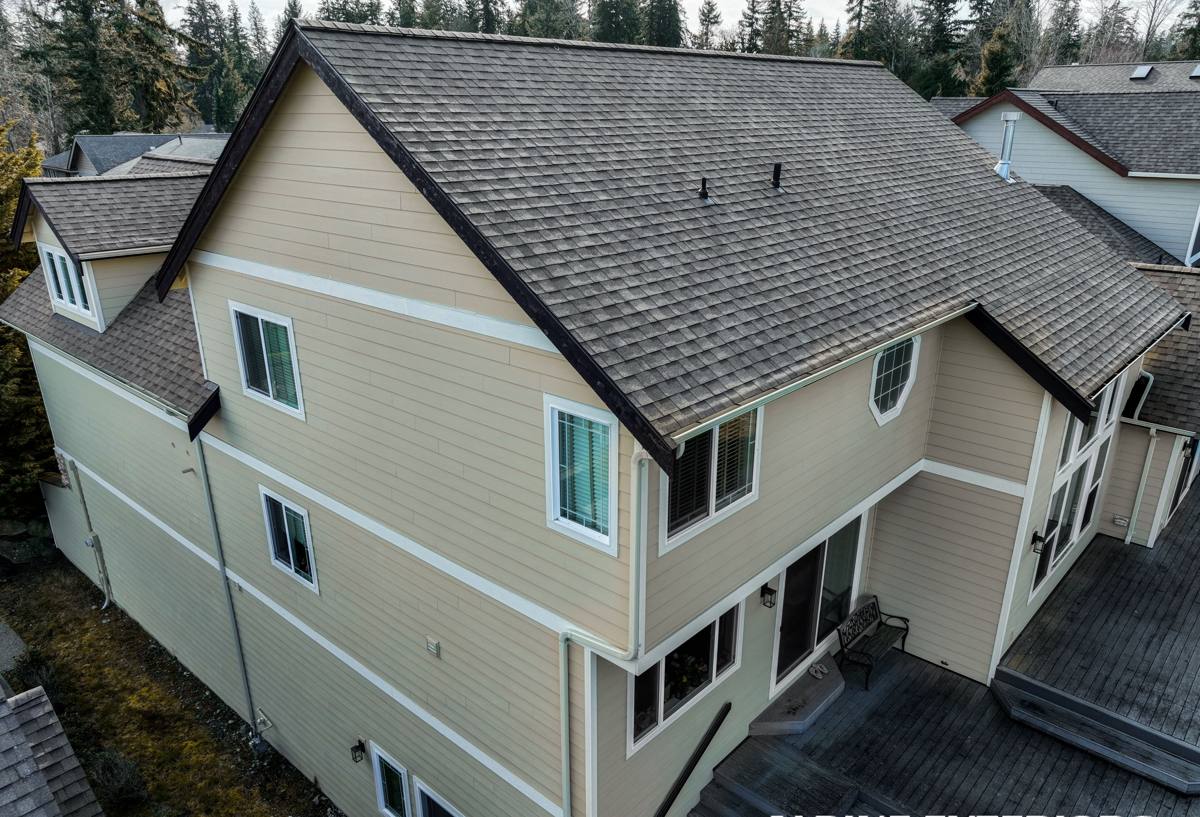
What a Correct Deck Replacement Involves
A deck replacement isn't just pulling up old boards and screwing down new ones. The parts nobody sees are the parts that determine whether the deck lasts eight years or twenty-five.
Tear-Off and What We Look For
When we remove the old decking, we're checking the framing underneath before we commit to anything. Soft or discolored joists, rot at the ledger board, deteriorated post bases, and water staining on the house band board all change the scope of the job. A deck that looks fine on the surface can be hiding structural damage that's been building for years under boards that were never spaced or vented properly.
Ledger Board and Flashing
The ledger board — where the deck attaches directly to the house — is the single most common failure point on any deck in a high-rain climate. Water runs down the siding, hits the top of the ledger, and if there's no proper flashing directing it away from the house framing, it works its way behind the board and rots both the ledger and the rim joist behind it, often for years before anyone notices. A correct install uses purpose-made deck ledger flashing set up to shed water outward, not just caulk and hope. This is one of the areas where a rushed job and a correct job look identical from the yard.
Framing, Footings, and Joist Spacing
Footings need to sit below the required frost depth and bear on solid, undisturbed soil — not just get poured wherever the old post happened to be. Joist spacing also needs to match the decking material: most composite and PVC boards require tighter joist spacing than solid wood to avoid flexing and long-term sagging. We also run protective joist tape over the top of the framing before decking goes down, which keeps rainwater that gets between the boards from soaking directly into exposed wood.
Decking Material Options for This Climate
There's no single "right" material for every deck — it depends on budget, how much upkeep you want to do, and how exposed the deck is to weather. Here's how the common options hold up under Whatcom County's rain and salt air specifically.
| Material | Moisture Behavior | Maintenance | Typical Lifespan Here |
|---|---|---|---|
| Cedar | Naturally rot-resistant but still absorbs and releases moisture; needs a sealed finish | Re-stain/reseal every 1-2 years | 15-20 years with upkeep |
| Pressure-Treated Fir/Pine | Chemically treated for rot resistance; can cup or check with repeated wet/dry cycles | Reseal regularly; watch for fastener corrosion | 15-20 years with upkeep |
| Composite | Doesn't absorb water like wood, but can trap surface moisture if airflow underneath is poor | Occasional cleaning; no staining/sealing | 25-30+ years |
| PVC/Capped Polymer | Essentially non-absorbent; handles standing moisture and salt air well | Occasional cleaning | 25-30+ years |
Wood costs less upfront but asks more of you every year. Composite and PVC cost more to install but shift the maintenance burden way down, which matters in a climate where a neglected wood deck can go from "needs a sanding" to "needs new boards" in a couple of wet seasons. We'll walk through the honest trade-offs for your specific deck rather than pushing whatever happens to be in stock.
Fasteners and Hardware: The Detail Everyone Skips
This is the part that's invisible once the deck is built and the part that determines whether it's still solid in fifteen years. Standard electro-galvanized screws and joist hangers corrode quickly in a coastal, salt-influenced environment — sometimes within a few years, well before the wood or composite around them shows any wear. Modern pressure-treated lumber also uses chemical preservatives that are corrosive to plain galvanized hardware, which is exactly the kind of interaction that causes fastener failure nobody sees coming until a railing wiggles or a board lifts.
The correct approach is hot-dip galvanized or stainless steel fasteners and connectors rated for the lumber and the environment — every joist hanger, post base, ledger bolt, and screw, not just the ones on the visible top surface. It costs more in hardware and it's completely invisible once the boards are down, which is exactly why it's the first thing a corner-cutting job skips.
Moss, Drainage, and Airflow Underneath
Whatcom County's moss season runs long, and decks with poor drainage or airflow underneath are the ones that stay damp long enough for moss and algae to take hold — especially on north-facing decks or ones shaded by trees. Correct board spacing lets water pass through instead of pooling, and keeping the ground or crawlspace under a low deck from being sealed off with non-breathable material lets trapped moisture actually dry out between rain events instead of sitting there all winter. Decks built without this in mind end up with a slick, green surface every fall no matter how often you scrub it.
Permits and Code Considerations in This Area
Most deck replacements that involve rebuilding structure — new footings, a raised deck, or anything attached to the house — require a building permit through the local jurisdiction, and inspections along the way. A few general code points that come up on nearly every project:
- Guardrails are generally required once a deck surface is a certain height above grade, with a standard minimum guardrail height that's higher than what a lot of older decks were originally built to.
- Stair and guardrail baluster spacing has to meet current code, even if the deck you're replacing didn't.
- Footings need to reach the required frost depth for the area, not just "deep enough to feel solid."
- A simple resurfacing job with no structural changes is sometimes treated differently than a full rebuild — worth confirming before assuming either way.
We handle the permit pull and inspection scheduling as part of the job rather than leaving it on you to figure out, since code compliance isn't optional and it's a lot cheaper to build it right the first time than to fix it after an inspection fails.
Our Deck Replacement Process
- On-site assessment — we look at the existing deck, the framing we can see, the ledger connection, and how the site drains before we quote anything.
- Full structural evaluation during tear-off — once the old decking is off, we confirm the actual condition of the joists, ledger, and footings and flag anything that changes scope before we proceed.
- Framing repair or rebuild — replace or reinforce anything compromised, correct flashing at the ledger, and set footings and posts to code.
- Decking, railing, and stair installation — using fasteners and hardware rated for this environment, with proper spacing for drainage and airflow.
- Final walkthrough and cleanup — we go over the finished deck with you, confirm everything's tight and level, and clear the site.
What Affects Your Cost
| Factor | Why It Matters |
|---|---|
| Deck size and shape | More square footage and more corners/cuts mean more material and labor |
| Decking material chosen | Wood costs less upfront; composite and PVC cost more but need far less upkeep |
| Condition of existing framing | Rotted joists, footings, or ledger connections add repair work most quotes can't predict until tear-off |
| Height and stairs | Taller decks and multi-flight stairs add framing, footings, and guardrail requirements |
| Railing style | Cable, glass, and composite railing systems cost more than standard wood or metal baluster railings |
Given those variables, most straightforward deck replacements in this area land somewhere in the mid-to-upper four figures for a smaller wood deck, climbing well into five figures for a larger composite or PVC deck with structural rebuilding involved. We'll give you a real number for your deck after we've actually looked at it, not a guess pulled from a size chart.
Why Hire a Crew That Already Works Custer
A crew that already works decks around Custer and the wider Semiahmoo area isn't guessing at how this climate treats a deck — we've seen what happens when standard hardware goes in instead of hardware rated for salt air, and we've seen what a poorly flashed ledger board looks like five years later. That experience shapes the material and fastener choices we recommend before problems start, not after. It also means we're familiar with the local permitting process, we're not driving a long way for warranty follow-up or a punch-list item, and we can plan the job's timing around the region's rainy stretches instead of fighting them.
Keeping Your New Deck Looking Right
A correctly built deck still needs some ongoing attention in this climate. A simple seasonal routine goes a long way:
- Rinse off leaf litter and moss buildup periodically, especially through fall and winter
- Keep gutters and downspouts clear so roof runoff isn't dumping directly onto the deck surface
- Reseal or re-stain wood decking on a regular schedule; composite and PVC just need occasional cleaning
- Check railing connections and visible fasteners once a year for movement or corrosion
- Keep planters, mats, and furniture legs from sitting directly on boards for long stretches, which traps moisture underneath
- Trim back overhanging vegetation to let sun and air reach shaded areas prone to moss
None of this replaces a correct build — a deck built with the wrong flashing or the wrong fasteners will fail no matter how well you maintain the surface — but it does stretch the life of a properly built deck considerably.
If your deck in Custer is showing rot, soft spots, corroded hardware, or just years of moss buildup that won't quit, we're glad to take a look and give you a straight answer on what it actually needs. Fill out the form below for a free, no-pressure estimate.