 Semiahmoo Exterior
 Why Siding Fails Faster on Custer Homes
Custer sits close enough to the water and the open farmland around Semiahmoo Bay that homes here take a different kind of beating than siding twenty miles inland. Salt-laden air off the bay works into seams and fastener heads, driving rain off Georgia Strait weather systems drives moisture sideways into walls, and a long, damp moss season keeps north- and west-facing walls wet for weeks at a stretch. Add the wind that funnels across open fields around Custer, and you have three separate stressors hitting the same wall assembly at once.
Most siding isn't engineered with that combination in mind. It's engineered for an average climate, then sold everywhere. In Whatcom County, "average" isn't what a wall actually experiences. That mismatch is where premature failure starts — not usually as a dramatic blowout, but as slow, quiet damage: swelling at butt joints, soft spots behind trim, moss holding moisture against the surface long after a storm has passed, and paint that can't keep up with the cycle of wet and dry.
What "Driving Rain" Actually Does to a Wall
Driving rain isn't just more water — it's water under pressure, pushed sideways by wind instead of running straight down. That pressure finds every gap in old caulking, every under-flashed window, every place where the original siding installer relied on sealant instead of proper lapping and drainage. Once water gets behind the cladding, it doesn't dry out quickly in a climate this humid. It sits against sheathing and framing, which is exactly the condition that causes rot, mold, and eventually structural repairs far more expensive than the siding itself.
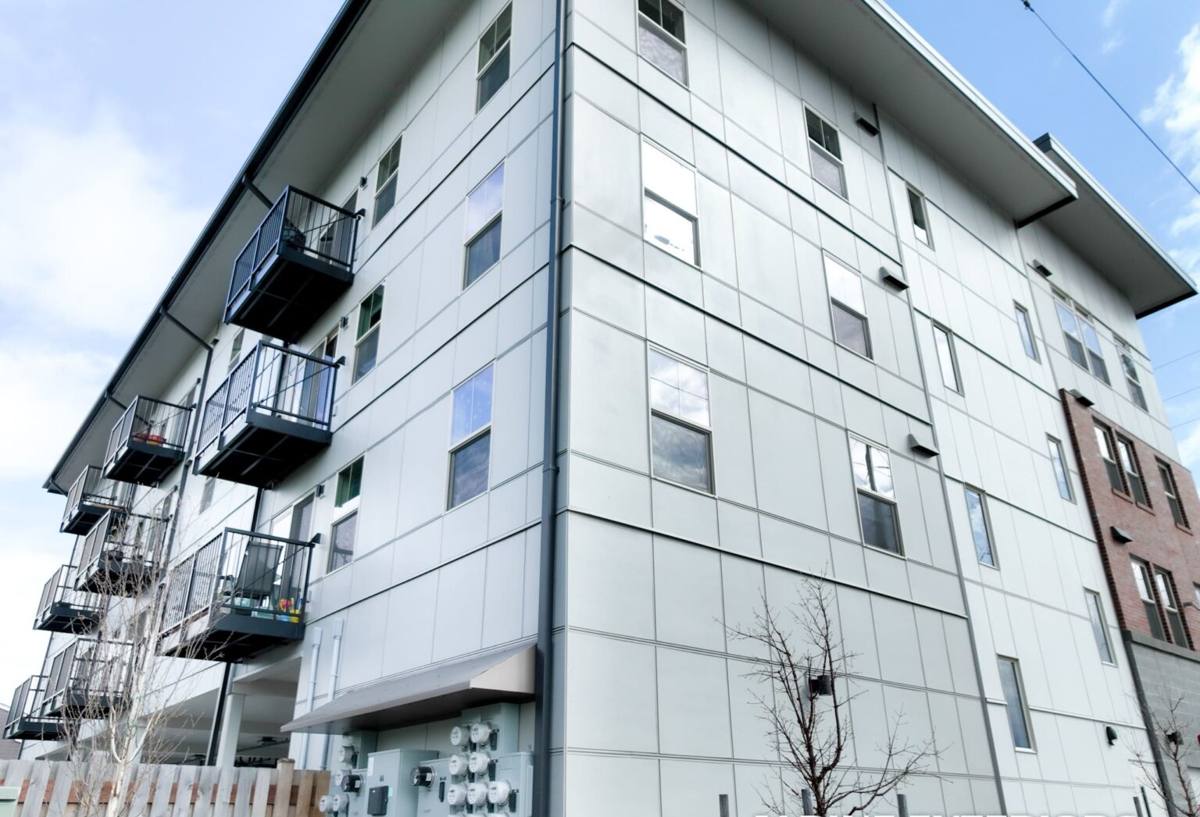
What a Correct Siding Replacement Actually Involves
Replacing siding on a Custer home isn't just stripping old panels and nailing up new ones. Done correctly, it's a full rebuild of the wall's moisture management system, with the visible siding as the last step, not the first.
- Full tear-off — removing old siding down to the sheathing so nothing gets covered up and hidden.
- Sheathing inspection — checking for soft spots, delamination, or hidden rot, especially around old window and door penetrations.
- Sheathing repair or replacement — any compromised OSB or plywood gets cut out and replaced before anything else happens.
- Weather-resistive barrier (WRB) — a new, continuous water and air barrier installed with proper overlaps, not just stapled sheets with gaps at seams.
- Flashing at every penetration — windows, doors, hose bibs, vents, and electrical penetrations all get flashed so water sheds outward instead of finding a path in.
- Rain screen gap where appropriate — a small air gap behind the siding lets any moisture that does get in dry out instead of sitting trapped against the wall.
- Correct fastening — the right fastener type, spacing, and depth for the specific siding product, following manufacturer installation instructions exactly.
- Trim, caulking, and finish work — done last, and done to shed water rather than rely on sealant as the primary defense.
Skip any one of these steps and the new siding might look right for a year or two, but it won't hold up through repeated wet seasons the way it should. Most of the siding failures we get called out to inspect in this area trace back to a shortcut somewhere in that list, not a bad siding product.
Why We Only Install James Hardie Fiber Cement
We install one siding system: James Hardie fiber cement. We don't offer vinyl, LP SmartSide, Cemplank, Allura, primed spruce, or cedar, and that's a deliberate standard, not a lack of options.
Vinyl siding is inexpensive and easy to install, but it's a petroleum-based product that expands and contracts with temperature swings, can warp or crack in wind-driven debris, and offers limited defense against the kind of moisture intrusion that matters most here — because it relies almost entirely on what's behind it, not the panel itself, to keep water out. In a climate with this much wind-driven rain, that's a weak link we're not willing to put our name behind.
Engineered wood products like LP SmartSide use treated wood strand technology that resists moisture better than untreated wood, but it's still wood at its core. Any breach in the factory coating — a deep scratch, a poorly sealed cut edge, a fastener hole that wasn't sealed — gives moisture a path into a wood-based substrate, and in a climate with a moss season this long, that's a risk that compounds year after year.
Other fiber cement brands, like Cemplank and Allura, are chemically similar to James Hardie and can be reasonable products. Our reasoning for standardizing on Hardie specifically comes down to product line depth (Hardie engineers specific formulations for different climate zones), the consistency of their factory-applied ColorPlus finish, and the strength and structure of their warranty program. We'd rather install one system exceptionally well, with installers who know its specifications cold, than juggle several product lines and specifications across every crew.
Primed spruce and cedar are the traditional look many older Custer homes were originally built with, and we understand the appeal. But raw or primed wood siding demands a maintenance schedule — recaulking, repainting, inspecting for rot — that most homeowners underestimate, and in a salt-air, high-moss climate, that maintenance window shrinks. We'd rather be honest about that trade-off upfront than sell a product we know will demand more upkeep than most people want to sign up for.
Choosing the Right Hardie Product for a Custer Home
James Hardie engineers its siding by climate zone, and homes in this part of Washington fall into the HZ5 category — formulated for wetter, harsher conditions. That's not a marketing distinction; it affects the actual composition of the board.
ColorPlus Factory Finish
Most Hardie installations we do use the ColorPlus finish — a coating baked onto the board at the factory under controlled conditions, rather than field-painted after installation. That matters here specifically because field-applied paint has to cure properly to perform, and curing paint outdoors during a wet Whatcom County stretch is never guaranteed. A factory finish sidesteps that variability entirely and comes backed by its own finish warranty.
Board Style Options
Lap siding, board-and-batten, and shingle-style panels are all available in the Hardie line, so switching to fiber cement doesn't mean giving up the architectural look of a home. We'll walk through which profile fits the existing lines of your house during the estimate.
Our Process, Start to Finish
Every Custer siding replacement follows the same sequence, whether it's a small rambler or a larger two-story home:
- On-site assessment — we inspect current siding, trim, flashing, and any visible moisture damage before quoting anything.
- Written estimate — a clear scope of work and product selection, no vague allowances.
- Tear-off and sheathing check — the point where hidden problems get found and addressed, not papered over.
- WRB and flashing installation — the unglamorous part of the job that determines whether the siding lasts.
- Hardie installation — installed to James Hardie's published specifications for fastening, clearance, and joint treatment.
- Final trim, caulk, and cleanup — site left clean, debris hauled, and a final walkthrough with the homeowner.
We don't subcontract the core installation out to whoever's available that week. The crew that quotes the job is familiar with Custer's specific conditions and has installed Hardie product on homes with the same salt-air and moss exposure yours has.
What Siding Replacement Typically Costs
Every home is different, but the factors that move the price are consistent. Use this as a general guide, not a quote — your estimate will reflect your home's actual condition and size.
| Factor | Why It Matters |
|---|---|
| Home size and wall complexity | More square footage, corners, and gables mean more material and labor time. |
| Sheathing condition | Hidden rot or delamination found during tear-off adds repair cost before new siding goes up. |
| Board style | Lap, board-and-batten, and shingle profiles carry different material and labor costs. |
| Trim and accessory work | Window and door trim, fascia, and soffit work often gets bundled into a full siding job. |
| Access and site conditions | Steep lots, tight setbacks, or landscaping that limits staging can affect labor time. |
Signs a Custer Home Needs Siding Replacement Now
Some warning signs are obvious; others hide in plain sight until they're expensive. Walk your home's exterior and check for:
- Soft or spongy spots when you press on the siding, especially near the bottom courses
- Persistent moss or algae growth that keeps returning after cleaning
- Cracked, warped, or bulging panels, particularly on north- and west-facing walls
- Paint that's peeling or blistering rather than just fading
- Visible gaps or separation at seams, corners, or trim boards
- A musty smell in rooms along an exterior wall
- Rising heating bills that suggest the wall assembly isn't performing the way it should
Any one of these on its own might just mean routine maintenance. Several together, especially on a home that's had the same siding for fifteen-plus years in this climate, usually means it's time for a real assessment rather than another round of patching.
Why Hiring Locally Matters for This Job
Siding installation instructions look the same on paper everywhere. What changes is judgment calls in the field — how much rain screen gap to build in on a wall that catches wind off the bay, where to add extra flashing attention around a window that's taken water before, how to sequence a tear-off around a wet Whatcom County forecast instead of a dry one. A crew that already works Custer has made those calls on homes with the same exposure yours has, and knows which details in this specific climate aren't optional.
That local familiarity also shows up in smaller, practical ways: knowing which older Custer homes were built with the assemblies common to a certain era, recognizing typical trouble spots before they're pointed out, and being available for a follow-up visit without a long drive across the county.
If your siding is showing its age, or you're just trying to get ahead of what a long moss season is doing to your walls, we're glad to come take a look. A free, no-pressure estimate gets you a clear picture of your home's actual condition and what a correct fix would involve — fill out the form below to get started.