 Semiahmoo Exterior
 Building a Deck That Actually Holds Up in Custer
Custer sits close enough to Semiahmoo Bay and the Strait of Georgia that homes here deal with a specific mix of weather most inland decks never see: salt-laden air, long stretches of driving rain, and a moss season that can run from fall through spring. A deck built with generic, one-size-fits-all methods will show its age fast in this environment — loose fasteners, soft spots at the ledger, green film on the boards by the second winter. A deck built for this specific climate holds its finish, its structure, and its footing for decades instead of years.
This page is about one project type in one area: custom deck construction for homes in and around Custer, Washington. Not a general overview of decks everywhere — the details that matter here, why they matter, and what a correctly built deck looks like when the crew doing the work already understands Whatcom County conditions.
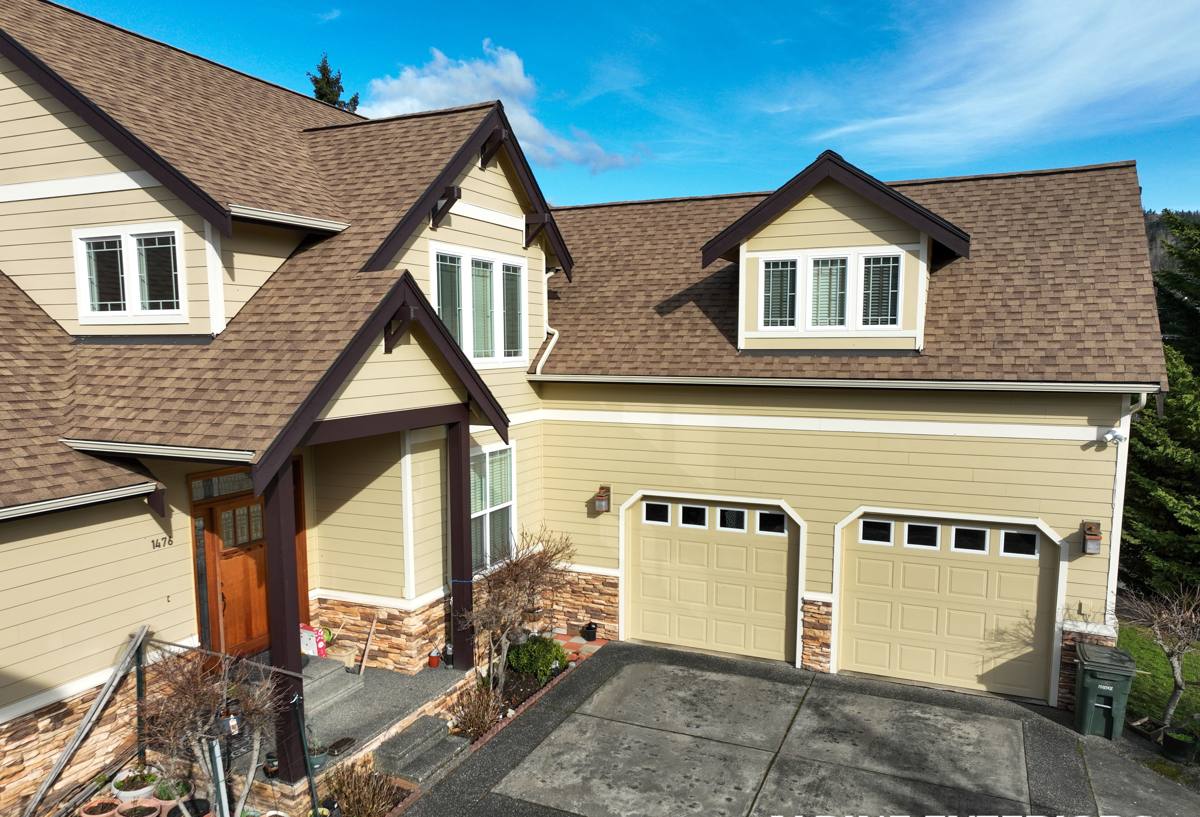
What Custer's Weather Actually Does to a Deck
Every recommendation on this page traces back to three things: salt air, driving rain, and moss. It's worth understanding what each one does mechanically, because that's what separates a deck that lasts from one that doesn't.
Salt Air and Hardware Corrosion
Proximity to the bay means airborne salt settles on everything outdoors, including the metal that holds a deck together. Standard zinc-coated fasteners and connectors corrode faster in a coastal salt environment than they would twenty miles inland. Once a joist hanger or ledger bolt starts rusting, it loses holding strength quietly — you won't see it until the deck starts to feel spongy or a board pulls loose. The fix isn't complicated, but it has to be done from the start: stainless steel or heavy-duty coated fasteners rated for coastal and treated-lumber exposure, not the cheapest box at the hardware store.
Driving Rain and Water Management
Whatcom County rain doesn't just fall straight down — wind off the water pushes it sideways, which means water gets into gaps and joints that a calmer climate would never test. The two spots that fail most often on poorly built decks are the ledger board connection to the house and the board-to-board gapping across the deck surface. If the ledger isn't properly flashed, water works its way behind the siding and into the rim joist, and you don't find out until there's rot. If boards are spaced or fastened wrong, water pools instead of shedding, and that's where rot and mold start on the deck itself.
Moss, Algae, and Long Damp Seasons
Custer gets enough shade, moisture, and mild temperature swings to grow moss and algae on almost any outdoor surface that isn't actively shedding water and getting some airflow. On a deck, moss isn't just cosmetic — it holds moisture against the board surface, which accelerates wood decay and makes composite and even PVC surfaces slick and unsafe underfoot. Decking material, board orientation, and gaps between boards all affect how much moss a deck grows and how easy it is to keep off.
Choosing the Right Decking Material for This Property
There's no single "best" decking material — there's a best material for a given budget, sun exposure, and how much upkeep the homeowner actually wants to do. Here's how the common options perform specifically under Custer's conditions.
| Material | How It Handles Salt Air & Rain | Moss Resistance | Maintenance |
|---|---|---|---|
| Pressure-treated wood | Good if fasteners and flashing are corrosion-rated; wood itself handles moisture well when sealed | Needs regular cleaning and sealing to resist moss buildup | Highest — annual cleaning, periodic staining/sealing |
| Cedar | Naturally rot-resistant, but still needs sealing near the coast to prevent graying and checking | Moderate — better airflow helps but still needs cleaning | Moderate to high — sealing every 1-3 years |
| Composite decking | Excellent — doesn't absorb moisture or corrode | Can still grow surface algae in shaded, damp spots; needs occasional washing | Low — no sealing, periodic cleaning |
| PVC/capped decking | Excellent — fully sealed surface, no wood fibers to hold moisture | Lowest of the group — smooth cap sheds moss more easily | Lowest — wash as needed |
We don't push one material over another as a rule — we walk the site, talk about how much sun or shade the deck will get, and give a straight answer about what will actually hold up where the deck is going. A shaded, water-facing deck and a sunny, sheltered one can call for different materials on the same street.
What a Correctly Built Deck Involves
A deck is only as good as what's underneath it. The visible boards get all the attention, but the structural work is what determines whether the deck is still solid in fifteen years.
- Footings set below frost depth and sized for the actual load of the deck, not guessed — Whatcom County soil and drainage conditions vary enough from lot to lot that this isn't a copy-paste number.
- Ledger board properly flashed and bolted to the house structure, with flashing that directs water away from the rim joist rather than letting it wick in behind the siding.
- Corrosion-rated fasteners and hardware throughout — joist hangers, structural screws, and post bases rated for coastal exposure and treated lumber contact.
- Proper joist spacing for the decking material chosen — composite and PVC often require tighter joist spacing than solid wood to prevent flexing.
- Consistent board gapping that lets water shed through instead of pooling on the surface.
- Railings and stairs built to current code, with attention to how coastal moisture affects post connections over time.
None of this is exotic. It's standard deck-building practice done correctly and adjusted for the specific conditions of this area, instead of shortcuts that only show up as a problem two or three winters later.
How Our Process Works for Custer Projects
1. On-Site Visit and Design Conversation
We walk the property, look at sun and shade patterns, drainage, and how the deck will connect to the house, and talk through what the homeowner actually wants to use the space for. Material and layout recommendations come out of that conversation, not a standard template.
2. Written Estimate and Material Selection
We put together a clear estimate with material options and honest trade-offs — not just a single number with no explanation of what's driving the cost.
3. Permitting
Most new decks and significant deck rebuilds in Whatcom County require a permit, especially anything attached to the house or built above a certain height. We handle the permit process as part of the job so the homeowner isn't left to navigate it alone.
4. Construction
Footings and framing first, inspected before decking goes down, then decking, railings, and any stairs. We don't cover structural work with finished decking until it's been checked.
5. Final Walkthrough
We walk the finished deck with the homeowner, cover basic care for the material chosen, and make sure everything is solid before calling the job done.
Permits and Local Requirements
Whatcom County building requirements apply to most deck construction, and the specifics depend on the deck's height, attachment to the house, and size. Waterfront-adjacent and unincorporated county properties around Custer can also have additional considerations depending on the parcel. We check what applies to a specific property before work starts rather than assuming — it's a lot cheaper to confirm upfront than to deal with a stop-work order or a failed inspection later.
What Affects the Cost of a Custer Deck
| Factor | Why It Matters |
|---|---|
| Decking material | Wood costs less upfront but more in long-term maintenance; composite and PVC cost more upfront but less over the deck's life |
| Size and shape | Multi-level decks, curves, and built-in features add framing complexity and labor time |
| Height off grade | Taller decks need more substantial railing, stair, and structural work to meet code |
| Site access and drainage | Difficult access or poor natural drainage can add site prep work before framing starts |
| Railing and hardware choice | Corrosion-rated hardware and higher-end railing systems cost more but hold up better in this climate |
We give straightforward, itemized estimates so homeowners can see where the money is going and make informed decisions about where to spend and where to save.
Keeping a Custer Deck in Good Shape Year-Round
- Sweep debris and standing leaves off the deck regularly, especially going into fall — trapped organic matter is what feeds moss growth.
- Rinse the surface periodically to knock down early algae and moss before it establishes, particularly in shaded corners.
- Check railing posts and stair connections once a year for movement or looseness — early signs of a fastener or footing issue.
- For wood decks, plan on resealing every one to three years depending on sun exposure and how the finish is wearing.
- Keep an eye on the area where the deck meets the house — any staining, soft wood, or gaps at the ledger should get looked at promptly, not left until the next dry season.
- Trim back overhanging vegetation where possible to reduce shade and improve airflow across the deck surface.
Why It Matters That We Already Work in Custer
A contractor who mainly builds decks in drier, inland climates will often use the same fasteners, the same flashing details, and the same material recommendations everywhere, because that's what works where they usually build. In Custer, those same choices age faster — corrosion sets in sooner, moss takes hold quicker, and water finds the gaps that a drier-climate build didn't need to worry about. A crew that already works this specific stretch of Whatcom County has already seen which details matter here and builds accordingly from the first footing, rather than learning it on your project.
We're not asking homeowners to take that on faith. Every recommendation on this page — the fasteners, the flashing, the material trade-offs — is standard practice for coastal Pacific Northwest construction, applied specifically to what a deck in this area actually faces.
Get a Free, No-Pressure Estimate
If you're planning a new deck or replacing one that's showing its age, we're happy to come take a look, talk through the options for your specific property, and put together a clear written estimate — no pressure, no obligation. Use the form below to get started.