 Semiahmoo Exterior
 Why Roofs in Custer Wear Differently
Custer sits close to the water along the Whatcom County coastline near Semiahmoo, and that proximity changes how a roof ages. Salt-laden air moves inland on a regular basis, and it's harder on exposed metal, fasteners, and flashing than most homeowners realize. Add in driving rain that comes in sideways during winter storms off the Strait, and you get moisture finding its way into laps, valleys, and penetrations that would stay dry in a more sheltered inland location. Then there's the moss: mild, damp winters and long stretches of shade from the region's tree cover give moss and algae months to establish themselves on a roof, and once they take hold they hold water against the shingle or panel surface long after a storm has passed.
None of this means a roof in Custer needs to be exotic or over-built. It means the details — fastener choice, flashing laps, ventilation, and moss-resistant surfaces — need to match the actual conditions the roof will face, not a generic spec sheet.
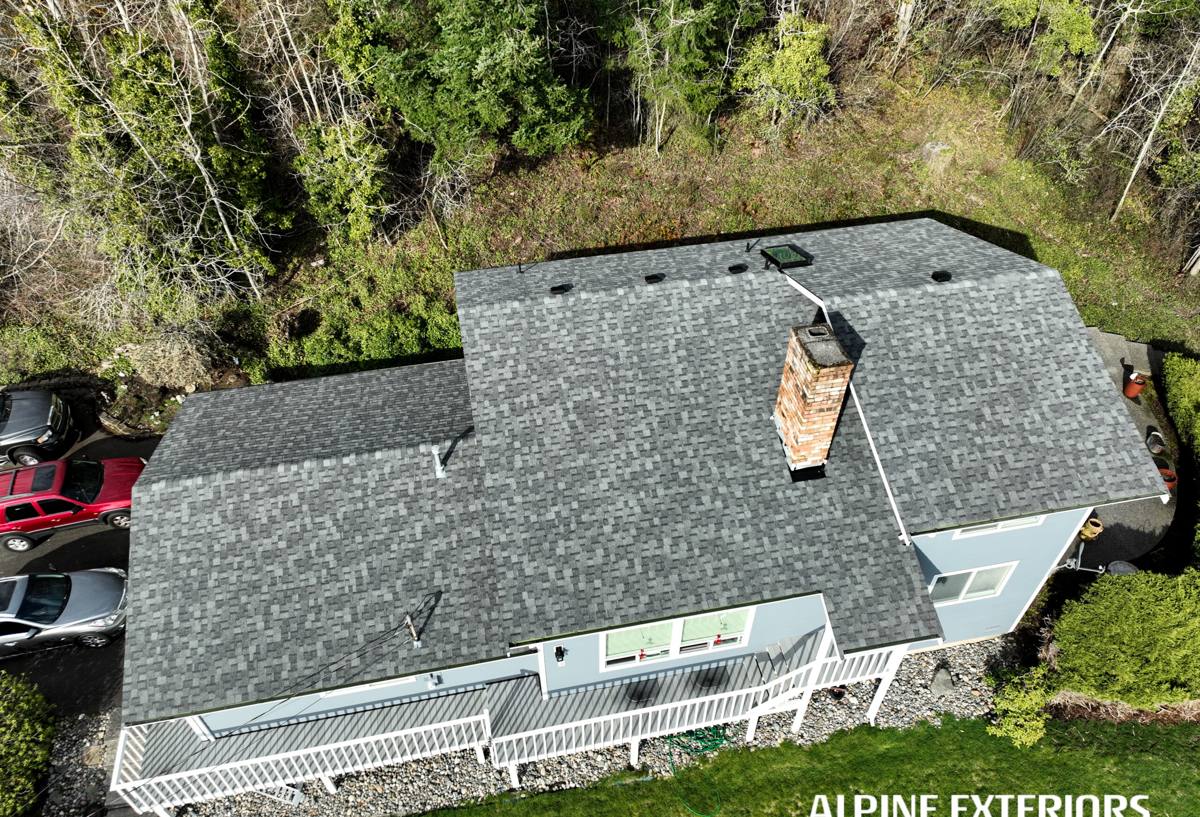
Signs Your Custer Home Needs a Roof Replacement, Not a Repair
A lot of roofs get patched two or three times before anyone asks whether the whole system needs to come off. In a coastal, moss-prone climate like this one, repeated small repairs are often a sign the roof is past the point where patching makes sense.
- Granule loss heavy enough that you can see bare asphalt or find granules collecting in gutters
- Shingles that are curling, cupping, or cracking, especially on south- and west-facing slopes
- Moss mats thick enough that you can't see the shingle surface underneath
- Soft or spongy decking when walked on, or visible sagging between rafters
- Daylight visible through the roof deck from inside the attic
- Leaks that keep returning in the same area even after repair
- A roof at or past 20-25 years old for asphalt composition, or showing corrosion on metal fasteners and flashing
If you're seeing two or more of these at once, a replacement estimate is worth getting before winter's driving rain finds every weak point at once.
What a Correct Roof Replacement Actually Involves
Tear-Off and Deck Inspection
A proper replacement starts with a full tear-off down to the deck, not a layover on top of old material. That's the only way to actually see the plywood or sheathing underneath and find soft spots, rot, or delamination caused by long-term moisture — problems that are common on older Custer roofs where moss has been holding water against the deck for years. Any bad decking gets cut out and replaced before anything new goes down.
Underlayment and Water Protection
Given how much wind-driven rain this area sees, underlayment matters as much as the visible roofing material. A synthetic underlayment with self-sealing capability around fasteners, combined with ice-and-water shield membrane at eaves, valleys, and penetrations, gives the roof a real second line of defense — because in driving rain, water doesn't always run straight down the surface the way it does on a dry-climate roof.
Flashing and Penetrations
Chimneys, vents, skylights, and wall-to-roof transitions are where most leaks actually start, not in the open field of the roof. Correct step flashing, counterflashing, and sealant rated for exterior, coastal exposure make the difference between a roof that stays dry for decades and one that needs re-caulking every couple of years.
Choosing a Roofing Material for Semiahmoo's Coastal Climate
There's no single "best" roofing material for every home — the right choice depends on budget, roof pitch, and how much moss and salt exposure the specific property deals with. Here's how the common options compare for a home in this part of Whatcom County.
| Material | Salt Air / Moisture Behavior | Moss Resistance | Typical Lifespan |
|---|---|---|---|
| Architectural asphalt shingle | Good when properly ventilated; algae-resistant granules help with staining | Moderate — benefits from periodic cleaning or zinc strips | 20-30 years |
| Standing-seam metal | Excellent when fasteners and flashing are corrosion-rated for coastal use | High — sheds moss more readily due to smooth, sloped surface | 40-50+ years |
| Synthetic composite shingle/shake | Good; doesn't absorb moisture the way wood shake does | Moderate to high depending on product line | 30-50 years |
We'll walk through these trade-offs with you directly rather than pushing one product line — the honest answer for a shaded, moss-prone lot might be different from the honest answer for an exposed, wind-heavy one even a few blocks away.
Cost Factors for a Custer Roof Replacement
Every roof is priced individually, but the same handful of factors drive most of the variation we see on estimates in this area:
- Roof size and pitch — steeper roofs take longer and require more safety setup
- Number of existing layers — tear-off of multiple old layers adds labor and disposal cost
- Decking condition — rot or soft sheathing found during tear-off means replacement plywood, which isn't always visible until the old roofing is off
- Material choice — asphalt, metal, and composite products carry different material and installation costs
- Roof complexity — valleys, dormers, skylights, and chimneys all add flashing work
- Access — trees, tight lot lines, or difficult staging areas can affect labor time
We give a written estimate that breaks these out so you know what you're paying for, rather than a single lump number with no explanation.
Our Roof Replacement Process
- Inspection and estimate. We walk the roof and attic, document the actual condition, and put together a written scope and price.
- Material selection. We go over the trade-offs above based on your roof's specific exposure and your budget.
- Property protection. Landscaping, siding, and gutters get protected before tear-off begins.
- Tear-off and deck inspection. Old material comes off completely; any compromised decking is identified and replaced.
- Underlayment and flashing installation. Water protection goes down first, followed by correctly detailed flashing at every penetration.
- Roofing installation. The new roofing material is installed to manufacturer specification, not shortcuts.
- Cleanup and walkthrough. Magnetic sweep for debris, full site cleanup, and a walkthrough so you can see the finished work.
- Documentation. You get warranty paperwork and a record of what was installed.
Ventilation and Moss: The Details That Prevent Repeat Problems
A roof that isn't ventilated correctly traps heat and moisture in the attic, which shortens shingle life from underneath — a problem that's easy to miss because it doesn't show up on the surface right away. Balanced intake and exhaust ventilation matters just as much in a damp coastal climate as it does in a hot one; the goal is constant air movement that keeps the underside of the deck dry.
On the moss side, the biggest factor is usually shade and airflow across the roof surface, which we don't control, but the roofing system itself can help. Zinc or copper strips near the ridge release trace amounts of metal ions that discourage moss growth as rain washes over them, and smoother-surfaced materials tend to hold less moss than heavily textured ones. None of this replaces occasional roof cleaning, but the right setup at installation reduces how often it's needed.
Why Hiring a Crew That Already Works in Custer Matters
A roofing crew that regularly works this stretch of Whatcom County already knows which slopes tend to hold moss, how far wind-driven rain typically travels up under eaves in a winter storm, and which flashing details actually hold up to salt air over time instead of just looking right on installation day. That's knowledge you don't get from a crew that mostly works a different climate and treats every job the same way.
It also matters for the parts of the job that happen after installation. A local crew can get back out to a Custer property quickly if a warranty question comes up, and they're accountable to the same community they're working in — not a name that shows up for one job and is hard to reach a year later.
What a Thorough Estimate Should Include
Before you commit to any roofing contractor, make sure the estimate you're given actually covers the details that determine whether the job holds up:
- A physical roof and attic inspection, not just a measurement from satellite imagery
- Written scope of work covering tear-off, decking, underlayment, and flashing — not just "install new roof"
- Specific material and underlayment brands and product lines, not vague descriptions
- Ventilation plan, including any changes to intake or exhaust venting
- Clear statement of warranty terms, both manufacturer and workmanship
- Timeline and a plan for weather delays, given how unpredictable rain can be here
- Proof of licensing and insurance you can verify independently
If a contractor's proposal skips most of these and jumps straight to a price, that's worth asking about before you sign anything.
If your roof is showing its age or you just want an honest read on where it stands, we're happy to come take a look. The estimate is free, there's no pressure to book anything on the spot, and you'll get a straight answer about whether repair or full replacement makes sense for your home.