 Semiahmoo Exterior
 Why Custer Homeowners Are Choosing Metal Roofing
Custer sits close enough to the water that salt air is part of daily life, and far enough into Whatcom County's rain belt that roofs here spend most of the year wet, shaded, or both. Asphalt shingles do an adequate job for a while, but the combination of salt-laden air, driving rain, and a moss season that can stretch from fall through spring wears them down faster than most homeowners expect. Metal roofing, installed the right way, is one of the few roofing systems that genuinely holds up to that combination over the long haul.
This page is specifically about metal roofing for homes in and around Custer — not a generic overview of metal roofing everywhere. The details that matter here (fastener choice, flashing metal, ventilation, moss control) are shaped directly by this area's climate, and getting them wrong is exactly how a metal roof underperforms its potential.
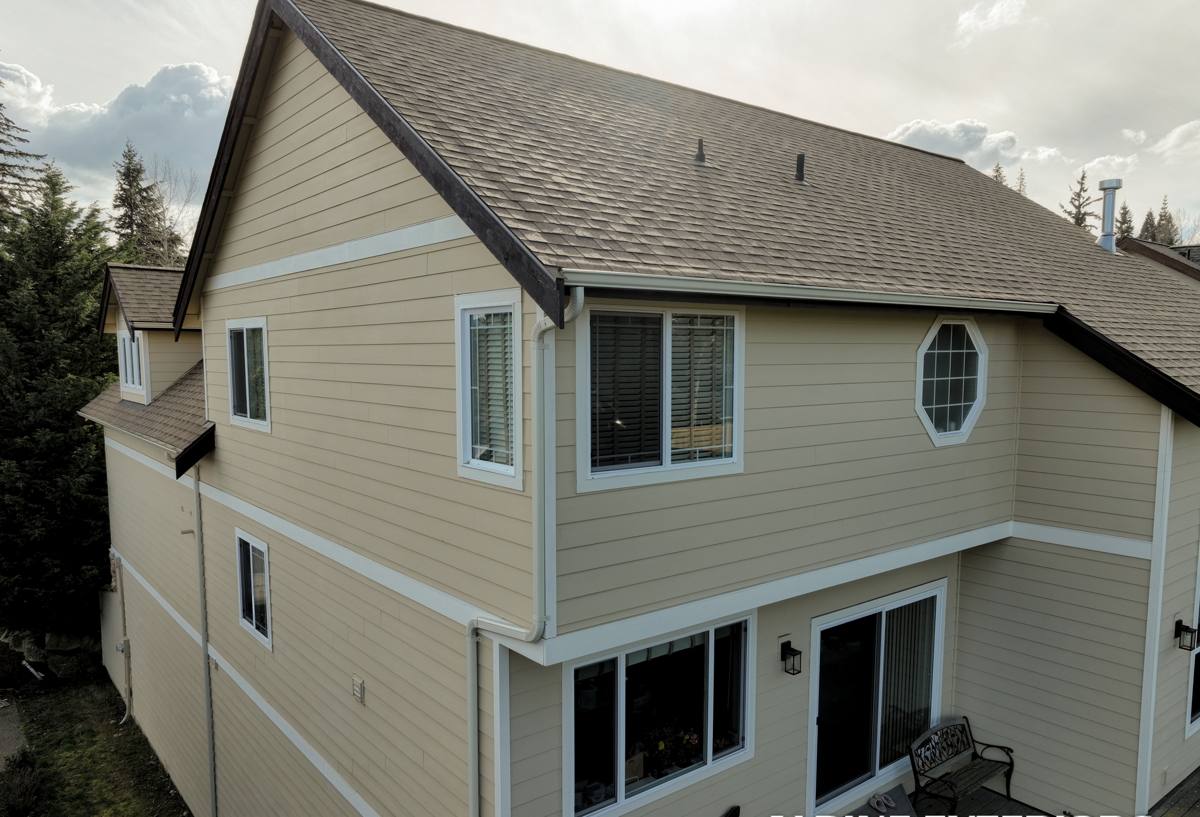
What Whatcom County's Coastal Climate Does to a Roof
Salt Air and Corrosion
Homes near Semiahmoo Bay and the Strait of Georgia deal with airborne salt that settles on every exterior surface, roofs included. Salt accelerates corrosion on unprotected or mismatched metal — this is why fastener and flashing selection matters as much as the panel material itself. A roof that looks fine on install day can develop rust streaks and failing fasteners within a few years if the metals weren't chosen with salt exposure in mind.
Driving Rain and Wind-Driven Water
Pacific storms coming off the water often push rain sideways rather than straight down. That kind of wind-driven rain finds its way into laps, seams, and flashing details that would stay dry in a calmer climate. A metal roof's water resistance comes almost entirely from how the seams, laps, and flashing are executed — the panel itself is only part of the system.
Moss, Shade, and Moisture
Custer's tree cover and long damp stretches create ideal conditions for moss and algae growth. Moss holds moisture against a roof surface, and on metal it can trap water at seams and fastener penetrations where corrosion starts. Moss is manageable on a metal roof, but it needs to be planned for at installation and checked periodically — not ignored until it's thick.
Metal Roofing Systems We Install
Not every metal roofing product is a good fit for coastal, moss-prone conditions. We generally point Custer homeowners toward one of three systems, depending on budget, roof pitch, and how the home looks with the roofline.
| System | How It's Fastened | Best Fit |
|---|---|---|
| Standing seam | Concealed clips, no exposed fasteners on the field of the roof | Homes closest to the water or with steep pitches where wind-driven rain is a bigger concern |
| Exposed fastener panel | Screws through the panel face into the deck or purlins | Budget-conscious projects, outbuildings, or lower-slope sections where cost matters more than the cleanest seam |
| Stone-coated steel | Interlocking panels resembling shingle or tile profiles | Homeowners who want a metal roof's durability but a more traditional roofline appearance |
Standing seam tends to be our default recommendation close to Semiahmoo Bay because there are no exposed screw heads to work loose or corrode over time. Exposed fastener systems can still perform well here, but they depend on correctly torqued, gasketed, corrosion-resistant screws and a maintenance routine that checks them periodically — something we walk homeowners through at handoff.
What a Correct Metal Roof Installation Actually Involves
Metal roofing has a reputation for lasting decades, but that reputation only holds when the details underneath the panels are done correctly. On a Custer roof, we pay particular attention to:
Underlayment and Deck Protection
A high-temperature synthetic underlayment goes down across the full deck, with self-adhered ice-and-water membrane at eaves, valleys, and around every penetration — the spots where wind-driven rain is most likely to work its way underneath the panels.
Matching Metals to Prevent Galvanic Corrosion
When two dissimilar metals touch in the presence of moisture and salt, one corrodes faster than it would on its own. We match flashing metal, fasteners, and panel material to avoid this — a detail that matters more here than almost anywhere else in the state.
Flashing at Every Transition
Chimneys, dormers, sidewall intersections, and skylights are where most roof leaks actually start, metal or not. Proper step flashing, counter-flashing, and sealant (used as a backup, not the primary defense) keep these transitions watertight through years of wind-driven storms.
Ventilation Behind the Panels
Metal roofs need airflow beneath the panel to prevent condensation from forming on the underside of the deck, especially in a climate as damp as ours. We check existing attic and roof ventilation as part of every metal roofing project, not as an afterthought.
Panel Expansion and Contraction
Metal panels expand and contract with temperature swings. Fastening methods and clip systems need to allow for that movement, or panels can buckle or pull fasteners loose over time.
Our Process, Start to Finish
- On-site inspection of the existing roof, deck condition, and ventilation, with honest feedback on whether a full tear-off or overlay makes sense for your situation.
- A written estimate that lays out the system, materials, and scope in plain language — no vague allowances.
- Material selection, including panel profile, finish color, and fastener/flashing metal matched for coastal exposure.
- Tear-off (when needed) and deck repair, since metal roofing performs best over a solid, dry substrate.
- Underlayment and ice-and-water membrane installation at all vulnerable areas.
- Panel installation, followed by flashing, trim, and ridge detail work.
- Final walkthrough with the homeowner and cleanup of the site, including magnetic sweeps for stray fasteners.
Maintenance and Moss Prevention for Custer Roofs
A correctly installed metal roof needs far less maintenance than asphalt shingles, but "far less" doesn't mean none — especially in a climate that grows moss on nearly every shaded surface. A short annual routine keeps small issues from becoming expensive ones.
- Clear gutters and valleys of needles and debris each fall, before the heavy rains set in.
- Check for moss buildup at shaded slopes and north-facing sections, and treat early rather than letting it establish.
- Install zinc or copper control strips near the ridge where moss is persistent — rain washing over them naturally discourages regrowth.
- Inspect fastener heads and flashing seams once a year for early signs of rust or loosening.
- Trim back overhanging branches to reduce shade, debris buildup, and physical contact with the roof surface.
- After major windstorms, walk the property and look for lifted trim, dented panels, or displaced flashing.
What Affects the Cost of a Metal Roof in Custer
Metal roofing costs more upfront than asphalt shingles, but the gap narrows considerably when you account for lifespan and reduced maintenance. Several factors drive the final price on any given project.
| Factor | Why It Matters |
|---|---|
| Panel system chosen | Standing seam costs more than exposed fastener panels due to labor and concealed clip systems |
| Roof complexity | Valleys, dormers, and multiple roof planes all add flashing work and labor time |
| Deck condition | Rotted or damaged sheathing found during tear-off adds repair cost but is essential to address |
| Tear-off vs. overlay | Removing old roofing adds labor but allows a full inspection of the deck and ventilation |
| Fastener and flashing grade | Coastal-grade, corrosion-resistant hardware costs more than standard-grade but is worth it here |
We provide itemized, written estimates so homeowners can see exactly where the cost is going rather than a single lump-sum number.
Repair, Recoat, or Replace?
Not every issue on an existing metal roof means starting over. If you're dealing with an aging metal roof in Custer, we assess whether the problem is isolated or systemic before recommending a course of action.
Isolated fastener failures, a section of loose ridge cap, or minor flashing leaks are often repairable. Widespread rust at seams, chronic leaking around multiple penetrations, or a deck that's showing signs of moisture damage underneath usually point toward replacement being the more cost-effective long-term choice. We'll tell you honestly which category your roof falls into rather than defaulting to the more expensive recommendation.
Why Hiring a Crew That Already Works in Custer Matters
Metal roofing installation isn't forgiving of guesswork, and a crew unfamiliar with this specific stretch of Whatcom County coastline is more likely to miss the details that matter here. Knowing which fastener and flashing grades actually hold up against salt air, understanding how wind-driven rain behaves on the roof pitches common in this area, and recognizing moss patterns before they become structural issues all come from doing this work locally, repeatedly.
There's also a practical side: local crews know local permitting requirements, understand typical deck construction in homes built in this part of the county, and aren't learning the region's weather behavior on your project. That familiarity shows up in fewer callbacks and a roof that performs the way it's supposed to for the decades a metal roof is meant to last.
If you're weighing a metal roof for your Custer home, we're happy to take a look and give you a straightforward, no-pressure estimate. Use the form below to get started.